The Mystical Echoes of Gurdjieff and the Soul of Piano Revenge Festival
In the heart of Paris, where the Seine whispers secrets of centuries past, there lies a thread of mysticism woven into the fabric of music. It is a thread that connects the enigmatic figure of Georges Ivanovitch Gurdjieff to the Piano Revenge Festival, a celebration of sound that transcends time and space.
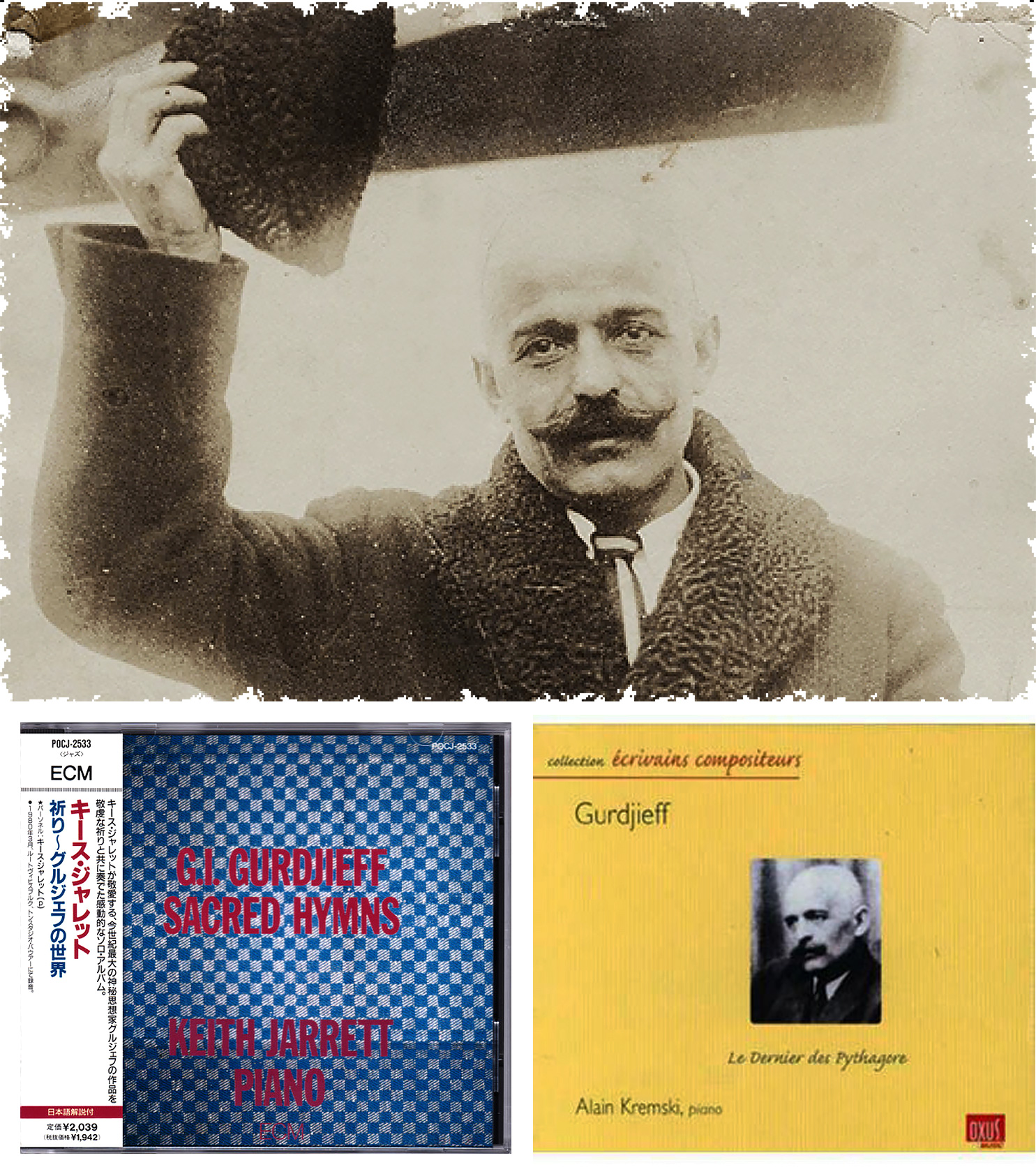
Gurdjieff, a philosopher, mystic, and composer, was a man who sought to bridge the earthly and the divine. Born in the Caucasus, he wandered the world in search of esoteric knowledge, eventually settling in Paris, where his teachings and music found fertile ground. His piano compositions, often described as “unusual” and “hypnotic,” were not merely music but portals to deeper states of consciousness. Each note, each rhythm, was imbued with a spiritual intention, a call to awaken the listener’s inner self.
It is said that Gurdjieff’s music was not created for entertainment but for transformation. His pieces, often performed on the piano, carry an otherworldly quality – a blend of Eastern mysticism and Western harmony. They are meditations in sound, inviting the listener to journey inward, to explore the mysteries of existence.
This mystical legacy found its way to the Piano Revenge Festival through the hands of Alain Kremski, a pianist and composer who dedicated himself to recording Gurdjieff’s piano works. Kremski’s interpretations brought Gurdjieff’s music to life, preserving its spiritual essence for future generations. It was through Kremski’s recordings that Anna Bondareva, the festival’s founder and artistic soul, first encountered Gurdjieff’s music.
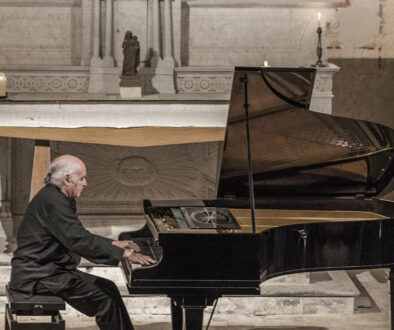
Yet, Kremski is not the only renowned pianist to have been captivated by Gurdjieff’s compositions. Keith Jarrett, the legendary jazz pianist and improvizer, also ventured into the mystical world of Gurdjieff’s music. Jarrett’s recordings of Gurdjieff’s piano pieces are a testament to their timeless appeal and universal resonance. With his profound sensitivity and technical mastery, Jarrett breathed new life into these works, bridging the gap between Gurdjieff’s spiritual vision and contemporary audiences.
Anna, a pianist and composer herself, felt an immediate connection to Gurdjieff’s work. His music resonated with her own artistic vision – a vision that seeks to break boundaries and explore the profound depths of human emotion. Inspired by Gurdjieff’s legacy, Anna embarked on a journey to create a festival that would honor his spirit while forging new paths in contemporary music.
The discovery of the festival’s venue, Le Théâtre de l’Île Saint-Louis, was nothing short of serendipitous. Nestled on the banks of the Seine, this intimate theater became the perfect stage for the Piano Revenge Festival. Its walls, steeped in history, seemed to echo Gurdjieff’s presence, as if inviting his music to return to the city he once called home.
The festival’s first edition was a testament to this spiritual connection. Pianists from around the world gathered to perform their compositions. The music filled the theater, creating an atmosphere of introspection and transcendence.
For Anna, the festival is more than a celebration of music; it is a dialogue between past and present, a way to honor the spiritual legacy of Gurdjieff while exploring new frontiers in neoclassical and contemporary piano music. It is a reminder that music, at its core, is a universal language—one that speaks to the soul and transcends the boundaries of time and space.
As the Piano Revenge Festival continues to grow, it carries with it the spirit of Gurdjieff – a reminder that music is not just an art form but a path to deeper understanding. In the heart of Paris, where the Seine flows endlessly, the echoes of Gurdjieff’s piano pieces continue to resonate, inviting us to listen, to feel, and to awaken.
The inclusion of Keith Jarrett’s interpretations of Gurdjieff’s works adds another layer of depth to this mystical dialogue. Jarrett, known for his improvisational genius and emotional intensity, approached Gurdjieff’s compositions with a reverence that highlights their timeless beauty. His recordings, such as Sacred Hymns (1980), are a testament to the universality of Gurdjieff’s music, proving that it transcends genres and eras. Jarrett’s ability to channel the spiritual essence of these pieces while infusing them with his unique voice has made them accessible to a broader audience, further cementing Gurdjieff’s place in the pantheon of musical mystics.
For the Piano Revenge Festival, Jarrett’s contributions serve as an inspiration – a reminder that Gurdjieff’s music is not confined to a single interpretation but is a living, breathing entity that evolves with each performer. The festival embraces this philosophy, encouraging pianists to explore Gurdjieff’s works with both respect and creativity, ensuring that his legacy remains vibrant and relevant.
In this mystical dialogue between past and present, the Piano Revenge Festival finds its soul – a soul that dances to the rhythm of Gurdjieff’s timeless music, forever intertwined with the spirit of Paris. It is a celebration of the piano as a vessel for spiritual exploration, a bridge between the earthly and the divine.
As the festival continues to develop day by day, it invites audiences to embark on a journey of discovery – to experience the transformative power of music and to connect with the deeper truths that Gurdjieff sought to convey. In the echoes of his piano pieces, in the hands of pianists like Keith Jarrett , Alain Kremski and the artists of the Piano Revenge Festival, we find a shared humanity, a universal language that speaks to the heart and soul.
This is the essence of the Piano Revenge Festival: a tribute to the past, a celebration of the present, and a vision for the future – all united by the mystical echoes of Gurdjieff’s piano music.
Exclusive for Piano Revenge MAG.
Piano Revenge MAG’s upcoming issue features an exclusive interviews with modern artists and rare insights into piano music of today.