The Soul of PLEYEL Reawakened: Inside the Renaissance of France’s Most Legendary Piano Maison
Foreword by Anna Bondareva
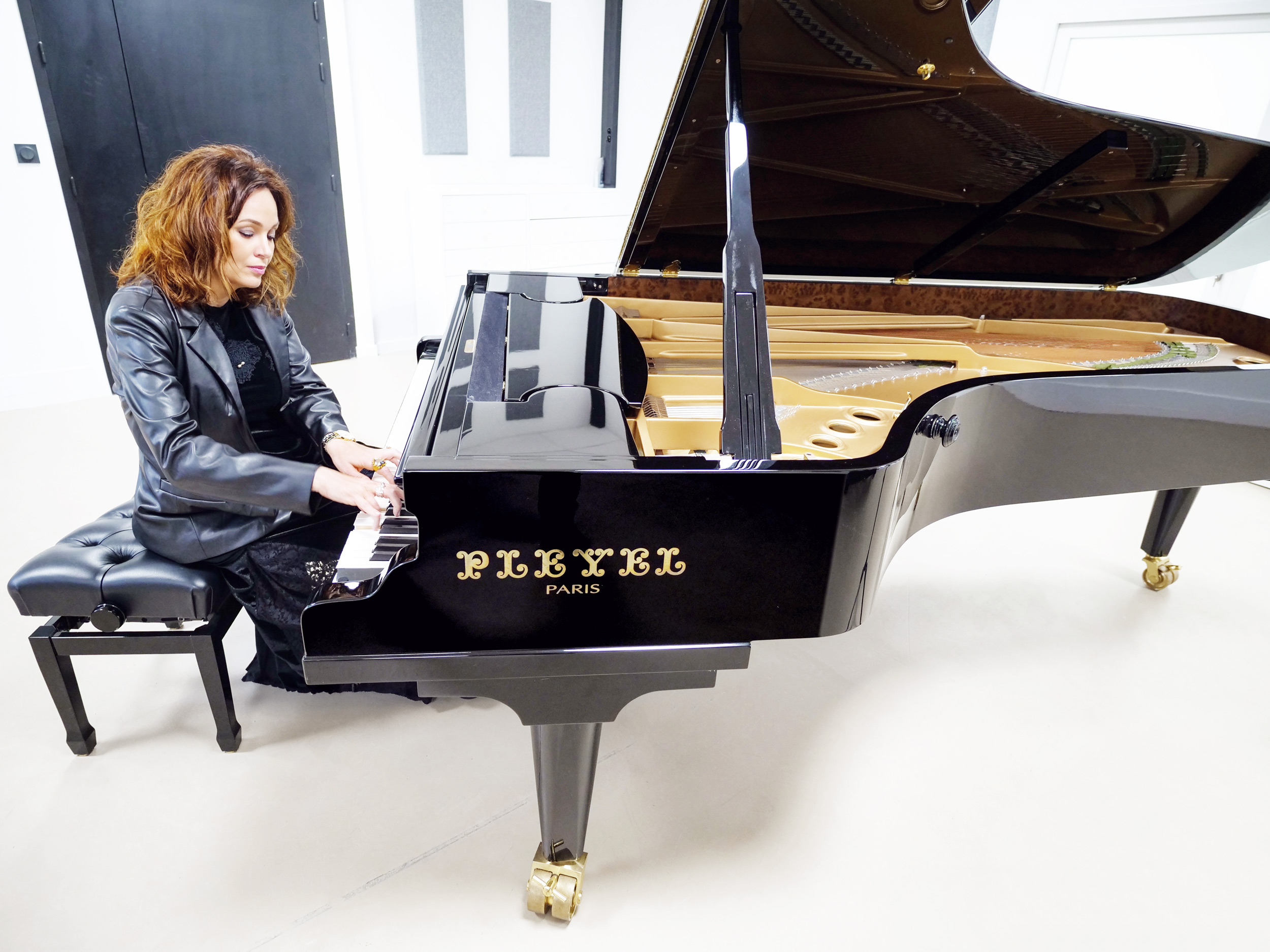
This February, I had the immense privilege of traveling to the new Pleyel ateliers, nestled near Nantes in the beautiful Upper Brittany region of western France. As the artistic director and founder of the Piano Revenge Festival, stepping into this space felt like entering a living sanctuary of French musical heritage – a place where history breathes and innovation takes shape.
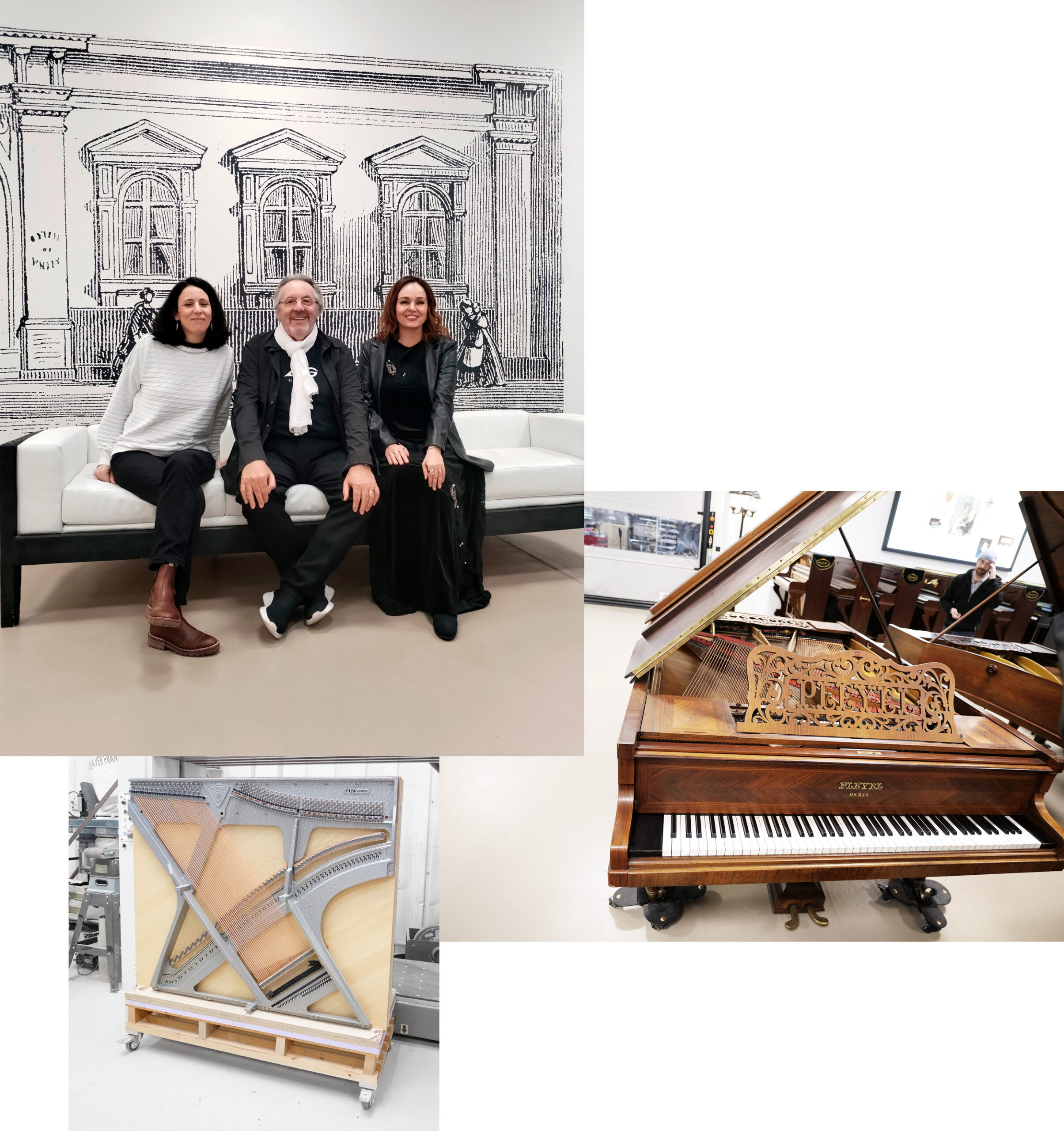
I was welcomed by the entire direction of the House of PLEYEL: the new brand owner, Gérard Garnier, whose vision is steering this legendary maison into a bold new era; Virginie Boyer, the atelier director, whose hands guide the craftsmanship; and Eric Montant, Directeur Marketing & Communication of the Algam brand, who bridges tradition with the modern world. Their passion for the instrument and its legacy was palpable in every conversation.
During my visit, I had the extraordinary chance to record my album “L’Éclats d’Alchimie” – now available on all platforms – in their lovely space, on the most famous Pleyel concert grand. This instrument, steeped in the great Pleyel tradition, responded to every nuance with a voice that was both intimate and commanding. It was a reminder of why Chopin himself declared: “When I feel inspired and strong enough to find my own sound, I need a Pleyel piano.”
Seizing this unique opportunity, I asked a few questions about the legendary brand’s past, present, and future. The answers you are about to read reflect a maison that honors its two-century legacy while daring to reimagine itself for tomorrow.
Here is our exclusive interview with the House of PLEYEL.
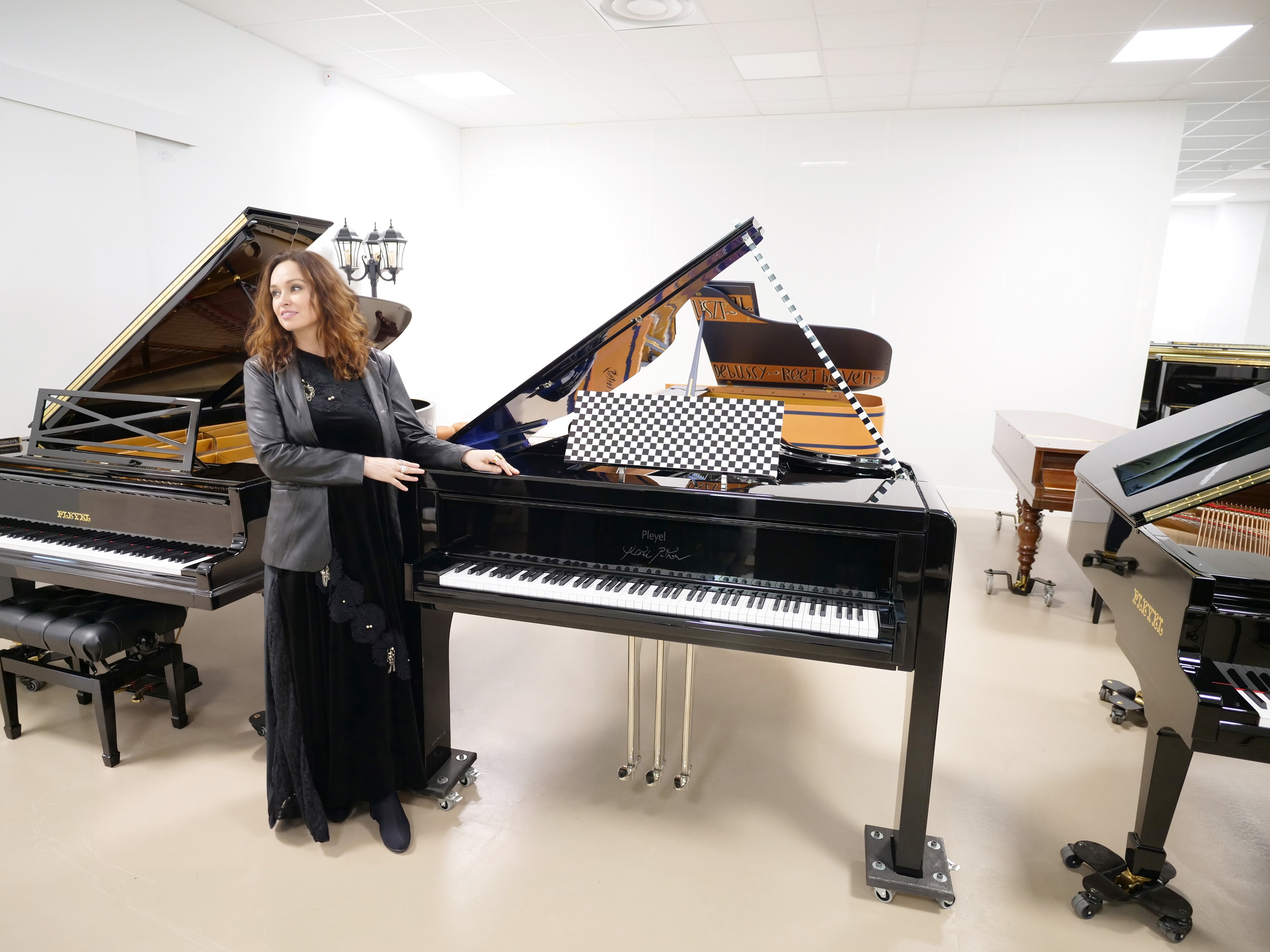
AB: The Maison Pleyel is an iconic institution in French piano craftsmanship. Can you tell us what makes Pleyel such a legendary name in the world of music?
Founded in 1807 by Ignace Pleyel, a student of Joseph Haydn, the Maison was born with a dual ambition: to publish the music of the great European composers and to design instruments capable of revealing all their subtlety. From the very beginning, Pleyel pianos distinguished themselves by their precise touch, sonic finesse, and great expressiveness. Pleyel did not merely manufacture instruments; it accompanied the evolution of piano playing and responded to the new demands of musicians.
What deeply marked its history was its bond with Frédéric Chopin. Arriving in Paris in 1831, Chopin met Camille Pleyel and performed in the Maison’s salons as early as 1832. He found in Pleyel pianos a natural extension of his own musical language – a delicate touch, lightness, and a wealth of nuance. His famous quote, “When I feel inspired and strong enough to find my own sound, I need a Pleyel piano,” perfectly captures this affinity.
Over more than two centuries, Pleyel has preserved its exacting standards while constantly innovating. The brand has become much more than a name in instrument making. It represents a certain idea of the French piano – elegant, sensitive, refined – at the service of the performer and musical emotion. It is this alliance of tradition, innovation, and complicity with artists that makes Pleyel a truly legendary name.
AB: With the acquisition by Gérard Garnier, the historic leader in musical instrument distribution in France, a new era opens for Pleyel. What are the main ambitions of this new direction?
The ambition of this direction has been to restore this great signature of French heritage to its rightful place, preserving its historical legacy and its famous romantic sonority, while adapting its instruments to the expectations of the modern piano.
The work carried out aims to reconcile the soul of Pleyel with contemporary demands such as power, homogeneity of registers, and reliability of touch.
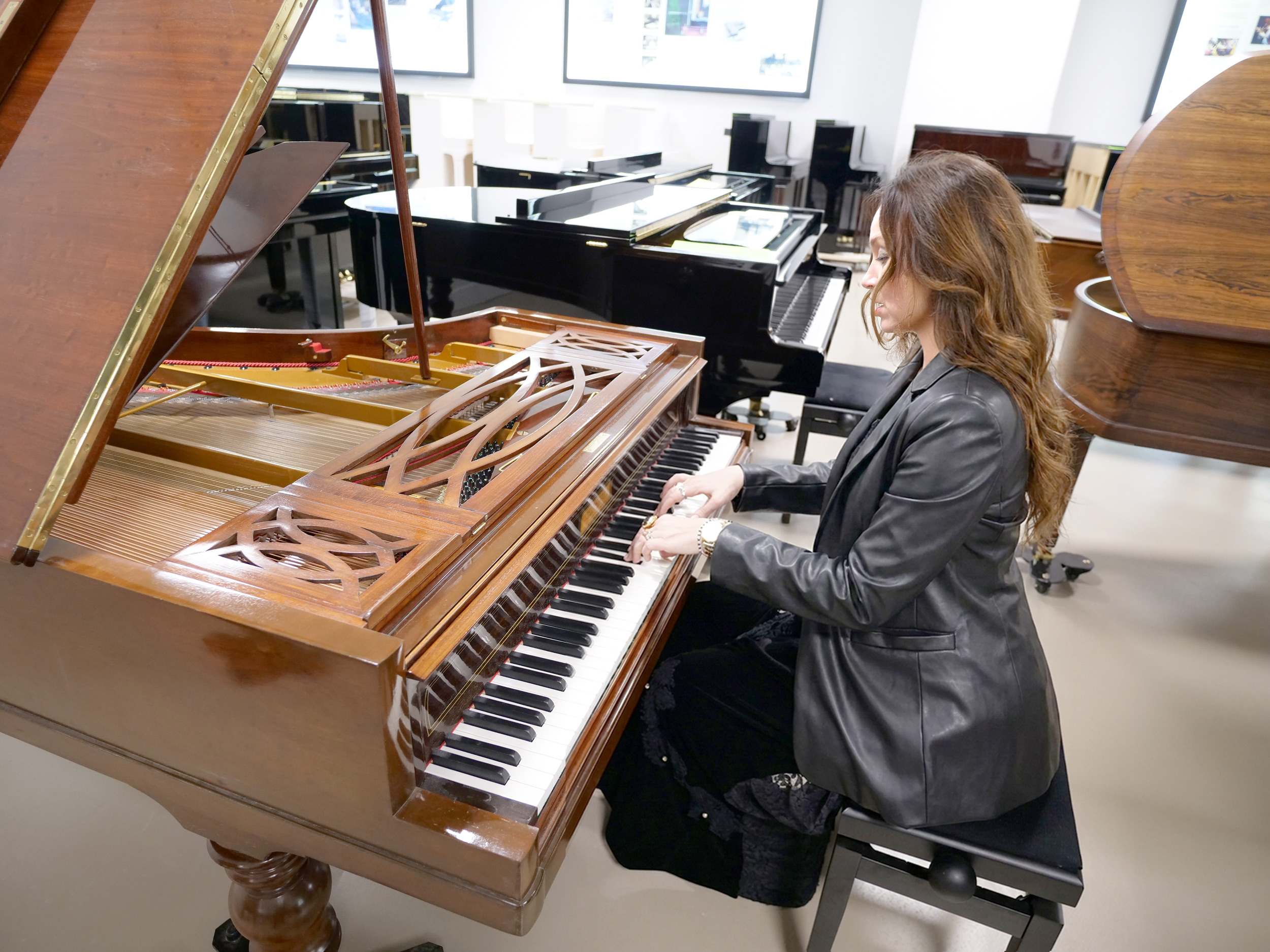
AB: How does Pleyel manage to reconcile the historical heritage of its pianos with contemporary technological and artistic innovations?
As a historic piano maker, we have always sought to keep the Pleyel heritage alive without freezing it in the past.
We started from the idea that an old piano should not be abandoned simply because it is no longer playable. It retains a soul, a presence, a soundboard capable of resonating. It was from this reflection that the idea of the Magistral system was born.
We wanted to create a discreet technology capable of transforming a piano into a high-end connected speaker, without drilling and without altering the instrument. The transducers use the piano’s soundboard to reproduce sound with naturalness, depth, and richness.
And when the piano is still playable, the experience goes even further. It can continue to be used as an instrument, while also being accompanied by high-quality recordings, solo, in duets, four-hand pieces, or even with an orchestra.
The Pleyel renaissance, therefore, is not simply about recapturing its historical sound. It is also about creating instruments and experiences capable of meeting today’s demands.
AB: Pleyel has always played a role in the training of pianists. Do you have any projects to support young talents or promote piano learning?
Yes, this is an important commitment for Pleyel. Our role is not only to manufacture instruments, but also to transmit a culture of the piano and to support those who will keep this heritage alive tomorrow.
It is in this spirit that we are partnering with the International Chopin Pleyel Piano Competition in Nohant, created with the Centre des monuments nationaux and the Nohant Festival Chopin. This competition will take place from August 15 to 23, 2026, and will bring together young pianists from around the world in a place deeply linked to Chopin, where some of his great works were born.
Through this project, Pleyel continues its vocation of transmission, connecting new generations of pianists to the spirit of Chopin and the great tradition of the French piano.
AB: Pleyel pianos are also known for their elegant design. How do you approach the balance between aesthetics and functionality in the design of your instruments?
Building on its unique and rare expertise, the Maison Pleyel aims to place the piano with modernity in contemporary interiors and to reconnect with the spirit of the great artistic traditions, where the avant-garde rhymes with an art of living imbued with refinement and elegance, as evidenced by the Art Nouveau and Trocadéro models.
The latter is notably distinguished by a lyre inspired by the Art Deco style.
Thus, we are witnessing a history in motion, never frozen, never definitive; remaining open and never finished, this history highlights the capacity of a maison that is strong in its past and ready to identify with the thought of its time.
Closing Note from Anna Bondareva
I would like to extend my deepest gratitude to Gérard Garnier, Virginie Boyer, and Eric Montant for their warmth, their time, and their visionary insights. The House of PLEYEL is not merely preserving history – it is actively composing the next movement of a magnificent symphony. I invite all our readers to discover my album “L’Éclats d’Alchimie,” recorded on that magnificent concert grand, and to experience firsthand the living legend that is Pleyel.
— Anna Bondareva, Paris 2026.