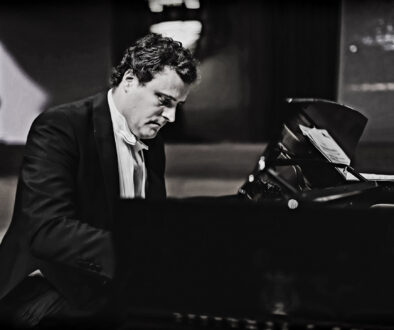
Matthew Mayer: An Artist Shaped by Instinct, Memory, and the Courage to Follow Illogical Pathways
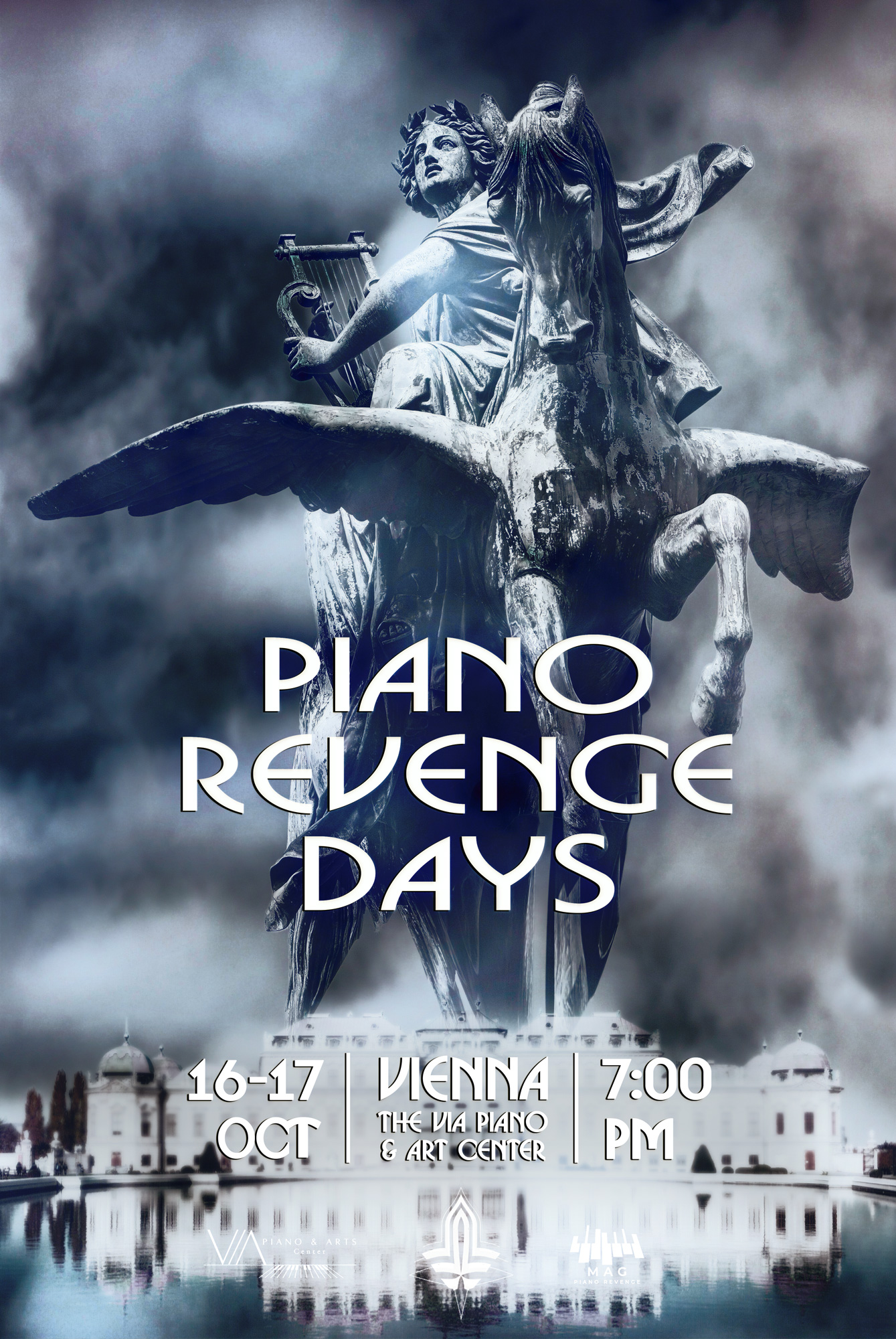
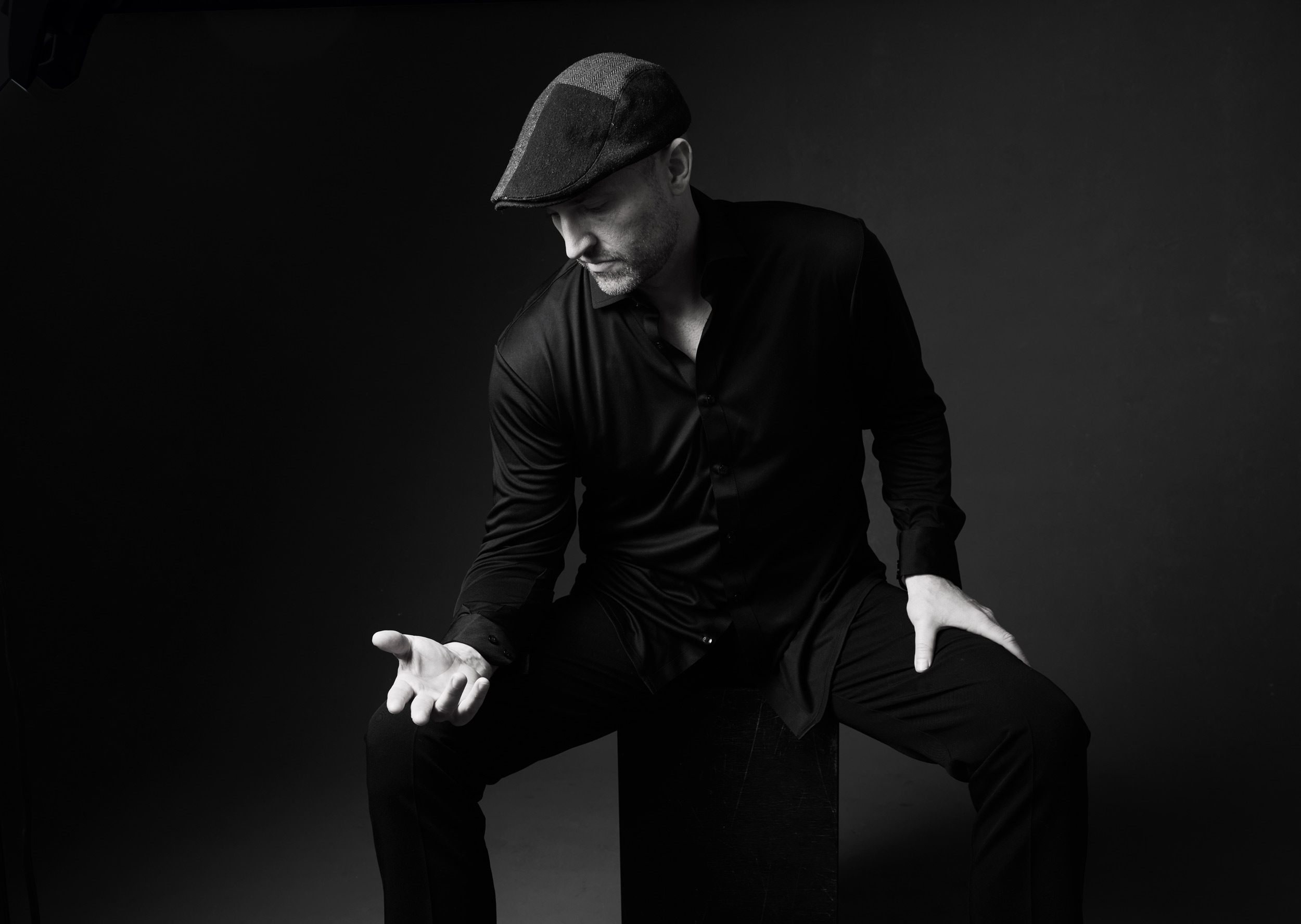
It is with great warmth and anticipation that we welcome you to this next chapter of our journey. As we prepare to gather in Vienna this October 2026, we are delighted to introduce Matthew Mayer – a dear artist who has already become an integral part of the Piano Revenge family.
Those of you who joined us in Venice this past January will remember the profound energy that filled the room. That event was not only a memorable evening of music but also the launch of Piano Revenge Days as satellite events to our main festival based in Paris. Matthew stood with us on that stage, pouring his heart into a performance that set the tone for everything we hope to build. He returned to Paris in April, further deepening the connection between his artistry and our vision.
Now, as we turn our eyes toward Vienna – a city where music breathes in the very stones of the streets – we are honored to share Matthew’s voice with you once more.
What follows is an interview that offers a rare glimpse into the soul of an artist who has never followed a conventional path. From a town of seven hundred people in South Dakota, through the loss of a grandfather whose piano he never heard but whose presence he somehow inherited, to the creation of a career built on instinct rather than blueprint – Matthew’s story is a testament to the power of trusting what cannot be explained.
He speaks of music as refuge, of compositions shaped by movement and memory, and of a festival that dares to be human in an age of algorithms. He speaks of Vienna with the reverence of someone who understands that art can outlive empires.
As you read these words, we invite you to sense the quiet courage behind them – the courage to follow illogical pathways, to sit at a piano and discover something new, to believe that the most beautiful moments often arrive when we walk toward what scares us.
We are proud to have Matthew Mayer with us in Vienna. We hope his music touches you as deeply as it has touched us.
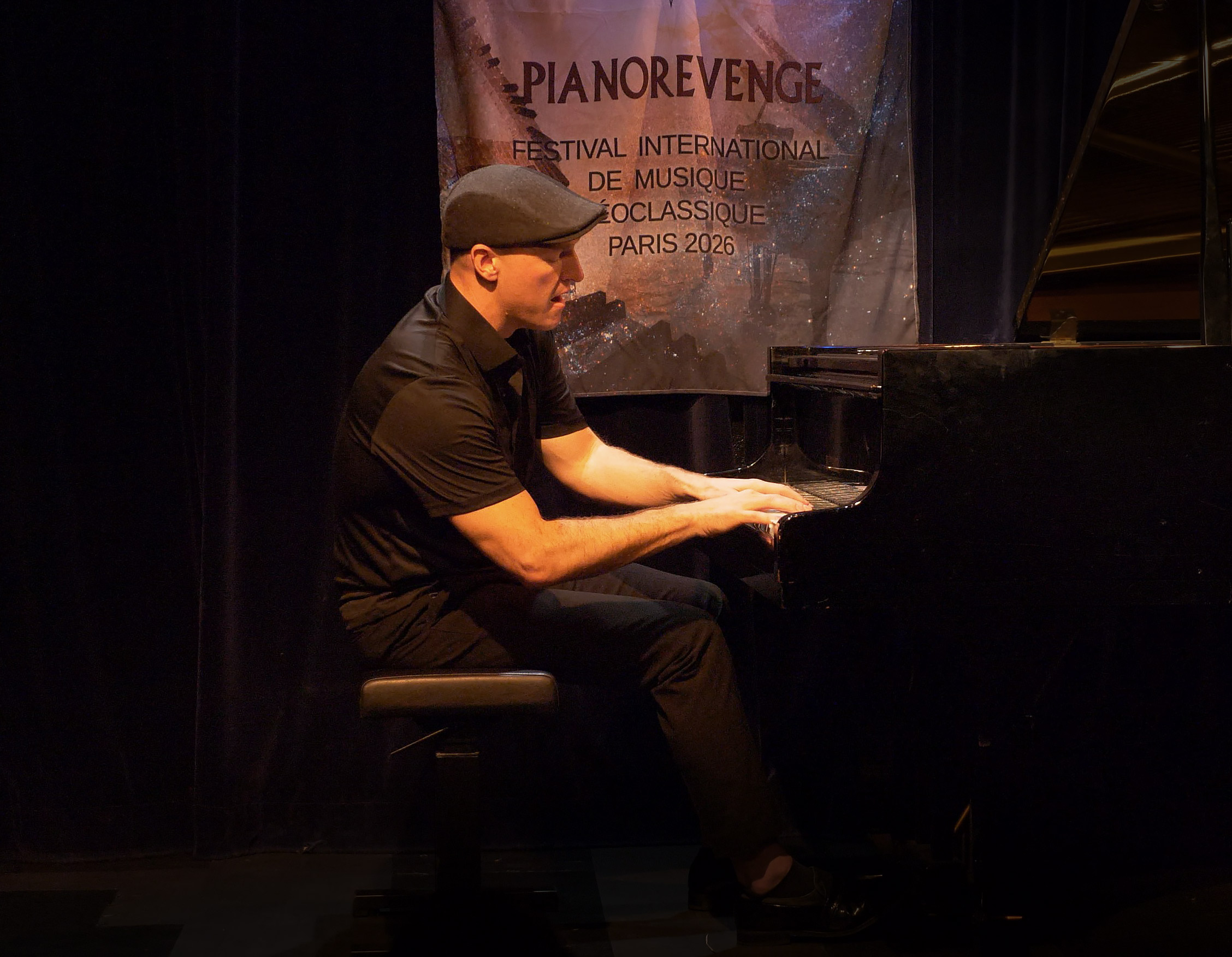
PRM: “Every pianist has a unique story of how they first fell in love with the instrument. Could you share a bit about your musical journey? What first drew you to the piano, and who or what has been the most significant influence on your development as an artist?”
I grew up in a very small town in South Dakota called Canistota – around 700 people. No stoplights. No roadmaps. Just open skies, hot summers, long winters, and a feeling that the world existed somewhere far beyond the edge of grassy fields.
Music always seemed to be there, but it didn’t truly begin for me until I was about twelve years old. Ironically, six months earlier, my grandfather had passed away. He was a tremendous piano performer – the kind of person who could walk into a room and bring people together through presence and emotion, or so I’ve been told. He played ragtime songs at dances and weddings, entertaining all who wanted to gather around a piano. I never had the chance to hear him play.
That said, I remember sitting down at the piano and feeling something that could not be logically explained. It felt less like “learning an instrument” and more like discovering a new path. From that point forward, the piano became both a refuge and an instrument for forming new pathways.
I did not come from a place where it made sense to become a musician. There were no connections. No elite conservatories. No wealthy backing. No blueprints. Much of my journey has been built on instinct, persistence, and an unwillingness to let logic define possibility.
George Winston had a massive impact on me early on. His music struck me – especially his song “Thanksgiving” – as I was driving down a gravel road and heard it for the first time on the radio. Years later, I would have the opportunity to speak with him and ask about his amazing career before he, too, passed away.
Over the years, I have realized that my career has never been built traditionally. It has been built through risk-taking, intuition, emotion, and pushing beyond what people around me believed was realistic. Many of the most important decisions in my life made no sense at the time. But almost all of the most beautiful and life-changing moments came when I followed those “illogical musical pathways.” For me, art rarely moves forward through comfort. Sometimes you simply feel called toward something, and even if it scares me, I try to walk toward it.
PRM: “Your work as a pianist and composer is deeply personal. Could you tell us about the artistic journey behind the pieces you will be performing at Piano Revenge Days? What emotions or stories are you hoping to share with the audience through your piano art?”
The music I will be performing at Piano Revenge Days comes from a very personal place. These compositions are tied to memory, longing, distance, hope, grief, wonder, and the strange beauty of being human. I hope to make people feel something they may not have had words for before, or sense an energy coming from the compositions that might impact them in their own personal way.
A lot of my recent work has been shaped by movement – physically and emotionally. Traveling has increased dramatically, not only performing in historic venues but simply standing in places I have never been. It changes you. My compositions live somewhere between hope and fear. They are often quiet conversations more than grand statements. I want listeners to feel like they are remembering something from their own life while hearing the music, even if they cannot explain why.
There is also a deeper thread running through the work: the idea of pushing beyond visible limitations – that tension between what the world says is realistic and what the human spirit quietly believes is possible. That’s where I want to let the notes live.
At Piano Revenge Days, I hope the audience experiences more than just a performance. I hope they feel presence. Reflection. Maybe even permission – permission to continue chasing the thing inside themselves that does not fully make sense yet.
PRM: “Piano Revenge Festival is a unique, hundred percent independent event that brings together artists and audiences in intimate, rare and beautiful settings. What drew you to this project? What do you find special about being part of a festival where the focus is purely on art, community, and the love of piano music?”
What drew me to Piano Revenge Festival is precisely what makes it rare in today’s world: authenticity. It is unafraid to present the immense diversity of an instrument.
So much of modern music culture has become driven by algorithms, metrics, speed, and constant noise. Piano Revenge feels like the opposite of that. It feels human. Independent. Intentional. It reminds me that music still has the power to gather people together – from all countries – in meaningful spaces simply because they love music and they love art.
I also deeply respect the courage behind creating a one hundred percent independent festival. I understand what it means to build something without guarantees, without massive backing, and without waiting for permission from the industry. These kinds of environments often create the most memorable performances because the audience arrives differently.
As an artist who has spent much of his career building outside traditional systems, I feel very connected to this festival. There is an artistic confidence in it. Not rebellion through opposition, but through sincerity. Through choosing depth in a world constantly asking us to become more superficial.
PRM: “Vienna is a city with an unparalleled musical legacy – from Mozart and Beethoven to the modern avant-garde. What does performing in the heart of the Innere Stadt, just steps from the Hofburg Palace, mean to you personally? How does the spirit of Vienna influence your music or your approach to this performance?”
Performing in Vienna honestly feels surreal to me. You hear the names Mozart and Beethoven and imagine this distant world where these titans of music shaped history itself. Somehow, life keeps carrying me into these extraordinary places.
There is something deeply emotional about performing near the Hofburg Palace, surrounded by centuries of artistic history. Vienna does not treat music as background noise. Music lives in the architecture, the streets, the atmosphere. You can feel the weight of generations of artists who devoted their lives to expression.
Vienna is a reminder that art can outlive everything else. Empires change. Technology changes. Culture changes. But a melody capable of moving the human heart can survive beyond a lifetime.
PRM: “Looking beyond this October, what are the dreams or projects that are currently inspiring you? Is there a particular composition you hope to complete, a collaboration you are dreaming of, or a musical boundary you are eager to explore next?”
It feels as though I am standing in the middle of a very transformative chapter creatively.
For years, I built quietly. My first album was released in 1999. In 2000, I bought and founded SoloPiano.com. In 2015, I started my podcast, Going Solo. Now, many of those years are beginning to converge at once – touring, expanding, connecting with diverse audiences. It feels less like arriving somewhere and more like the beginning of something else.
I hope to be a part of continuing to push the emotional and visual boundaries of what modern piano performance can become. I am very interested in creating experiences that combine music, atmosphere, storytelling, architecture, and location in ways that feel immersive and unforgettable.
At the core of everything, though, I want to keep creating honestly. I never want to lose the part of myself that sat at a piano years ago and was so excited to play and discover.
I am still excited to play and discover.
And perhaps that is one of the things it is all about – the feeling that despite everything that has already happened, the story may only be beginning.