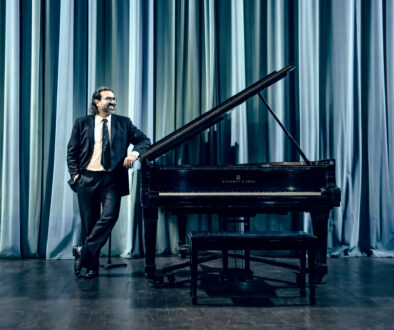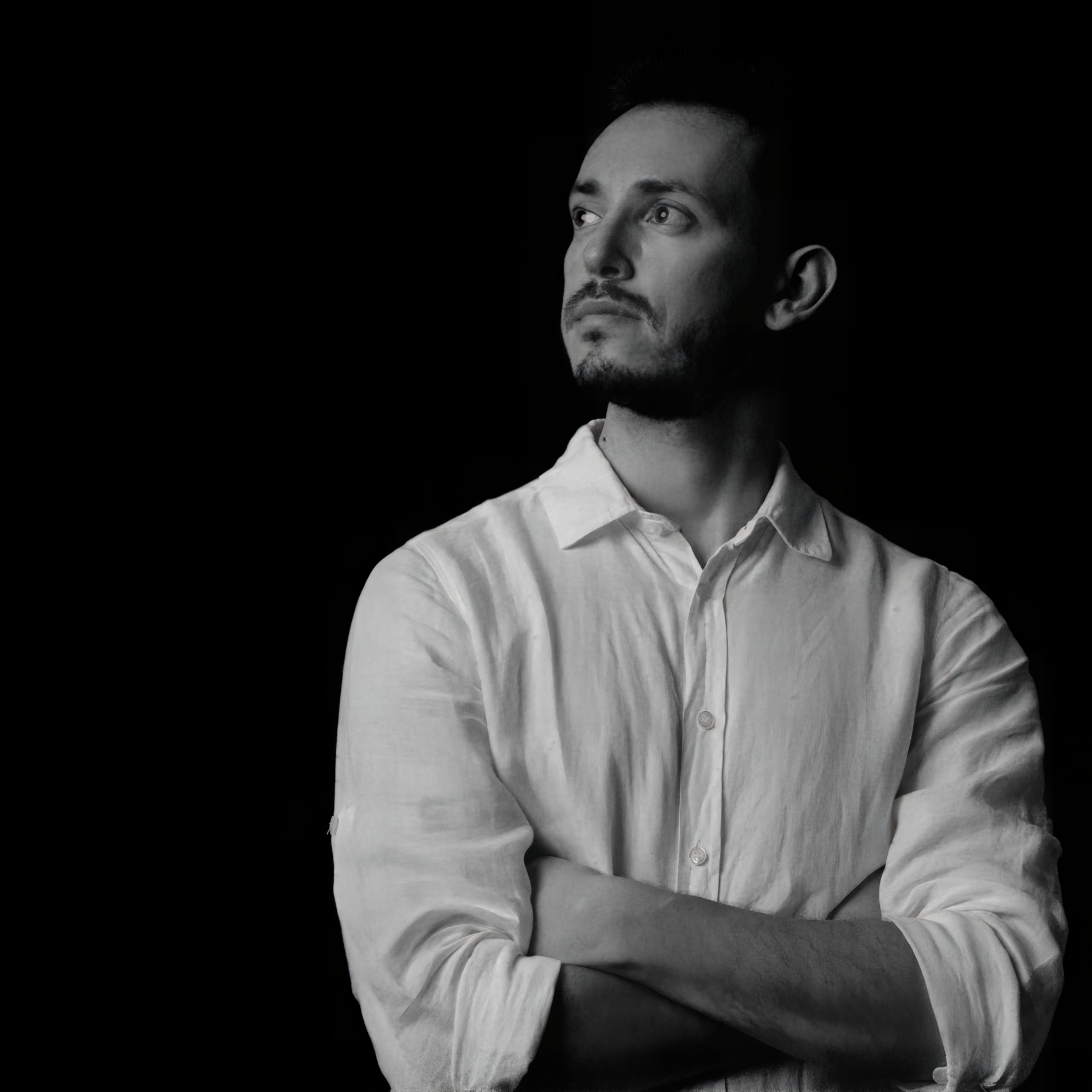
The Pianist Who Came to Listen: A Conversation with Girolamo Parisi
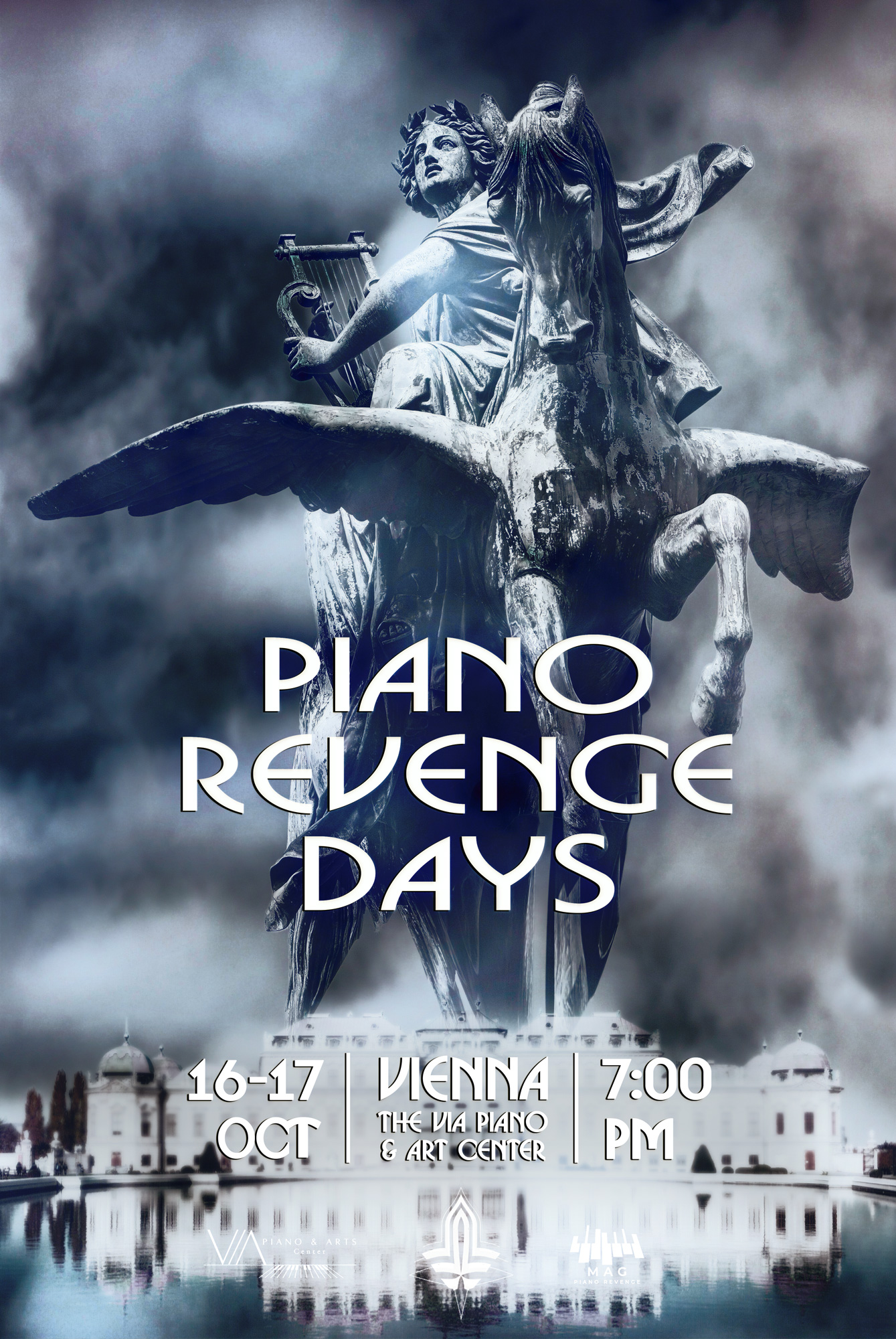
As we prepare to announce the artists for our upcoming Piano Revenge Days in Vienna this October, we begin with a figure who embodies the very essence of this event: a dialogue between the pianist and the city that has shaped the soul of classical music.
Girolamo Parisi’s words capture something profound – not merely the anticipation of a performance, but a deep reverence for Vienna’s living legacy. For him, stepping onto a stage in the Innere Stadt, near the Hofburg Palace, is not an act of conquest but an act of conversation. It is a chance to listen to the echoes of Mozart, Beethoven, and Schubert, and to respond with his own voice, humble yet unafraid.
His approach is rare in our fast-paced world. He does not rush to the stage and depart. He intends to stay, to wander, to absorb the city’s art, its culture, its quiet corners. He understands that a true performance is not just what happens at the keyboard, but what happens in the days before – the walks, the silences, the moments of discovery that shape the music yet to be played.
This is the spirit we wish to honor with Piano Revenge Days: not revenge as retribution, but as a reclaiming of meaning. A return to what matters. A pianist who plays not to impress, but to connect.
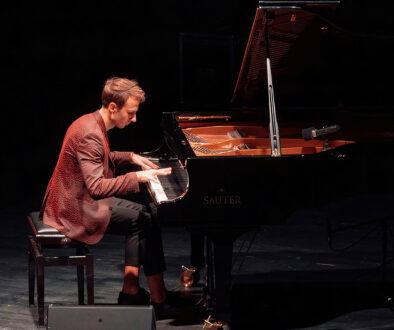
We are honored to welcome Girolamo Parisi to Vienna!
PRM: “Every pianist has a unique story of how they first fell in love with the instrument. Could you share a bit about your musical journey? What first drew you to the piano, and who or what has been the most significant influence on your development as an artist?”
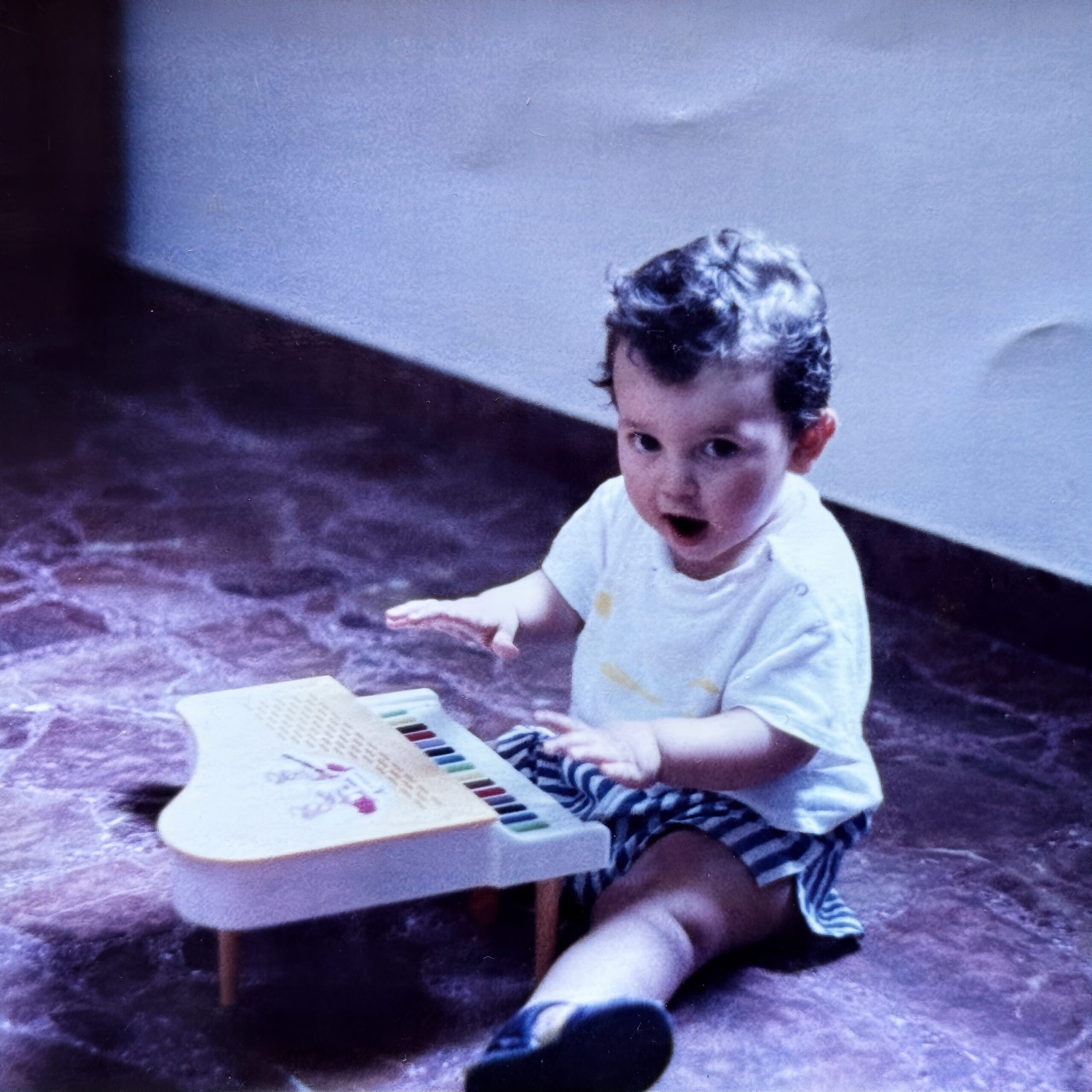
My story with the piano began very early, almost before my own memories. I was about a year old when my father gave me a small toy piano. There’s a photo from that moment: I’m sitting on the floor, my hands hovering near the keys, as if that little instrument had already entered my world in the most natural way.
Even as a child, I had a strong pull toward music. I’m told I would listen to songs on television and try to play them by ear on my little piano. It was completely spontaneous and instinctive – as if sound had always been a natural language for me.
My father often said that one day he would send me to the Conservatory. Sadly, he passed away after a work accident when I was only 23 months old, but that first connection with the piano stayed with me. As the years went by, that early curiosity slowly turned into a real passion, then study, discipline, and eventually an artistic path.
Around the age of 15, I composed one of my first pieces, called ‘Se fosse ieri,’ dedicated to him. The piece came from the thought of what it might have felt like to have my father beside me – to feel his presence, his affection, and that sense of protection a child can receive from a father. In that moment, I began to understand that the piano could become a way to give shape to deep emotions that are difficult to put into words.
I later studied piano at the Conservatory, where the instrument became more and more central to my musical identity. Today, for me, playing the piano means transforming emotions, memories, and inner images into music.
PRM: “Your work as a pianist and composer is deeply personal. Could you tell us about the artistic journey behind the pieces you will be performing at Piano Revenge Days? What emotions or stories are you hoping to share with the audience through your piano art?”
My piano art always comes from an inner experience. When I compose, I never start from a musical structure alone. I begin with an image, a memory, a feeling – a moment in life that I feel the need to turn into sound.
The pieces I will perform at Piano Revenge Days represent different parts of my artistic and personal journey. In some compositions there is melancholy, in others rebirth, and in others the desire to capture a fragile emotion before it fades away. For me, the piano becomes an intimate voice – able to express what words often cannot.
Through my music, I would like to share with the audience a simple but deep emotional journey. I am not just trying to perform pieces. I want to create a sincere moment of listening, where each person can find something that connects with their own story, their own memories, and their own sensitivity.
PRM: “Piano Revenge Festival is a unique, hundred percent independent event that brings together artists and audiences in intimate, rare and beautiful settings. What drew you to this project? What do you find special about being part of a festival where the focus is purely on art, community, and the love of piano music?”
What drew me to Piano Revenge Days is precisely its independent and authentic nature. In a time when music is often tied to numbers, algorithms, and the speed of digital content, I find it very meaningful to be part of a project that puts art, listening, and the human connection between artist and audience at the center.
For me, the piano also needs intimate spaces – places where every sound can truly be heard. The idea of performing in a refined, intimate setting dedicated to piano music allows me to return to the purest essence of performance: sharing emotions through sound, without filters and without distance.
Being part of an independent festival also means joining a community of artists who believe in the deep value of music. That’s why I see my participation not just as a concert, but as an artistic and human investment. It’s an opportunity to bring my music to a special place, to meet new sensibilities, and to contribute to a project built on a sincere love for the piano.
PRM: “Vienna is a city with an unparalleled musical legacy – from Mozart and Beethoven to the modern avant-garde. What does performing in the heart of the Innere Stadt, just steps from the Hofburg Palace, mean to you personally? How does the spirit of Vienna influence your music or your approach to this performance?”
Performing in Vienna holds a very special meaning for me. It’s a city that every pianist feels almost as a symbolic place, because it carries an immense musical history – made up of great composers, concert halls, tradition, elegance, and artistic depth.
To perform in the heart of the Innere Stadt, just steps from the Hofburg Palace, means entering into a dialogue with an important part of European musical history. I don’t see it only as a concert, but as a moment of deep respect for a city that has preserved and inspired some of the most important pages of classical music.
I’m also very curious to visit Vienna and experience its artistic atmosphere. I’ll stay for a few days to truly feel the city, to discover its places, its culture, and its art. For me, this experience represents a special opportunity – not only as a pianist, but as a person.
The spirit of Vienna encourages me to approach this performance with greater attention, depth, and awareness. I would like to bring my music with simplicity and sincerity, allowing the piano to tell my inner world in a place where music has always had such a powerful voice.
PRM: “Looking beyond this October, what are the dreams or projects that are currently inspiring you? Is there a particular composition you hope to complete, a collaboration you are dreaming of, or a musical boundary you are eager to explore next?”
Looking beyond this October, I feel that one of my most important goals is to keep bringing my original music to international stages. After Vienna, I’ll also have the chance to take part in the Piano Revenge Festival in Paris next year, and that makes my journey with this project even more meaningful to me.
Right now, I feel very inspired by the idea of expanding my personal repertoire and giving more space to my artistic identity. By the end of the year, I’m planning two special releases – each conceived as a trilogy – along with two additional singles. I’m also working on a new album of around eight pieces, which I hope to complete by the end of the year.
I want to keep writing music that comes from real emotions, personal experiences, and inner images, always keeping the piano at the center of my language. For me, each new composition is part of a larger journey – one shaped by memory, transformation, and emotional exploration.
One of my dreams is to create a stronger connection between live music, professional recordings, and the digital world. Through social media, I’ve reached a very wide audience, but my real desire is to turn that online connection into actual artistic experiences: concerts, collaborations, and authentic moments of listening.
The musical boundary I’d like to explore is exactly this: bringing together the depth of neoclassical piano music with a modern way of communicating – one that can reach people directly and emotionally. For me, the future means continuing to build a path where composition, performance, and sharing can all grow together.