A piano chord lasts seconds. Angelina cares about what comes after.
“The piano is not the destination. It is the beginning.”
A piano chord lasts for seconds. Angelina Yershova is interested in everything that happens after that. A piano chord lasts for seconds. Angelina Yershova is interested in everything that happens after that.
The resonance in the room. The silence around it. The sensation in the body. The image it creates. The space it seems to open. This is where her music begins to leave the conventional geography of the piano.
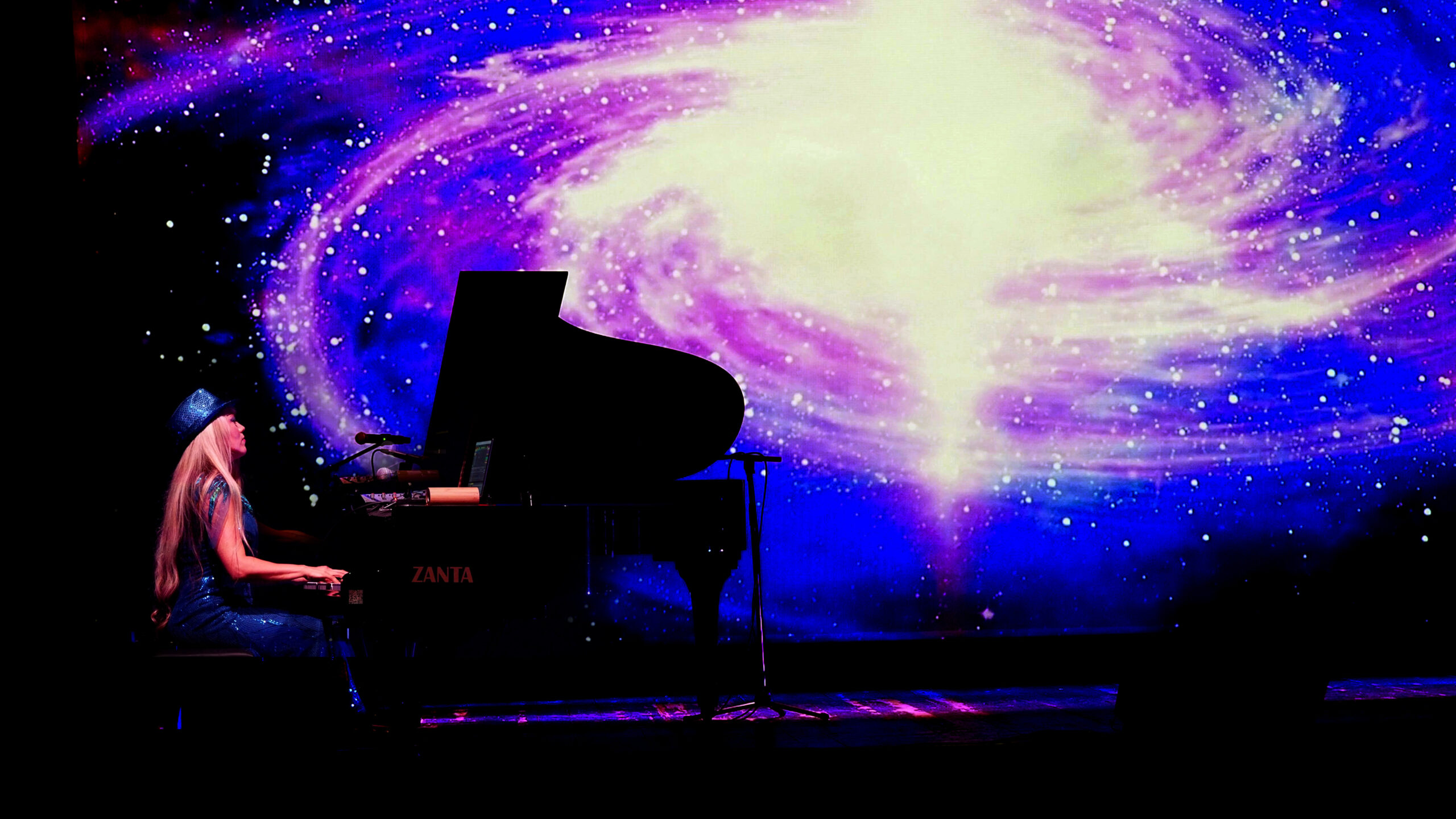
Her work has gradually grown into a meeting place for acoustic piano, electronics, improvisation, visual imagination and the science of the cosmos. Yet beneath all this technology and experimentation remains something remarkably physical: a human being at a piano, listening for what a sound might become once it is no longer confined to the moment in which it was played.
That tension — between the intimate and the infinite — is perhaps the most revealing thread running through Yershova’s musical evolution.
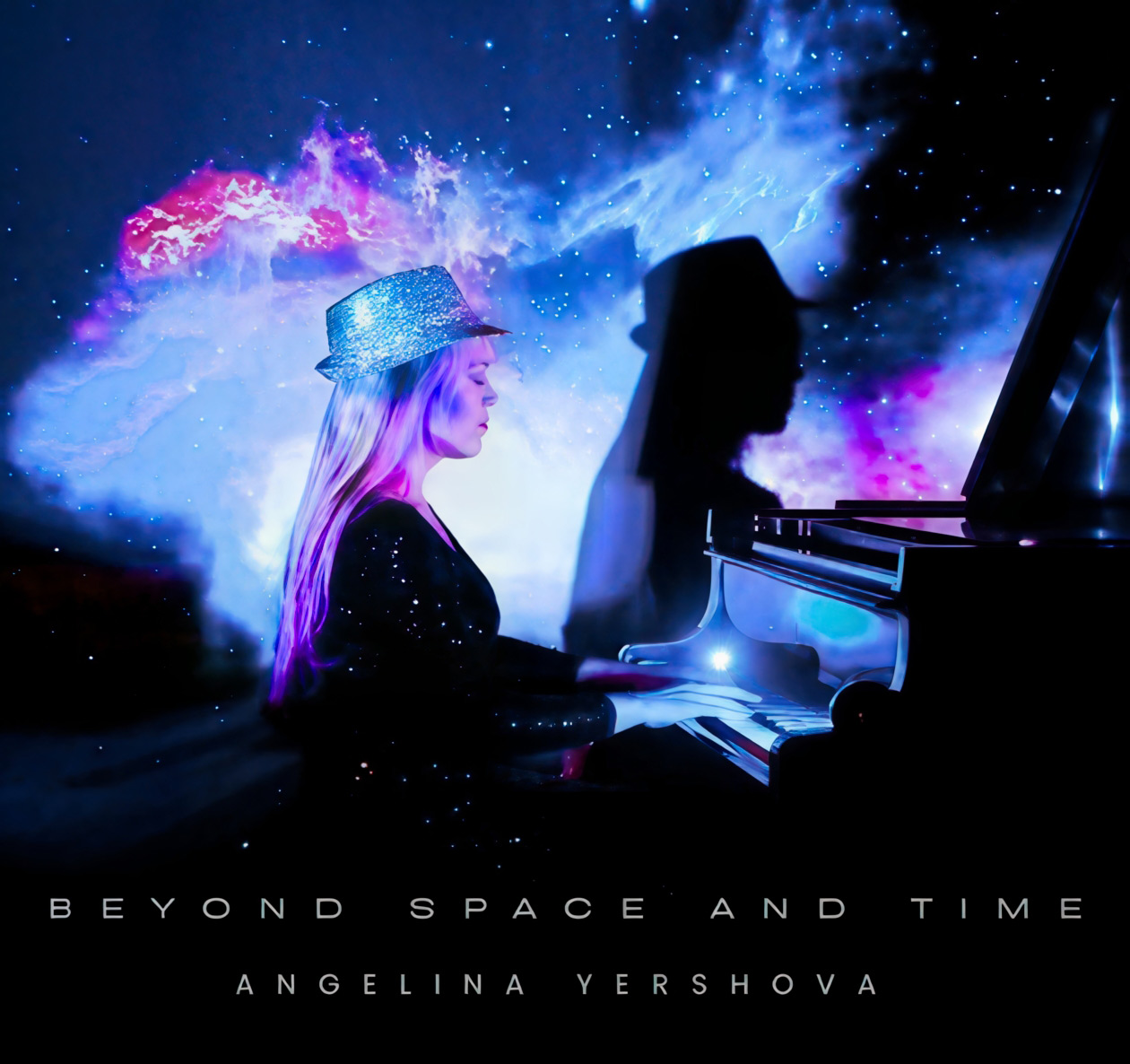
Across her discography, the piano gradually becomes less a fixed instrument and more a living source of sound — something that can be stretched, transformed, surrounded by electronics, immersed in ambience and ultimately expanded into an entire sonic environment. Her newest release, “Beyond Space and Time,” continues that evolution, bringing her long-running fascination with the cosmos into particularly clear focus.
Released in June 2026, the single is presented as the first piece from Yershova’s new Piano ASTROCONCERT project. It combines acoustic piano with electronic processing, creating what the project describes as a dialogue between sound, light, space and contemplation.
From the piano’s depths
To understand where Yershova is now, it is worth going back to Piano’s Abyss (2016).
The album represents one of the most radical stages in her exploration of the instrument. Rather than treating the piano simply as a vehicle for melody and harmony, Yershova investigates its physical identity: strings, vibrations, resonances, pedals, hammers and mechanical sounds are electronically processed and transformed into drones, textures and evolving sonic landscapes. The project even gave rise to her description of this approach as “piano drone music.”
What makes this period important in retrospect is that the electronic element does not replace the piano. It reveals another piano — one hidden inside the familiar instrument.
That idea continues into Resonance Night (2017), where the relationship between acoustic piano and electronic manipulation becomes more rhythmic and dynamic. Contemporary commentary on the album noted Yershova’s ability to turn processed piano material into something resembling a rhythm machine while retaining the expressive qualities of her live playing.
From abyss to mirage
With Piano Mirage (2020), the atmosphere changes.
The emphasis moves toward what Yershova calls “sonic paintings”: shorter, colourful pieces situated between fantasy and reality, with the piano becoming a vehicle for imagination and atmosphere. The album includes fourteen compositions, with violin appearing on selected tracks.
This is an important contrast within her evolution. The earlier work asks us to look inside the piano; Piano Mirage seems more interested in asking where the piano can take us.
That movement outward continues through CosmoTengri (2019) and Time of Change (2022), before reaching another distinctive stage with Harmony Awakening in 2025. Spotify currently lists Harmony Awakening as her latest album/EP before the 2026 single, while her discography also includes Blind Rain, Piano’s Abyss, Resonance Night and Piano Mirage.
Harmony Awakening: another kind of listening
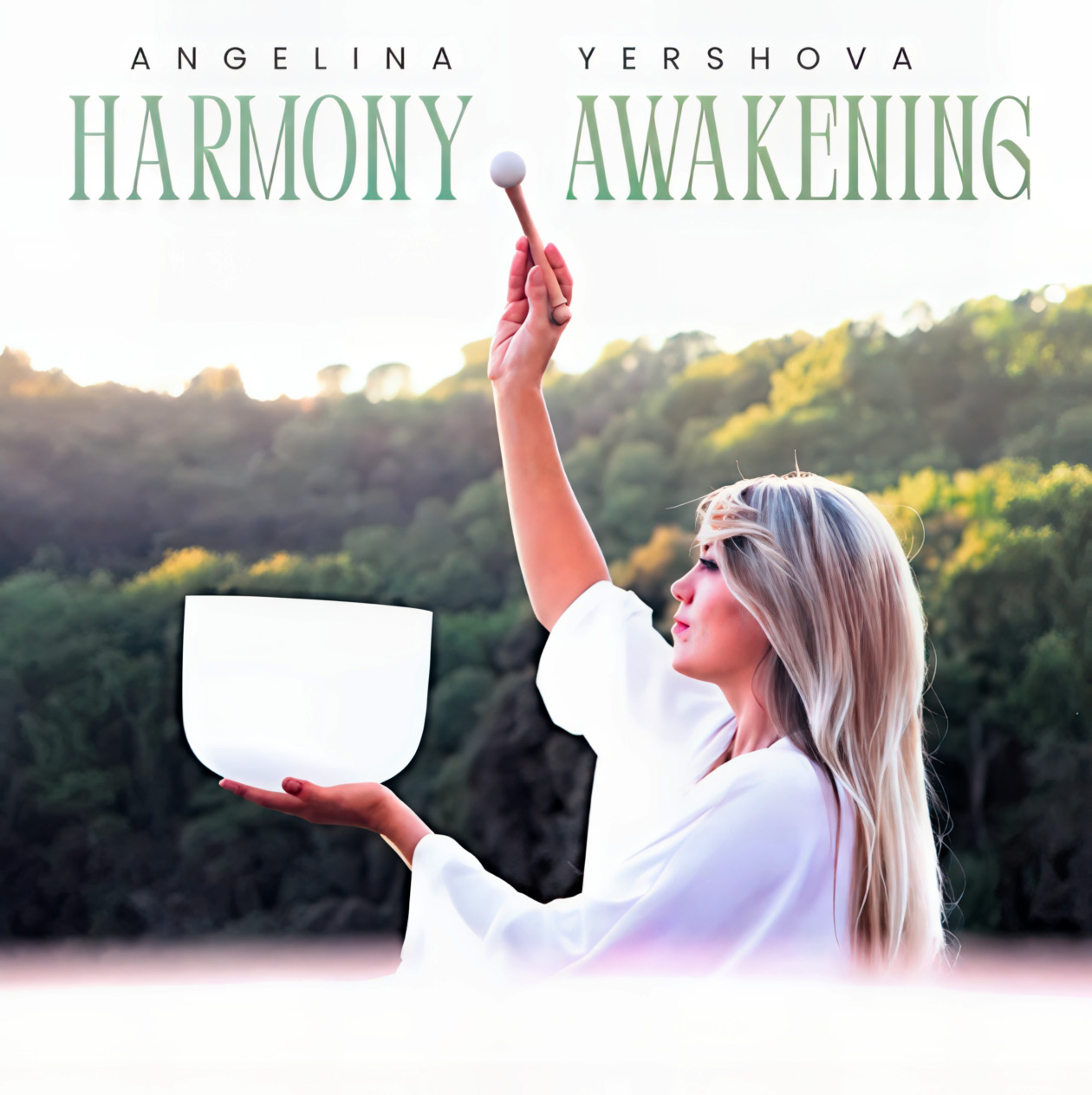
Harmony Awakening introduces an especially different sonic vocabulary.
Here, delicate piano is placed alongside crystal singing bowls, voices and orchestral textures, creating an atmosphere suspended between ambient music, neoclassical composition and meditation.
The album’s five tracks — including “Beyond the Dreamline,” “Renewed,” “Union of Hearts,” “Journey Waves” and the title track — reveal an artist increasingly interested in music as an immersive environment rather than simply a sequence of compositions.
It is perhaps this widening conception of music that makes the arrival of “Beyond Space and Time” feel so natural.
The new single: Beyond Space and Time
The new single takes Yershova back toward the territory where piano, electronics and cosmic imagery intersect.
The concept behind Piano ASTROCONCERT dates back to her work with astronomical imagery and immersive performance, and the new single is described as the first release from this renewed project. Piano and live electronic processing are placed together not as opposing forces, but as two dimensions of the same musical space.
The result is less about conventional song form than about expansion.
The acoustic piano provides the human centre. Electronics extend its resonance beyond the immediate physical sound. Space becomes not merely a subject but a compositional idea: distance, suspension, movement, light and silence.
And that is perhaps the most interesting thread running through Yershova’s career.
She has repeatedly taken something recognisable — the piano — and asked what happens when we refuse to accept its conventional boundaries.
A piano as an inner compass
Yershova’s artistic evolution can therefore be heard almost as a series of changes in scale.
First, she looks deeply into the instrument.
Then she transforms its sound.
Then she creates landscapes around it.
Then she connects those landscapes to nature, consciousness and finally to the cosmos.
Her background helps explain this unusually broad musical vocabulary. Trained in piano and composition in Kazakhstan and later in electronic music in Rome, she has developed a practice that moves between classical performance, composition, improvisation, electronics and multimedia work. Spotify describes her as a composer, pianist, producer and sound artist whose work bridges tradition and innovation.
Her own earlier reflections on improvisation are revealing: she has described composition and improvisation not as opposites, but as two possibilities that can meet within the same creative process. That openness remains central to her music.
Beyond genre
The temptation with Yershova is to place her somewhere between neoclassical, ambient, electronic, experimental and contemporary piano music. All of those descriptions contain something true, but none completely defines the work.
Her music is perhaps more accurately understood as an ongoing investigation into what the piano can become.
And Beyond Space and Time feels like another step in that investigation. It is a fitting new chapter for an artist whose work has moved from the abyss of the piano toward the vastness of the cosmos — without ever abandoning the physical intimacy of a human being sitting at the keyboard.
For Piano Revenge MAG, that makes Angelina Yershova particularly fascinating: her evolution is not a departure from the piano, but a continuous attempt to discover how far the piano can travel.
And perhaps, with “Beyond Space and Time,” the journey is only beginning.