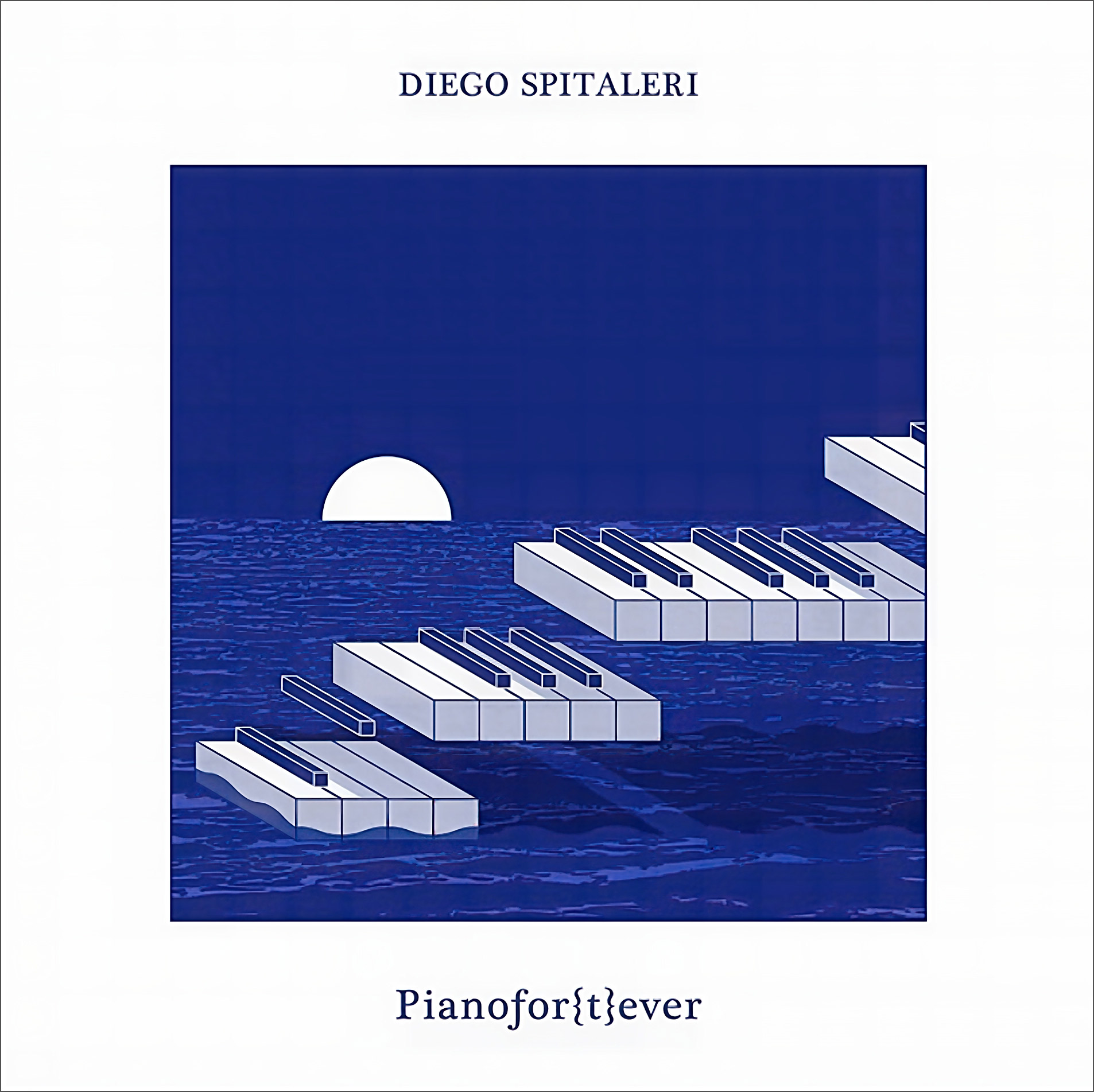
Diego Spitaleri — Pianofor(t)ever
The piano does not describe the world. It remembers it.
A Mediterranean Grammar of Memory. There is a particular kind of musical maturity that does not announce itself through virtuosity, density or grand gestures, but through the precision of what an artist chooses to leave unsaid. In Diego Spitaleri’s music, the piano becomes precisely such a space: a place where decades of jazz, improvisation, Mediterranean memory and compositional experience are distilled into sound that feels intimate without ever becoming small.
This is the paradox at the heart of Spitaleri’s solo work. The music can sound immediately accessible while resisting any single stylistic definition. Jazz, neoclassical writing, ambient music, Mediterranean song and improvisation are all present, but none completely explains what happens when Spitaleri sits at the piano.
The explanation may lie elsewhere: in a lifetime of listening.
Born in Palermo in 1959, Spitaleri began his concert career in 1979 and has spent more than four decades moving through jazz, ethnic music, gospel, Brazilian music, classical traditions, theatre and improvisation. His career includes more than 2,500 concerts, teaching in jazz piano and improvisation, and compositions for theatre and audiovisual projects. His first CD, Mediterranea Suite, appeared in 1992.
Yet the most revealing chapter of that history may be the one in which he increasingly reduced the instrumentation to a single instrument.
The result was not a retreat from his previous musical life. It was its distillation.
The road toward one instrument
It is tempting to hear Pianofor(t)ever simply as a contemporary solo-piano album.
That would undersell it.
Released in 2017, the album is better understood as the work of a musician who had already spent decades learning what happens when musical languages meet. Jazz gave Spitaleri improvisation and harmonic freedom; gospel brought another relationship with repetition and emotional intensity; Brazilian music contributed rhythmic fluidity; Mediterranean traditions supplied a particular relationship with melody, landscape and memory.
By the time these influences reach the solo piano, they no longer appear as separate references.
They have become grammar.
That is why the apparent simplicity of Spitaleri’s writing can be deceptive.
Simplicity here is not the absence of information. It is the consequence of information having been absorbed.
An experienced ensemble musician knows how to listen to the space occupied by others. An improviser knows when a phrase needs to continue and when it needs to disappear. A composer understands how repetition changes meaning. A theatre musician understands that atmosphere can communicate before narrative does.
Spitaleri brings all of these forms of listening to the piano.
The instrument has to carry melody, harmony, rhythm, silence and emotional perspective simultaneously. He allows it to.
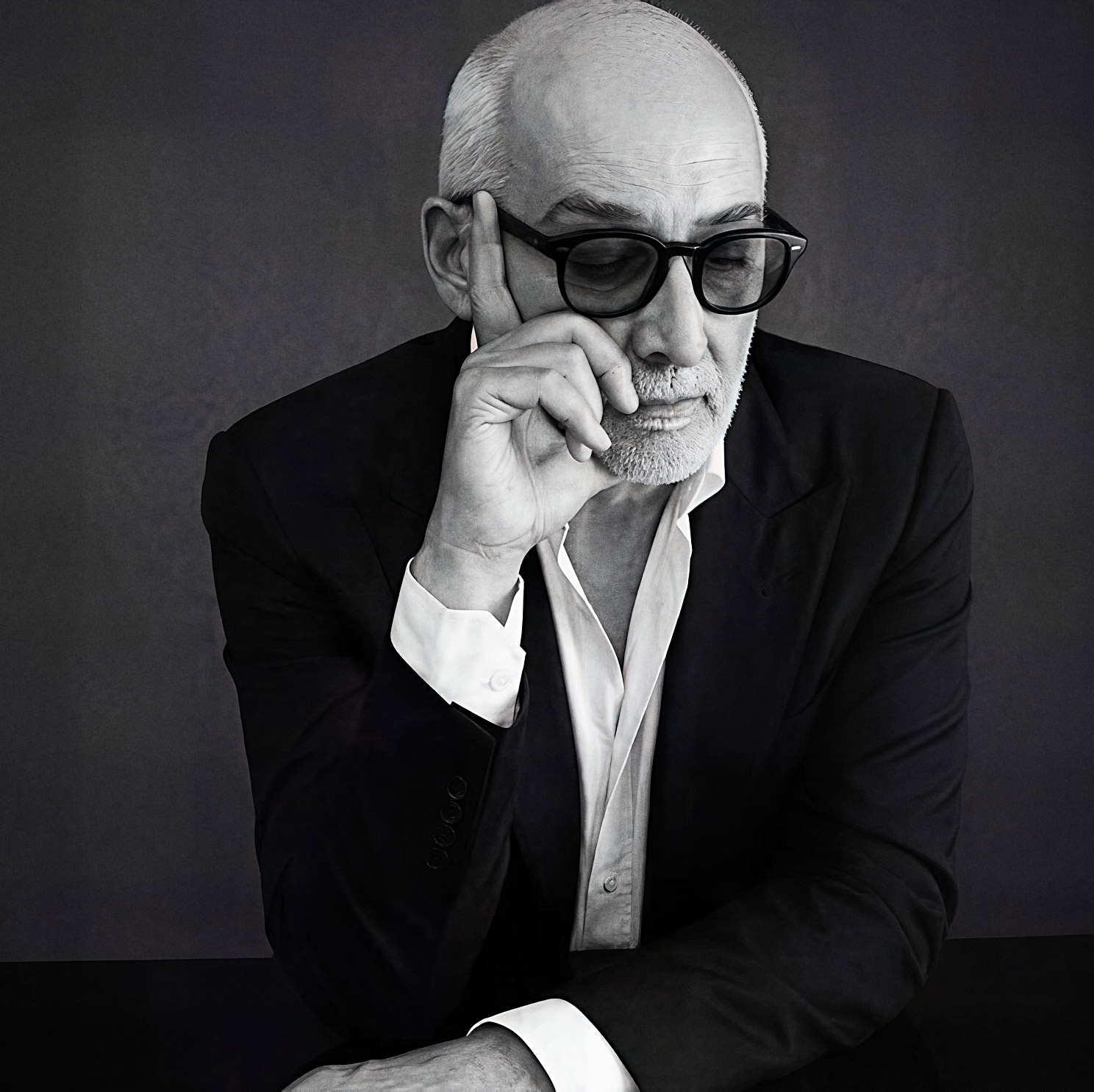
Thirteen rooms
Pianofor(t)ever contains thirteen original compositions, including Lanterne, Itaca, The Sound of Sand, the title track Pianofor(t)ever, L’altalena, Il distacco, L’attacco, Genesi, La danza del mare, All’improvviso, Alternanze, Aghi di pino and Ti cerco.
The titles reveal something important about Spitaleri’s imagination. Lanterns. Sand. The sea. Pine needles. Birth. Separation. Searching.
These are not abstract musical concepts. They are images, physical states and emotional conditions.
Spitaleri does not necessarily attempt to illustrate them. Instead, he asks what they might feel like.
That distinction is crucial.
In The Sound of Sand, for example, the subject is inherently resistant to literal musical representation. Sand has no melody; its movement depends on pressure, wind and gravity. The compositional challenge is therefore not imitation but translation.
Throughout Pianofor(t)ever, landscape becomes gesture, physical movement becomes rhythm, and memory becomes harmonic colour.
The piano does not describe the world.
It remembers it.
“Itaca”: departure and return
Among the album’s titles, “Itaca” carries particular symbolic weight. The reference to Ithaca evokes departure, distance and return, but also the idea that the journey itself changes the traveller.
That metaphor fits Spitaleri’s career unusually well.
Sicily is a place shaped by movement. The Mediterranean has always been a geography of crossings, exchanges and cultural encounters. Spitaleri himself describes the Mediterranean as a central source of his artistic identity, a sea of encounters, cultural contaminations and ancient stories.
Yet he does not turn this heritage into musical decoration.
There is no need for folkloric quotation.
The Mediterranean appears more subtly: in the spaciousness of a phrase, the warmth of a melodic contour, a rhythmic impulse, or the tension between melancholy and openness.
His music does not need to announce that it is Sicilian.
The music already knows.
The improviser beneath the surface
Spitaleri’s jazz background is essential to understanding the freedom inside his compositions.
He is not a classical pianist who later incorporated jazz as an influence. Jazz has been part of his musical vocabulary for decades, both as a performer and teacher.
That history changes the meaning of his restraint.
For an improviser, silence is not simply an interval between phrases. It is a possibility.
Spitaleri’s melodies often leave room for that possibility. A phrase may return without needing to return identically. A harmonic colour may linger. Repetition can feel organic rather than mechanical.
The compositions are clearly structured, yet they retain the breathing quality of music that has been shaped by improvisation.
This is one of the most compelling tensions in his work: form without confinement.
“Il distacco”: the art of leaving space
“Il distacco” — “the separation” — perhaps comes closest to articulating the emotional intelligence of Spitaleri’s writing. Melancholy in his music rarely becomes simple sadness. Instead, it remains open, allowing the listener to supply the memory.
Critic Gigi Razete described Il distacco as a genuine wordless song, while identifying the broader synthesis of jazz improvisation, swing, melody and Mediterranean roots within Spitaleri’s language. “Wordless song” is an apt description.
Spitaleri’s strongest melodies often behave like songs even without a singer. They breathe. They pause. They return. They approach resolution without always insisting upon it. The piano seems to remember the human voice.
“La danza del mare”: beyond the postcard
“La danza del mare” could easily invite cliché. Mediterranean music is frequently reduced to sunshine, sea, nostalgia and picturesque exoticism. Spitaleri’s music is more complex. The sea here is not scenery. It is movement.
It is rhythm, repetition and instability. It is a surface that never remains still. This is where his Mediterranean identity and jazz background meet most naturally. Both depend upon movement within structure. Improvisation is not chaos; neither is the sea.
There is a form inside the movement. The musician listens and responds.
A catalogue still in motion
Pianofor(t)ever should not be treated as a finished statement. It is the foundation of an ongoing solo language.
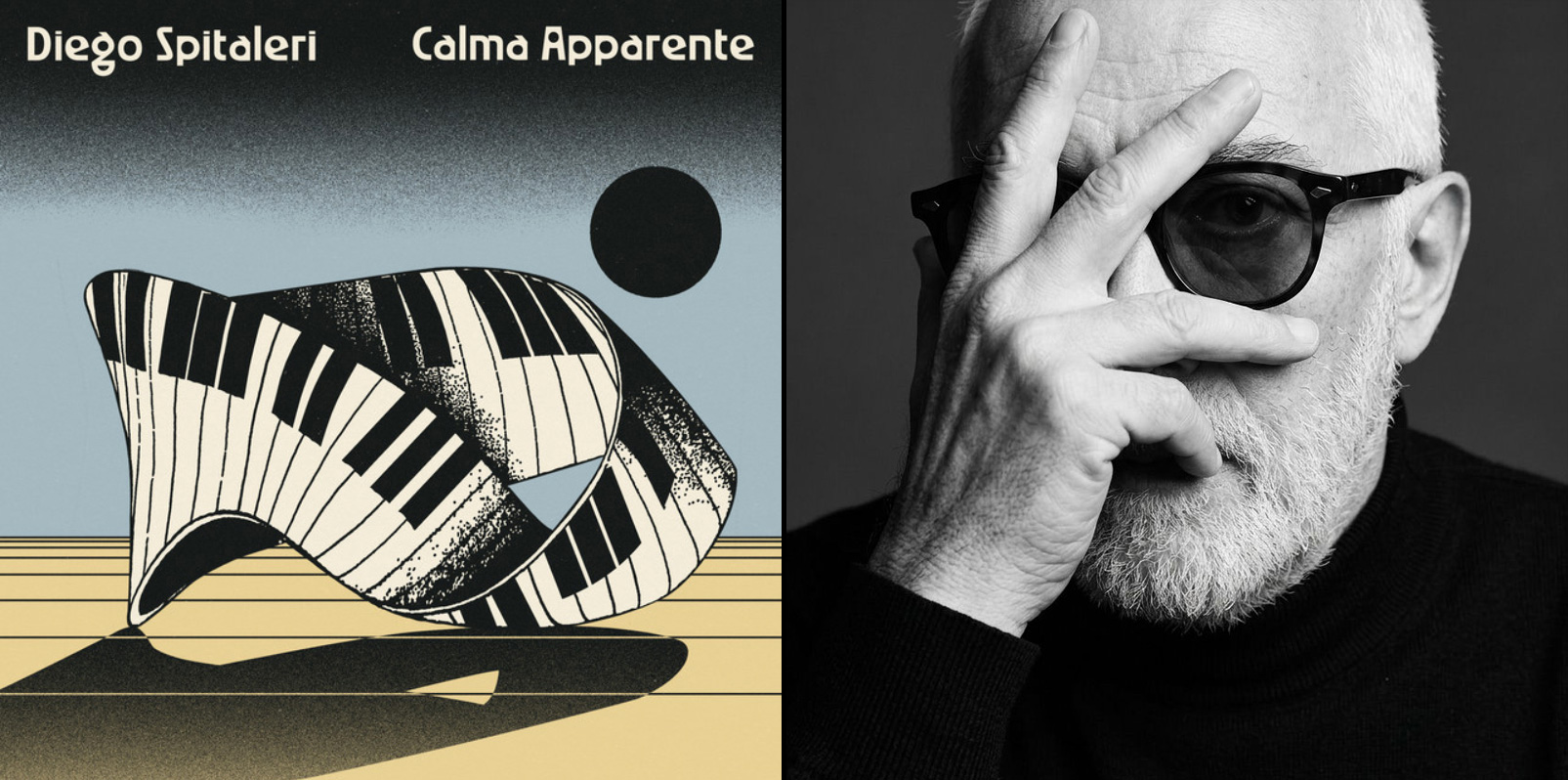
Since 2021, Spitaleri has increasingly released individual compositions, including The Prayer, State of Grace, Walking, Tarantella Lenta, Crepuscule, Astral Threads and, in 2026, Calma Apparente.
These later works extend rather than overturn the world established on Pianofor(t)ever. The single composition becomes a miniature: an autonomous emotional space that can establish its atmosphere, develop its idea and disappear before the listener has exhausted it.
Titles such as “Crepuscule” are revealing. Twilight exists between states — neither day nor night — and Spitaleri’s music repeatedly occupies such intermediate territory.
Between jazz and contemporary piano. Between composition and improvisation. Between landscape and emotion. Between intimacy and cinematic scale.
That is why the label “neoclassical,” although sometimes useful, is ultimately insufficient. It describes one surface of the music but not the musician underneath it.
The piano as memory
There is a recurring sensation in Spitaleri’s work that the piano is remembering something. Not necessarily a particular event.
A place. A person. A landscape. A journey. A moment that cannot quite be recovered.
This is why his titles and melodies work so closely together. Itaca. Il distacco. Ti cerco. La danza del mare. Crepuscule. They are emotional coordinates. The music moves between them. And here the Mediterranean becomes more than a geographical reference. It becomes a way of understanding memory itself.
Sicily is a landscape layered with civilizations, languages, architecture and traditions. Its history is not linear; it is accumulated. Contemporary life exists alongside traces of what came before.
Spitaleri’s music has something of the same archaeological quality. A contemporary phrase may carry an older emotional vocabulary beneath it. Nothing needs to be quoted literally.
It is already embedded in the way the music moves.
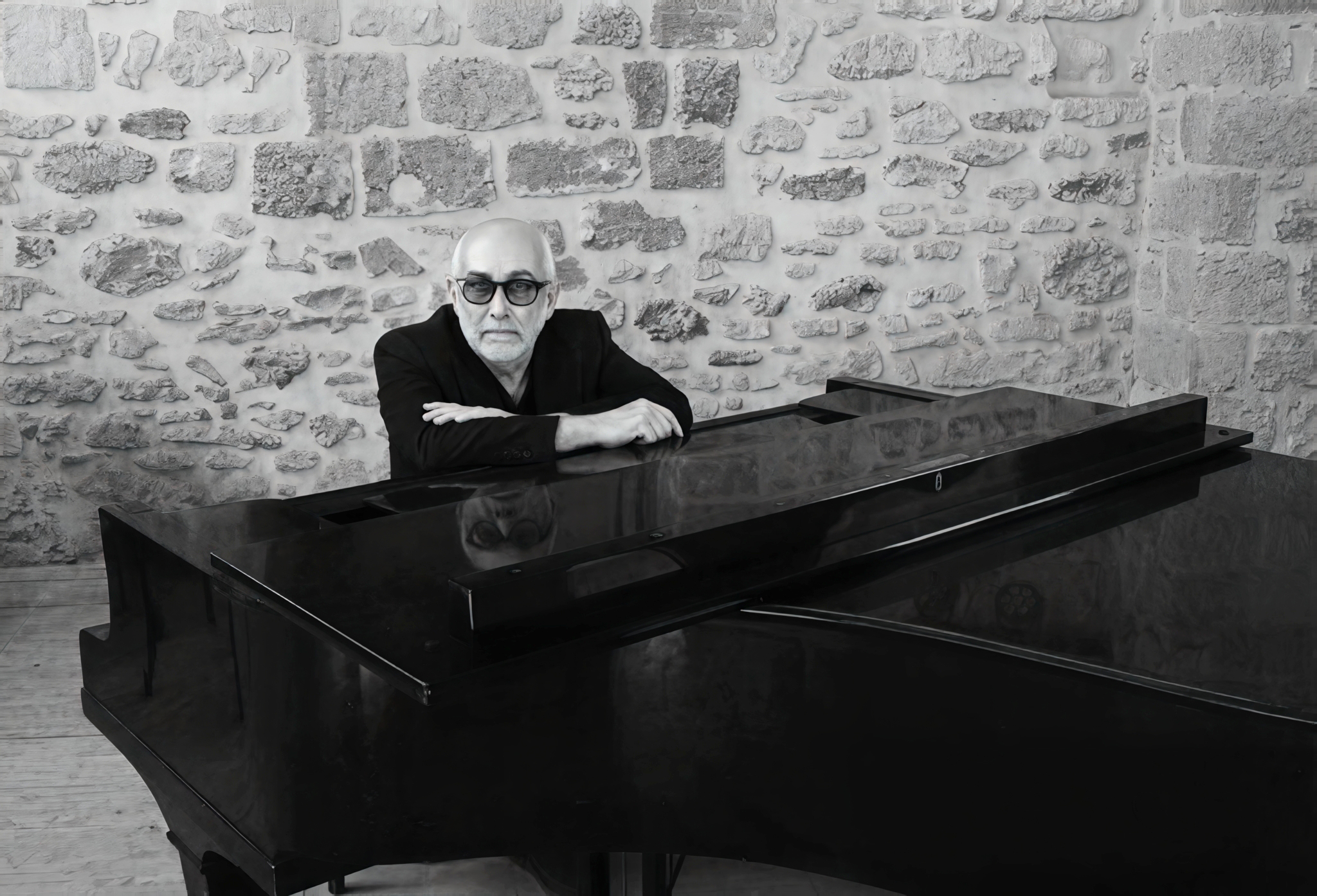
Diego Spitaleri and Piano Revenge
This is also where Diego’s relationship with Piano Revenge becomes significant.
His appearance in our Paris programme brought a distinctly Sicilian voice into an international gathering of pianists. His repertoire included Rose (Si maritau rosa), Respiro, Itaca, La danza del mare and Crepuscule, connecting established compositions with newer material. La Repubblica subsequently highlighted Spitaleri’s presence as a Palermo voice within the Paris festival.
The relationship has since grown beyond a single performance. Diego will continue with Piano Revenge in Vienna, London, and the main Paris edition in April 2027.
But the most personal chapter will take place in Marsala, Sicily, in November 2026.
Marsala is not simply another festival destination. It is Diego’s native territory.
Piano Revenge Days — Marsala brings international pianists and composers together at the Teatro Comunale Eliodoro Sollima, creating a meeting point between international contemporary piano and the cultural landscape of western Sicily.
For Piano Revenge, Diego’s role in this project goes beyond appearing on stage.
He has become a collaborator in the deeper sense of the word: someone helping create the connection between artists, audiences and place.
Independent festivals are built as much through these relationships as through their visible programmes. The stage is only the final expression of a much larger network of trust, communication and dedication.
Diego’s commitment to the Marsala project has been an important part of making that connection possible. And there is something fitting about this particular collaboration.
A pianist whose music has spent decades transforming Mediterranean experience into an international musical language is now helping bring an international piano community back into Sicily.
From Palermo outward — and back
The geography begins to resemble one of Spitaleri’s compositions.
Palermo. Paris. Vienna. London. Marsala. Departure. Movement. Encounter. Return. But return is not repetition.
The artist returns with new experiences, and the place receives them differently. That is one of the reasons international artistic exchange matters. It is not simply about putting different nationalities on the same programme. It is about allowing musical languages to affect one another.
Spitaleri’s work is particularly suited to that exchange because it has never been confined by a single musical border. His music travels naturally.
What remains
The most compelling quality of Diego Spitaleri’s music may be its refusal to insist on being memorable.
It simply leaves something behind. A melodic contour. A harmonic colour. The sensation of a landscape. A phrase that feels strangely familiar.
Pianofor(t)ever remains important because it captures the moment when decades of musical experience became concentrated into thirteen solo compositions: jazz, Mediterranean memory, improvisational freedom and contemporary piano writing occupying the same space without needing to explain themselves. But the album is not a monument.
Spitaleri is still writing. The more recent compositions continue the conversation rather than closing it. And perhaps that is the deeper meaning of Pianofor(t)ever.
Not that the piano lasts forever. But that a musical language can continue changing while remaining recognisably itself.
After more than four decades of music-making, Spitaleri has arrived at something deceptively simple: fewer instruments, fewer distractions, greater concentration.
The world enters through fewer notes. Sicily is there. Jazz is there. Memory is there. Improvisation is there. And increasingly, so is the silence between the notes.
That may be Spitaleri’s most distinctive contribution to contemporary piano music: an understanding that emotional depth does not require musical excess.
Sometimes the most powerful gesture is to leave enough space for the listener to enter.
And once the listener has entered, the journey can begin.