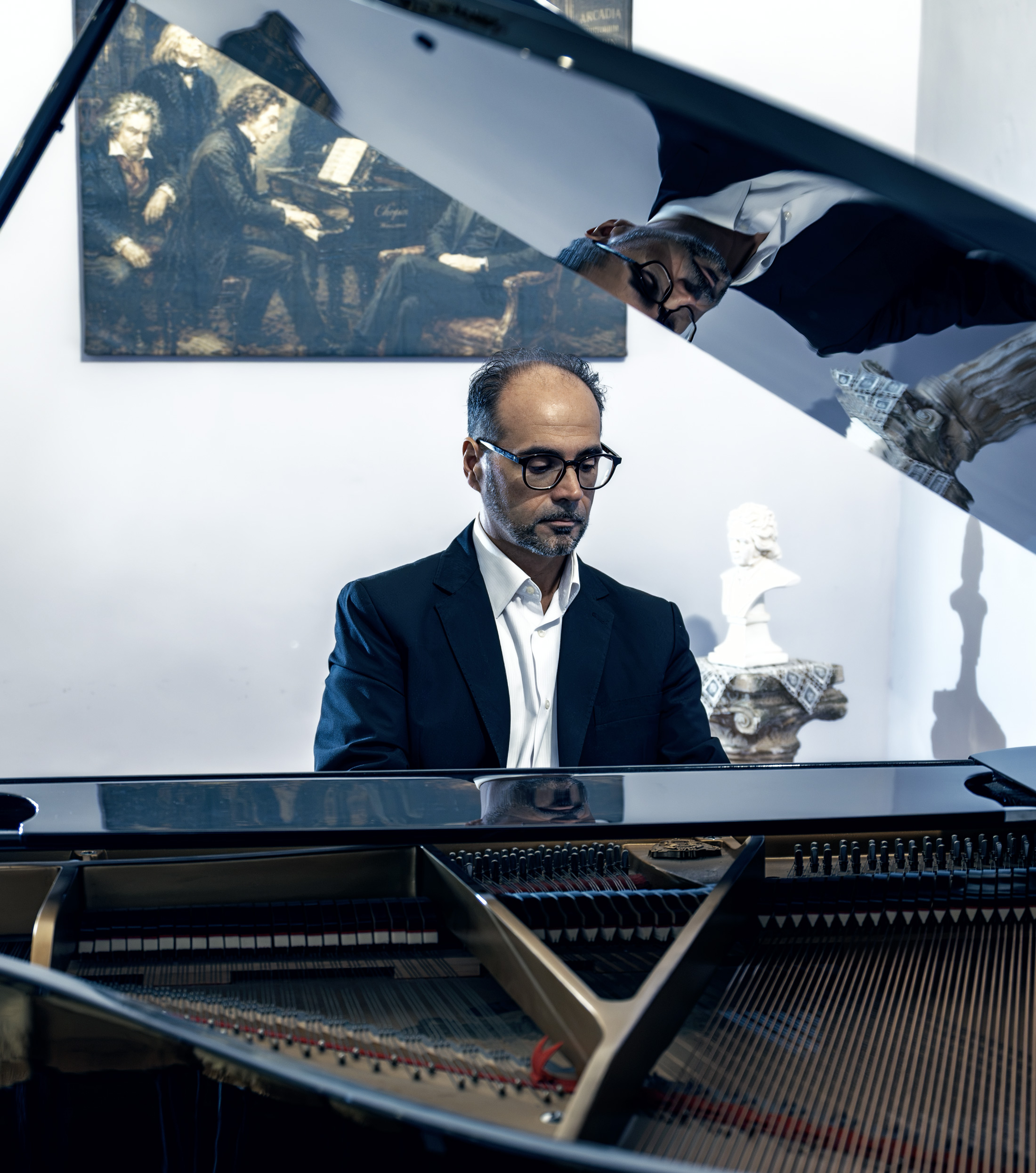
Roberto Fasciano: Where the Mediterranean Becomes Sound
The sea does not repeat itself. It returns.
The same horizon, the same tides, the same wind — and yet never quite the same movement. Perhaps this is why it has remained such a powerful musical metaphor for Roberto Fasciano, whose artistic imagination has been shaped by the Adriatic coast of Trani and by the many cultural currents that have crossed the Mediterranean throughout history.
But Fasciano’s Mediterranean is not one of sunlit clichés or borrowed folklore. It is quieter, deeper, almost geological: layers of memory, language, migration, ritual and musical gesture accumulated over centuries, then transformed into something personal.
This distinction matters
Rather than reproducing the sounds of a particular tradition, Fasciano searches for what might survive after tradition has been transformed — a melodic contour, an interval, a rhythmic impulse, the character of a silence. Something recognisable without being quoted.
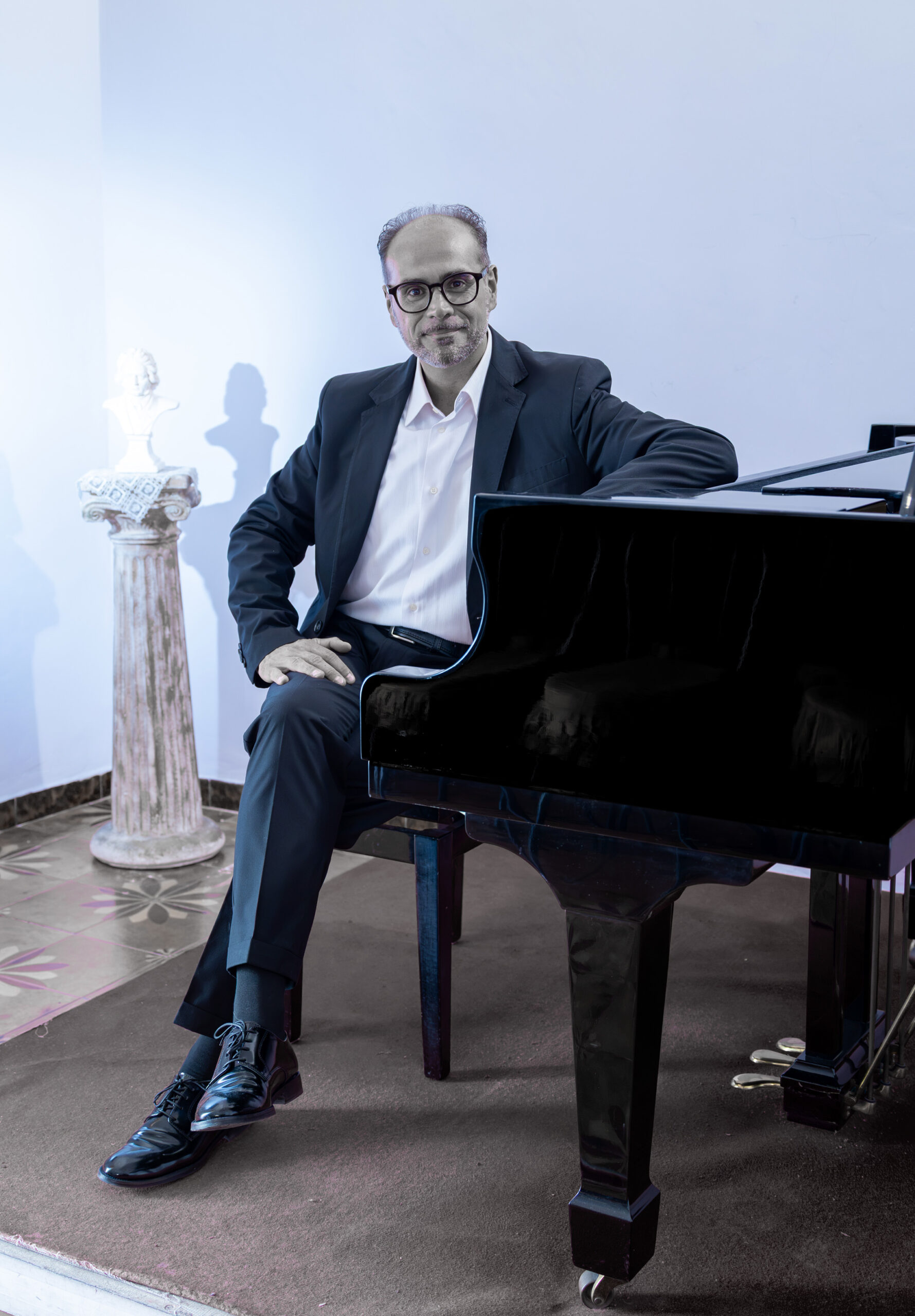
His artistic practice is equally fluid. Pianist, composer, conductor and harpsichordist, he moves between creation and interpretation, between the intimate physicality of the keyboard and the larger architecture of ensemble and orchestral sound. For him, these are not competing identities but different perspectives on the same question: how can sound carry thought?
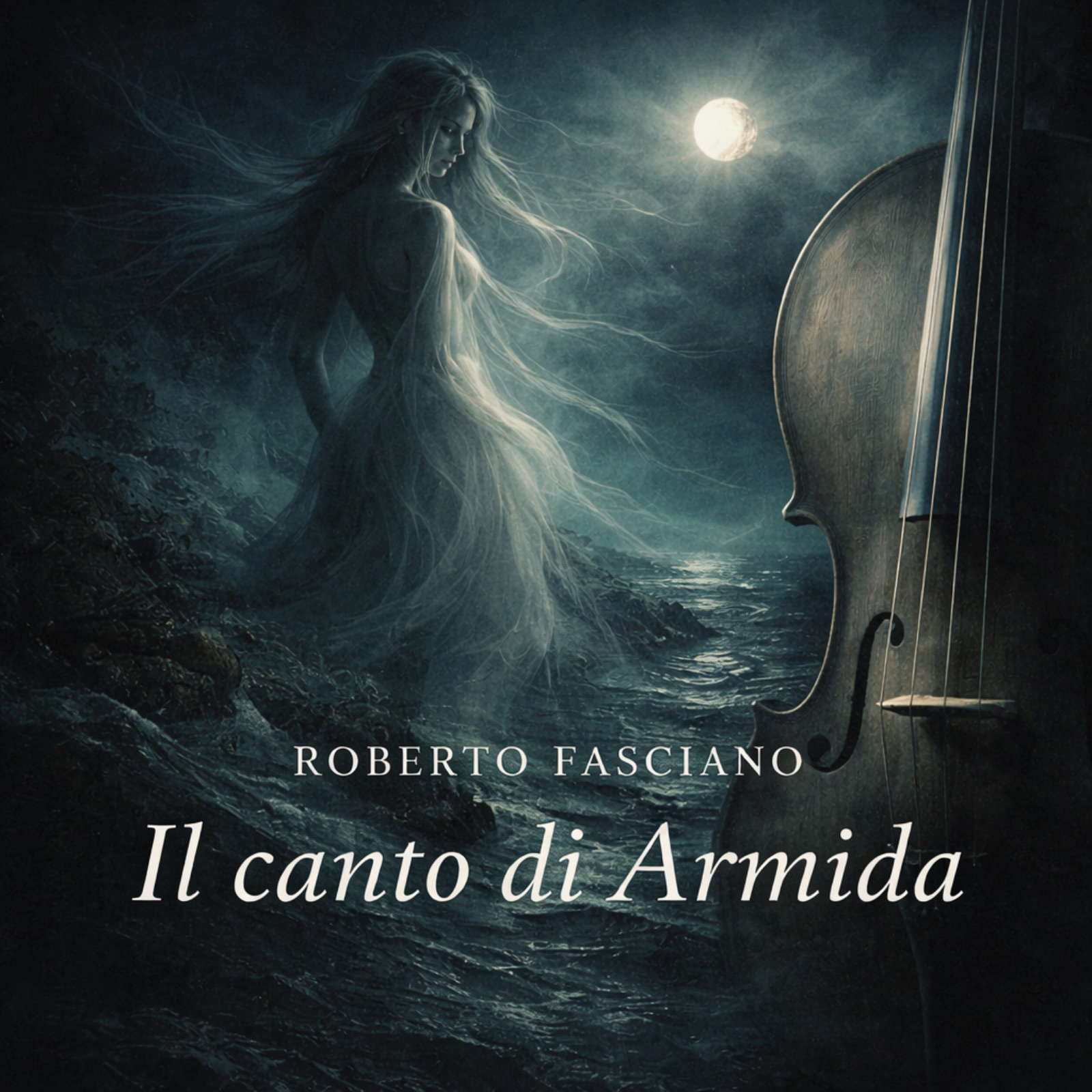
His I racconti del mare offers perhaps the clearest window into this philosophy. Written across time and brought together in its definitive form in 2007, the cycle transforms the sea from landscape into narrative — a place where memory can surface, disappear and return in another form.
And this may be the most compelling aspect of Fasciano’s musical journey: he is not attempting to arrive at a definitive Mediterranean language.
He is still discovering it.
In the conversation that follows, we enter a musical world where geography becomes memory, memory becomes gesture, and gesture becomes sound — a world in which the distance between an ancient coastline and a contemporary piano can become surprisingly small.
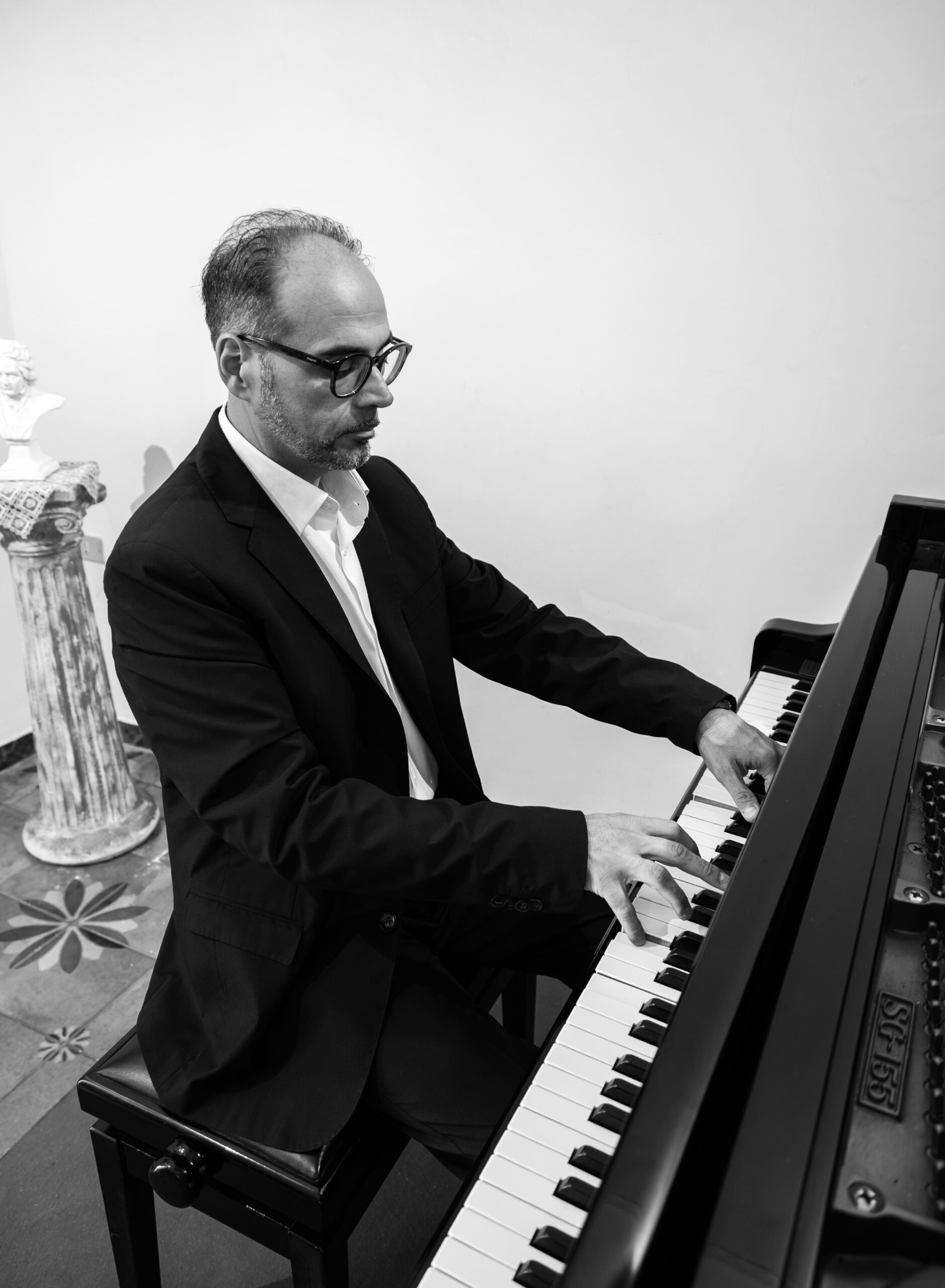
PianoRevenge MAG: You are a pianist, composer, conductor and harpsichordist. Do you see these as different artistic identities, or simply different ways of approaching the same musical vision?
Roberto Fasciano: I do not regard these activities as separate identities. They are different perspectives through which I approach the same idea of music. The composer imagines and constructs; the pianist transforms thought into gesture, breath and sound; the conductor brings different sensibilities into dialogue so that they may become a single voice; and the harpsichordist leads me back to the foundations of form, counterpoint and musical articulation.
Each experience profoundly influences the others. Performing allows me to test physically what I write; composing changes the way I interpret; conducting teaches me to listen to music in its collective dimension; and the harpsichord reminds me how expression can also arise from rhythmic precision, structural clarity and the articulation of a phrase.
At the heart of all these activities, however, lies a single vision: not simply to assemble sounds, but to create a narrative through music, one that possesses its own identity.
Whether I am working with a score, sitting at the keyboard or standing before an orchestra, I am always searching for a living sound—one capable of carrying a thought and truly reaching the listener.
Your work increasingly explores what you describe as a contemporary Mediterranean musical language. What does ‘Mediterranean’ mean to you musically – beyond geography or folklore?
For me, “Mediterranean” does not simply indicate a geographical place, nor is it synonymous with folklore or a collection of recognisable colours. Above all, it is a cultural and sonic memory: a territory shaped over the centuries by civilisations, languages, rituals and different ways of conceiving song, rhythm and time.
It is a memory I carry within me, but one that I seek to experience without nostalgia and without imitating the past.
Musically, this identity may emerge through modality, the vocal character of melody, rhythmic structures that are not always regular, and a particular attention to timbre and silence. However, I am not interested in directly quoting a folk song or inserting a traditional fragment merely so that it can be immediately recognised. I am interested in transforming its essence: an interval, a melodic contour, a rhythmic impulse or a particular way of articulating sound may lose its original form and assume a new function within the composition.
This is where the contemporary dimension comes into play. Inherited material is not simply reproduced or clothed in modern harmonies, but reimagined through a different organisation of musical language. The source may no longer be recognisable, while its identity can still be perceived. For this reason, my “contemporary Mediterranean sound” is not intended as a genre or an aesthetic label: it is an ongoing exploration through which I seek to transform a sense of cultural belonging into a personal and living musical language.
The Mediterranean is a meeting place of cultures, histories, migrations and memories. How do these different layers find their way into your compositions?
These different layers enter my compositions as forms of sedimentation, sometimes consciously and sometimes at a deeper, almost instinctive level. The Mediterranean does not preserve a single memory: it is a place where civilisations, religions and languages have met, overlapped and transformed one another. Its musical identity, too, has grown out of continuous journeys, encounters and returns.
When I compose, I do not try to represent these cultures separately, as though assembling a mosaic of quotations. I prefer to allow them to act within my musical thought.
An echo of the past, a gesture that retains the imprint of song, a rhythmic memory or the character of a landscape can be absorbed and transformed until it becomes part of the structure, colour and narrative tension of the piece.
This process takes different forms throughout my work. In I racconti del mare, the Mediterranean becomes above all an inner landscape and a space of memory; in Apuliae Suite, my relationship with the land of Apulia opens onto history and cultural identity; in Puer Apuliae, inspired by Frederick II, a historical figure becomes the starting point for evoking a world in which different cultures could meet and enter into dialogue.
I also believe that migration belongs profoundly to the image of the Mediterranean: the sea separates, yet at the same time it creates connections; it holds within it departures, arrivals and absences. In my music, none of this is expressed in a merely descriptive way.
Instead, it becomes movement, expectation, distance, tension and memory — human elements even before they become musical ones.
As both pianist and composer, how does your relationship with the piano influence the music you write? Does the performer in you ever challenge the composer?
For me, the piano is the place where musical thought encounters the body. An idea may arise inwardly or on the page, but when it passes through the keyboard it acquires weight, breath, duration and colour. Contact with the instrument allows me to understand whether what I have imagined possesses a genuine sonic necessity or remains merely an abstract construction.
Being a pianist therefore profoundly influences my writing — not because I wish to compose only what is comfortable to perform, but because I understand the physical nature of gesture and the instrument’s timbral possibilities. The position of the hands, the weight of the touch, resonance, pedalling and silence participate in the composition just as much as pitch and duration. Improvisation also plays an important role: it is a space of discovery in which an intuition can reveal possibilities that rational thought had not anticipated.
Yes, the performer often challenges the composer. When I play one of my own works, I may realise that a formally correct passage does not breathe, that a texture is too dense, or that a phrase requires a different sense of time from the one I had imagined. In such moments, performance does not merely realise the score; it questions it.
At the same time, the composer also challenges the pianist, asking him to move beyond habitual gestures and search for a new sound.
There is no conflict between the two that needs to be resolved, but rather a continuous dialogue: the composer gives form to thought, and the pianist gives it sonic truth.
I racconti del mare occupies an important place in your artistic journey. What was the original impulse behind this cycle, and what did you want the sea to become in musical terms?
The original impulse grew out of my daily relationship with the sea, which began in childhood. Living in a city overlooking the Adriatic means constantly sensing its presence: in the light, the changing sky, the wind, the silences, and even in the sense of distance it evokes. The sea entered my imagination long before I ever thought of transforming it into music.
With I racconti del mare, I felt the desire to give this presence the form of a piano narrative. I did not want simply to describe the sea or imitate its outward movements, but to allow it to become a narrative voice. The eleven pieces therefore form a journey from Alba sul Mediterraneo to Pensieri sommersi, passing through images, breaths, horizons and transformations.
In musical terms, I wanted the sea to be at once an ever-changing landscape, a mirror of inner states and a metaphor for human existence.
Its surface can change within moments, while its depths remain invisible: in this relationship between what appears and what remains submerged, I recognise something that also belongs to our lives.
For this reason, the sea is not merely the backdrop to the individual pieces in the collection. It is the true element that binds them together: a presence capable of holding memory, restlessness, contemplation, movement and silence, each time assuming a different musical form.
In this work, the sea seems to exist not simply as a landscape, but as a space of memory, movement, silence and imagination. What fascinates you most about the sea as a musical subject?
What fascinates me most is the sea’s ceaseless movement: the waves return continuously, yet they are never exactly the same. I recognise in this something profoundly musical. In music too, an idea can re-emerge and transform, changing in intensity, colour and meaning while still preserving something of its origin.
I am also fascinated by its invisible depths. When we look at the sea, we perceive its surface, while what it holds beneath remains largely unknown.
It is precisely this hidden space that nourishes the imagination and suggests to me a kind of music that does not reveal everything immediately, but gradually allows resonances, images and meanings to emerge.
The sea also has an extraordinary ability to preserve memories and suddenly bring them back to the surface. A sound, a particular light or the rhythm of the waves can awaken something we believed to be distant. For this reason, memory and the present are not separate dimensions in my music: they enter into dialogue and sometimes overlap, just as they do in the movements of the sea.
Finally, there is the horizon: a visible line that nevertheless points towards something unreachable. For me, it represents a call towards what is distant, unknown or still waiting to be discovered. Perhaps it is precisely this tension between what we can see and what we can only imagine that makes the sea an inexhaustible musical subject.
I racconti del mare was composed in 2007. When you return to this music today, do you recognise the artist you were then – or do you hear the beginnings of the musical language you have developed since?
When I return to I racconti del mare today, I certainly recognise the artist I was then, but I also hear the origins of many elements that I would develop in the years that followed. It is worth clarifying that several of the pieces had been composed before 2007. That was the year in which I revisited and revised them, bringing them together into a coherent project and giving the collection its definitive form.
In those pages, I can already recognise certain traits that still belong to my artistic identity today: the central role of melody, the exploration of timbre, an attention to atmosphere, and the relationship between music, memory and the Mediterranean landscape. For this reason, I do not regard I racconti del mare simply as a work belonging to a phase that has now passed, but as a living root of my compositional journey.
At the same time, many aspects of my musical language have changed. I believe this is natural, because each of my projects grows out of an ongoing process of research and leads me towards new harmonic, rhythmic, formal and expressive solutions. I do not seek to repeat a formula I have already found; I prefer to question the musical material each time and discover different possibilities within it.
The way I perform these pieces today has also changed. The experience I have gained as a pianist and composer allows me to perceive nuances that, when the music was first created, I may have experienced primarily on an intuitive level. I therefore recognise the composer I was, but I now see him with a new awareness: not as a distant figure, but as the beginning of a journey that is still continuing today.
Your music combines lyricism with contemporary sonorities and a strong sense of atmosphere. How do you balance experimentation with the desire to communicate directly with the listener?
For me, experimentation should never be an end in itself, nor should it simply arise from a desire to appear innovative. It must grow out of an expressive necessity: the search for the sound, form or colour capable of conveying a musical idea in the most authentic way.
I do not believe that communicating directly with the listener means sacrificing complexity. Rather, I seek a balance between harmonic, timbral and rhythmic exploration and expressive clarity. This balance, however, is never predetermined: each composition raises different questions and requires its own solutions. I therefore do not apply a formula, but allow the nature and development of the piece to suggest the language it needs.
Melody plays an important role in my music, but I do not regard it as a return to the past. For me, it is living material that can be reconsidered and transformed through contemporary harmonies, timbres, rhythms and forms. It can offer the listener an emotional point of entry without imposing a single interpretation: I want to leave listeners free to create their own images, associations and meanings.
I also believe that music can engage the listener immediately without revealing everything at the first hearing. It can establish an emotional connection from the outset while preserving further layers that gradually emerge over time.
In this sense, my aim is to lead the listener towards a territory that may be new or unexpected, without ever breaking the dialogue between us.
How much does the place where you live – and your personal relationship with the Mediterranean landscape – shape your imagination as a composer?
The place where I live profoundly shapes my musical imagination. Trani, through its constant dialogue with the Adriatic Sea, is not merely a geographical setting for me, but a perceptual reality that has gradually become part of the way I feel and think about music.
The sea, the harbour, the pale stone, the wind and the architecture enter my compositions not as elements to be described or reproduced, but as internalised sensations. They may be transformed into a harmonic colour, a particular resonance, the breathing of a phrase, or the way silence surrounds a sound. Their presence is not necessarily explicit, but it works at a deeper level within my imagination.
Living on the coast also nurtures a sense of the horizon: a line that defines the limits of our vision while simultaneously drawing it towards the distance. For me, it evokes a dialogue with the other shores of the Mediterranean, with different cultures and memories that the sea both separates and connects.
Through this process, the external landscape gradually becomes an inner landscape. I do not write in order to depict a place illustratively, but from the traces that place has left within me. It is precisely this transformation of lived reality into memory, imagination and sound that nourishes my work as a composer.
Looking ahead, do you feel that your contemporary Mediterranean musical language is something you have already found, or is it still a territory you are continuing to discover?
Rather than feeling that I have definitively “found” a language, I feel that I have recognised its direction. An authentic artistic language cannot be an immutable formula: it must evolve together with its creator, embracing new experiences, questions and expressive possibilities.
For me, the Mediterranean remains an open territory of exploration. I would like it to emerge from my music as both a memory held deep within and a contemporary vision, never as a merely folkloric reference. I am not interested in reproducing its most recognisable features externally, but in transforming its cultural layers, resonances, contrasts and memories into living musical material.
This exploration may continue to develop not only through piano writing, but also through chamber and orchestral music and a variety of instrumental settings, extending a path I have already begun in previous chamber and orchestral works. Each instrumental configuration offers new timbral possibilities and new ways of examining the same musical identity.
My future aim is to make this language increasingly personal and recognisable, while enabling it to communicate beyond geographical boundaries. I believe that beginning with authentic roots does not mean confining oneself to a local identity; on the contrary, it can become the most sincere way of connecting with sensibilities, cultures and listeners beyond its place of origin.
This is the direction in which I wish to continue my journey.
● Blog: https://robertofasciano.blogspot.com
● Instagram: https://www.instagram.com/fasciano_composer
● Facebook: https://www.facebook.com/fascianoroberto
● YouTube: https://www.youtube.com/@RobertoFasciano