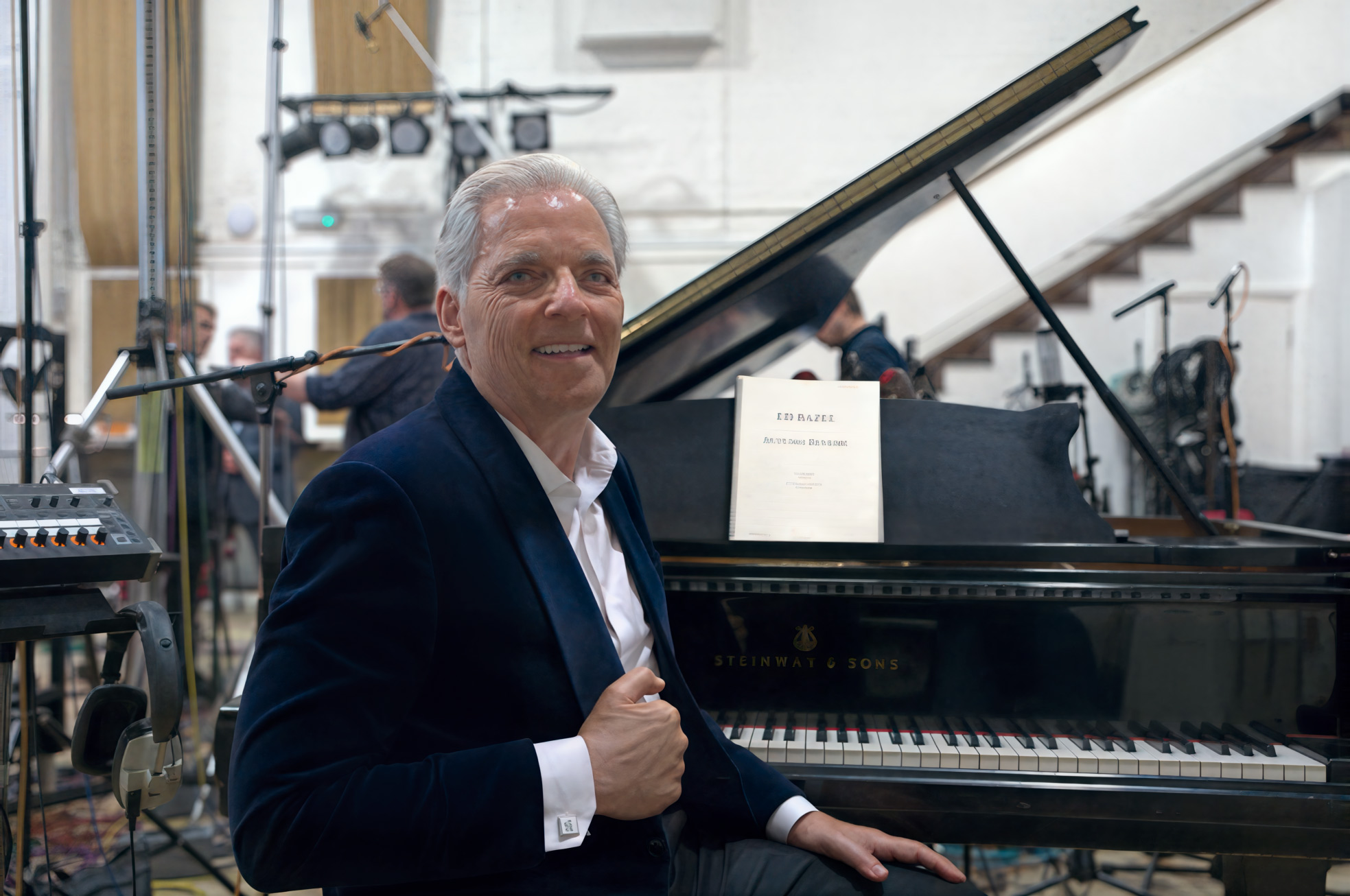
Ed Bazel: When the Piano Becomes a World
Perhaps every pianist has a moment when the instrument stops being an object and becomes a world. For Ed Bazel, that world began almost by accident.
We have already followed his latest release — freshly released and still carrying that particular sense of something newly born — in our album review. But an album only reveals one side of an artist. Behind the finished recording lies the inner architecture: the obsessions, silences, memories, instincts and strange little decisions that eventually become sound.
So, rather than listening again, we decided to go deeper.
For this edition of Piano Revenge MAG, we enter the world behind the music of an extraordinary piano artist — beyond technique, beyond genre, and beyond the polished surface of a release. Here, the piano becomes less an instrument than a language, a place of thought, and sometimes even a kind of confession.
What follows is not simply an interview about music. It is a glimpse into the mind of the person who creates it — his relationship with the piano, his artistic universe, his newest work, and the ideas that continue to shape his sound.
We reviewed the album. Now, we open the door behind it.
PianoRevenge MAG: You began playing piano at just five years old, and your musical journey has taken you from your early influences and playing in bands to a celebrated career as a solo pianist and composer. When you look back at that five-year-old discovering the piano, what do you think first drew you to the instrument—and what has kept you connected to it for all these years?
Ed Bazel: Actually, starting piano lessons was not my idea, it was a stroke of genius from my mother. We used to drop my older sister off for a 30 minute piano lesson and then go to the library or do some errands until it was time to pick her up.
My mom had the brilliant idea that if she dropped both kids off, she could have an hour of freedom to herself. That’s how this journey started. Piano lessons for 11 years and practicing 30 minutes a day was not what I had in mind, but I eventually fell in love with music. Those lessons turned out to be the best gift I have ever been given.
PianoRevenge MAG: Your musical education included studying with remarkable musicians such as Jay Flippin, Lou Levy, Joe Harnell, and Clare Fischer. What did you take from those different teachers and musical worlds, and how did those experiences shape the pianist and composer you eventually became?
Ed Bazel: I am a very lucky man to have had guidance from each and everyone of these individuals. I can credit different sections of my playing to their teachings, including runs of the board, chord progressions, and more, to make my playing much more colorful.
I incorporated these techniques while playing piano for decades at some amazing venues, including the Beverly Hills Country Club, The Ritz Carlton, and many more places that valued the beauty of a piano.
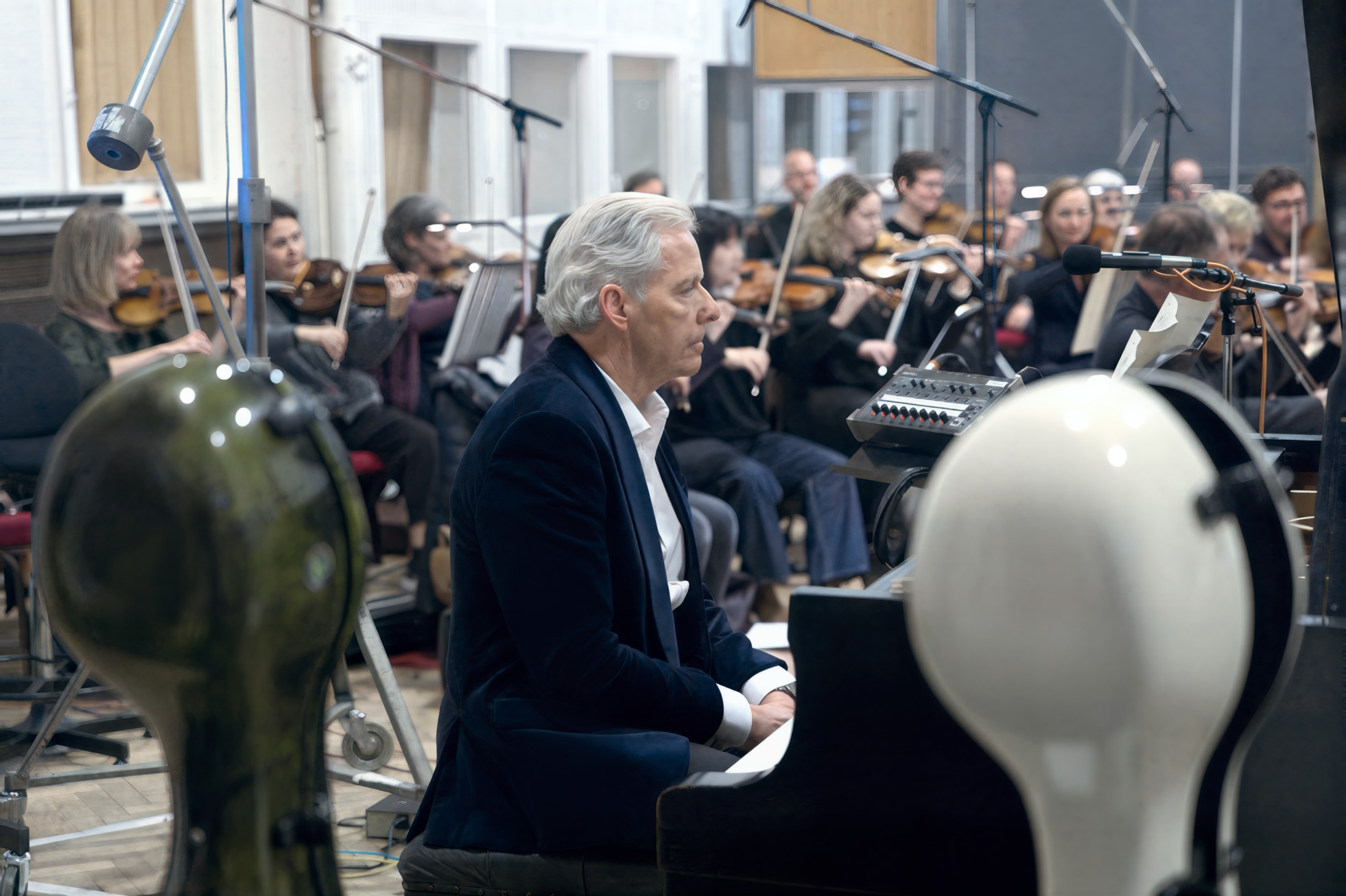
PianoRevenge MAG: You have described yourself through music that values melody, atmosphere, emotion, and the ability to create a sense of calm. When you sit at the piano to compose today, what usually comes first for you: a melody, an emotion, an image, or simply the sound of the instrument itself?
Ed Bazel: Actually, melodies appear in my head no matter where I am. It’s like I have a movie soundtrack running in my mind. When they arrive, I immediately sit at the piano and record the melody on my iPhone. I have hundreds of melodies saved now.
I take the melody that I like best, and expound on it, and it blossoms into a fully developed song. If I’m away from the piano, I try to whistle or sing the melody into the phone—but that doesn’t always work so well. No wonder I’m a pianist and not a vocalist!
PianoRevenge MAG: Your lifelong love of The Beatles has become an important thread in your artistic story, from seeing their legendary appearance on The Ed Sullivan Show to incorporating their music into your own recordings. What was it about The Beatles that spoke so deeply to you as a young musician, and what do you think their music continues to teach you as a composer today?
Ed Bazel: I remember as a young child sitting on the floor in the living room with my mother, father, and older sister. It was Sunday and my sister was so excited to see something on The Ed Sullivan Show.
I remember watching on a black-and-white TV, and she screamed when she saw these four guys that were called the Beatles. I was astounded by the powerful response of the audience. This was my first lesson on the power of music and what it can do. I try to embody that feeling and let it inform every recording and performance.
PianoRevenge MAG: RÊVERIE takes twelve pieces from your solo piano catalogue and reimagines them on an entirely different scale with the London Philharmonic Orchestra. What was it like hearing music that had lived primarily through the intimacy of a piano suddenly expand into a full orchestral landscape?
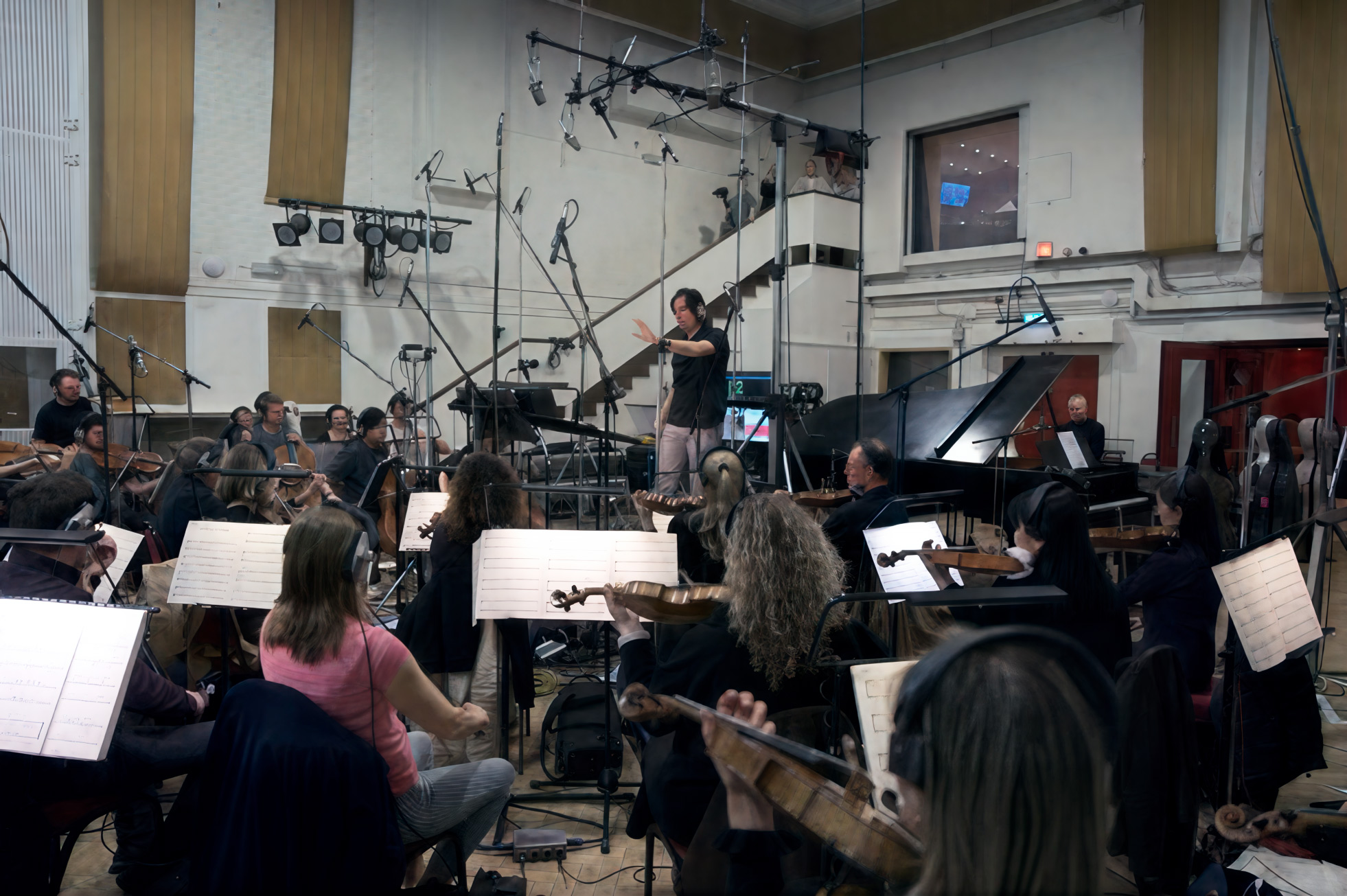
Ed Bazel: Hearing my beloved compositions reimagined with The London Philharmonic Orchestra was a breathtaking experience. We had 43 incredible musicians and an amazing conductor who all did an outstanding job of bringing out the powerful emotion and depth of each piece. As a solo pianist for so many years, I’m used to recording alone in the studio, so it was a thrill to experience the dynamics of working with such a talented group of musicians on the studio floor and collaborators in the control room, with the support of my wonderful family and friends who have been so invested in the fruition of this project.
To feel the synergy of all of us working in tandem to bring these magnificent orchestrations off the page and into the ear was one of those truly unforgettable life experiences. It was a phenomenal feeling to see and hear these familiar compositions take on a new incarnation and become something so spectacular.
PianoRevenge MAG: Recording at Abbey Road Studios must have carried a particular emotional weight for someone whose musical imagination was so strongly influenced by The Beatles. Was there a moment during the sessions when you stopped and thought, “I can’t believe I’m actually here”? And did the history of that room influence the way you played or approached the recording?
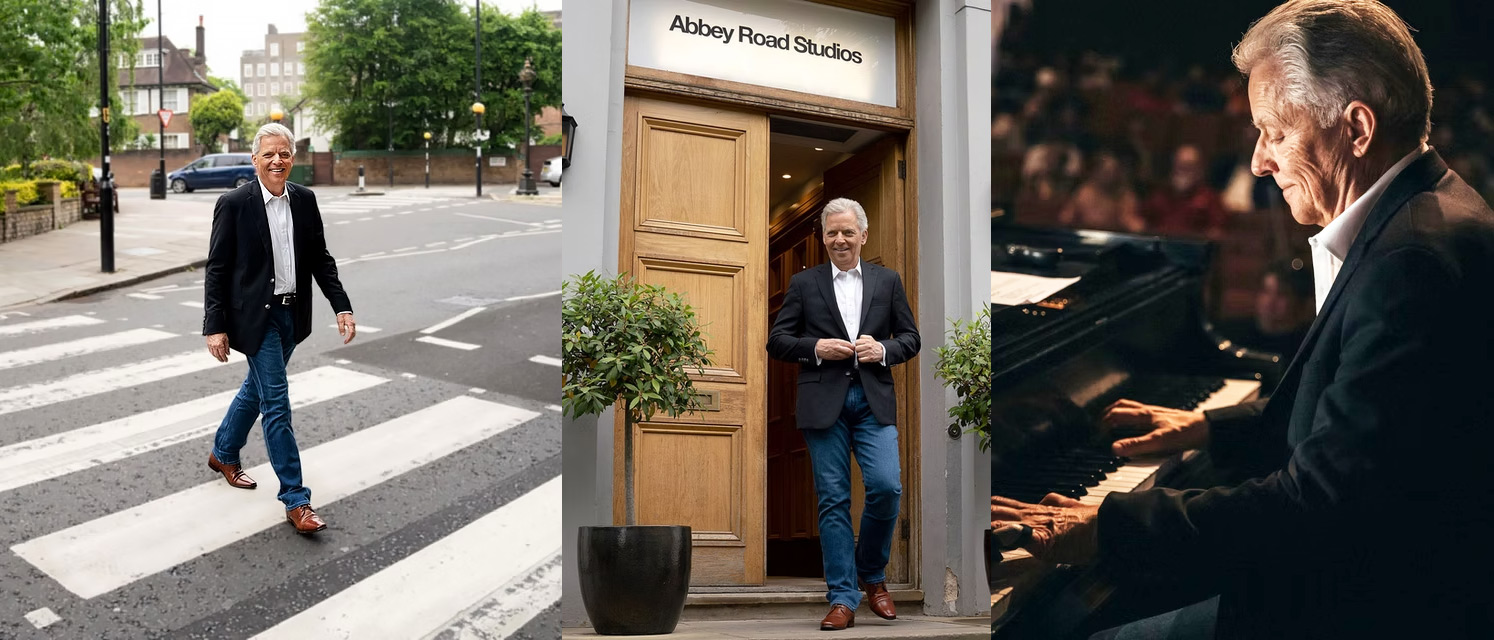
Ed Bazel: This was my fourth time recording at Abbey Road Studios. We’ve recorded seven albums in Studio 2—and it really feels like home now! Three of those albums are forthcoming projects, set to be released next year, including a Beatles tribute album, a second Christmas album, and a new original solo piano project.
The Abbey Road crew is so wonderful to work with and everyone is so friendly and professional. Their acoustics and equipment are top notch—and I always record on my favorite Steinway Model D concert grand piano. Given the musical history of the space, it’s always a remarkable feeling to realize that my music is seeping into those shared walls and etching its own chapter in the studio’s history books.
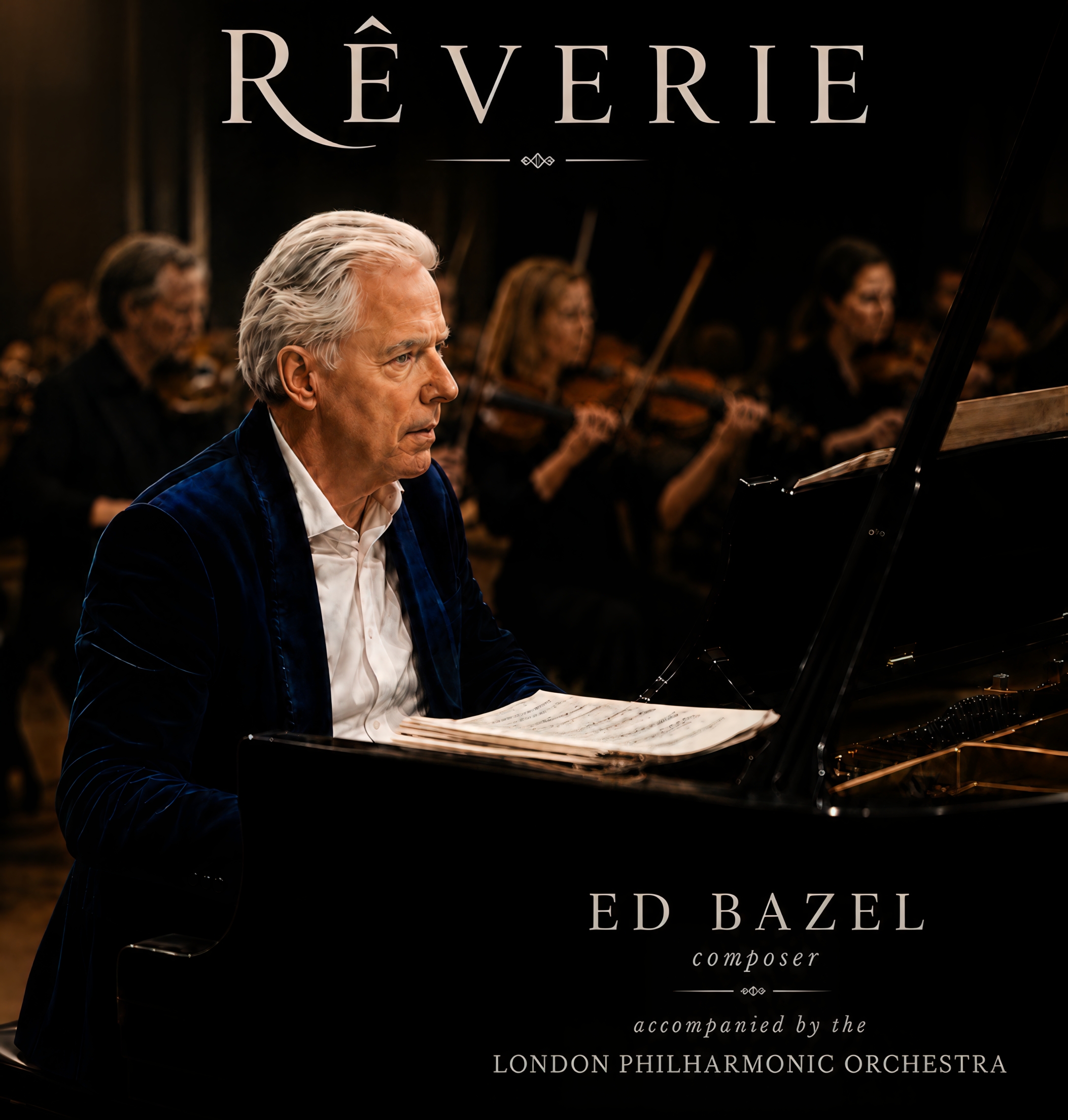
PianoRevenge MAG: Moving from solo piano to orchestral arrangements inevitably changes the role of the pianist. How did you approach deciding what should remain at the heart of these compositions and what could be given over to the orchestra? Was there anything about your own music that surprised you once you heard it orchestrated?
Ed Bazel: It was wonderful to collaborate with such a fantastic team this time around. We worked for months behind the scenes with our wonderful group of producers and orchestral arrangers (including the brilliant Dr. David Fogel, the award-winning team at On Staff Music, two-time Grammy® winner Kitt Wakeley who arranged my “signature song,” The Tide, and also with our wonderful Grammy®-winning conductor, Michael Repper, before finalizing the album with our 7x Grammy®-winning post production engineers, Brian Vibberts of Vibberts Mixing and Michael Romanowski of Coast Mastering) to capture the core essence and beauty of each unique piece and incorporate the grandeur of the orchestra in a way that illuminated the piano rather than obscuring it, and maintained each song’s original integrity.
It was wonderful to have the handprints of so many industry pros touching these pieces, and while the music itself hasn’t exactly changed, these arrangements gave the compositions a new perspective by expanding the scope of each piece in a beautiful way.
PianoRevenge MAG: You have recorded in extraordinary environments, from Abbey Road to Skywalker Sound, and have worked with Grammy®-winning engineers and producers. How important is the recording environment to your artistic process? Does being surrounded by a particular acoustic piano, or recording team actually change the music you create?
Ed Bazel: The environment plays a strong role in any musical situation. Each studio, from Abbey Road to Skywalker Sound to EastWest Studios, has its own vibe and energy, which can certainly affect the feeling in the room in a marvelous way and can coax a certain kind of performance that ideally will translate to the listener.
Each piano also has its own history and soul, and tells its own story, so selecting the right instrument is key. The piano is my counterpart, so, as is the case with any collaborator, the combination has to be an ideal fit.
● Piano & compositions: Ed Bazel
● Orchestra: London Philharmonic Orchestra
● Conductor: Michael Repper
● Recorded at: Abbey Road Studios
● Orchestral arrangements: On Staff Music, David Fogel & Kitt Wakeley
PianoRevenge MAG: Beyond your recording career, you founded The River of Calm, creating a platform centered on music as a source of comfort, including the Headphones for Chemotherapy initiative. What has your work with people experiencing difficult moments taught you about the real emotional power of music—and has it changed the way you think about your own compositions?
Ed Bazel: The River of Calm – Music To Soothe your Soul™ – is another lesson in the incredible power of music. I created this platform to provide calming music for a stressed out world. What started out as a simple goal to share soothing melodies and connect with those who need a musical escape, has now expanded to reach listeners in 214 countries with music from more than 300 independent artists.
I have a genuine passion for connecting with cancer patients, as my mother, father, and sister have all passed from cancer. I wanted to find a way to harness the power of music and create a tool to comfort people experiencing chemotherapy, so we partnered with a team to build out headphones with seven hours of pre-loaded calming music from a stable of creative artists, which are then donated to chemotherapy centers. I feel so strongly about cancer patients that I once organized a fundraiser for the City of Hope and rode a bicycle from the Santa Monica pier in California to the St. John’s pier in Saint Augustine, Florida.
The journey included 3000 miles, 278 cities and towns, and took 44 days, and it was worth every mile.
PianoRevenge MAG: With RÊVERIE now marking such an ambitious new chapter, a Grammy® submission ahead, and a Beatles tribute project among your upcoming plans, where do you feel your artistic journey is taking you next? After a lifetime with the piano, is there still something you feel you haven’t yet said through music?
Ed Bazel: A wise man once said: “the future hasn’t been invented yet.” Professionally, I would love to see my work expand into the film and television space. Artistically, I’m always finding new inspiration.
After a lifetime with the piano, I’ve learned that here are always new ways to reimagine what’s been said, or express what’s been unsaid.
RÊVERIE has been a reminder that music is truly limitless—it is an expansive organism that can continuously reveal different chapters and take on new emotions through a new lens, and deeper meanings as we evolve. With music, the possibilities are endless, and I will always embrace new avenues of expression through melody.