Chantal Largier: Everything is Possible
From childhood dreams to creative liberation, Chantal Largier speaks about the emotional language of music, the artists who have inspired her, her second album FEEL, and the dream of bringing her music to Paris.
There are moments in childhood when something simply feels right — when a first encounter quietly reveals a path that will remain with us for a lifetime. For Chantal Largier, that moment came at the piano. At just six years old, she discovered not only an instrument, but her own language of expression.
For Chantal Largier, that connection began when she was just six years old, when she discovered the piano as a language of her own. At only eleven, her musical path had already taken her to Tokyo, where she immersed herself in Japanese culture and studied intensively with renowned teachers. Early concerts and an award at the 14th Youth Harmony Competition confirmed a talent that was already making itself heard.
“Trust the process. Trust your own path.”
Her journey continued in Switzerland, where she studied at the Basel Music Academy and the Zurich University of the Arts, earning a Teaching Diploma, a Master’s degree and a CAS in Performing Arts. Yet her musical story would soon extend far beyond Europe.
In China, Chantal taught piano at Zhaoqing University and performed nearly 100 concerts in more than 20 cities as a soloist, appearing in prestigious venues including the Great Hall of the People in Beijing, the Oriental Center in Shanghai and the Shanghai Symphony Hall. One particularly meaningful moment came when she performed at Chinese Friendship Day for the Swiss Embassy, allowing her music to become, quite literally, a bridge between cultures.
After returning to Switzerland in 2018, Chantal dedicated herself not only to performing but also to teaching, sharing her experience with a new generation of young musicians.
Then, in 2022, her artistic journey took an unexpected turn.
A fall in the mountains temporarily took away her ability to play the piano. For a pianist, such a period of silence could have felt like an ending. For Chantal, it became the beginning of something entirely new.
During that silence, she discovered composition.
Through free improvisation, her first composition, Boundless, was born — a work reflecting hope, freedom and trust in limitless possibilities. Composing gradually became an inner refuge: a kind of musical diary in which emotions, memories and thoughts could find their own voice.
From there came a new chapter. On February 2, 2022, she released her first album, TIMELESS, followed by FEEL, GROWTH and TRUST THE PROCESS. These titles themselves seem to trace an intimate artistic journey — from timelessness, through feeling and growth, towards the courage to surrender to the process.
And perhaps this is where Chantal’s words become especially powerful.
Her creative motto is simple:
“Everything is possible.”
But behind those three words lies a deeply personal experience — the need to give herself permission to create, to trust her intuition, and to discover what might exist beyond the boundaries she had previously placed around herself.
Today, Chantal Largier lives in Switzerland, where she composes original piano music, teaches selected students and continues to perform internationally. Since childhood, she has played on Steinway instruments, and her own Steinway grand piano from 1940 now accompanies her artistic voice.
Yet beyond the concerts, the albums and the international journey, there remains something remarkably close to the little girl who first discovered the piano.
Music is still her language.
And when she plays, she tells us, she becomes one with the piece — feeling it so deeply that she experiences goosebumps every time.
For Chantal, that emotional connection is ultimately what music is about: opening the heart, allowing music to speak, and creating a moment of connection between the artist and the listener.
As she prepares to bring her music to new audiences — and dreams of finally performing in Paris, a city she has so far only experienced as a visitor — we invite you to discover the story, philosophy and inner world of Chantal Largier.
PianoRevenge MAG: Chantal, do you remember when you first understood that music would have an important place in your life?
Chantal Largier: Since I was a little girl — around seven years old — I already knew that music would accompany me for the rest of my life.
Looking back, I think that feeling was already very clear within me. Music was not simply something I enjoyed. Somehow, I already understood that it would become part of who I was.
You describe yourself as a shy child. What did music give you that perhaps words could not?
I was a very shy child, and music gave me a way to express myself. It was my language.
What I already understood back then was that music is a universal language. Through music, I came alive from within, and nothing could stop me.
That was when I understood that music is not only a language — it also reaches me on an emotional level.
And perhaps that is why music has remained so important to me. It allows me to communicate something that words sometimes cannot express.
Your inspirations come from very different musical worlds. Which artists have shaped your own musical voice?
I have been inspired by Beethoven’s temperament, Einaudi’s simplicity and profound depth, Chopin’s elegance, Liszt’s virtuosity, and Weber’s beauty.
Each of them has given me something different, and together they have shaped the way I express myself through music.
I think this mixture of influences is important. Every artist we encounter leaves something behind — an idea, an emotion, a way of looking at music — and eventually those elements become part of our own artistic language.
Your creative motto is beautifully simple: “Everything is possible.” Where does it come from?
That moment when I composed my second album, FEEL, I decided to compose piano music as if everything were possible.
It wasn’t just a decision — I really had to give myself permission to just DO it. It is a process, and it takes time, but at the same time, it feels liberating to me.
For me, “everything is possible” is not simply a positive phrase. It is a way of allowing myself to explore, to trust my intuition and to create without constantly asking whether something is allowed or whether it fits into a particular expectation.
When you look at your compositions today, which pieces feel the most important to you?
My very newest composition — I’m still deciding which one.
I think the pieces that feel most important to me are the ones that touched me most deeply while I was composing them.
Sometimes a piece can become important not because of what it represents technically, but because of what you experienced emotionally while creating it.
And when you perform one of those pieces, what happens inside you?
I become one with the piece.
I can really feel it, and while I’m playing it, I get goosebumps every single time.
That moment of becoming completely immersed in the music is something very special to me. It is almost as if the distinction between the pianist and the piece disappears.
Is that also the feeling you hope to create for your audience?
Absolutely.
When I get touched by the music, I can feel my heart opening up and I feel a deep connection.
I can literally feel how music SPEAKS to me. And this is exactly the feeling I want to share with my audience and listeners.
For me, music is about creating that connection — that moment when someone listening feels something deeply, perhaps something they cannot even explain in words.
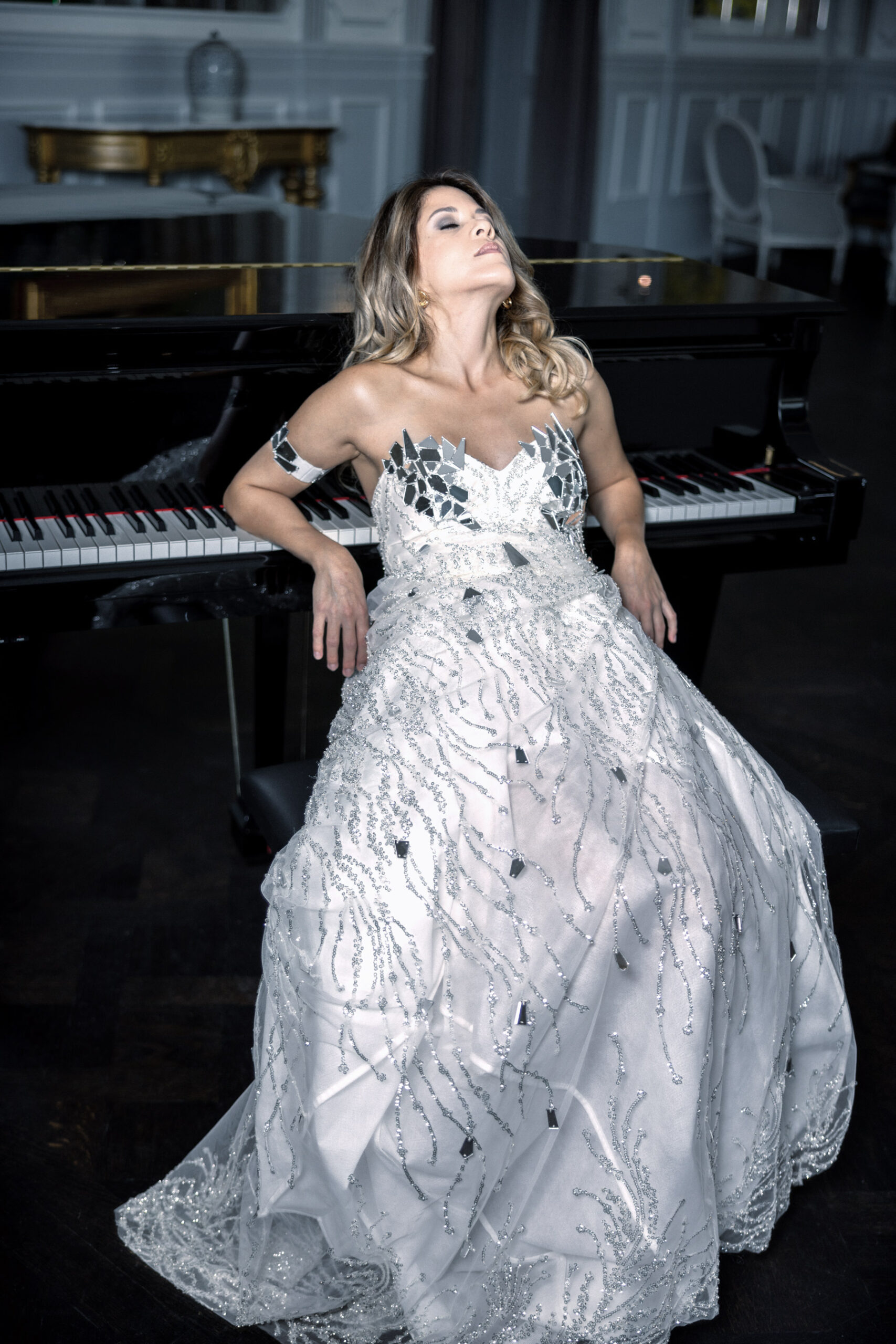
What is your greatest ambition as an artist?
To play as much music as I can, in front of as many people as possible — and to touch as many hearts as I can with my music.
That is what matters most to me.
I don’t simply want people to hear my music. I want them to feel something through it.
What would you say to young musicians who are still searching for their own artistic path?
It all has so much potential.
We musicians just need to trust the process and trust our own path.
I think that is sometimes one of the hardest things to do as an artist. We naturally compare ourselves, question ourselves and wonder whether we are moving quickly enough.
But every artistic path has its own timing. We need to trust that process and allow ourselves the time to grow.
And then there is Paris.
What does Paris mean to you as an artist?
Paris has always been special to me.
I have only ever been there as a tourist, but my dream has always been to perform there.
I’m sure Paris holds so much more that I have yet to experience.
Perhaps that is what makes the dream even more exciting. There is still so much waiting to be discovered.
Finally, if you could describe what you want your music to leave behind in one feeling, what would it be?
A connection.
The feeling that music has spoken directly to someone’s heart.
Because that is what music has always done for me. It gave me a voice when I was a shy child. It allowed me to come alive from within.
And today, I want to give that feeling back to the people who listen to me.
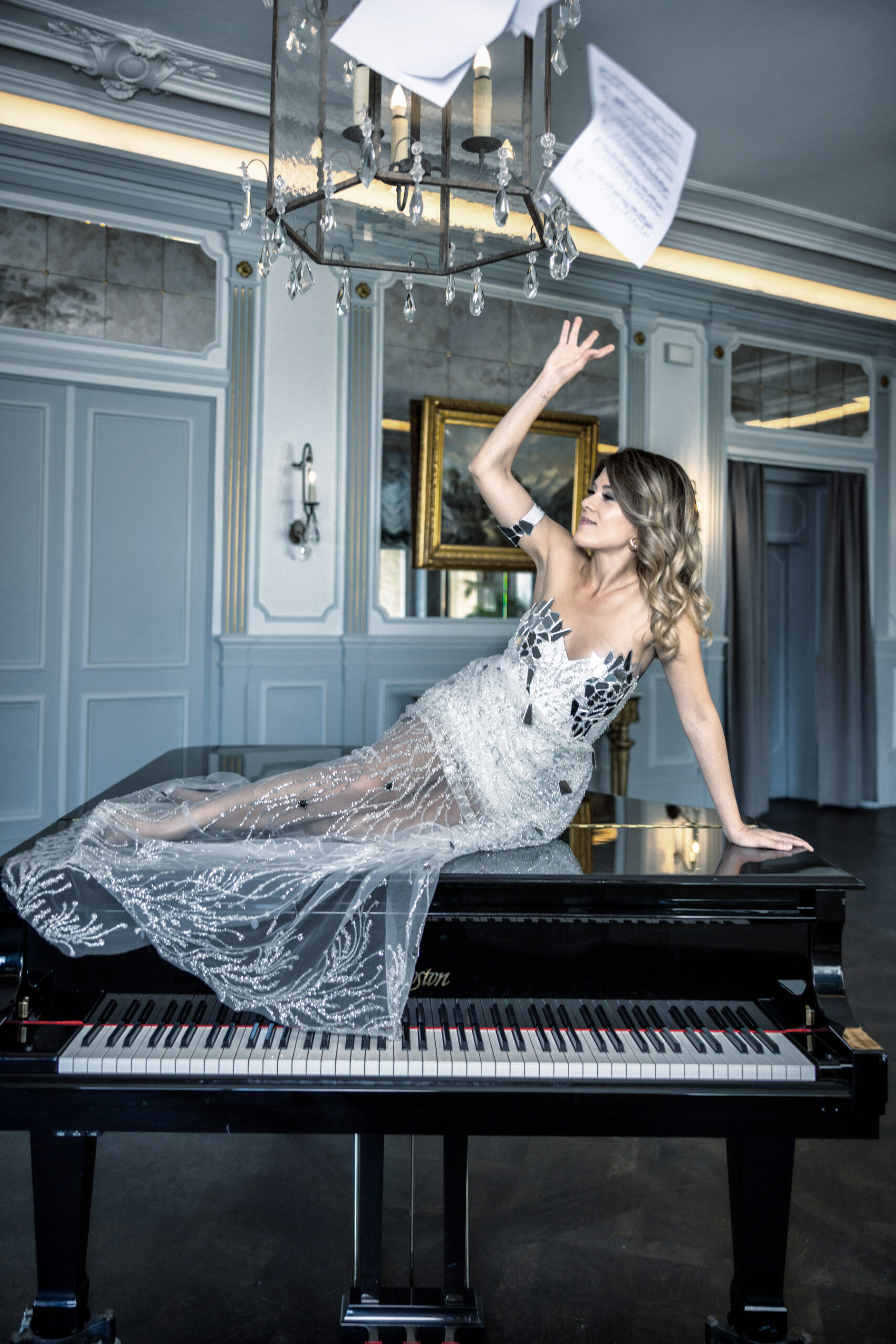
A NOTE FROM PIANO REVENGE MAG
We are particularly happy to share this conversation with Chantal Largier ahead of her appearance in the main program of the Piano Revenge Festival in Paris in April 2027.
Her journey — from discovering the piano as her own language at the age of six, through years of international performing and teaching, to finding composition during a profound period of silence — resonates deeply with what we value at Piano Revenge MAG: authenticity, artistic courage, and the freedom to follow one’s own musical path.
We are very much looking forward to welcoming Chantal to Paris and to hearing her music live as part of our festival next April.
For an artist who has long dreamed of performing in Paris, we are especially happy that this particular chapter of her journey will take place with us.