The Space Between Moments: Kirsten Susanne Böhm
Editor’s Note
There is a particular kind of courage in making music without knowing exactly where it will lead. For Kirsten Susanne Böhm, improvisation has become not simply a musical technique, but a way of being present — an act of listening, trust and discovery in which silence is allowed to remain silence, mistakes can become new directions, and a musical idea is permitted to reveal itself rather than being forced into existence.
A music that leaves the door open
Böhm’s path to this place was not conventional. Her musical world has grown through many forms of practice: choir work, vocal music, teaching, church music and, more recently, an increasingly personal language at the piano. Remarkably, it was only in 2020 that she discovered she was capable of playing without a score. Since then, improvisation has opened an entirely new territory, one in which she can move beyond reproduction and towards something that exists only in the present moment.
At the heart of this development is FReMD, a deeply personal body of work born from childhood memories. What initially began as an exploration of loneliness, foreignness and feeling different gradually revealed something else: a child who had already learned, intuitively, where she felt safe and where she belonged. Through the music, Böhm rediscovered those places of strength — the stream, her pony, an old French melody, the excitement of discovering new worlds — and, with them, a fundamental part of herself.
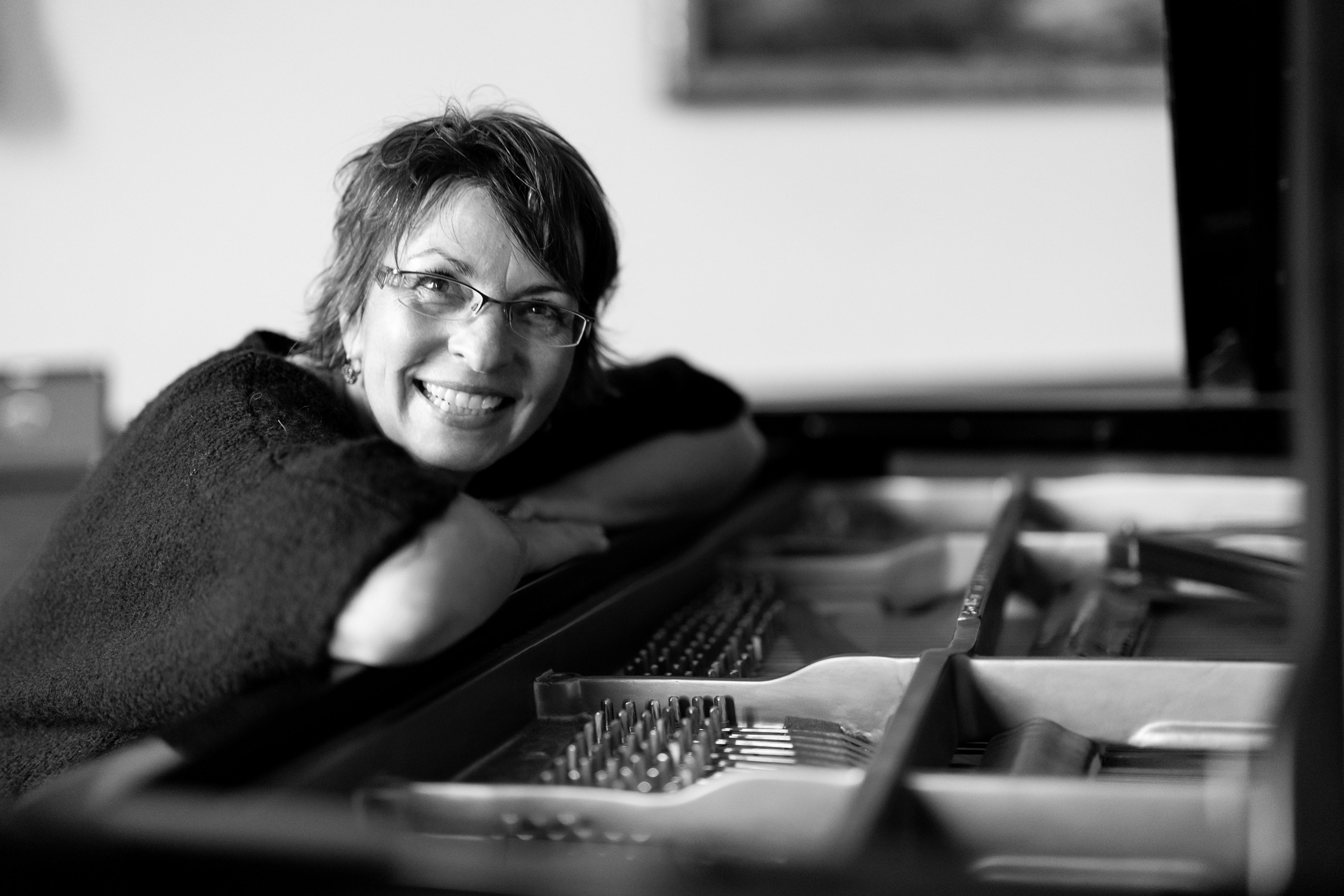
Her relationship with the piano is equally expansive. She approaches the instrument not only through its keys, but through its strings, pedals, soundboard and physical architecture, discovering unexpected colours and textures. At times, the piano can suggest another instrument entirely; at others, it becomes almost percussive, blurred or spatial.
Yet perhaps the most striking element of Böhm’s artistic philosophy is her belief in uniqueness. In a culture saturated with recordings, repetition and constant external noise, she has come to value the possibility that a piece might exist only once. The live improvisation cannot be reproduced exactly. It asks both musician and listener to be present.
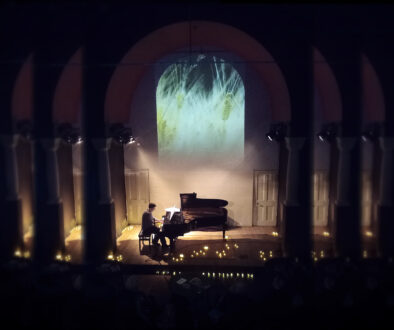
Now, as she joins the main selection of the Piano Revenge Festival, this philosophy takes on an especially natural place within our programme: a piano, a room, an audience, and the possibility of something happening that has never happened in quite the same way before.
At 58, Böhm describes herself as being only at the beginning of discovering what might still be possible. Her imagination is already moving towards a meeting point between music, light, silence and architecture — including live performances in which faces from the audience could become musical material in real time.
When improvisation finds its form
PianoRevenge MAG: Your music seems to exist somewhere between composition and spontaneous creation. When you sit at the piano without a score, how do you know when an improvisation has found its true form?
Kirsten Susanne Böhm: I feel it inwardly, as a deep sense of calm and clarity, when I keep returning to a theme and it begins to emerge and resonate in ever-changing facets. I become so immersed that I lose all sense of time, and I am no longer thinking about creating any particular effect.
Conversely, I know very well what it feels like when an improvisation has not yet found its form. I reach for musical threads, only to have them slip away again. It is like a conversation in which everyone is talking past one another.
I never try to fix an improvisation into a predetermined form in the way we do with notated music. Because at that point, I would no longer be creating — I would be reproducing.
Rediscovering the places of childhood
You describe your childhood memories as places of sanctuary and strength. Are there particular images, sensations, or places from your childhood that still return to you when you create music today?
The original idea behind FReMD was actually quite the opposite. At first, I wanted to give expression to this deep feeling I had as a child of always being alone, of feeling foreign, different.
In searching for the moments I wanted to express, I returned to memories in which I had felt this aloneness very strongly. But as I developed the concept and explored all the musical places that were to become part of FReMD, I discovered that, as a child, I had actually done the exact opposite: even as a very young girl, I had always intuitively known what was good for me, where I felt safe and at home.
I had forgotten that. And it was only through the intensity of developing FReMD that I became fully aware of it again.
Now, when I play and recreate this music, all those places of strength return to me immediately: the stream, galloping on my pony, the old French song — which in our home was a church chorale — the joy of discovering new worlds.
Through this music, as an adult woman, I rediscovered something fundamental about myself: my ability to know what I need and to take good care of myself — something I had possessed since childhood.
Breaking open a memory
Your album FReMD transforms personal memories into sound. Was there a particular memory that was especially difficult — or surprisingly liberating — to translate into music?
The creation of Choral was surprisingly liberating. It is based on an old French song, Une jeune fillette, dating from before 1550, which was given a sacred German text only a little later. The melody is enchantingly beautiful and simple, while the French lyrics of the love song are deeply sorrowful.
I grew up in a Protestant household where I experienced a great deal of tension and an oppressive adherence to the Bible. And through that house ran this song, like a thin, uncomfortable thread — a melody my mother loved and would sing to herself.
For FReMD, I took this chorale and broke it open, setting it against massive, strongly dissonant chords. And suddenly it had such power.
The freedom of the wrong note
Improvisation requires a remarkable degree of trust in the present moment. What happens internally when you experience a moment of uncertainty or even silence during a performance?
For me, that is actually one of the greatest gifts of improvisation.
I can stay with silence. I let it remain. I let it resonate.
And uncertainty — yes, of course that happens. Sometimes my thoughts wander and I lose my focus. Or a musical idea seems to be going nowhere, endlessly circling around itself.
That is when I introduce “mistakes” — things that would be called mistakes when performing a composition. I deliberately reach for a wrong note. And then I follow that new path.
This experience was completely new to me — until 2020, I had no idea that I was even capable of playing without a score. And it continues to deepen my trust in myself and in the present moment.
Singing through the piano
You have worked across choirs, vocal music, teaching, and church music before arriving at your own compositions. What have these different musical worlds taught you that you now carry into your work as a composer and improviser?
I still work in these different musical worlds, because I love the way singing transforms people.
I would say that at the piano, I am less a pianist than a singer — although I do not actually use my singing voice while I play, because I can only devote myself fully to one instrument at a time.
As a singer, I am deeply connected to breath and to the resonant spaces within my body. I had never really asked myself this question before, but thinking about it now, I realise that I sing inwardly when I play the piano. I open the resonant space of my body in much the same way as I do when I sing.
And in my work with choirs, I experience how music, singing and musical movement can create a shared sense of connection and fulfilment.
To be able to create that same experience through the piano feels like a beautiful expansion of my musical world.
Discovering the piano again
You speak about using the piano’s “full sonic diversity.” What attracts you most to the physical possibilities of the instrument beyond the traditional way of playing the keys?
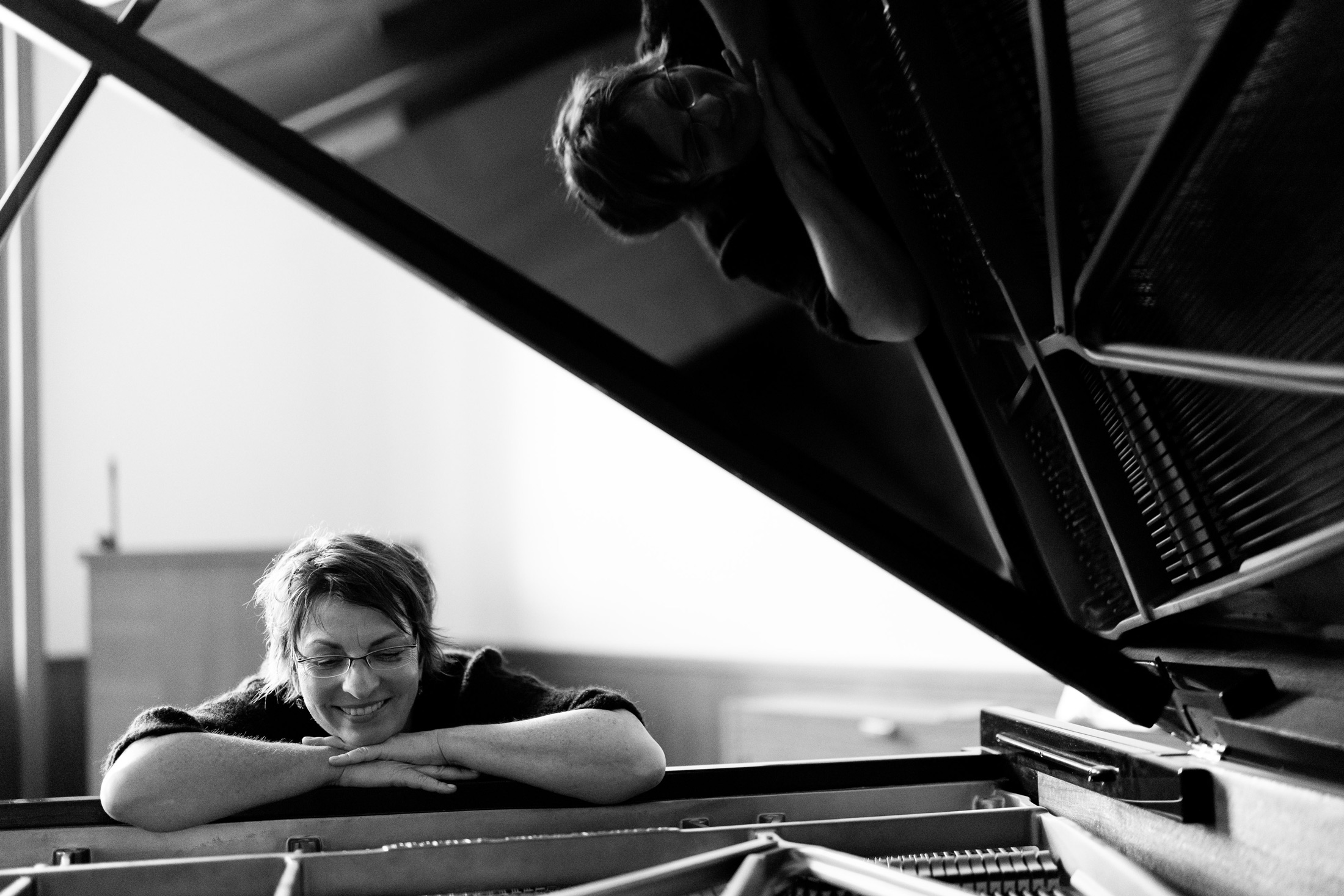
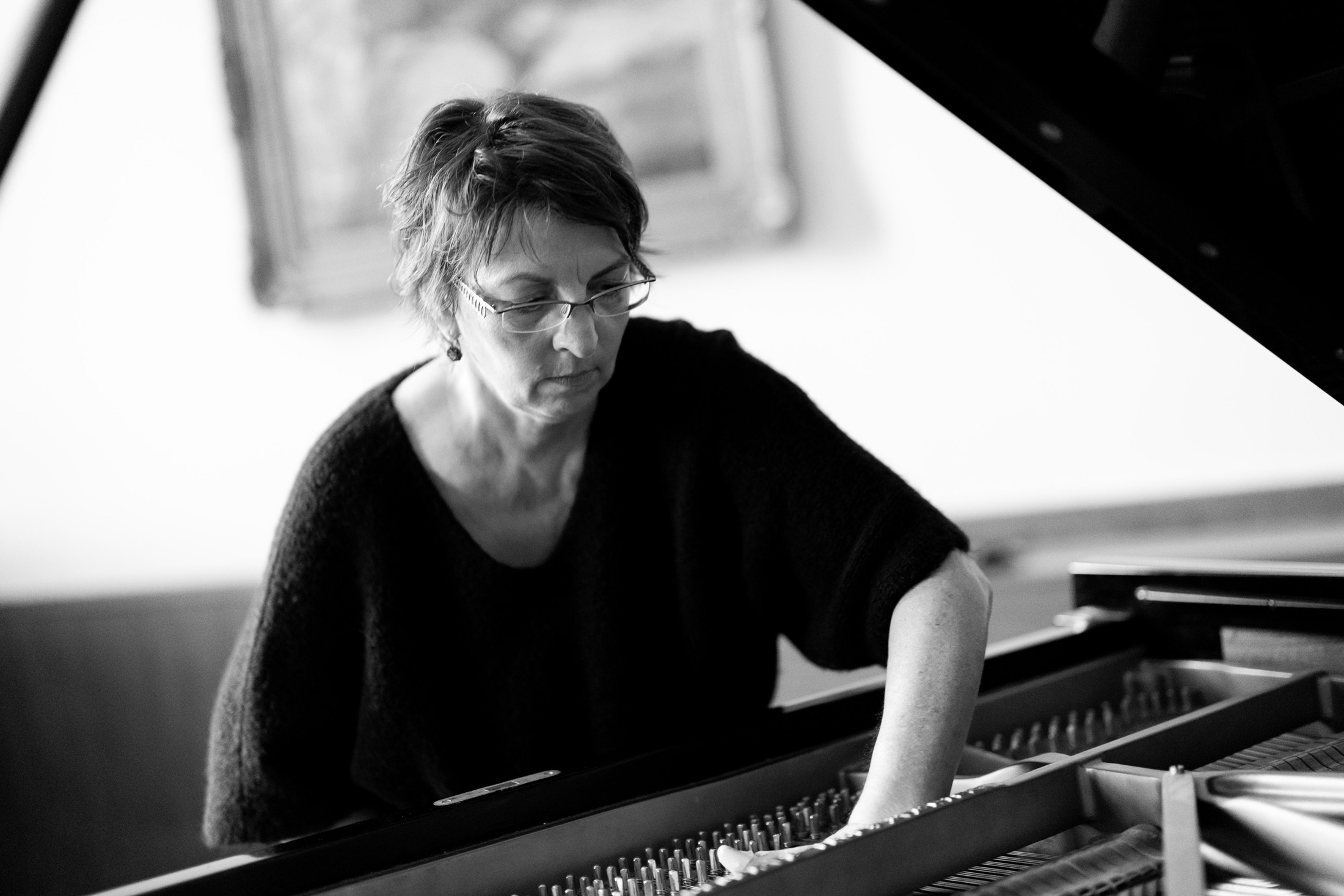
I am fascinated by what happens when you approach the physical reality of a piano like a child: placing your hand on the strings, covering them with a cloth, striking them with a small stick.
These techniques create effects through which entirely different instruments or musical worlds suddenly seem to emerge — the sound of Arabic plucked instruments, for example.
At other times, the music becomes much more rhythmically driven through the creation of sounds and textures: knocking on the soundboard, playing on the raised lid while holding the sostenuto pedal, or deliberately allowing sounds to blur into one another through the use of the pedals.
I love discovering what else this instrument can be.
The value of the unrepeatable
When an improvised piece disappears after the moment of performance, what does it mean to you to let music exist only once? Do you ever wish you could preserve certain moments?
Yes, I have often thought about finding ways to preserve these moments.
But in doing so, I realised that I grew up within a musical tradition in which only the great composers seemed to have value. And I have come to understand that my value lies precisely in allowing things to exist only once, in exactly this form.
I find this uniqueness incredibly precious in our time: listening, truly giving yourself to the moment, receiving, paying attention.
We are surrounded by so much external noise, so many things constantly demanding our attention. We create forms of security for ourselves.
Here, there is only one certainty: being here, now, in the present moment.
The attraction of contrasts
As your own musical language has developed since 2020, have you noticed a recurring sound, gesture, emotion, or musical idea that seems to appear in your work almost unconsciously?
Contrasts.
Something very delicate can suddenly break open. A beautiful sound can become porous. Stillness can turn into unrest, and something wild can suddenly give way to an almost unexpected silence.
Perhaps something in me is always searching for that point where one thing begins to lose its form and the new has not yet fully emerged.
Leaving the listener an open space
What would you like an audience member to discover about themselves while listening to your music — not simply about you or your story?
I cannot say what someone should discover.
What moves me is the idea of creating a space — or perhaps a kind of vehicle — in which, for a moment, things become a little quieter between a person and themselves.
Perhaps a memory emerges that has nothing to do with mine. Perhaps a longing. Perhaps unease. Perhaps beauty. Perhaps something for which there are no words yet.
If my music can do anything, I hope it does not provide a finished meaning, but opens a space.
And whatever appears within that space belongs to the person who is listening.
What is still waiting to be discovered
Looking ahead, what is the artistic territory you feel you have not yet explored, but already sense is waiting for you?
I really am only at the beginning of discovering what might still be waiting for me — and at 58, that is an extraordinarily joyful feeling.
I have a sense that my work will increasingly move towards the intersection of music, light, silence and architecture.
For example, I have already imagined collaborating with a photographer in a live performance. The photographer would capture particular faces or moments among the people in the audience and project them live onto a large screen. I would then translate that face, that movement, that individual human being into music in real time.
There would be no predetermined concept.
It would be about giving one individual person a face — making them visible.
I am also fascinated by the idea of architecture being placed into an entirely new relationship with music created specifically for it: music and space responding to one another, transforming the way both are experienced.
A music that leaves the door open
Kirsten Susanne Böhm’s answers return again and again to the same essential gesture: making space.
Space for silence. Space for memory. Space for uncertainty. Space for a wrong note to become a new direction. Space for a listener to encounter something that belongs entirely to them.
Perhaps this is also what makes her approach to improvisation so compelling. It is not an attempt to control the unknown, but to remain attentive enough to recognise what emerges from it.
For an artist who only discovered the freedom of playing without a score in 2020, the future consequently feels less like a destination than an open field. Music, light, architecture, faces, silence — all remain possible.
And for Böhm, that sense of possibility is not something to resolve.
It is something to listen for.
Photos by : Thomas Lorenzen & Jens F. Kruse