Alicia Sevilla: When Music Becomes Image
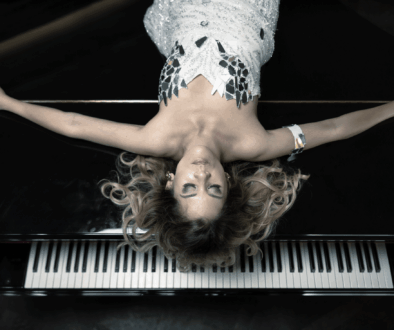
“Music you can see” describes quite well how I experience music. For me, it is almost impossible to experience it only through hearing.
Preface
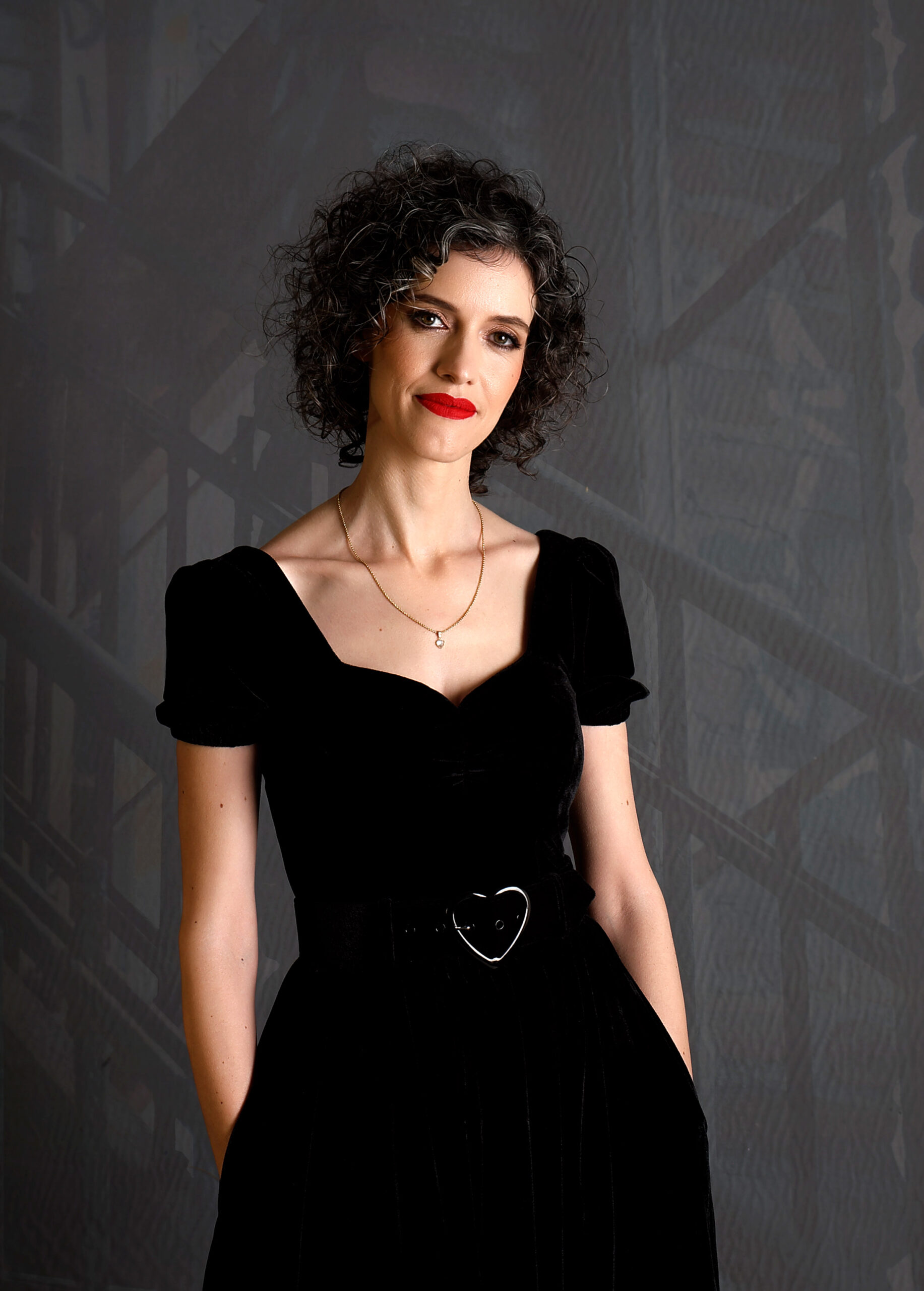
For Alicia Sevilla, music exists beyond sound. It can become colour, movement, memory, landscape and story — an inner visual language in which the boundaries between what we hear and what we imagine begin to dissolve. As both pianist and composer, she approaches the piano as the centre of a wider artistic universe, one shaped by curiosity, play, narrative and an instinctive search for her own musical language.
Her creative process can begin with a chord, an emotion, a melody heard in a dream, or an image waiting to be translated into sound. From intimate piano works to theatre, documentary, film, games and orchestral music, Sevilla has continually explored the space where different art forms meet. Her music is deeply personal, yet she sees composition as an invitation for listeners to undertake their own inner journey.
What we hear can awaken something we see, feel or imagine, until all these dimensions become a single experience.
At the heart of her approach is also a belief in listening: to resonance, to silence, to the unexpected, and to the identity of each artistic voice. She describes silence not as absence, but as the space in which resonance can breathe, while collaboration becomes a form of mutual enrichment rather than a compromise of identity.
This spring, Sevilla brings that distinctive musical world to Piano Revenge Days Île Saint-Louis in Paris, where she will share the programme with fellow artists in an intimate historic setting. For her, the festival already feels like something more than a stage: a meeting point with artists following related paths, and perhaps, as she puts it, a kind of musical family.
Between the piano and the blank page
Piano Revenge MAG: You are both a pianist and a composer, but you describe the piano as the expressive axis of your musical world. When a new piece begins to appear, does it usually come to you first through the piano, through an image or emotion, or through a purely musical idea?
Alicia Sevilla: I’m a pianist and a composer, and the piano is at the centre of my musical expression. At the same time, I often think of myself as a researcher of sound as much as a composer. I like to develop my own criteria through experience and exploration, and to shape a language of my own, with full creative freedom.
A piece rarely begins the same way twice. Most often, inspiration finds me when I’m already at the piano, playing or improvising. A chord I love appears, and I follow it. Sometimes it begins with an emotion I want to express, and I search for the chords that can hold it. And sometimes it comes in dreams, where melodies seem to arrive much more easily than they do when I’m awake.
There are also moments when I’m simply relaxed at home and start singing. A melody begins to take shape, and I bring it to the piano, where harmony becomes the clothing that dresses it. From there, I develop it and discover where it wants to go.
Play is at the heart of this process. I explore freely, but there is often a small seed of intention within that play — a story, an image, or a feeling that wants to be told. What I’m always searching for is that spark: the moment when something suddenly feels alive, when I feel the music moving through me and I get goosebumps. Those are the moments when I feel most alive myself.
There is something almost spiritual in them for me. Beauty seems to transcend me for a moment, and I feel connected to something beyond myself. For me, music is sacred. I feel completely present and alive when the boundaries between myself, the music and the world around me seem to disappear, even if only for a moment.
After years of composing, I understand my palette of colours much better, so harmony and rhythm often come more naturally. Melody, for me, runs deeper. It can be an idea, a reflection, a philosophy, or an inner movement that I don’t necessarily have words for.
In the end, it is all connected. I think composing is partly about listening closely enough to discover what is already trying to emerge.
Music you can see
You describe your music as “music you can see” and “images you can hear.” Visual imagination seems to have a particularly important place in your creative process. What do you actually see when you are composing, and how does an image eventually become melody, harmony, rhythm or texture?
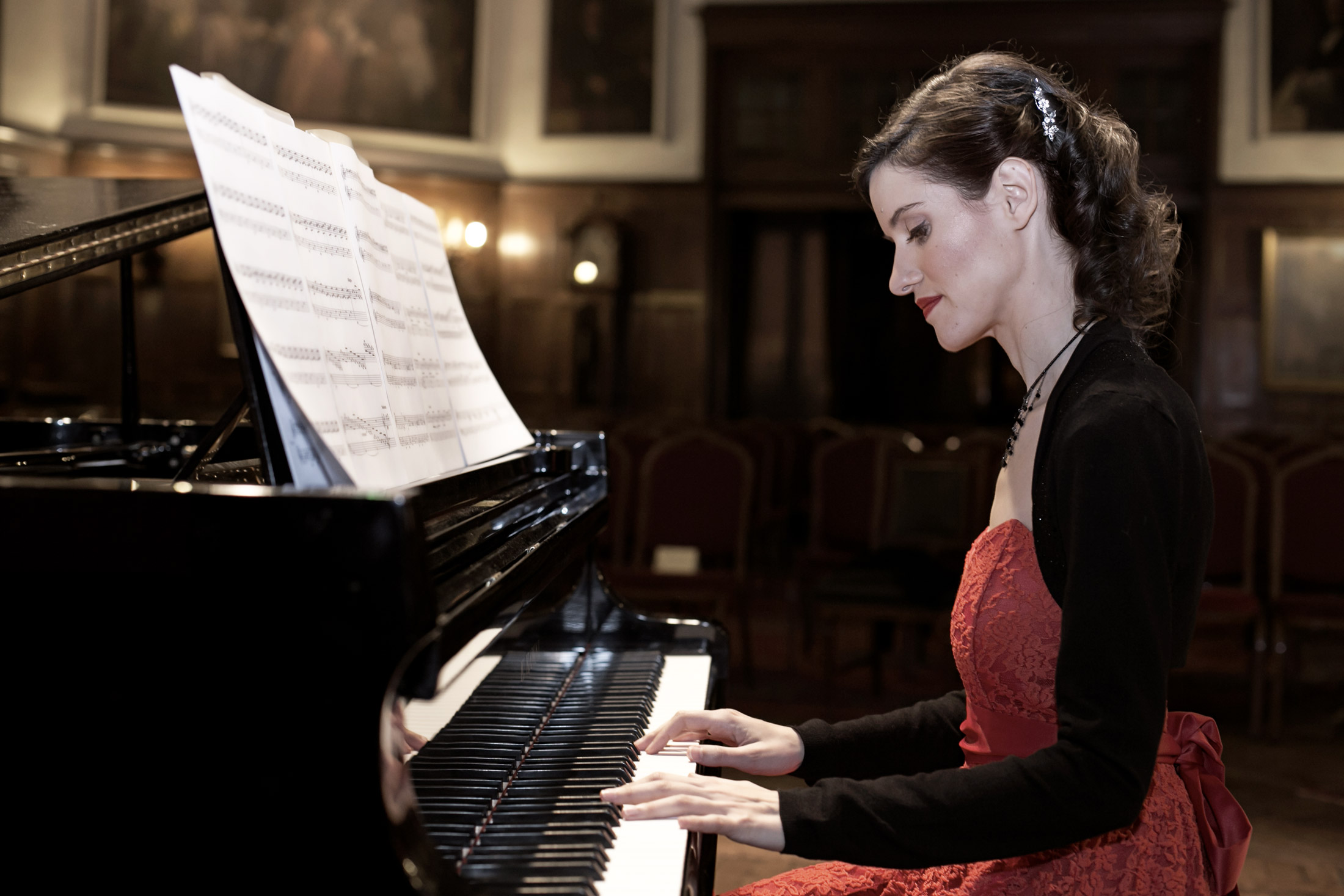
“Music you can see” describes quite well how I experience music. For me, it is almost impossible to experience it only through hearing. When I listen or compose, I also perceive movement, atmosphere, images, colours and shapes.
When there is a melody, I feel an inner movement. When a harmony appears, it creates an atmosphere that accompanies that movement, emphasises it, or plays with it to carry it somewhere else. Sometimes harmony brings discovery and openness; other times, intimacy. For me, all of that can also become a visual experience.
Sometimes the images are very concrete. Nature is a great source of inspiration for me, and some of my pieces have expressed, quite literally, snow, a tree through the seasons, a sunrise, flowers, or light passing through leaves. Other times, there is no specific image, only colours and abstract shapes that already carry meaning for me.
For many years, as a teacher, I even painted music as a way of showing the depth of sound from another perspective. It always felt natural to me, and over time I realised that it is simply an innate way of perceiving music.
I have experienced this, too, when working with fairy tales, where the images of the story are often inner images. There, I feel a kind of two-way language: anything I see or experience can be translated into music, but music can also turn into image.
Perhaps that is why composing for image has felt so natural to me. My training in scoring for film, television and video games, together with my experience composing for theatre and documentary, has allowed me to explore this relationship from another side: not only imagining images through music, but also starting from a story, a scene or a visual world and discovering how it can become sound.
This connection has been present in different parts of my work. When composing Noble Heart, for example, I used drawing as part of the creative process, translating the story into colours, intensities and shapes. And working on La Historia del Noctámbulo, a theatre piece without words, made me experience very directly how music can carry a narrative without dialogue. I’ll say more about both of these later.
That is also why the project I’m developing now, bringing my music to the stage with scenography, makes so much sense to me. Images also tell stories, or at least create a context and a situation, and my music tends to have a strong narrative depth. It feels as though everything comes together.
For me, movement, narrative, image and music are deeply connected. Music is my main language, but I believe it has an essence that can be translated into other languages.
And perhaps that is, in the end, what it means to me that music can be seen: that what we hear can awaken something we see, feel or imagine, until all these dimensions become a single experience.
The language you have built
Your music has developed into a very recognisable personal language, which you describe as post-minimalist, expressive and narrative. Looking back at Moments and Memories, do you feel that you were already searching for this language then, or did you only recognise its identity afterwards?
When I composed Moments, Memories and my earlier works, I wasn’t trying to fit into any particular language. My aim has always been to find my own voice and stay true to it. Terms like “neoclassical”, “cinematic” or “post-minimalist” came later, mostly as a way of giving others a small point of reference when they ask what kind of music I make.
I think my language has revealed itself through the process of creating. I create music, but at the same time I am creating myself in that process. The work and the person merge. I discover music that comes from within me, and that same music becomes a mirror that helps me know myself better.
That is why, looking back now, I feel the language was already there, even if I didn’t yet know how to name it. It is really the natural medium through which I express the philosophy behind my music: the way I transform an experience, search for depth, and make musical decisions with intention and meaning.
Language is the path. Philosophy is the source.
Every melodic, harmonic or formal choice can have a meaning within that universe. For me, music is not only a way of expressing an experience, but also a way of integrating it. There is something healing in that process, but also something transcendent: the search for beauty, or for a closer connection to the deepest questions of my existence.
I believe that philosophy is an essential part of my identity as a composer.
And music is my answer.
Memories becoming music
Memories grew from personal experiences — struggles, dreams, joys and growth — which were transformed into twelve pieces. What happens to a personal memory when you turn it into music? Does composing allow you to preserve an experience, transform it, or perhaps see it from a different distance?
I really like this question because, for me, composing is a journey into myself. I am not the same person before creating a piece as I am afterwards. Some pieces have transformed me more deeply than others.
The process often begins with a need, because composing is a very deep necessity for me. I could almost put it on the same level as breathing. It’s the best way to be myself.
And it’s also my greatest strength: through composing, I can transform an experience. If the experience is positive, I can celebrate it more deeply. If it is difficult or painful, I can guide it towards a place of healing and reflection.
And what usually happens is that, somewhere along that journey, I arrive at a place of greater calm. I feel more serene, more at peace than I was before I began.
That is why I feel that, if music has helped me in this way, sharing it is an invitation for each listener to take their own inner journey through my experience, through my music.
Perhaps that is what happens to a personal memory when it becomes music: it is no longer only something that belongs to me. It becomes a journey that someone else can navigate and experience in their own way. I’m only guiding the process.
Writing without words
Your first theatre commission, La Historia del Noctámbulo, was created for a wordless production, meaning that music had to carry much of the narrative normally conveyed by dialogue. What did that experience teach you about storytelling through music, and has it continued to influence the way you compose today?
Absolutely, it influenced me. La Historia del Noctámbulo was my first true commission as a composer, and for me it was a gift. The creative freedom and the narrative weight I was given were greater than usual, and rather than seeing it as a challenge, I saw it as a privilege. The play was wordless, so the music had to carry much of the story. In truth, it meant giving space to the language I was already composing in: expressive, narrative, melodic. It felt like a natural continuation, but one of great responsibility.
The music was also performed live, so I had to adapt to the movement of the actors and to what was happening at each moment, subtly changing my intensity or timing. It was months of careful observation, and not the usual process of receiving a finished play and then being asked for the music. I was part of the creative process from the beginning, and even the final touches of the staging were adjusted to the music as it took shape. There was a remarkable sense of connection.
It was a milestone for me as a composer. In a story without words, the music could not be an accompaniment. It had to be the centre, the core: clear, evident, and the guide through which everything else came together. The production was very well received, and both the director, Ricardo Padilla, and I received warm congratulations. The experience was so good that he has continued working with me for more than fifteen years, and I have continued to compose for his theatre works.
Recently, I asked him to be the set designer for my own music. We are reversing roles: now he will create a scenography that expresses, without words, the narrative of the music itself. It feels like a new step in my career.
From intimate piano music to the orchestra
Your work has gradually expanded from piano-centred compositions to strings, ensemble and orchestral writing. Noble Heart, recorded at AIR Studios in London, was also the first orchestral work you conducted yourself. How did stepping into the role of conductor change your relationship with a piece you had written?
Conducting has changed my relationship with the music I write. Before I stood in front of an orchestra for the first time, I had led string quartets and other small ensembles, and in La Historia del Noctámbulo I conducted while playing, acting as a bridge between what was happening on stage and the musicians.
I worked intensely on Noble Heart before recording it at AIR Studios in London. I knew I would be working with outstanding musicians from around the world, in one of the finest recording rooms anywhere. What I was not prepared for was to feel the music come to life in front of me and to be moved so deeply by it. On the conductor’s podium, you receive the sound at its fullest splendour. I will be honest: the emotion was so intense that tears came to my eyes. Yet I had to keep my full attention on everything happening until the very end of the session, shaping and polishing the final sound. It was an enormous triumph, and I am deeply grateful for the experience and for everyone who was part of it.
My music is very organic, or at least I try to make it so. I look for expressive freedom, I respect the rubato, and I rarely use a metronome. That is why conducting matters so much to me. I believe part of a composer’s work is to convey more than the score can hold, so before recording I explain my intentions for each section and, when there is time, what it means to me. Musicians play differently once they understand the context behind the creative decisions. Conducting then becomes a way of emphasising what is already written, and of taking responsibility for the final result.
It also gives me the best place from which to listen. I can make small adjustments in the moment and guide the expression towards the place I had imagined within myself, while staying alert to the unexpected. Sometimes I have even become the composer again in the middle of a performance and changed a few bars that, heard live, did not say what I wanted them to say. That doesn’t happen when I play solo, because that work is already finished. When I extend my music to other instruments and other interpreters, there is far more richness and complexity, and listening in the present moment becomes essential.
For me, conducting is part of my responsibility as a composer.
Spain and Denmark
Your artistic life has developed between Spain and Denmark. How have these two places, their different cultural environments and your experiences of living there shaped the person and musician you have become?
When people ask me where I am from, it is surprisingly hard to answer. I can say where I was born, but where am I really from? I think I am from all the places I have lived, and, in part, from the person I have chosen to become along the way.
My roots are in Extremadura and the south of Spain, where my parents and grandparents come from, and from them I inherited a way of seeing life. I was born in Valencia, and I absorbed its culture too. I love my land, above all its nature: watching the sunrise over the sea, and the light that comes with it. Valencia is also musically privileged, and I was fortunate to receive excellent training there.
Later I moved to the Basque Country, where I met my partner and lived for six years. It was there that I premiered La Historia del Noctámbulo and began to develop professionally. Then came six years in Denmark, a period of research and consolidation. Denmark helped me take my work abroad, and it gave me a mentor, the composer Halfdan E, head of the Danish film composers association, whose unconditional support continues to this day. It also gave me broader horizons and, through contrast, an awareness of the Spanish culture I carried within me. I premiered an album there, Memories, full of everything I had lived and gathered.
I returned to Valencia as a mother, to the same place where I was born, yet the experience was different because I had changed along the way. I also decided to study scoring for film, television and video games at Berklee, a possibility that did not exist when I left. Graduating with honours in my own land meant a great deal to me: it felt as though my place of origin could now hold my own voice and my own space.
What has shaped my identity is not the places themselves, but what I chose to take from each one: what resonated with me, what helped me grow, what, in truth, was already inside me. The outside experience was a mirror that helped me recognise myself and know myself better. In the end, I realised that home is where you find people who share your values, not simply your traditions. I have found that in Spain and abroad alike.
The role of silence
You speak about silence as something that “speaks too,” and your music places great importance on rubato, resonance and pauses. What does silence allow you to express that sound alone cannot?
Thank you for this question; it lets me talk about something deep that I rarely have the chance to put into words.
Silence, for me, is not an absence but the space where resonance breathes. Music is already the most invisible of artistic languages, and resonance is what brings me closest to that invisible world. A note is never only the note we hear: every note has depth, and I love the mystery that a single note contains all the others. Sometimes I emphasise those harmonics through different chords, simply letting them breathe.
Rubato belongs to the same kind of listening. For me, it is what is organic and genuine, not built to the rhythm of a machine. Rubato is humanity.
Pauses matter for the same reason. I feel they are almost an act of rebellion against the haste of our society: a chance to stop and listen. In that stillness, attention widens, and things are heard differently. I don’t try to impose an impact; I try to invite. The layers of depth reveal themselves to each listener, according to how far they wish to go. With that attention, there is more openness to feeling that there is something beyond sound, because for me music is a means of expressing something much deeper.
Writing for images
Your work now also extends into documentary, theatre, film and video-game scoring. When you compose for an existing story or visual world, how do you find the balance between serving the narrative and preserving your own musical voice?
I have a strong conviction that I cannot stop being myself. If I am invited to compose for a project, being loyal to myself and to my creative freedom is essential. That is why I choose collaborations where this principle is respected.
Ideally, I want people to come to me precisely because they are looking for my voice. I want to be able to adapt to the project, but without having to leave my own musical identity behind. Respect for that identity is essential to any collaboration for me.
From there, a very beautiful exchange can happen, because I also deeply respect the vision of the other artist, the director, or whoever is behind the project and has something they want to express.
I naturally like to listen. I want to understand what the other person is trying to say and, even though I bring my own language, I want that need to be expressed through the music. The need is the “what”; I am the one who shapes the nuances of the “how”.
There is often an exchange of ideas. Someone may bring an initial concept, and we explore together whether it reflects what they were imagining. But sometimes, after listening carefully and trying to understand what they really want to communicate, I become a kind of musical translator of that idea and come back with a proposal they may not have imagined, but that they like even more. I find that very beautiful.
For me, working with someone is a source of inspiration. It is almost like being given a frame in which to focus my attention. My work is then to translate an idea, a story, or an emotional or narrative intention into music, through my own language.
Often, people come to me specifically because they are drawn to that language. So the collaborations I have done, and the ones I hope to continue doing, are based on these principles: mutual respect, active listening, and a clear sense of identity.
That is where I think collaboration becomes a mutual enrichment and an expansion of horizons.
A piano in Paris
You will be joining us for Piano Revenge Days Île Saint-Louis in Paris next April. When you imagine bringing your music into an intimate Parisian setting and sharing it within a programme of different artists, what would you most like the audience to take away from those few minutes of music — an image, an emotion, a memory, or perhaps something that cannot quite be put into words?
I think what I would most like is for the audience to see my musical identity — something personal, genuine and truly mine.
One of the most important goals for me is to become more and more myself. So, on one level, I would love for people to see me as I really am, as faithfully as possible, through the voice I have developed.
But I would also love for them to take something with them. I would love the music to transform them in some way, so that after those few minutes they are not quite the same person they were before. That they have been able to take that journey with me.
It is the same journey I go through every time I compose and then perform my own music. Something happens to me through that process, and it would be wonderful if at least part of the audience could experience something similar within themselves.
It would feel as though the gift I wanted to offer had reached them and had truly been received. That would make me feel deeply satisfied, and very honoured.
And I also feel that being part of Piano Revenge Days is something to celebrate. The festival feels very specific to the kind of music I make and the kind of musical world I have been looking for. To find other artists who are walking along a similar path feels a little like finding your own musical family. There is strength in that sense of companionship.
I feel grateful even before arriving in Paris. I feel fortunate to have found this place. It is still a young festival, but it feels very authentic to me, and I have had this beautiful feeling of fitting naturally into it — almost like feeling at home.
So I am very grateful to be part of it, and I am really looking forward to being there.