Massimo Iacobacci: A Life Between Musical Worlds
Music asks for no passport
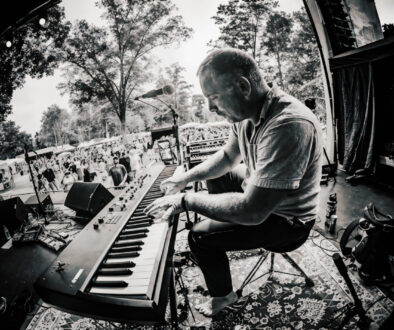
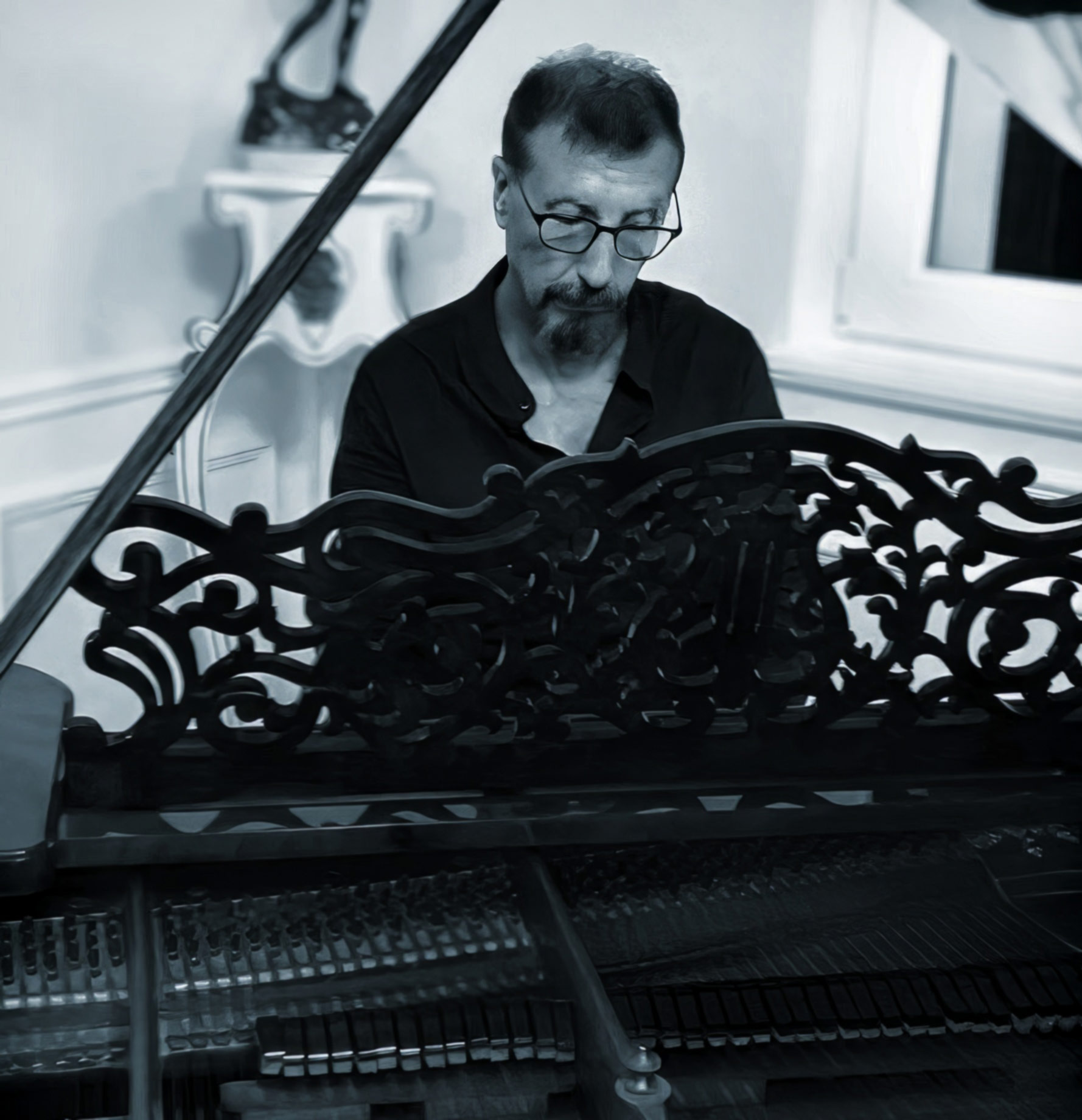
Italian pianist, composer and arranger Massimo Iacobacci has built his artistic identity through a lifelong dialogue between musical traditions. Rooted in classical training yet drawn towards the expressive freedom of jazz, blues and swing, his work reflects a curiosity that has never been confined to a single genre or musical discipline.
His musical education began at the Conservatorio Santa Cecilia in Latina, where he studied piano and cello, developing a solid foundation in instrumental technique and classical repertoire. Following his studies, Iacobacci gradually expanded his musical horizons towards blues and jazz, discovering new possibilities for improvisation, rhythmic expression and composition. Rather than abandoning his classical roots, he incorporated these influences into a broader musical language, one that allows structure and spontaneity to coexist.
An important chapter in his artistic development came in 1986, when he moved to Paris. Performing in jazz clubs, including Café Rive Droite, and meeting musicians from different cultural backgrounds, he experienced a particularly formative period. Those six months offered more than professional opportunities: they became a moment of personal discovery, teaching him to embrace uncertainty, take creative risks and recognise the universal language shared by musicians beyond geographical and cultural boundaries.
Over the years, Iacobacci has developed an extensive collaborative practice as a composer and arranger, working with artists including Clorinda, Fabio Senna, Valentina Ferrari, Luca Marconi, Ernesto Mancuso and Alessandro Pirolli, as well as producer Andrea Palumbo and the 04011 Records label. These encounters have taken him across different musical territories, from folk and swing to blues, instrumental composition and contemporary songwriting.
His collaboration with singer Clorinda resulted in Jazz Novilunion, a project that brought together original songwriting and jazz-swing-blues influences. The creative partnership demonstrated his interest in combining musical experimentation with the expressive possibilities of the human voice. His instrumental work, meanwhile, explores the piano as a central narrative instrument, often surrounded by delicate harmonic textures and influences drawn from different musical traditions.
As a performer, Iacobacci has appeared at several established Roman music venues, including Fonclea, Big Mama, Cotton Club and Elegance Caffè. His musical approach is characterised by stylistic versatility and expressive sensitivity, moving between the intimacy of solo piano and the collaborative energy of ensemble work.
In recent years, his creative activity has increasingly turned towards composition for film and television. This development has brought another dimension to his relationship with music: the challenge of creating sound that serves an image, accompanies a character or gives emotional depth to a narrative. In this field, he has explored the importance of restraint, atmosphere and silence, discovering how a musical idea can communicate as much through what it leaves unsaid as through the notes themselves.
His artistic influences reveal a similarly open musical landscape. The harmonic language of Bill Evans, the melodic expressiveness of Frédéric Chopin, the earthy character of the blues and the cinematic melancholy of Ennio Morricone all occupy a place in his musical imagination. Among the works to which he repeatedly returns is Bob Berg’s So Far So Good, a piece that remains a personal point of reference.
For Iacobacci, composition often begins with an emotion rather than a predetermined musical structure. A memory, an atmosphere or an image gradually finds its way towards the piano, where harmony and melody emerge through an intuitive process. It is this relationship between feeling, memory and musical expression that continues to inform his work.
Today, Massimo Iacobacci remains committed to exploring new compositional directions while looking towards a return to the concert stage. His artistic journey is a reminder that musical identity need not be defined by boundaries: classical discipline, jazz freedom, cinematic storytelling and the intimacy of the piano can all belong to the same creative world.
Between musical worlds
PianoRevenge MAG: Your musical education began with classical studies, including piano and cello, before your artistic journey expanded towards blues, jazz, swing and other musical languages. Looking back, how have these different traditions shaped your identity as a musician? Do you feel that you belong to a particular musical world, or have you always preferred to move freely between them?
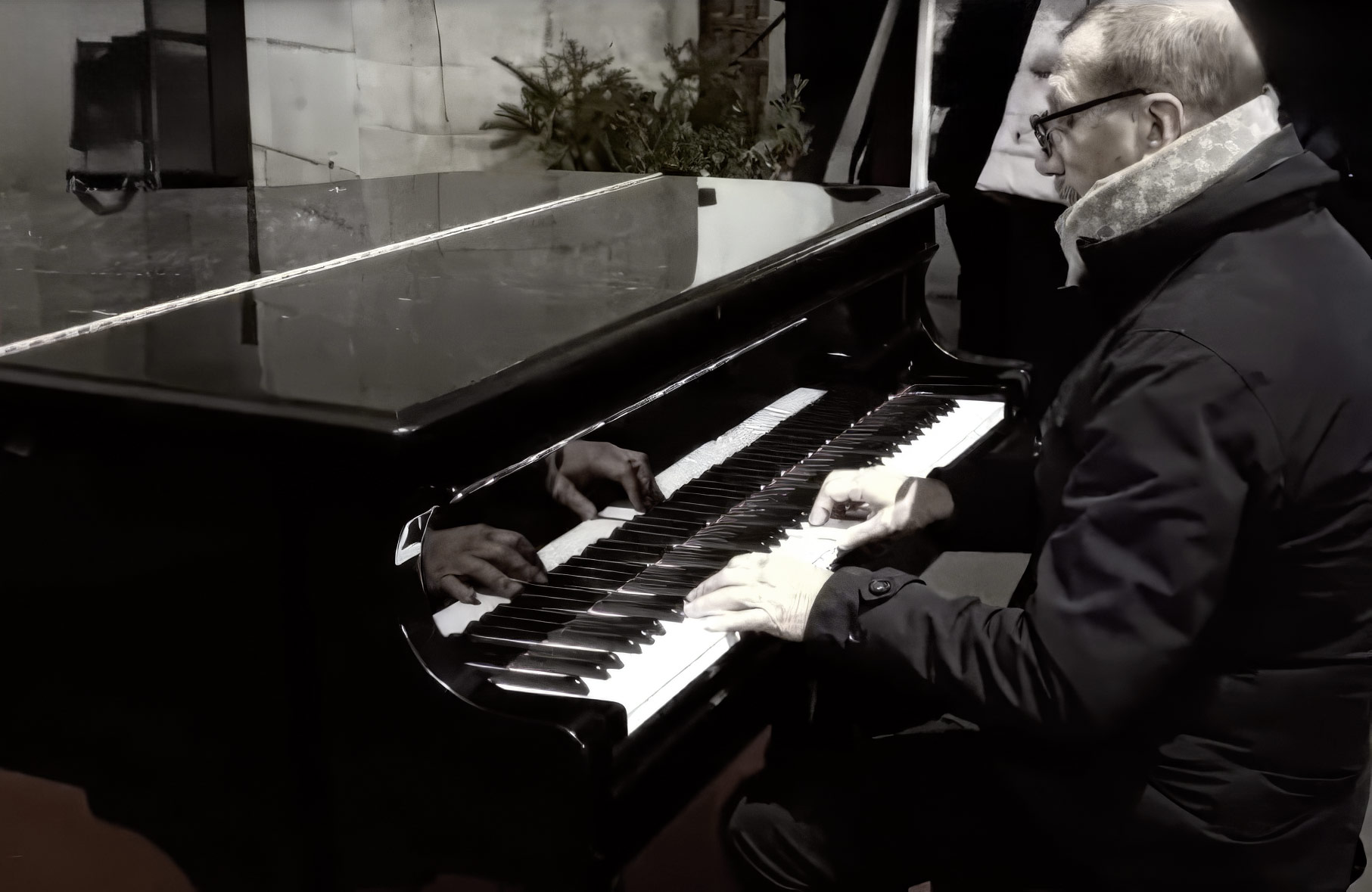
Massimo Iacobacci: I grew up between two homes. One was made of scores, of silences respected, of the accordion and cello vibrating against my chest; the other of smoky clubs, of chords left hanging in the air, of notes born a moment before they were played. For years I believed I had to choose. Then I realised that music asks for no passport. Today I feel like a wanderer: I don’t belong to a single world, but I carry a little of each one’s soil with me.
Paris as a musical chapter
In 1986, you moved to Paris, where you performed in jazz clubs and collaborated with French musicians. What did that period bring to your musical development? Did the atmosphere of Paris, its cultural diversity and its musical community influence the way you approached the piano and composition?
I was in my early twenties, and Paris seemed like a dream far too big for me. At night I played in jazz clubs, at the Café Rive Droite, and by day I walked along the Seine trying to understand who I was. Those six months taught me the courage to make mistakes, and the beauty of meeting people who speak another language yet feel the same music. Something of that grey and golden light has stayed in my hands forever.
The piano as a storyteller
Your work encompasses different styles, from instrumental compositions and jazz influences to folk, swing and contemporary songwriting. When you sit at the piano to create something new, where does the process usually begin: with a melody, a particular atmosphere, a rhythmic idea or perhaps a story you wish to tell?
It often begins with a nameless emotion: a winter evening, a face that comes back to me, a longing I cannot explain. I sit at the piano and wait, the way you wait for someone at a station. At some point a chord arrives that resembles that feeling, and from there the melody finds its way. I am not the one who decides the story: the heart already knows it, my hands on the keys follow it, and I simply try not to get in the way while they tell it.
Writing music beyond the concert stage
In recent years, you have devoted much of your creative energy to composing music for film and television. How does writing for an image or a narrative change your relationship with music? Does composing for cinema require a different kind of musical discipline compared with writing a standalone piano piece?
Writing for images is an exercise in humility. Music is no longer at the centre of the stage: it becomes the air the characters breathe, the wind stirring a curtain, the thought no one says out loud. I have learned to take away, to leave space, to trust silence. And when I return to writing for solo piano, I bring that lightness with me: every note has to earn its place.
The art of collaboration
Throughout your career, you have worked with a variety of singers, musicians, arrangers and producers. What does collaboration bring to your creative process? Is there a particular artistic encounter that changed your perspective on music or opened an unexpected direction in your work?
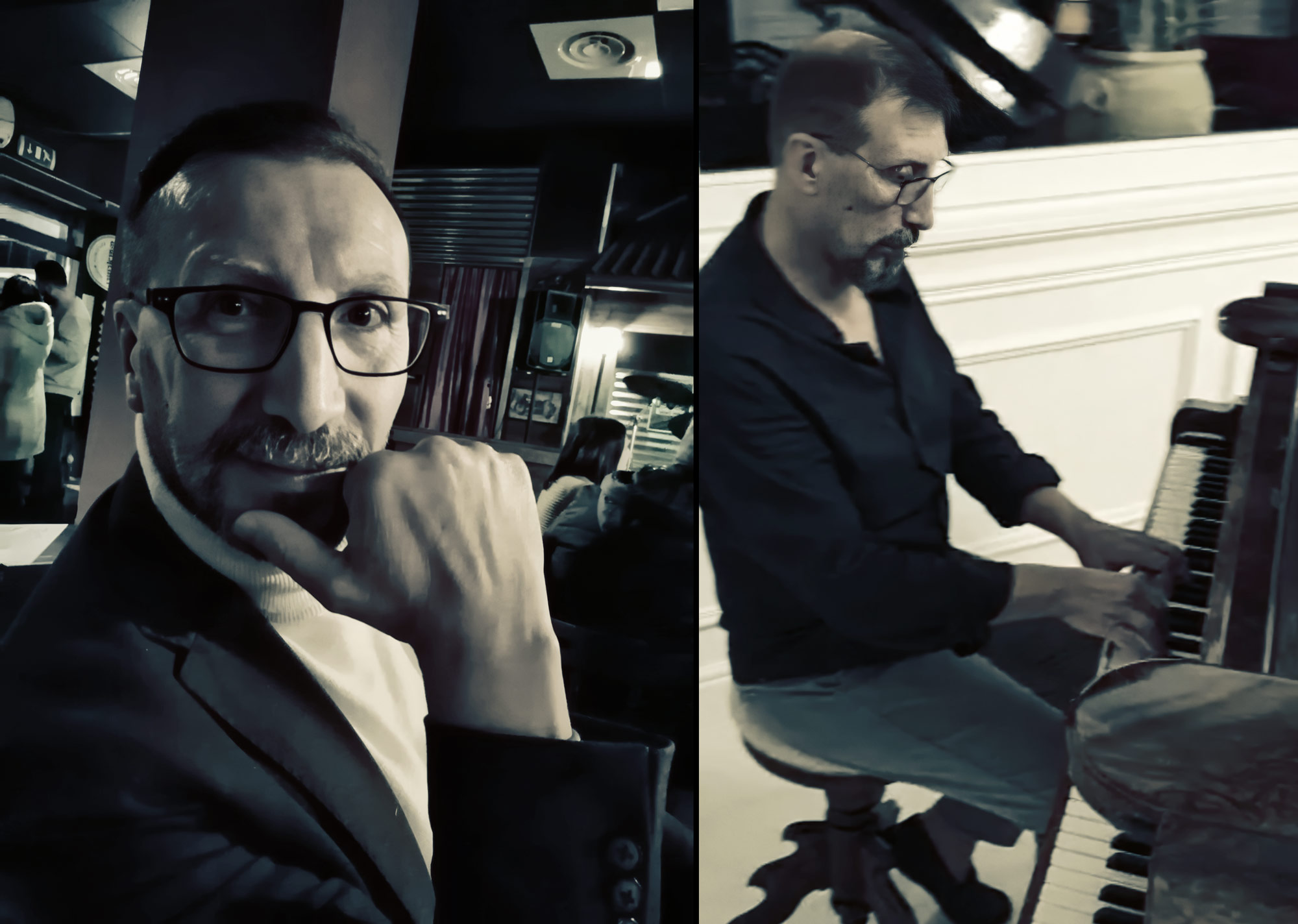
Every artistic encounter is a window opening onto a room I had never seen. With Ernesto Mancuso I learned to listen to a singer’s breath, to follow a voice without ever overpowering it. Through instrumental composition I discovered the song of strings intertwined with the piano, and the courage to give shape to entire albums. The people I have played with have changed me more than any textbook: in every note I write, there is a little of them.
The music you carry with you
Every musician has a personal musical landscape, shaped by the sounds, composers and experiences that remain meaningful over time. Which musical influences, perhaps not immediately apparent in your own compositions, continue to accompany you? And is there a piece of music you find yourself returning to, no matter how many years pass?
When I compose, I don’t follow patterns or models, but I carry with me voices that may not be heard straight away, yet live deep inside: the harmony of Bill Evans, the singing line of Chopin, the earthiness of the blues, the melancholy of Morricone. They are like old friends who need no introduction. And then there is one piece I always return to, “So far so” by Bob Berg, almost as if it were a home. I listen to it on happy days and on difficult ones, and each time it reminds me why, so many years ago, I chose to live inside music.
Returning to the piano, meeting the audience
You were originally expected to join us for Piano Revenge Days in Marsala, an event dedicated to independent piano music and the encounter between composers and audiences. What does performing your own music live mean to you today? And looking ahead, what musical territories or creative projects would you most like to explore next?
Performing your own music live is like opening a diary in front of strangers, and discovering that those pages belong to them too. This year life asked me to pause, and both Marsala and Paris have remained a wish held in suspension. But the piano knows how to wait, and so do I. I dream of returning to the stage soon and of continuing to write music. As long as there is a note left to search for, I will be there, ready to find it, with a reason to sit down at the keys once again and a new chapter of life to tell.
Editor’s Note
Some musical encounters are simply waiting for the right moment. Although circumstances did not allow Massimo Iacobacci to join us on stage for Piano Revenge Days in Marsala this time, we sincerely hope this will be only a postponement of a musical meeting yet to come.
At Piano Revenge, we believe that independent music deserves spaces where artists can share their own compositions, meet attentive audiences and discover new artistic connections. Massimo’s musical journey, his openness to different traditions and his personal relationship with the piano resonate deeply with this spirit.
We would be delighted to welcome him to a future Piano Revenge stage, wherever our musical paths may meet. Until then, we are pleased to give his music and reflections a place in our pages.