Elton John — The Architecture of a Pop Song
Before Elton John became one of the defining figures of popular music, he was a young pianist immersed in the traditions of the European classical repertoire. His story offers an intriguing perspective on the relationship between musical education and artistic reinvention: how the discipline of classical study can survive beyond the concert hall, finding an entirely different expression in the language of popular music.
The revolution was never in abandoning the tradition. It was in discovering what else the piano could say.
On classical education, melodic intelligence and the piano as the foundation of an extraordinary musical language.
Before Elton John became one of the defining figures of popular music, he was a young pianist immersed in the traditions of the European classical repertoire. His story offers an intriguing perspective on the relationship between musical education and artistic reinvention: how the discipline of classical study can survive beyond the concert hall, finding an entirely different expression in the language of popular music.
Born Reginald Kenneth Dwight in 1947, in Pinner, England, Elton John demonstrated an exceptional aptitude for the piano from an early age. By the age of four he was already picking out melodies by ear, and his grandmother, recognizing the child’s unusual gift, encouraged him to play whenever the opportunity arose. At eleven, he won a scholarship to the Royal Academy of Music in London, where he studied for several years.
The institution introduced him to the structural principles of classical composition, the discipline of performance and the intellectual depth of the piano repertoire. He absorbed the music of Bach, Mozart, Beethoven and Chopin, learning not only how to play but how to think in terms of form, harmony and development. Yet his ambitions gradually moved elsewhere. Fascinated by American rhythm and blues, gospel and rock and roll, he discovered in popular music a freedom that would eventually become central to his artistic identity. The young student who dutifully practised his scales in the morning could be found in the evening listening to the records that would shape his sense of rhythm and emotion.
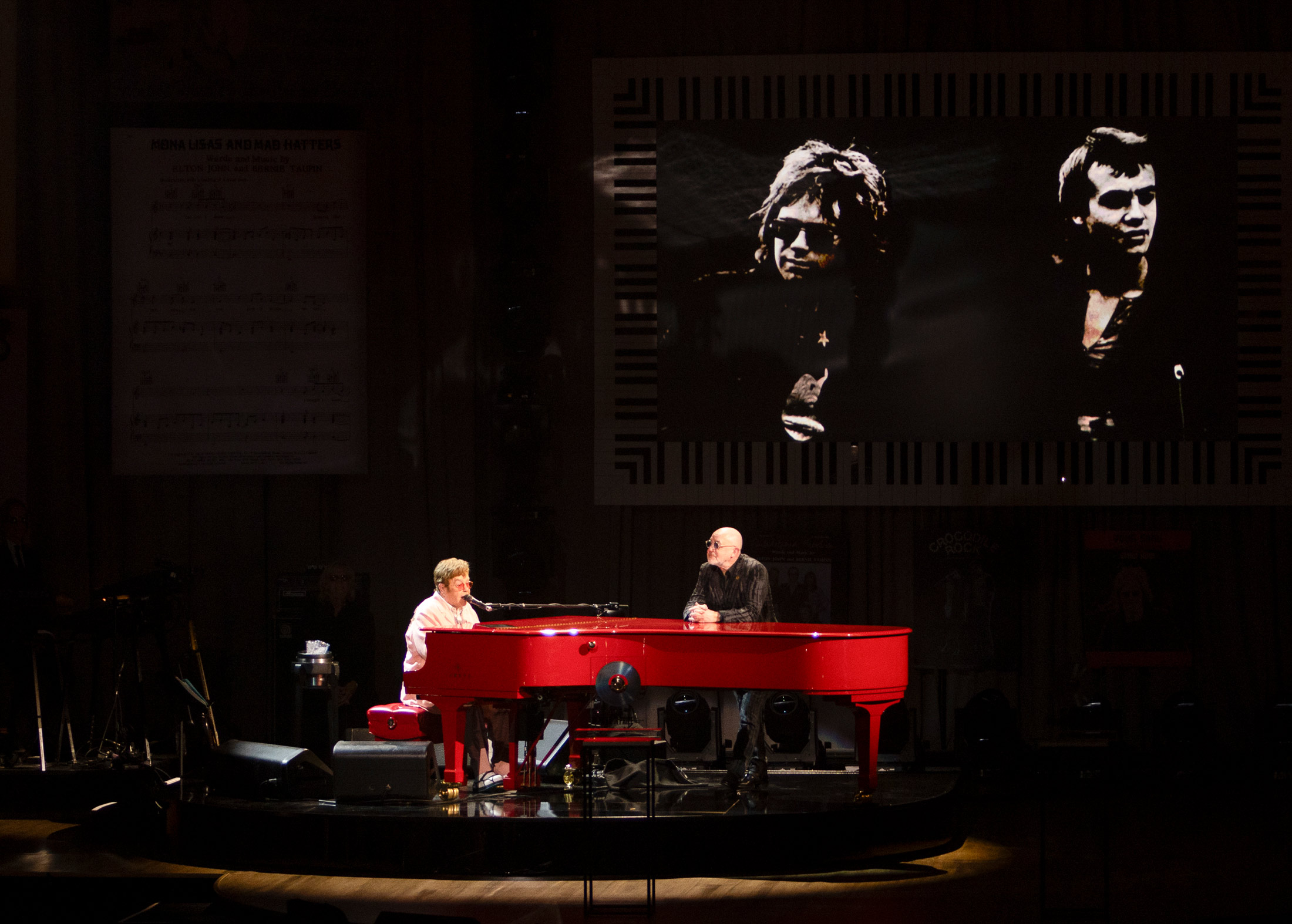
What is particularly interesting is that this transition did not require him to abandon his classical formation. Quite the opposite. In a 2023 conversation at the Royal Academy of Music, John acknowledged that he would never have written his songs without his classical training. It is a revealing admission, suggesting that beneath the apparent spontaneity of his songwriting lies a much deeper understanding of musical architecture. The classical education provided him with a vocabulary that most pop musicians never acquire: an instinct for harmonic movement, a sensitivity to voice leading, and an awareness of how a musical idea can be developed, delayed or resolved. These are not decorative skills. They are the structural foundations on which memorable melodies are built.
Listen closely to Your Song. Its intimacy is deceptively sophisticated. The piano establishes a harmonic environment in which the melody can unfold with extraordinary naturalness, supporting the voice without competing with it.
The chord progressions are simple in appearance yet carefully chosen, each one opening a small door into the next phrase. In Tiny Dancer, the musical landscape becomes more expansive, gradually developing towards an almost orchestral emotional release; the piano moves from gentle accompaniment to a driving, almost cinematic presence. Goodbye Yellow Brick Road reveals another dimension: a finely balanced composition in which nostalgia, theatricality and melodic clarity coexist.
Across these works, the piano is never merely an accompanying instrument. It is the compositional centre, the place where musical ideas acquire their identity. Even when the arrangements grow elaborate — with strings, guitars and layered vocals — the piano remains the anchor, the source from which everything else radiates.
An essential part of this creative process belongs to Bernie Taupin, whose partnership with John began in 1967. Their method remains one of the most fascinating arrangements in popular songwriting: Taupin writes the lyrics, while John transforms them into music, often working independently from the written text. It is a dialogue between two distinct imaginations, one literary, the other musical.
At the piano, John discovers the harmonic and melodic possibilities hidden within Taupin’s words, translating images and narratives into sound. The process recalls, in its own contemporary way, the relationship between a composer and a text — a kind of secular lieder tradition in which the piano does not merely accompany the voice but interprets the emotional world of the words.
The remarkable longevity of their partnership, spanning more than half a century, testifies to the depth of this creative understanding. His musical language is equally indebted to the pianists who shaped his early imagination. Winifred Atwell, Little Richard and Jerry Lee Lewis demonstrated that the piano could move freely between refinement, rhythmic force and theatrical expression. From Atwell he learned showmanship and the joy of performance; from Little Richard and Jerry Lee Lewis, the physical energy and the rebellious spirit of rock and roll piano. This broad musical inheritance helps explain the remarkable versatility of John’s playing. He can be delicate without becoming sentimental, rhythmically commanding without sacrificing melodic sophistication, and harmonically adventurous while remaining accessible. Few pianists in popular music have managed to combine such different registers of expression within a single artistic identity.
Perhaps this is the most significant aspect of his legacy: the refusal to recognise a strict hierarchy between musical traditions. Classical education did not make Elton John less of a popular musician; it enlarged the possibilities of what his popular music could become. His compositions demonstrate that accessibility need not be synonymous with simplicity, and that technical knowledge, when fully internalised, can disappear into the apparent ease of a melody.
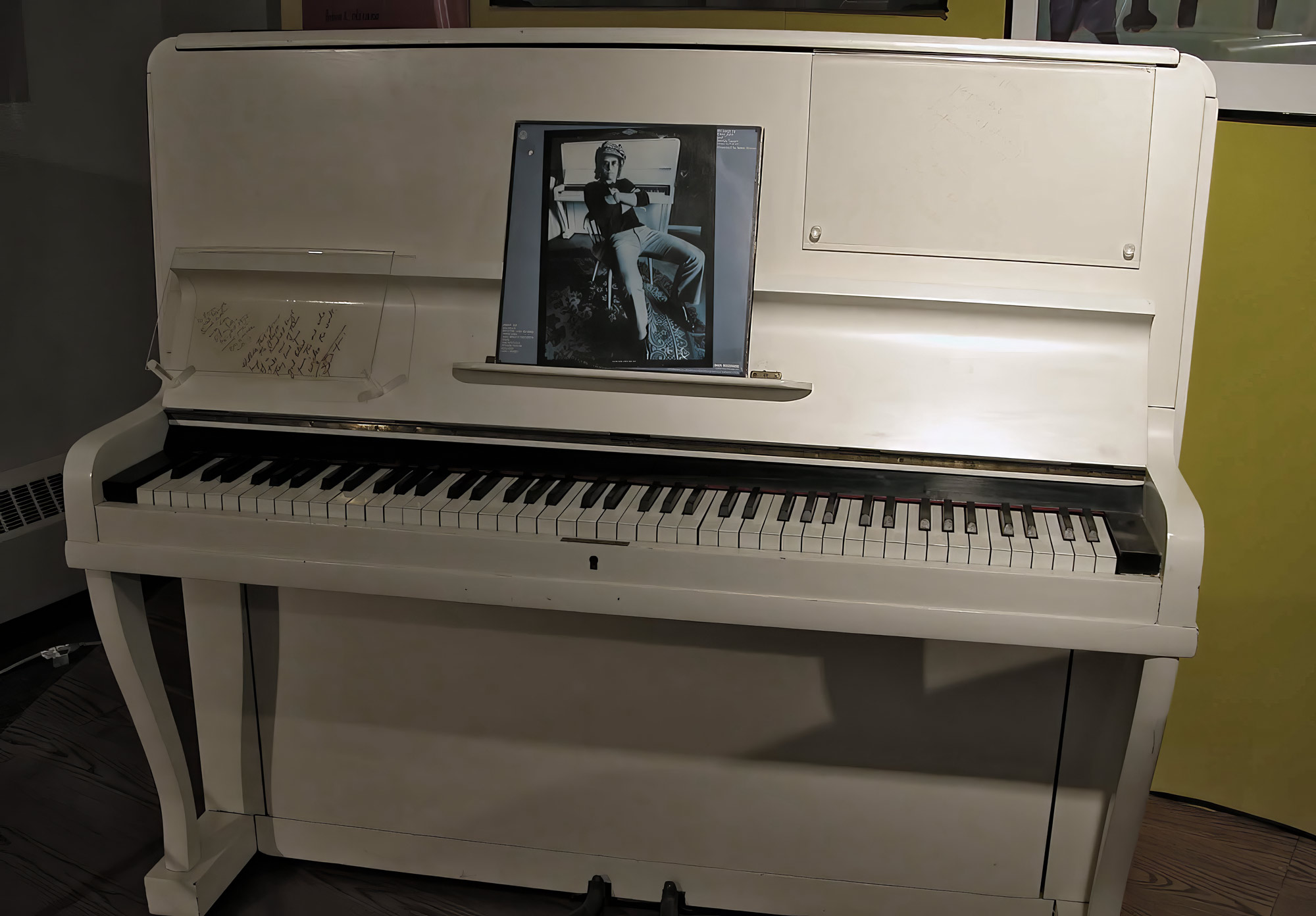
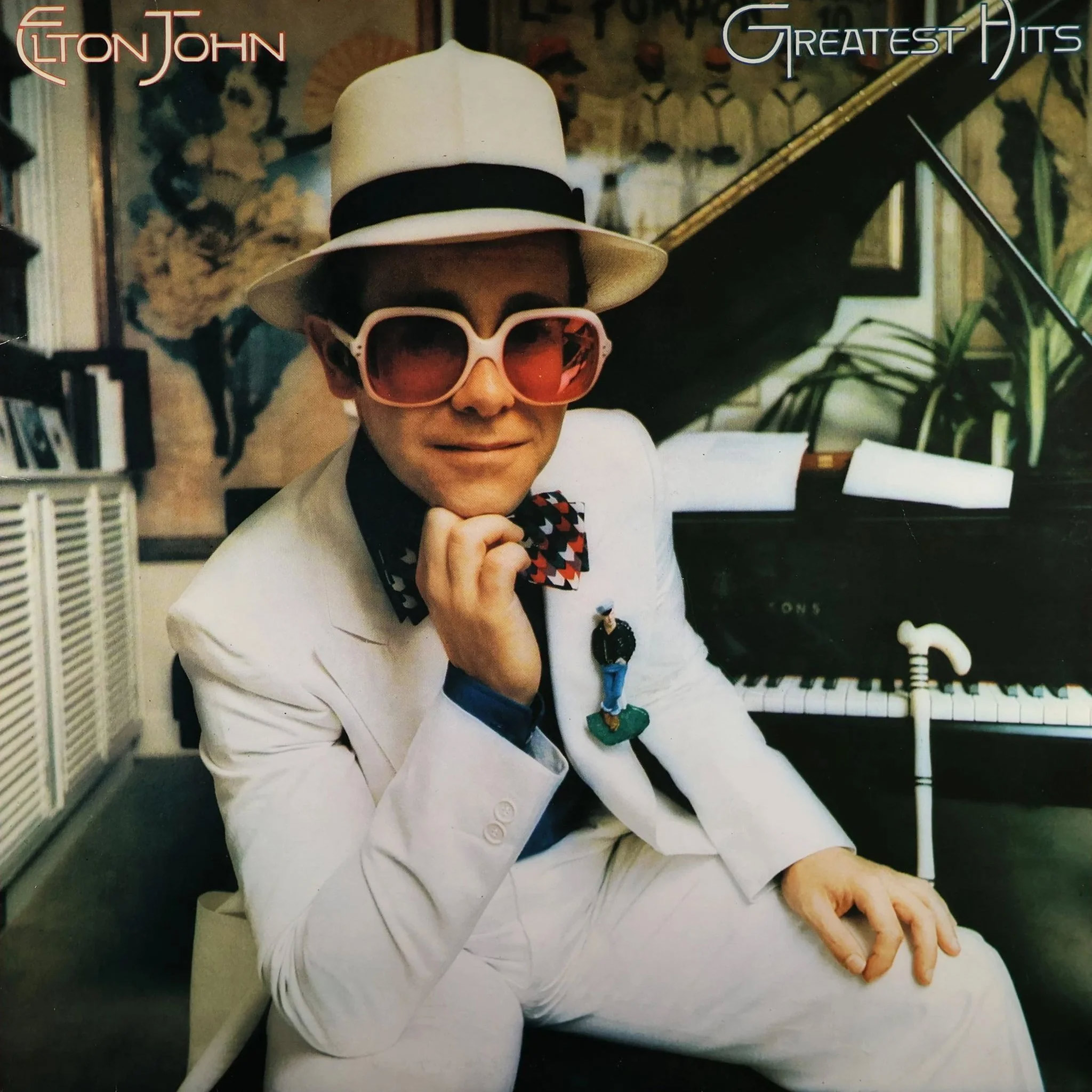
Over the decades, the public image has become inseparable from the legend: the theatrical costumes, the extravagant eyewear, the extraordinary performances. Yet the most revealing image remains a quieter one — Elton John seated at his piano, working through a melody, finding the right harmony, allowing a musical idea to take shape.
For Piano Revenge MAG, his story resonates with a fundamental conviction: the piano does not belong to a single genre, period or institution. Its history is one of constant reinvention, and its language remains open to those willing to explore beyond established boundaries.
Elton John did not leave his classical education behind when he entered popular music. He carried it into another world, transformed its possibilities and made them his own. The result was not a compromise between two traditions, but an original musical language — one in which the intelligence of the pianist and the imagination of the songwriter became inseparable.
The revolution was never in abandoning the tradition. It was in discovering what else the piano could say.