The Fondation Louis Vuitton – Where Art Meets the Piano
The Fondation Louis Vuitton, the Arnault family, and Paris’s most quietly magnetic instrument…
In Paris, the piano is never just furniture. It is a presence – lacquered and waiting – capable of turning a room of strangers into a single listening body.
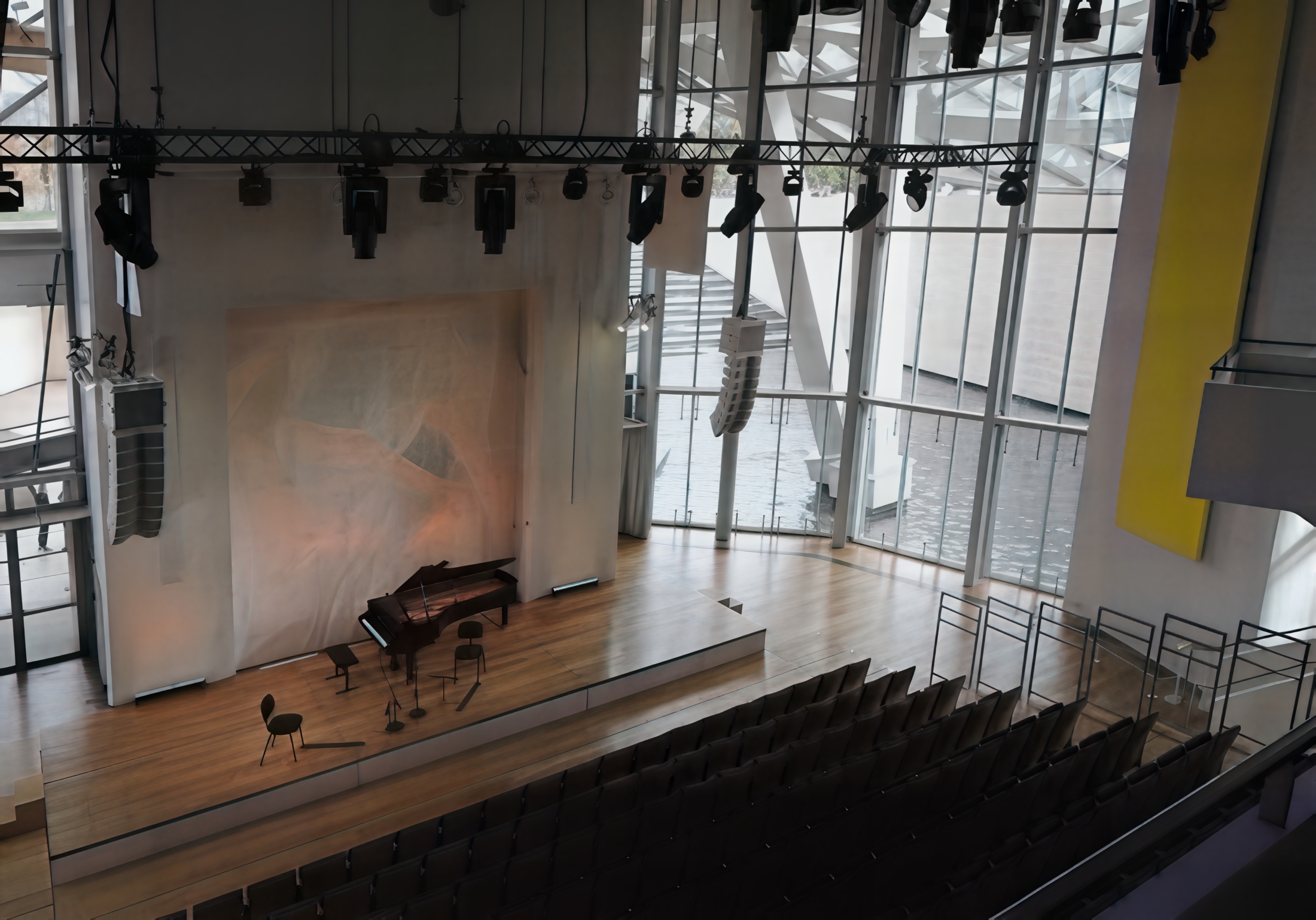
At the Fondation Louis Vuitton, that presence feels unusually at home. Not because the building is “musical” in any obvious way, but because it was conceived for encounters: art with architecture, ideas with sensation, and – in the Auditorium – silence with sound.
For Piano Revenge MAG, the question is irresistible:
What happens when an institution built for contemporary art treats the piano not as a guest, but as a central thread?
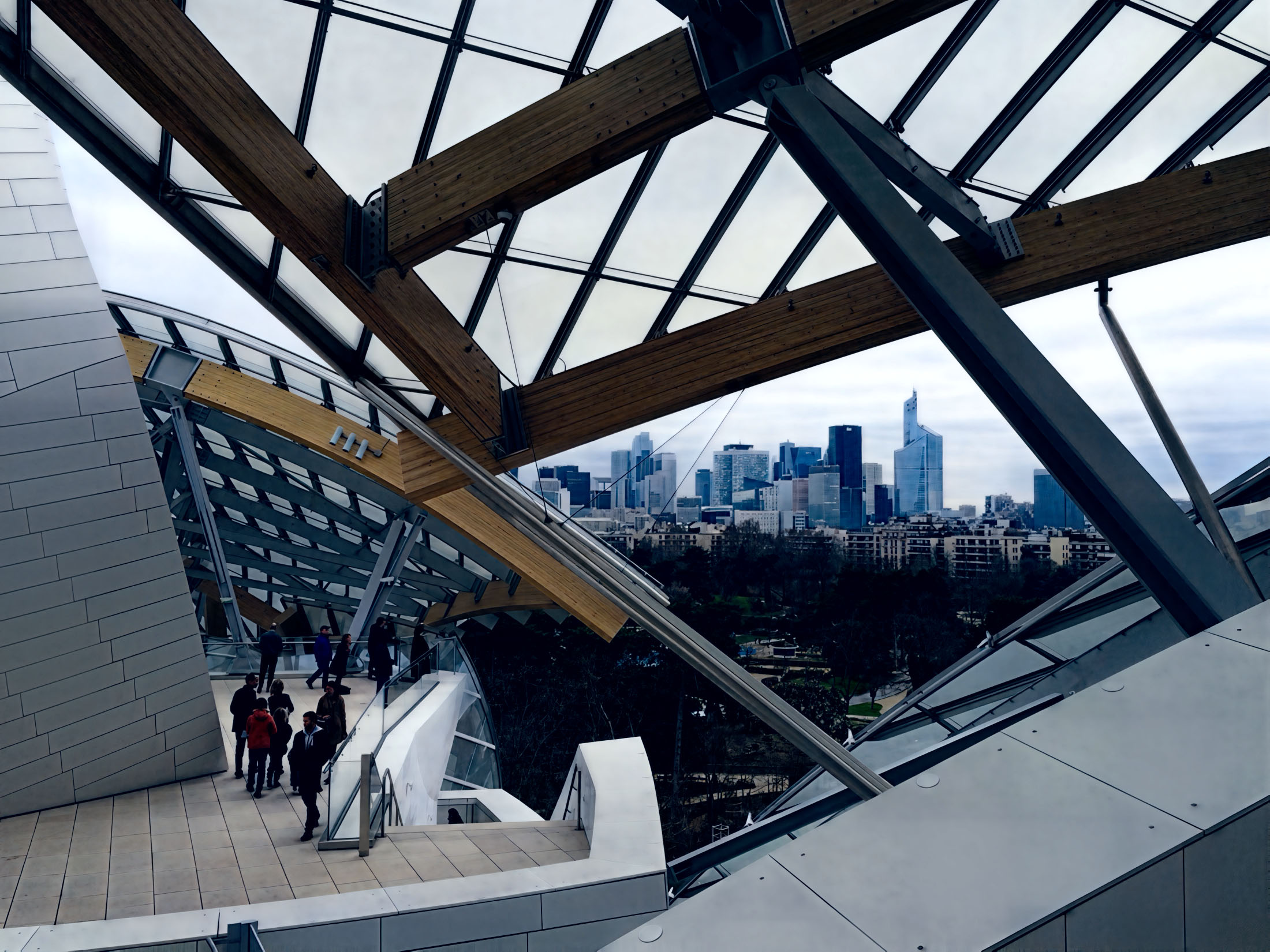
An Auditorium That Flatters the Smallest Sound
Frank Gehry’s Fondation Louis Vuitton is all sails and shifting light – a building that seems to move even when you stand still. Yet inside, the piano asks for the opposite: concentration, stillness, a kind of collective breath-holding.
The Auditorium was designed for that paradox. Depending on its configuration, it can welcome a few hundred listeners or expand toward a larger crowd – but the feeling the piano demands remains the same: proximity. The soft attack of a key, the decay of a chord, the faint mechanical sigh between phrases – details that vanish in grander spaces can become the drama here.
This is the piano’s great trick: it fills a room without shouting. At the Fondation, you sense that the architecture understands that language. The building doesn’t merely contain the music; it frames it – like a gallery frames a canvas, but with time as the medium.
Listening note: In a room that rewards nuance, the piano’s “quiet” becomes its most radical power – a reminder that intensity doesn’t require volume.
A Family That Speaks in Keys
Behind the Fondation’s devotion to piano is something less institutional and more intimate: a household for whom the instrument is part of daily life. Bernard Arnault may be defined in public by industry and scale, yet in private, profiles have long pointed to another constant – the piano – present not as a symbol, but as a habit.
His marriage to Canadian concert pianist Hélène Mercier-Arnault deepens the story in the most fitting way possible: through repertoire, touch, and the particular honesty of playing for someone else. Mercier-Arnault’s career spans the great pillars of piano literature – Mozart to Debussy – and her musical education, from Vienna to Juilliard to the Paris Conservatoire, is the kind that sharpens your ear for a lifetime.
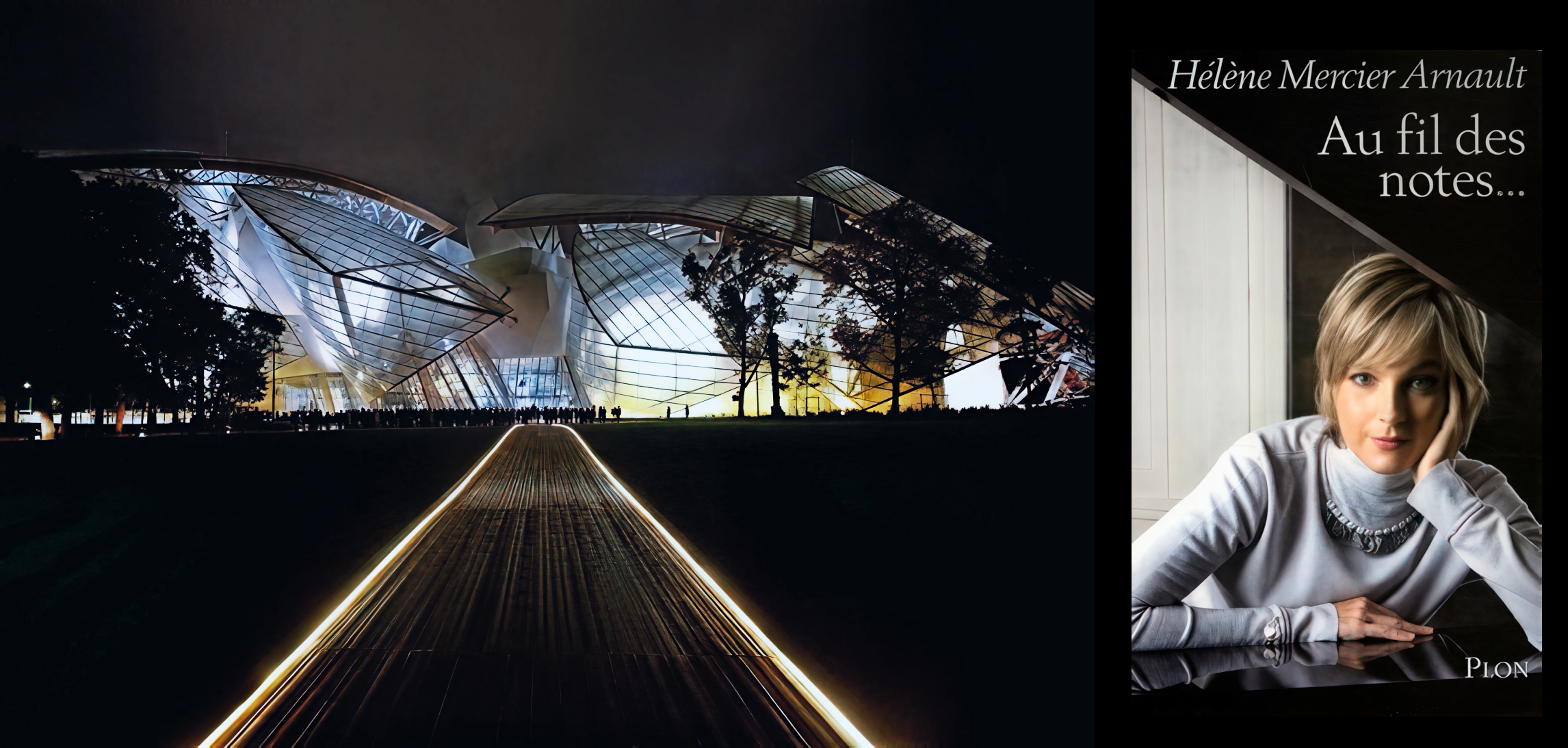
There is also the quieter evidence she has left on the page. In her 2009 journal Au fil des notes, Mercier-Arnault writes the piano not as an emblem but as a way of moving through the world – a life organized by practice, travel, and the strange, private weather of performance. She returns to the beginning: early concerts at twelve, the first hard lessons in exposure, and the long, patient work of preparing repertoire until it becomes both reliable and alive.
From there, the book unfolds like an itinerary of listening: recitals and encounters across continents, the repetitive glamour of airports and hotels, the shifts in light between Montréal and Tokyo, Moscow and back again. What she captures is not only the triumph – but the cost: fears that arrive uninvited, the constraints that discipline imposes, the joys that make the risk feel necessary. And because it is a journal, it opens onto what programs never show: family life, her meeting with Bernard Arnault, and the enduring grief of losing her sister Madeleine – all braided through the same central thread of music, as if the keyboard were the one place where language remains precise enough to hold everything.
Read that way, Au fil des notes (see fnac.com) becomes more than a personal document; it becomes another proof that the Fondation’s cultural ambition is grounded in something deeply lived. Before the programming, before the architecture, there is the daily fact of the instrument: work, memory, and a human being shaping time with ten fingers.
Their origin story has the clarity of a vignette: conversation turning to Chopin; Bernard at the keyboard; the Revolutionary Étude offered not as small talk but as proof of feeling. Two people sitting down to the same instrument, sharing a language that doesn’t require translation.
What matters is not celebrity, but culture – the kind you practice at home. Mercier-Arnault has described family gatherings where playing is encouraged, where music is discussed and shared, where the piano is not placed on a pedestal so much as lived with. In that light, the Fondation’s programming begins to look less like branding and more like continuity.
The Piano as a Continuum: Masters, Debuts, Discoveries
The Fondation’s piano history has a clean beginning: the Auditorium’s inaugural recital by Lang Lang in October 2014, a statement that the keyboard would matter here. Since then, the stage has welcomed major voices – the kind of artists who reshape your understanding of tempo, color, and risk – alongside a deliberate commitment to emergence.
That commitment is crucial. A cultural institution can become a hall of mirrors, reflecting only the canon and its most famous custodians. The Fondation’s approach suggests something more alive: a conversation between generations, where an established name and a young virtuoso belong to the same present tense.
The New Generation Piano series captures this ethos: not “youth” as a marketing concept, but discovery as an artistic duty. The piano’s history has always been a relay – technique handed down, traditions argued over, new sounds insisted upon. Here, that relay is staged with intention, as if the building itself is asking the instrument to remain unfinished.
When the Same Keys Learn Another Accent
The Fondation also refuses the piano’s most common trap: classification. Classical. Jazz. Contemporary. Experimental. Useful labels – and yet profoundly inadequate for an instrument that has always thrived on reinvention.
With the Piano Jazz Sessions, the keyboard is granted another kind of freedom: rhythm as architecture, improvisation as narrative, touch as a form of persuasion. The names associated with the series underscore its seriousness – artists who treat the piano not as a polite dinner companion, but as a whole orchestra under ten fingers.
What’s striking is how naturally the shifts occur inside the same Auditorium. One night, a recital draws the room into near-liturgical focus; another night, the same space becomes a workshop of swing and surprise. The piano doesn’t change. Our listening does – and that is the point.
Coda: A Building Made for Encounters – and a Festival Dream
The Fondation Louis Vuitton sits amid luxury, spectacle, and the visual seductions of contemporary art – yet its most disarming centerpiece is almost comically simple: a piano waiting for someone to begin.
Wood, strings, felt, keys. A human being deciding how to shape time. Few objects have survived so many technological revolutions while remaining, at heart, unchanged. And few objects can still hush a room the way a single, well-placed chord can.
Perhaps that is why the Fondation’s relationship with the piano feels more than programmatic. The instrument becomes a bridge: between disciplines, between generations, between the private rituals of family music-making and the public life of a major cultural landmark.
Key takeaway: At the Fondation Louis Vuitton, the piano isn’t an accessory to the art – it’s one of the ways the building teaches you how to look, by first teaching you how to listen.
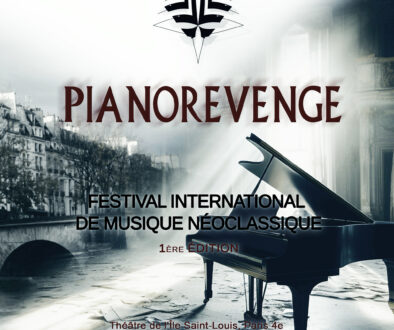
If the stars align – calendars, collaborations, that rare Parisian electricity that makes improbable ideas feel inevitable – it’s not hard to imagine a special night here under the Piano Revenge banner: a Piano Revenge Festival event that treats the Auditorium as both concert hall and canvas.
Not as a takeover, but as a perfect encounter. A pianist walking into Gehry’s light. An audience arriving for art and leaving with a melody lodged in the mind. The kind of evening you remember not because it was loud, but because it was precise – and because, for a moment, the city’s many worlds met at the keyboard.