The Four Acts: When Two Musical Worlds Find a Common Language
An encounter born in Venice, an artistic friendship nurtured by Piano Revenge Festival, and four intimate compositions that prove some of the most beautiful collaborations begin with a simple meeting.
A meeting that became music
There is something rather wonderful about the way music brings people together. Not through carefully orchestrated introductions or professional networking, but through that unpredictable chemistry that happens when two artists find themselves in the same room, sharing a curiosity, an instrument, or simply an understanding of what music can be.
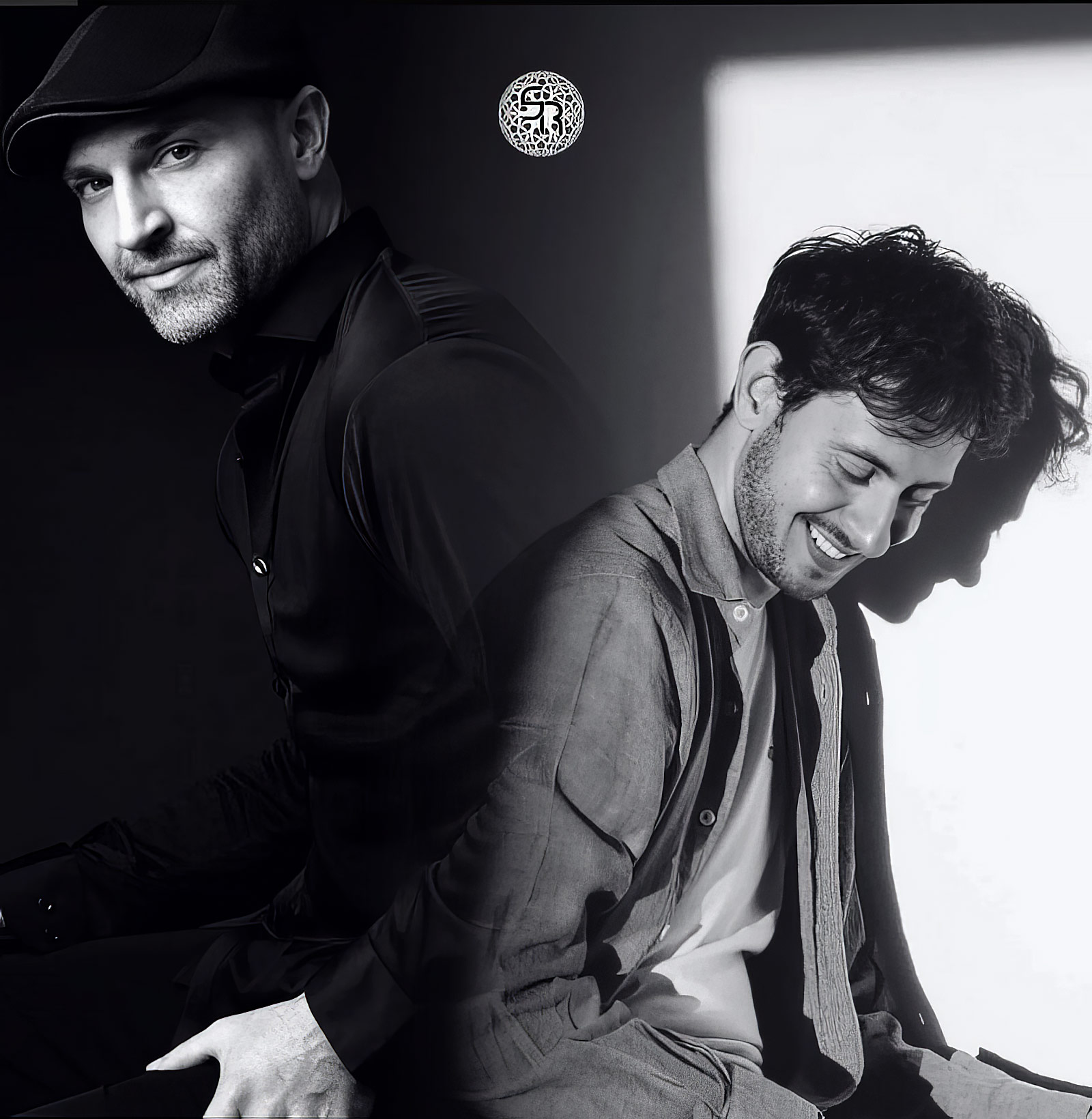
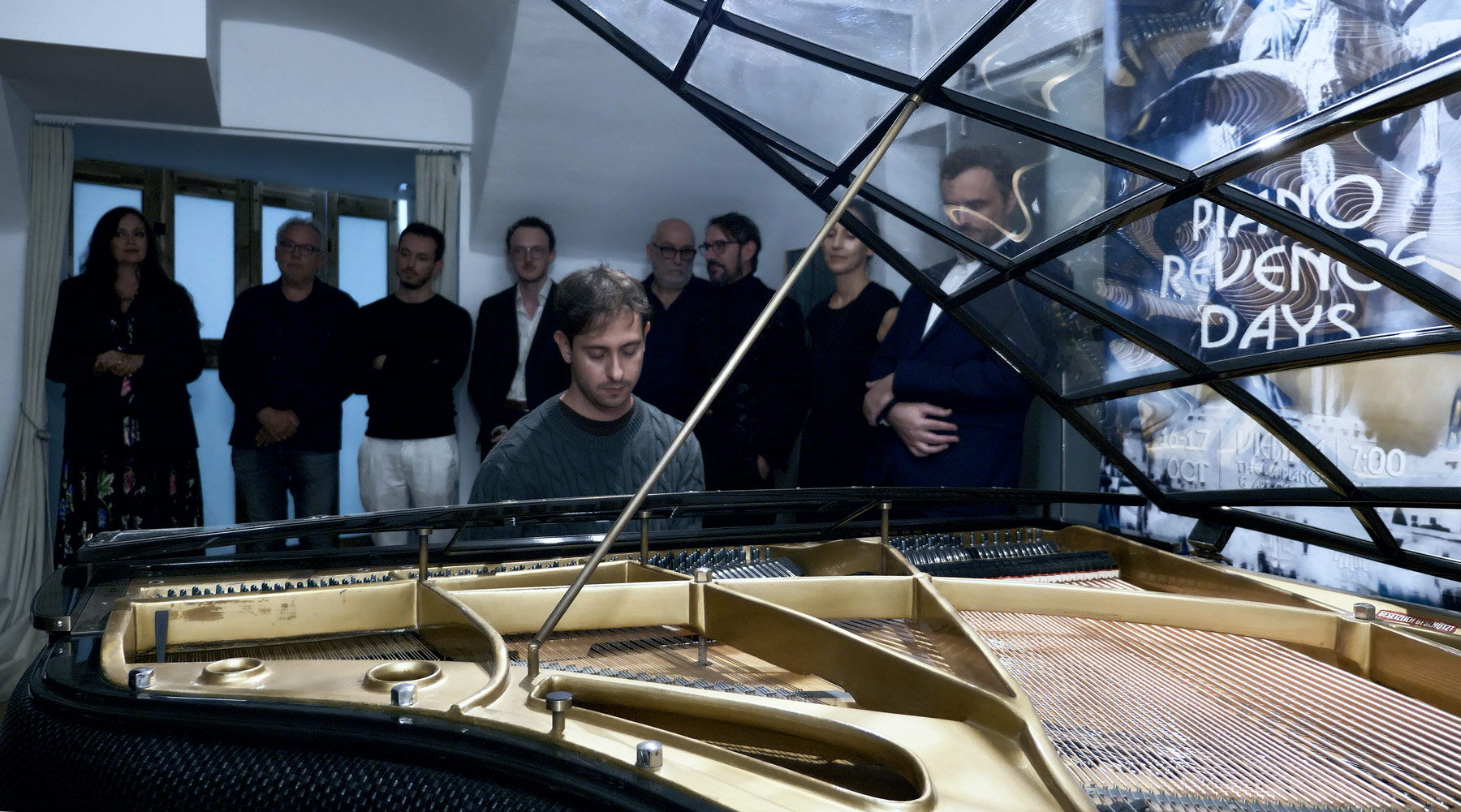
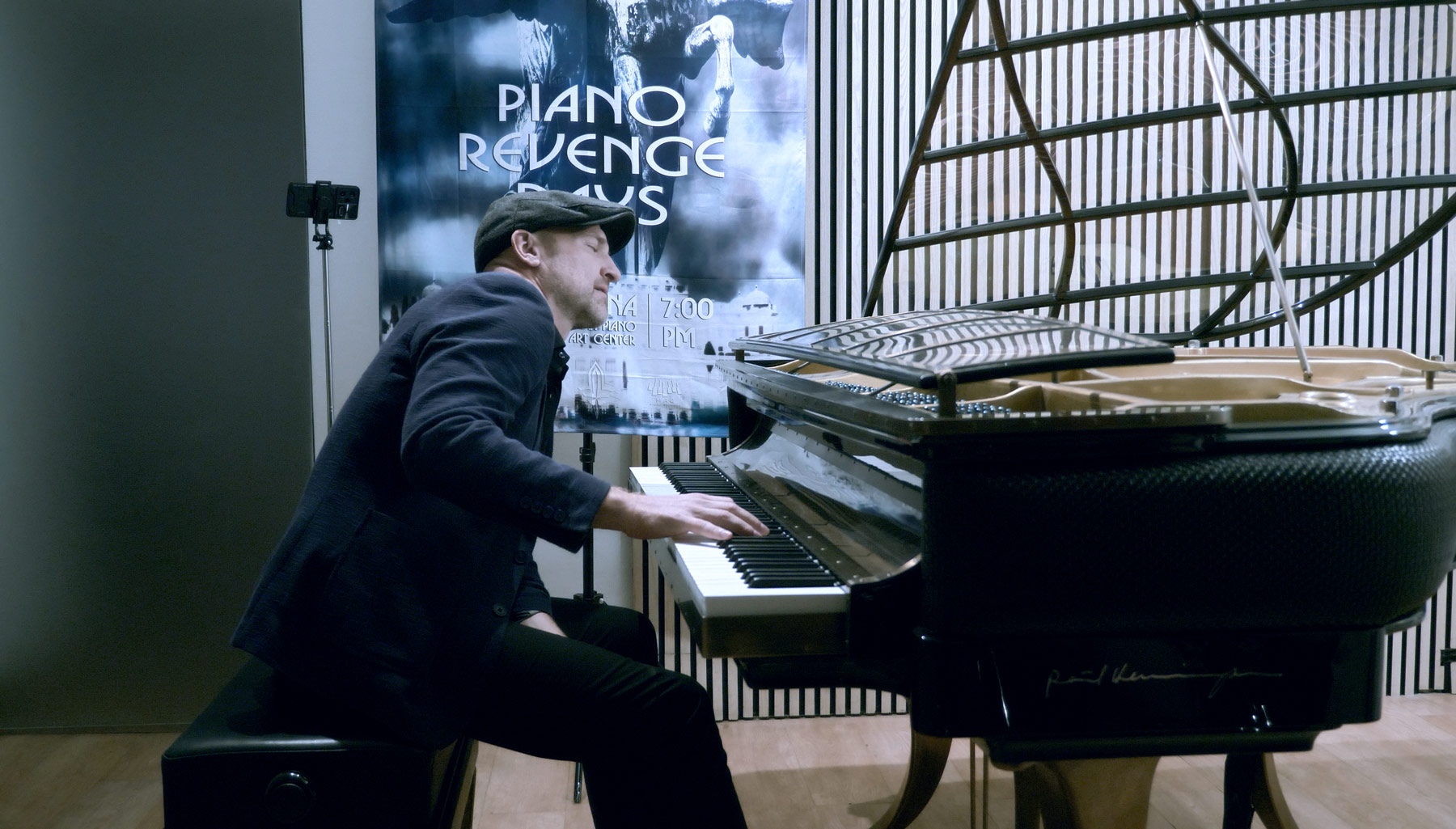
For Matthew Mayer and Edoardo Gastaldi, that meeting happened in Venice in January 2026, during Piano Revenge Days. Matthew travelled to perform at the festival, while Edoardo was already a familiar and much-valued collaborator within the Piano Revenge universe, having been involved in the project from its early days. Two musicians, two individual creative paths, and one encounter that would eventually lead to The Four Acts.
Released on 9 October 2026, this four-track EP is a particularly welcome outcome of that meeting. At Piano Revenge, seeing this friendship evolve into a musical collaboration makes us especially happy. It is also a lovely illustration of what an independent festival can do at its best: create the conditions for artists to meet, exchange ideas and discover unexpected creative affinities.
An intimate dialogue, rather than a compromise
What makes The Four Acts appealing is precisely the sense that neither artist has had to surrender his individual musical identity. Instead, their approaches find a natural meeting point somewhere between contemporary piano, atmospheric composition and the cinematic possibilities of ambient music.
Matthew Mayer has built an international career around solo piano, with a distinctive storytelling approach and an instinct for melodies that connect directly with listeners. His music often finds beauty in simplicity, allowing a single melodic gesture to become an entire emotional landscape. His work as a performer is matched by a commitment to supporting the wider solo-piano community.
Edoardo Gastaldi, meanwhile, brings a different but equally compelling sensibility. The Venetian composer has developed a musical language moving between minimal piano, modern classical composition and cinematic ambient. His work frequently explores introspection, human fragility and the complexity of existence, with an ear for atmosphere that makes even the smallest musical gesture feel significant.
There is a natural compatibility here. Mayer’s melodic instinct meets Gastaldi’s cinematic imagination, and the result feels less like two signatures placed side by side than a conversation that has gradually found its own vocabulary.
Edoardo Gastaldi: a composer without borders
To understand Gastaldi’s contribution to The Four Acts, it is worth looking beyond the piano itself. His practice extends into production, screen music and an ongoing network of collaborations with artists working across contemporary classical, ambient, experimental and cinematic sound.
Since beginning to release his compositions in 2021, Gastaldi has developed a distinctive position within the modern classical landscape. His musical vocabulary draws on the intimacy of minimal piano, the expansive textures of post-rock and the emotional architecture of film music. Yet it is perhaps his openness to collaboration that makes his trajectory especially compelling.
His catalogue includes projects with Davide Fasiello, Riccardo Roveda, Ostel, Le Code, Raphael Beaudon and Jay Brewer, among others. From NeoSeta, created with Raphael Beaudon, to Flores Veritatis with Le Code and Atlantic to Adriatic with Jay Brewer, Gastaldi repeatedly explores what can happen when different musical identities meet. His work with Davide Fasiello includes Each Origin, Every End, also involving Riccardo Roveda, and The Cage in Our Mind, featuring Ambient Yokai. These projects reveal a musician comfortable moving beyond the traditional composer-and-pianist format.
Cinema is another important part of his creative world. Gastaldi has composed for screen productions, including the short film Etilismo, which addresses chronic alcoholism among young people. His work has also included the end credits of Marcin Skruch’s short film Infant, in collaboration with MayaVic Media, and Sometimes You’ve Got Those Days with Amsterdam-based sound designer George Ammerlaan. His more recent soundtrack activity includes Salt Skin (Original Motion Picture Soundtrack), released in September 2026.
There is also a humanistic dimension to his work. Gastaldi has participated in projects connecting music with mental wellbeing, mindfulness and social awareness. His involvement with Lullify, an initiative using music and audio content to support mental wellbeing, and Keys for Peace, a collaborative project associated with the Contemporary Classical Collective and supporting children’s education, illustrates an interest in music’s capacity to reach beyond the concert platform.
Taken together, these activities sketch the portrait of an artist who sees music as an interconnected landscape rather than a collection of separate disciplines. A composition can travel from the piano to a film, from an independent release to a collective project, or from one country to another through a creative partnership. Gastaldi’s work is shaped by that movement.
Four acts, four windows into another world
The opening track, The Path Forward, establishes the atmosphere with remarkable restraint. There is something beautifully mellow about its unfolding, and in certain moments it may bring to mind the ambient sensibility of Brian Eno. Not through imitation, but through a shared understanding of how little a composition sometimes needs in order to create a great deal of space. The music does not insist on being heard; it invites us to enter.
Fog Is Nothing but a Memory follows with an evocative title that almost functions as a miniature poem. There is an intriguing relationship between disappearance and recollection, between what remains visible and what has already dissolved. The piece feels like a passing thought that stays with us longer than expected.
With Tenderness Will Save Us, the emotional centre of the EP becomes particularly apparent. The title feels almost like a declaration, and there is something refreshing about such openness in a musical landscape that can sometimes become overly concerned with melancholy. Tenderness, in this context, is not weakness; it is a quiet form of resilience.
The closing piece, The Meaning of Everything, brings the four-part journey towards a contemplative conclusion. It is a fitting final gesture for a release that seems less interested in providing answers than in creating a space in which listeners can find their own.
At just over ten minutes, The Four Acts is a concise release, but its brevity works in its favour. There is no unnecessary elaboration, no attempt to turn a small musical idea into something larger than it needs to be. Four titles, four distinct moments, one shared atmosphere.
Beyond the piano: Matthew Mayer and SoloPiano.com
It would be impossible to discuss Matthew Mayer without mentioning another of his important contributions to the musical world: SoloPiano.com. Founded and curated by Mayer, the platform has grown into a meeting place for independent piano artists, offering visibility and a shared space dedicated to the solo-piano genre.
This is an important part of Mayer’s artistic identity. He is not simply a pianist interested in developing his own career; he is also someone who understands the value of building an ecosystem in which other artists can be discovered. In an industry where independent musicians often have to navigate visibility and promotion alone, such initiatives matter.
Here, too, there is a point of connection with Gastaldi. Both artists understand that the contemporary piano world is sustained not only by individual releases and performances, but also by the communities, platforms and collaborations that allow music to circulate.
The Piano Revenge idea: artists bringing artists together
At Piano Revenge Festival, we have always believed that the piano belongs to everyone willing to explore it. Classical pianists, neoclassical composers, experimental musicians, cinematic storytellers, improvisers and artists working somewhere between these definitions — there is room for all of them.
Our task has never been to create another closed musical circle, nor to promote one particular aesthetic as the only valid direction for contemporary piano music. Quite the opposite. We want to bring artists together, creating encounters between different generations, countries, sensibilities and artistic languages.
Edoardo has been part of this adventure from its early days. Matthew joined us in Venice in January 2026, and it was there that the two musicians met for the first time. Today, The Four Acts stands as a reminder of what can happen when an artistic platform becomes more than a succession of concerts.
This is exactly the kind of outcome we hope to see: friendships becoming collaborations, collaborations becoming new releases, and new releases travelling far beyond the original meeting place. We are genuinely delighted to see this particular encounter bear fruit.
Perhaps the most beautiful thing about The Four Acts is not simply the music itself, but the story behind it. Two artists who might otherwise have continued along their separate paths found a shared language through a festival that exists precisely to make such connections possible.
Four acts. Two musical minds. One meeting in Venice. And a reminder that sometimes the best thing a festival can do is bring the right people into the same room — and let the music take it from there.