Angelina Yershova: Between Piano, Cosmos and the Infinite
An Interview on Music, Space, Silence and the Journey Beyond the Horizon. PianoRevenge MAG
What happens when the piano becomes more than an instrument — when a single resonance can suggest an entire universe?
For Angelina Yershova, music exists somewhere between the physical and the intangible: between the sound of the piano and the silence surrounding it, between acoustic resonance and electronic space, between the vastness of the cosmos and the most intimate dimensions of human listening.
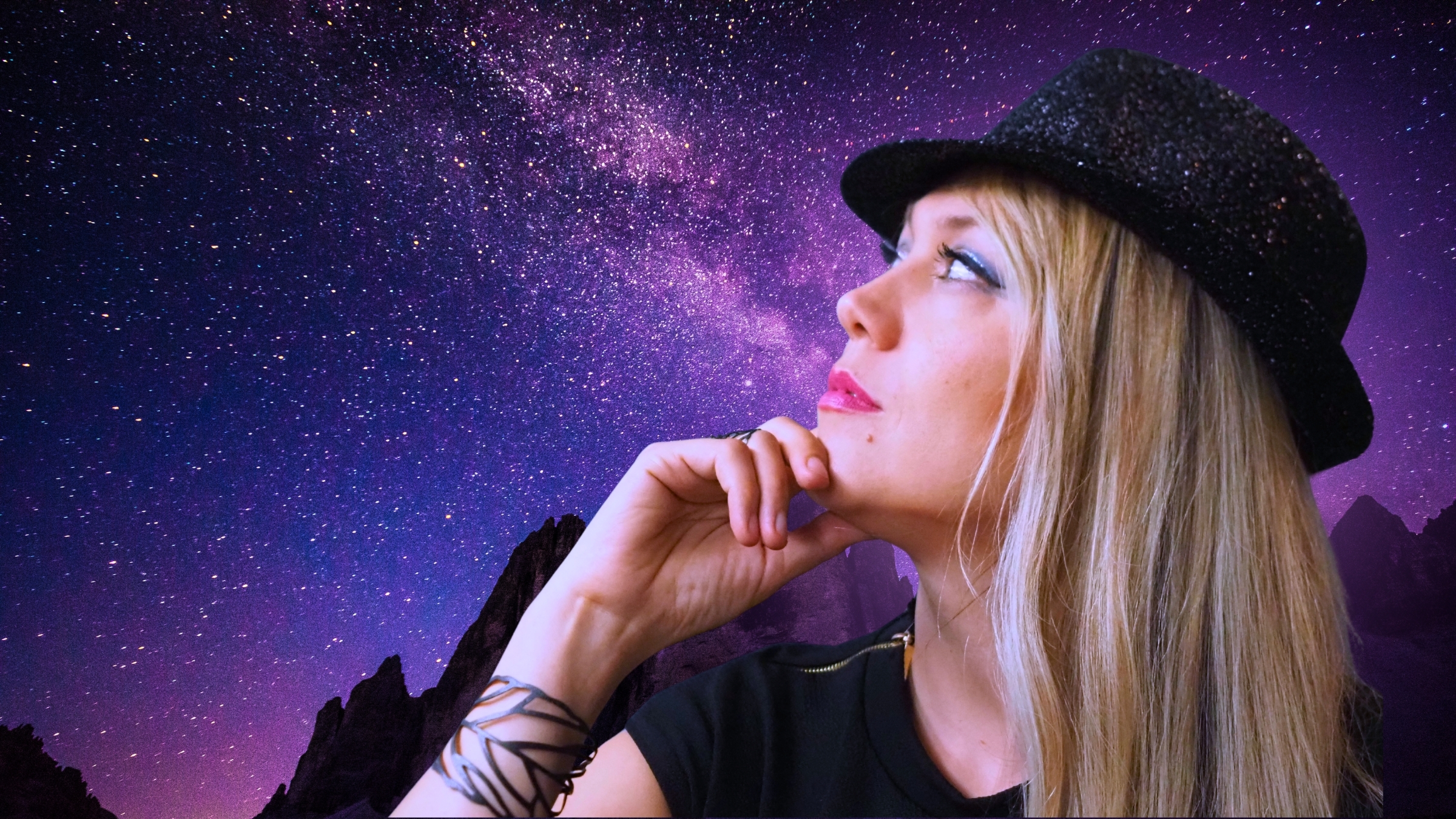
Born and musically educated in Kazakhstan before continuing her artistic journey in Italy, Yershova has developed a distinctive practice encompassing piano, composition, improvisation, conducting and electronic music. Her work is deeply concerned with perception: how sound can alter our sense of time, space and presence.
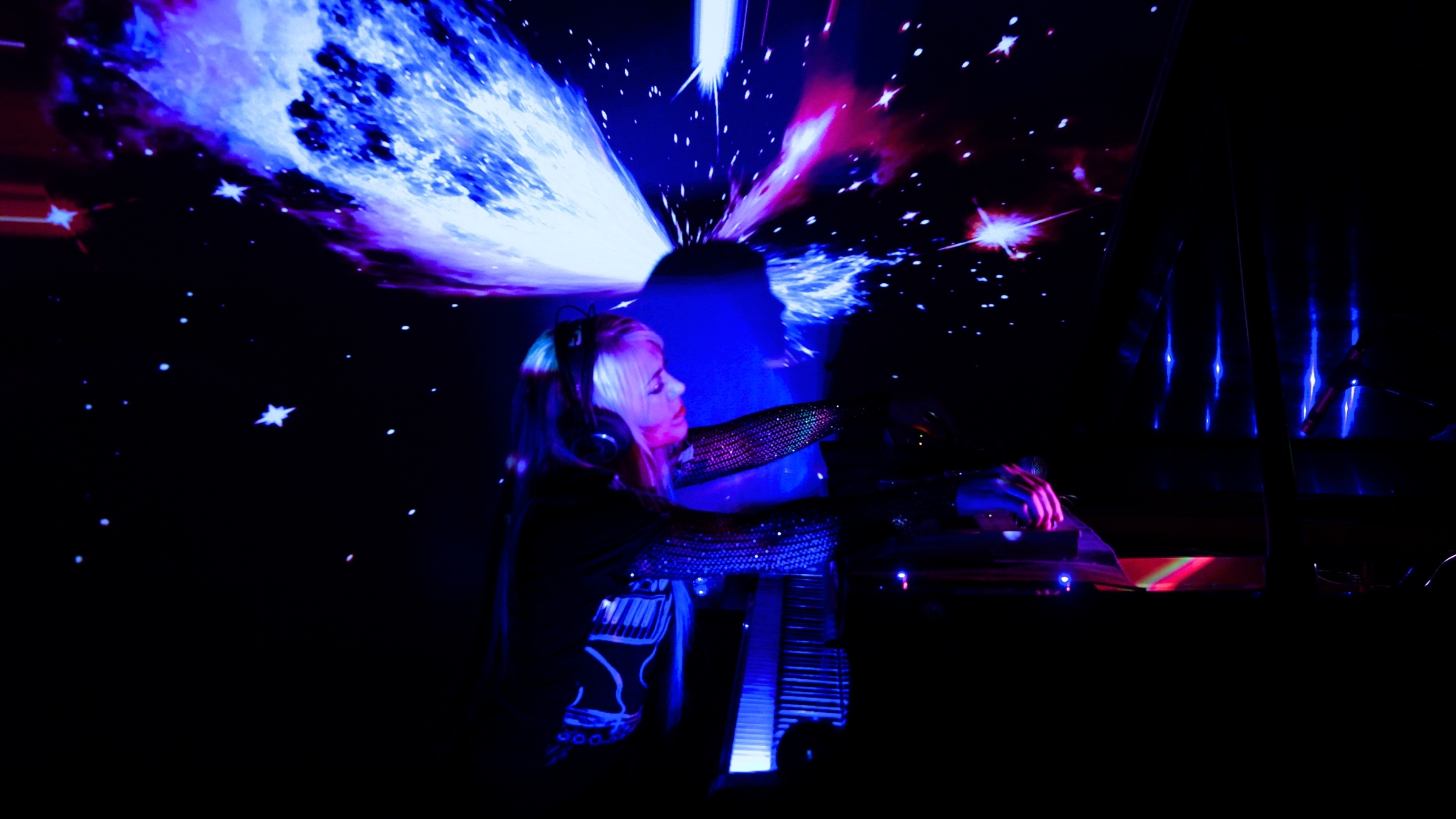
At the heart of this exploration is Astroconcert, a project first conceived at Rome’s Planetarium in 2008, where piano, electronics, spatialised sound and astronomical imagery became part of an immersive journey through the universe. Since then, Yershova has created more than twenty Astroconcerts, continuing to explore the dialogue between outer space and what she calls the inner universe.
Her latest artistic direction brings together composition and improvisation, structure and spontaneity, technology and the unmistakably human resonance of the piano. In this conversation with Piano Revenge MAG, Yershova reflects on the landscapes that shaped her musical identity, the evolution of her albums, her fascination with silence and resonance, and the continuing journey of Astroconcert.
Ahead of her participation in the Piano Revenge Festival Paris 2027 Main Selection, she also shares what she hopes to create for a Paris audience: not simply a concert, but a space in which listeners can slow down, enter the music, and perhaps discover a universe of their own.
PianoRevenge MAG: You began your musical education in Kazakhstan and later continued your studies in piano, composition, conducting, and electronic music in Almaty and Rome. Could you tell us about your early relationship with music and the experiences that first made you understand that music would become such an important part of your life?
Angelina Yershova: Music entered my life very early, in a natural and profound way. I grew up in Kazakhstan, in an environment where culture, singing, the memory of traditions, and a sense of vast space were deeply present. The piano soon became my place of expression: not simply an instrument to study, but a language through which I could give form to emotions, images, and inner questions.
During my years of training in Almaty, I gradually understood that music would not be only a profession, but a true direction in life. Through studying piano, composition, orchestral and choral conducting, I discovered that I was not only interested in interpreting the works of others, but also in creating my own sonic worlds — worlds able to bring together structure, imagination, and freedom.
Your artistic journey has crossed different musical and cultural environments, from Kazakhstan to Italy. How have these different places, traditions, and experiences influenced the way you understand music and shaped your identity as a pianist and composer?
My journey between Kazakhstan and Italy has had a decisive influence on my artistic identity. Kazakhstan gave me a sense of vast distances, the steppe, silence, and an almost ancestral dimension of sound. Italy, on the other hand, opened me to a culture deeply connected to art history, melody, theatricality, and contemporary research.
Rome represented a place of transformation for me. There, I was able to deepen my work in composition, electronic music, and the dialogue between different artistic languages. I believe my music lives precisely in the meeting of these two worlds: on one side, a contemplative, expansive, and cosmic sensibility; on the other, the desire to create forms, narratives, and sonic landscapes that can be shared with an audience.
You have studied several disciplines, including piano, composition, orchestra and choir conducting, and electronic music. How do these different areas of training come together when you create or perform your own music?
For me, these disciplines have never been separate. The piano remains the emotional and physical centre of my work: it is a place of intimacy, breath, and gesture. Composition allows me to give direction to musical material, while studying orchestral and choral conducting taught me to listen more broadly and to think in terms of sonic masses, dynamics, and the relationship between voices.
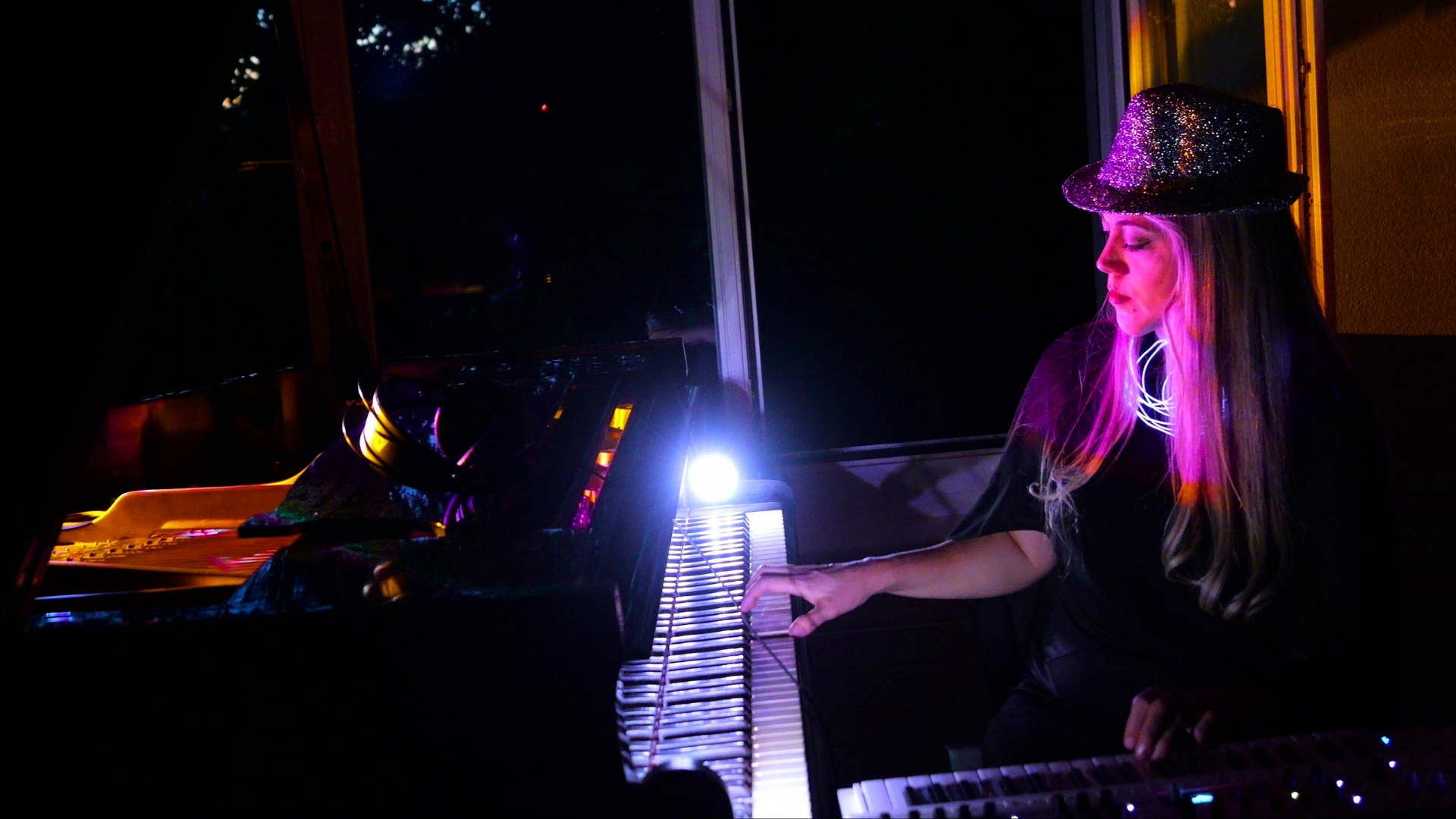
Electronic music opened another dimension: sound as space. It allows me to expand the piano, transform its resonances, and create immersive environments. When I compose or perform, all these experiences come together naturally: writing meets improvisation, acoustic sound dialogues with electronic sound, and form makes room for the perception of the present moment.
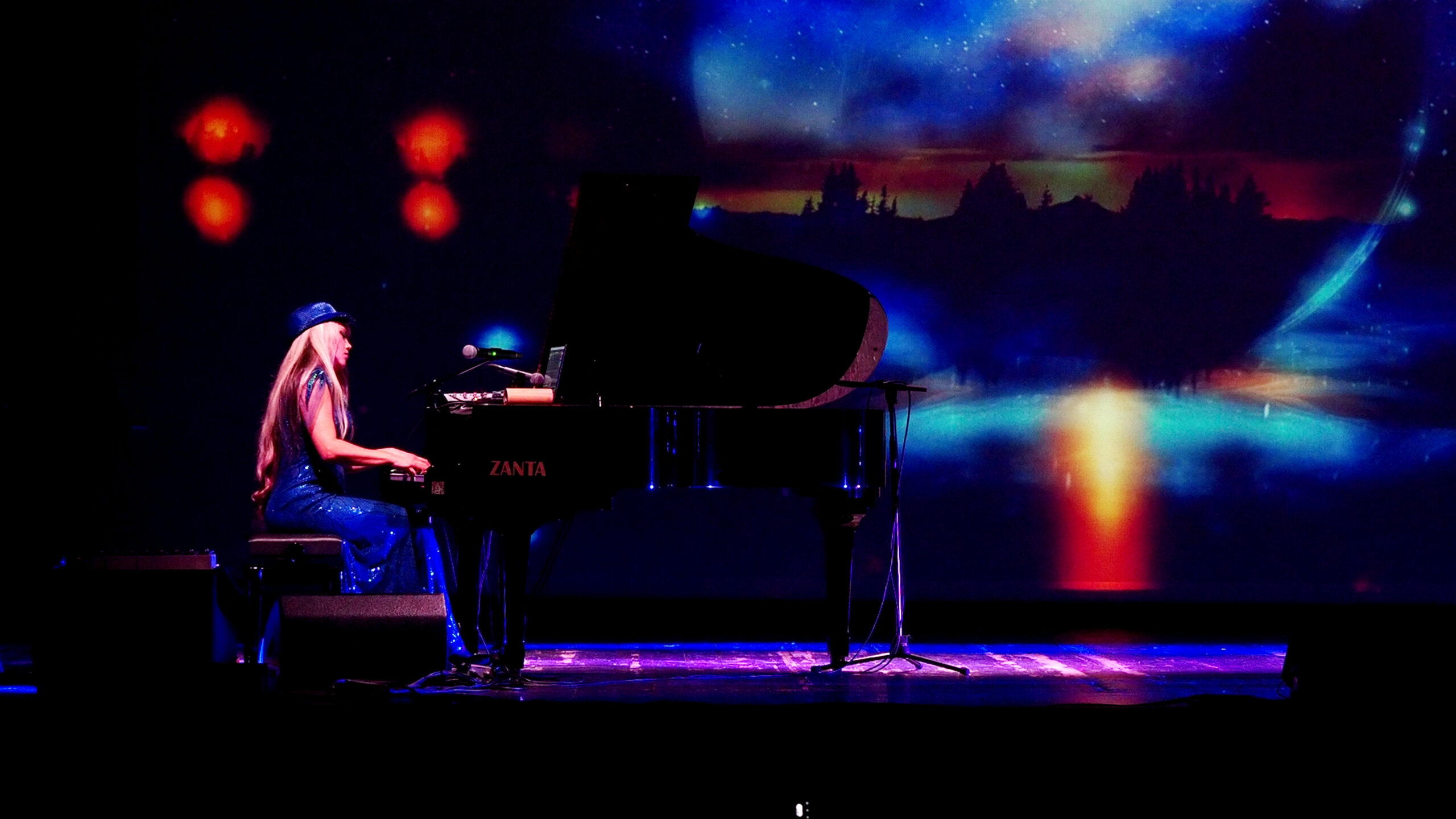
Your discography stretches from Blind Rain, Nomad, and Piano’s Abyss to your more recent Harmony Awakening. When you look back at your earlier recordings, do you hear the beginnings of the artist you are today, or do you feel that your musical language has undergone a fundamental transformation?
When I listen again to works such as Blind Rain, Nomad, and Piano’s Abyss, I clearly recognise the seeds of the artist I am today. Those albums already contained my search for depth, my relationship with silence, the narrative quality of the piano, and the desire to move beyond the boundaries of musical genres.
At the same time, my musical language has evolved. Over time, I have learned to trust simplicity, resonance, and the space between notes more deeply. In Harmony Awakening, I feel a more conscious search for balance, healing, and connection. I would not describe this as a break, but rather as an organic evolution: the same inner voice has found new colours, new tools, and greater expressive freedom.
A major part of your artistic research seems to revolve around space, resonance, silence, and perception. When did you first become interested in the relationship between sound and space, and what continues to fascinate you about it?
My interest in the relationship between sound and space emerged gradually, through listening and live experience. I have always felt that a note does not end at the moment it is played: it continues to live in resonance, in the surrounding environment, in the body of the listener, and even in the silence around it.
I am fascinated by the way music can transform our perception of time and space. A single piano chord, when listened to attentively, can open an immense inner landscape. Silence is not an absence; it is a living material, a field of expectation and possibility. In my work, I try to create conditions in which the audience does not simply listen to the music, but can enter into it.
Your work eventually developed into the Astroconcert concept, combining piano, improvisation, electronics, and sometimes large-scale visual projections. How was this universe born, and what were you searching for when you first began creating music around cosmic and interstellar imagery?
Astroconcert was born from a desire to bring music, science, imagination, and contemplation into dialogue. From the beginning, I felt that the piano and electronics could become instruments not only for expressing personal emotions, but also for approaching the mystery of the universe: the light of stars, the movement of planets, the void, expansion, and all that we still do not know.
The first Astroconcert was a highly experimental project created for the Planetarium of Rome in 2008. For that occasion, I developed what I called a “stellar score”: a map of the sky translated into sound, in which stars became musical material through parameters inspired by their astronomical magnitude.
I created specific sonic materials for the project, combining piano, self-built resonant instruments, and electronics within an eight-channel spatialisation system. The performance was accompanied by visual programming projected across the Planetarium’s dome, surrounding the audience in an immersive audiovisual experience.
It was a profound experience. At that moment, I understood clearly that my sonic world was intimately connected to the vision of the cosmos, space, and time. I was not trying to describe the universe literally; rather, I wanted to evoke the feeling of standing before the infinite and, at the same time, recognising a part of that infinity within oneself.
Since then, I have created more than 20 Astroconcerts, each taking shape in different forms and contexts. Today, the project is evolving further. My intention is not only to create live performances, but also to develop a series of musical releases entitled Cosmic Diary, dedicated to exploring both the cosmos and my inner universe. The piano remains at the heart of this journey: a human, living, resonant presence capable of connecting the immensity of the universe with our most intimate listening.
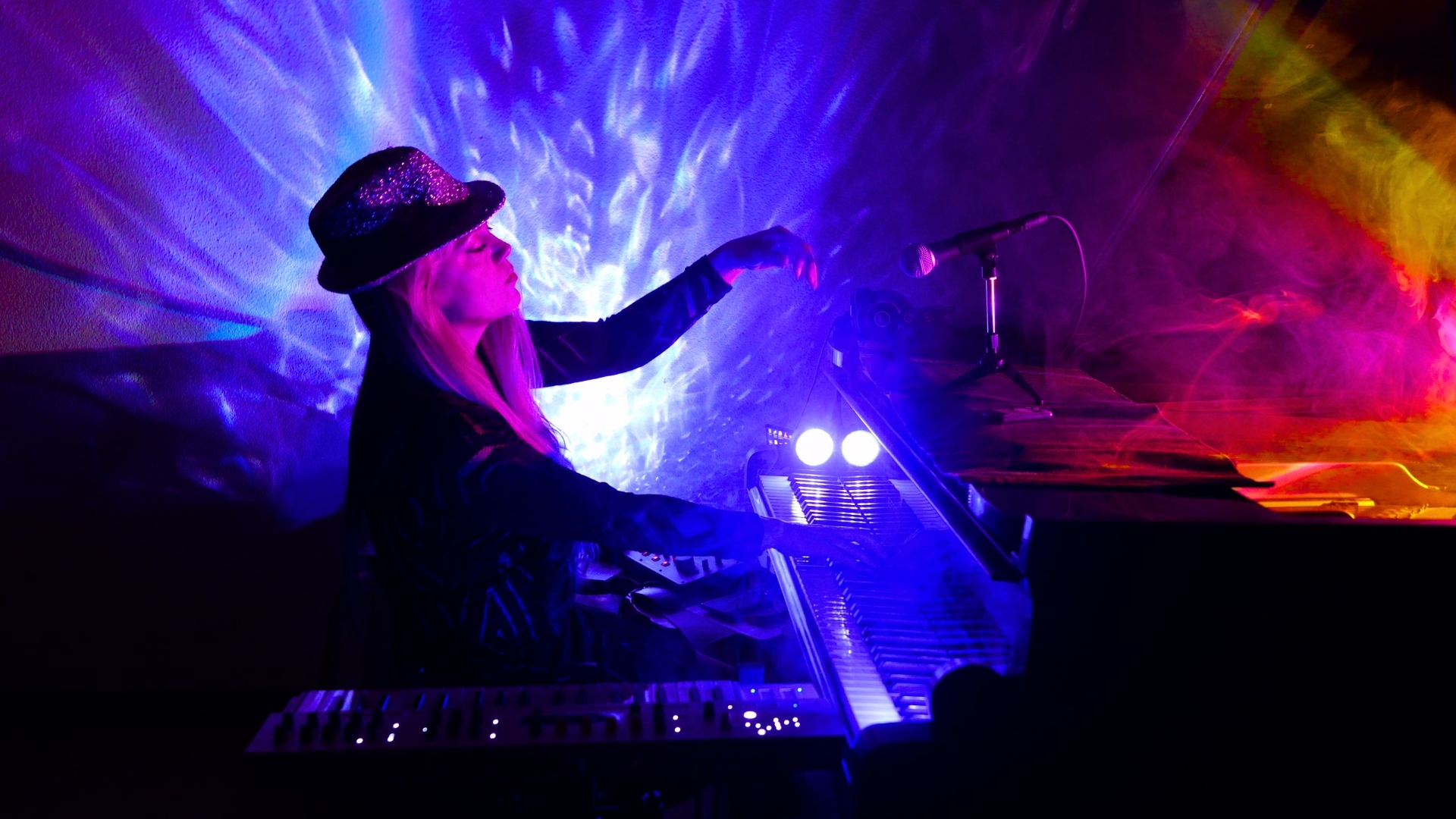
In Piano Astroconcert: A Stellar Journey through Space and Sound, compositions such as Awakening, Light Mirage, Shadow of the Moon, Beyond the Horizon, and Expansion Universe form what feels almost like a musical constellation. Do you compose these pieces as individual works first, or do you think of the entire Astroconcert as one continuous journey?
Each Astroconcert composition can exist as an independent work, with its own atmosphere and identity. Awakening, Light Mirage, Shadow of the Moon, Beyond the Horizon, and Expansion Universe arise from different images, inner states, and sonic directions.
However, when I bring them to the stage, I perceive them as parts of a constellation. Astroconcert is conceived as a continuous journey: a path that begins with inner listening, travels through shadow and light, matter and imagination, and gradually opens toward a wider space. The sequence, transitions, improvisation, and visual imagery all help transform individual pieces into a unified experience.
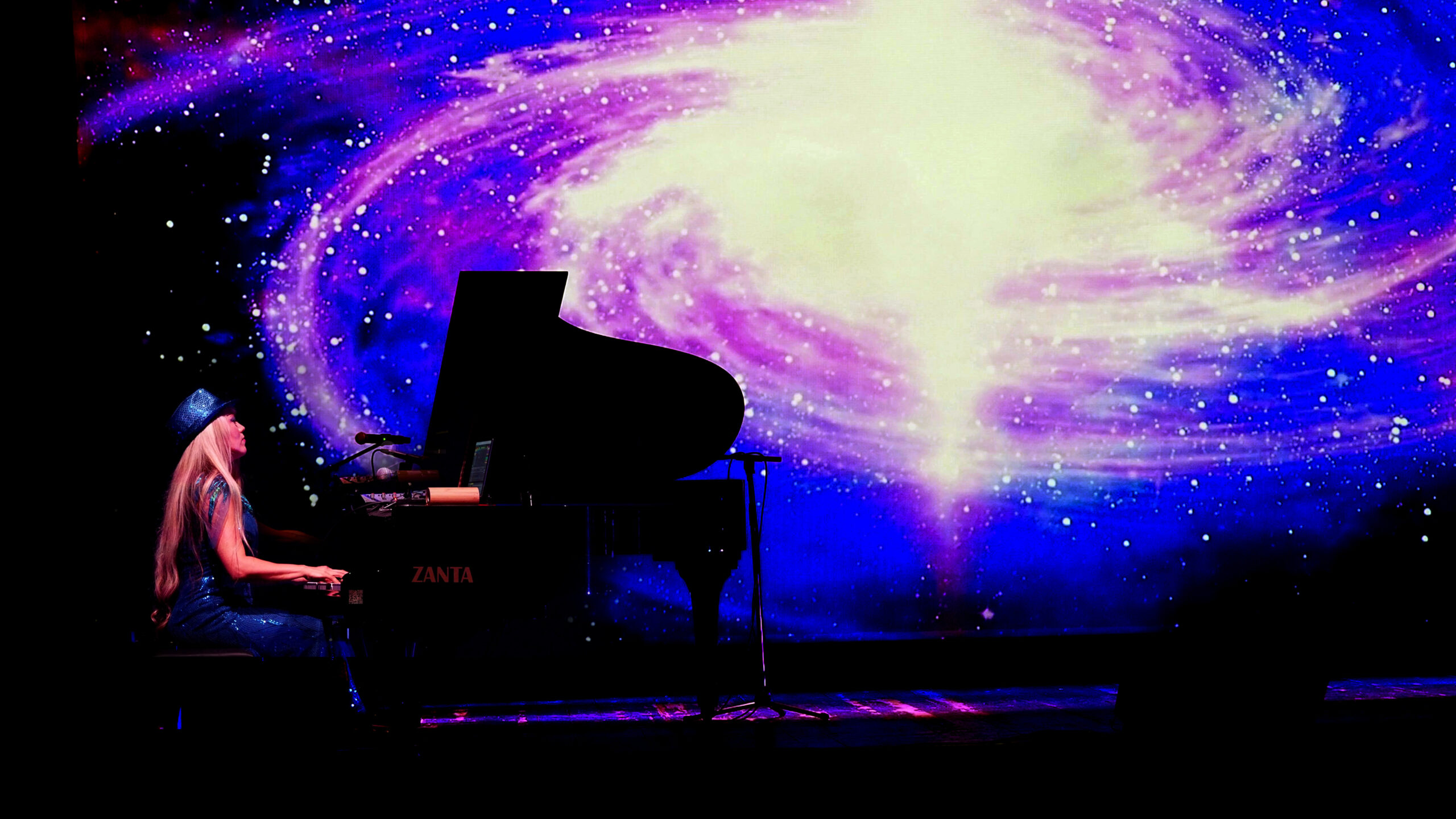
You often move between meditative minimalism, improvisation, acoustic piano, and electronic soundscapes. How important is spontaneity in your performances, and how much of what happens on stage is planned versus discovered in the moment?
Spontaneity is an essential part of my artistic language. Even when a composition has a defined structure, each concert is unique: the acoustics of the venue, the energy of the audience, the silence in the room, and my own inner state are always different. Improvisation allows me to truly listen to the present and to let the music breathe, find its own timing, and transform itself.
On stage, I seek a balance between preparation and discovery. The compositions, electronic materials, visuals, and overall architecture of the concert are carefully developed in advance; yet within this framework, I always leave genuine space for freedom. A pause may expand, a resonance may suggest a new path, a theme may change shape or lead into unexpected territory. It is precisely in this meeting point between control and surrender that something authentic can emerge.
When creating certain acoustic-electronic pieces, I instead surrender to a more radical form of improvisation, free from predetermined structures. It is an intense and vibrant dimension that belongs deeply to my creative DNA: the piano, electronic sounds, and resonances become living material, developing through instinct, listening, and the relationship with space.
I would like to bring this form of pure improvisation more and more into live performance. At the same time, I recognise that it requires ongoing practice and further exploration — not only on an expressive level, but also technically: from the real-time handling of sound and electronics to spatialisation, and to shaping a coherent musical flow while preserving complete freedom in the moment. For me, this is a very important direction of research: creating performances in which composition and the unexpected can meet with even greater intensity.
You will soon become part of the Piano Revenge Festival Paris 2027 Main Selection. What does this invitation mean to you at this particular point in your artistic journey, and what would you like the Piano Revenge audience in Paris to experience when they enter your musical universe?
Being selected for the Piano Revenge Festival Paris 2027 is both an honour and an important sign at this stage of my artistic journey. Paris is a city with an extraordinary musical history and a strong openness toward experimentation, dialogue between the arts, and new visions of the piano.
I would like to offer the festival audience not simply a concert, but an immersive experience. I hope that, when entering my musical universe, each person can slow down, listen deeply, and feel free to imagine their own journey. The piano will be the starting point, but the true meeting place will be the inner space that music can open.
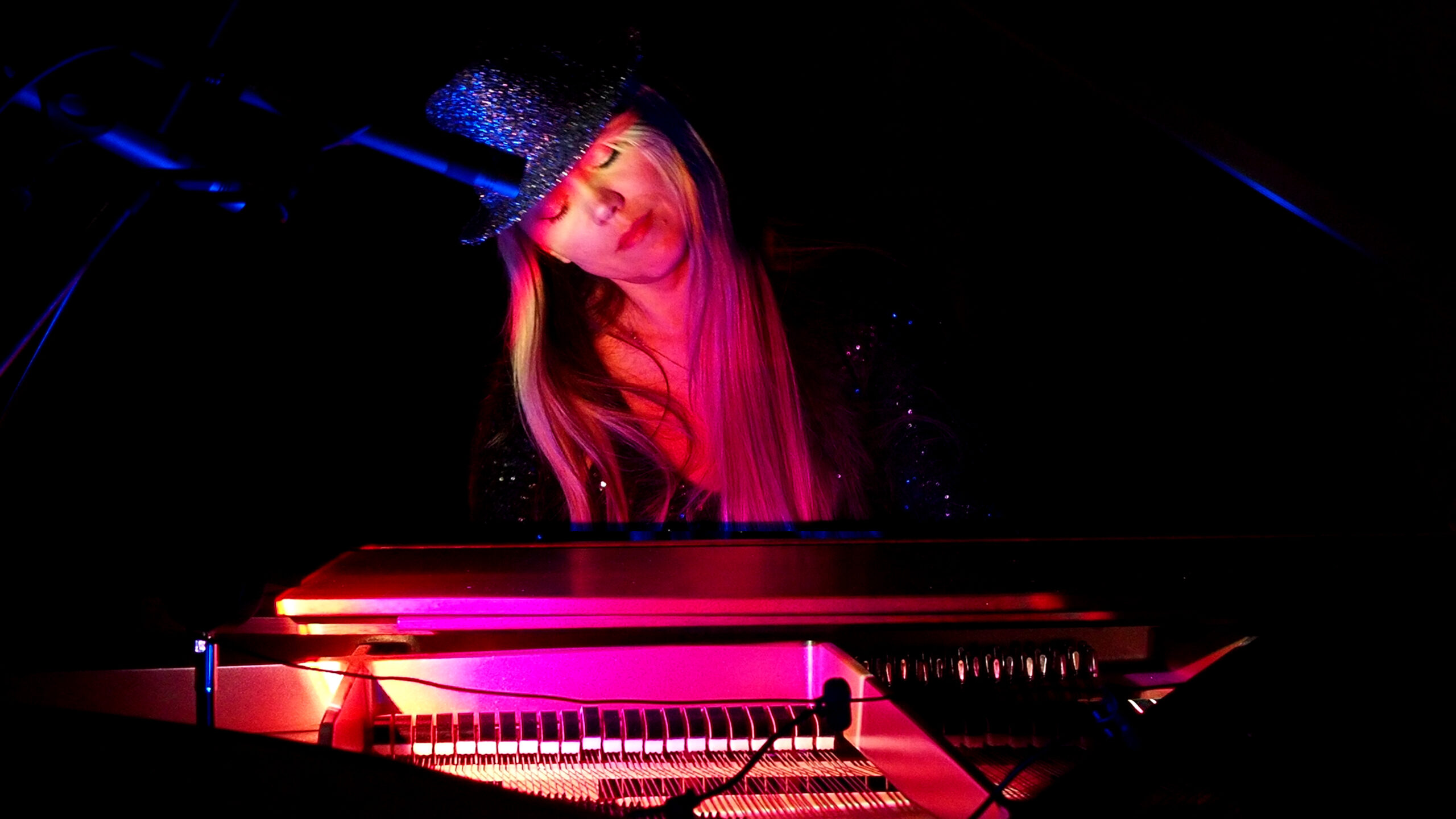
Finally, if you could describe your current artistic journey as a constellation, what would be its brightest star right now — and what new musical territory are you hoping to explore next?
If I were to describe my current artistic journey as a constellation, its brightest star would be connection: between piano and electronics, between art and science, between outer cosmos and inner cosmos, and between the artist and the audience.
The territory I wish to explore next lies increasingly in immersive and multidisciplinary experiences: new collaborations with scientists, visual artists, astronomical institutions, and performers; compositions conceived for unconventional spaces; and projects in which sound can become a form of listening, healing, and transformation.
I want to continue moving beyond the horizon, without losing touch with the simplest essence of music: a vibration capable of bringing people together.