The Freedom to Be Unbound: Ilya Polaykov on Music, Perception, and the Human Condition
“There are only such qualities as being alive, sincere, and genuine.”
Preface
What remains of music when we move beyond established conventions, familiar structures, and the expectation that every artistic gesture must be explained?
For composer and pianist Ilya Polaykov, music begins with the freedom to perceive, to search, and to experience without the need to categorise. His artistic language moves between minimalism, classical tradition, contemporary instrumental music, and performance, resisting fixed definitions in favour of something more immediate: the possibility of being alive, sincere, and real.
Without a conventional academic musical education, Polaykov has developed an independent relationship with composition, guided by philosophical inquiry and a belief that music can express what unites us beyond words. His work explores the tension between freedom and limitation, a question that became particularly tangible in the creation of his new album, written with his hands bound, and in Solo Coda, a concert project in which physical restriction becomes part of the artistic statement.
Perhaps freedom begins where the need for explanation ends.
His perspective has also been shaped by experiences far beyond the concert hall, including an international performance festival in Cameroon and a self-organised solo tour across thirteen cities in 2024. Through these encounters, music emerges not as a demonstration of complexity, but as a shared human language.
In this conversation with Piano Revenge MAG, Ilya Polaykov reflects on artistic independence, the philosophy of listening, the meaning of creative constraints, and the possibility of finding freedom precisely where it seems least accessible.
PianoRevenge MAG: You came to professional music without a formal academic musical education. What has proved to be your greatest advantage on this path, and what has been your biggest challenge?
Ilya Polaykov: The greatest advantage is the opportunity to preserve my own perspective on music and express my inner voice without having to take into account everything that came before or might come afterwards.
The greatest challenge is explaining my point of view to someone with an academic background when the situation requires it. More often than not, reaching mutual understanding can be very difficult.
Your music brings together minimalism, classical tradition, contemporary instrumental music, and performance. How do you define your musical language today?
I have never sought to attach a label to my own work or anyone else’s. My musical language lives alongside everything in the world around me and constantly changes according to circumstances.
You have spoken about a connection between your approach to composition and Plato’s theory of sensory perception. How does this philosophical idea translate into actual music – in sound, composition, and emotion?
I would not call these principles. They are more a way of relating to things.
Either you are constantly searching, or you are certain that you already have everything you need. The difference lies in how we listen to music. Some people try to understand it, while others allow themselves the courage to experience it fully.
Your artistic path encompasses not only solo concerts, but also theatre, performance, orchestral work, and international projects. Which experience has changed you most profoundly as a composer?
The performance festival in Cameroon in 2021. Three weeks of regular creative exchange with artists from different continents.
That journey changed my attitude towards art and helped me understand its true purpose. “More complex” does not mean “better”, just as “simpler” does not mean “worse” – or vice versa.
There are only such qualities as being alive, sincere, and genuine.
In 2024, you embarked on your first major solo tour: sixteen concerts in thirteen cities, organised largely on your own. What did you discover about yourself and your audience during that journey?
To be honest, I simply confirmed that we are all human beings and have a great deal in common. Music always brings people closer, helping us recognise that we all go through the same kinds of circumstances.
A new album has now emerged. At what point did you realise that the music you had developed needed to become an album rather than remain a collection of individual works?
The album was the idea from the very beginning. I was not accumulating material with the intention of eventually putting it together.
A particular concept appeared in my mind, and I brought it to life over the course of a month.
If we consider your new album as a complete artistic statement, what does it express for you? What story or inner state did you want to convey to the listener?
The album’s primary mission is to communicate the idea that neither internal nor external limitations should determine our personal freedom.
I rarely convey my own personal stories or states of mind. I speak about what unites us all.
In your new concert project, Solo Coda, a physical restriction – your hands being bound – becomes part of the artistic concept. Why are you so interested in the relationship between limitation and freedom, and how does this connect to the new album?
The entire new album was written with my hands bound.
Solo Coda is an album that speaks about self-sacrifice and how it determines the extent to which we are willing to be free. The question of freedom defines the existential nature of the human being: a person who, in our world, has nothing else left.
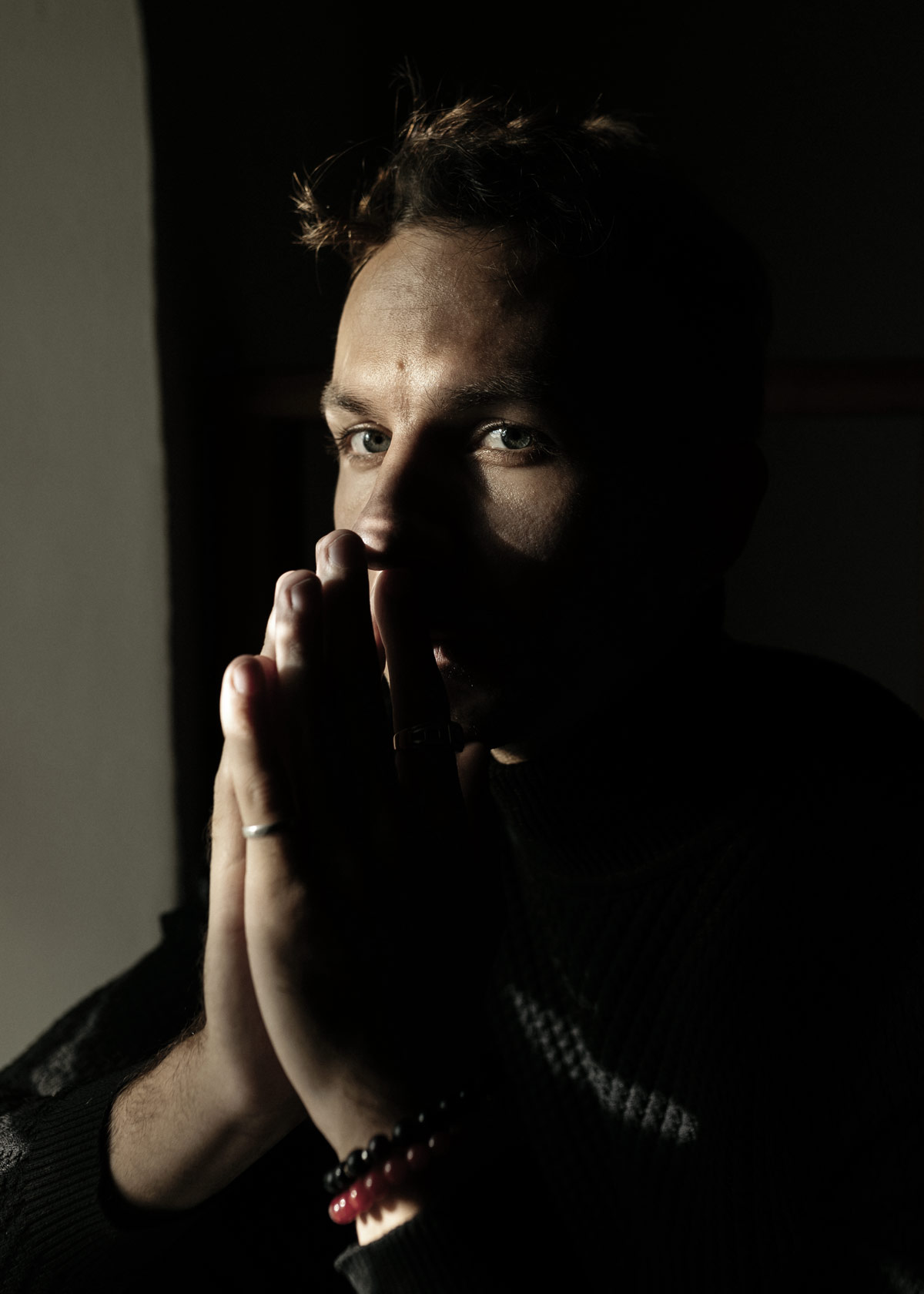
For years, you have been developing the Piano Day festival, bringing together contemporary composers and creating a space devoted exclusively to original piano music. How do you think audiences’ relationship with contemporary instrumental music is changing today?
Year after year, I observe the audience growing and interest in our field increasing.
People discover our music and, in a way, learn a new language of perception. They begin to understand that music does not need words to express thoughts or feelings.
I think many people recognise a certain sincerity in this and want to become part of it.
If someone were to discover your music for the first time through the new album, what feeling would you like them to carry with them after the final composition?
I would like to leave them with a sense of hope and the freedom to choose – with the understanding that we owe nothing to anyone.
A Conversation with Piano Revenge
Piano Revenge brings together contemporary pianists and composers from different countries, creating a space for original music and artistic experimentation. What genuinely attracts you to the project: its international community, the opportunity to experiment with concert formats, or the idea of creating a distinctive creative environment around new piano music? What kind of participation would interest you most?
All of the above attracts me. I would very much like to meet composers from different parts of the world and understand how they experience it. I would be happy to participate in any format that might be possible.
Piano Revenge MAG — Independent perspectives on piano, contemporary composition, and the artists shaping its future.