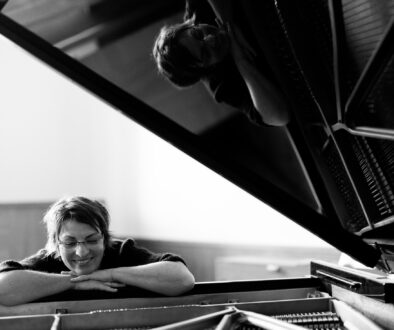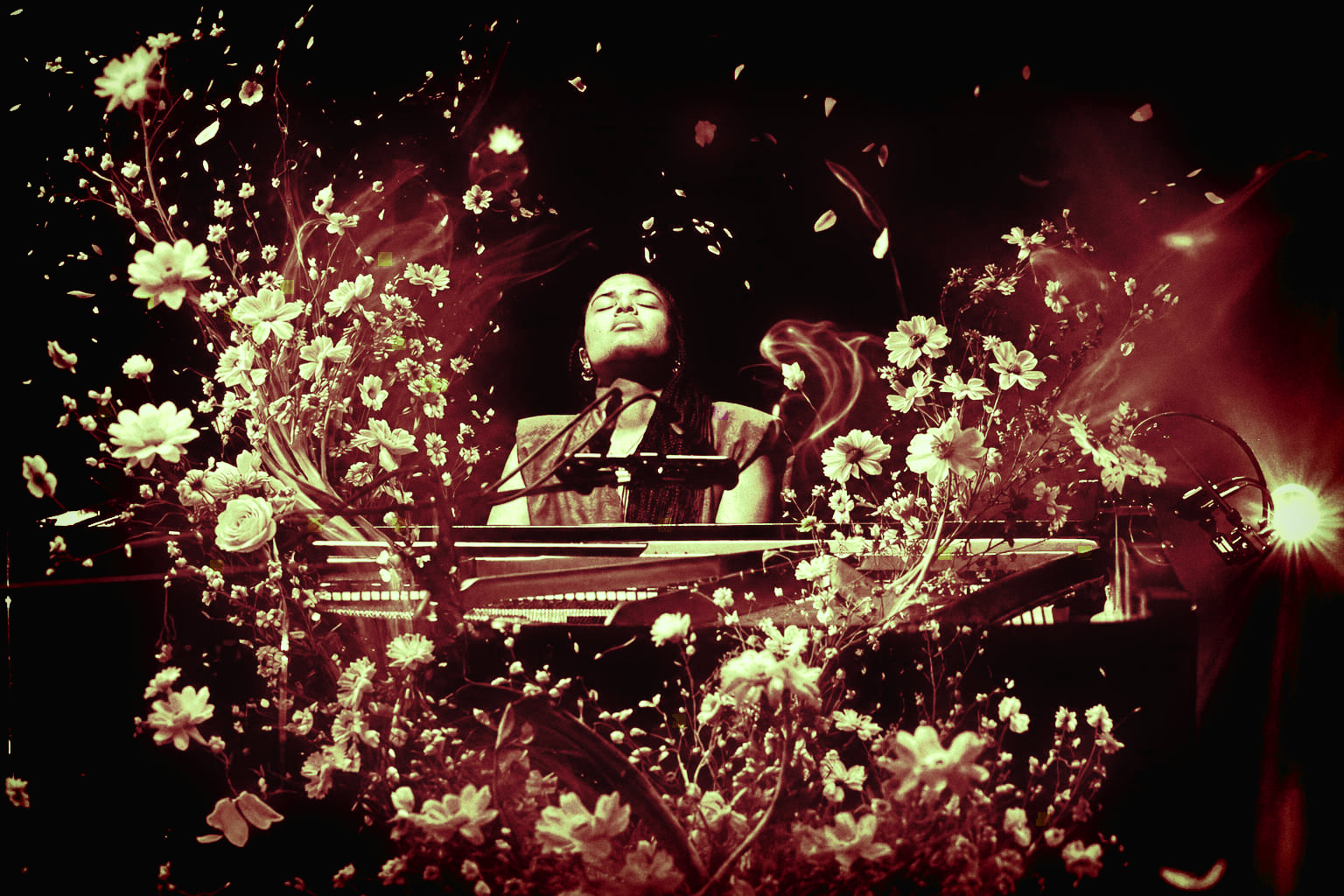
Louisiana Bloom — Release: The Art of Letting Go
For Louisiana Bloom, the piano has become a language for everything that words cannot quite hold.
Her relationship with the instrument began in childhood, sparked by the music of The Beatles and John Lennon that she heard through her father. Yet her early path was not entirely straightforward. A difficult first year at the academy almost made her abandon the piano altogether. A new teacher changed that trajectory, opening the door to eleven years of study and, ultimately, to a much deeper relationship with music.
Some music asks to be heard. Other music asks to be felt.
Today, Louisiana Bloom describes her artistic identity as “introspective piano”—and even, with a certain courage, “healing piano.”
It is an appropriate description for an artist whose latest album, Release, transforms emotional experience into sound.
The album follows five stages: illusion, the first cracks, attachment, awakening, and release. It is a journey through the emotional architecture of toxic dynamics, expressed without lyrics but through repetition, silence, dynamics, tension and gradual harmonic transformation.
What begins as a deeply personal process becomes something universal.
Because Release is not simply an album about leaving something behind. It is about what happens afterwards—when healing means accepting that we cannot return to the person we once were.
We spoke with Louisiana Bloom about her musical beginnings, the influences that shaped her language, the emotional world behind Release, the mysterious moments when music seems to arrive by itself, and the philosophy that continues to guide her:
“I want to touch souls.”
Editor’s note
With Release, Louisiana Bloom turns the private work of healing into a language that can be shared. Across five emotional stages, the album traces the fragile movement from illusion and attachment toward awakening, freedom, and light.
These pieces do not offer easy answers, nor do they suggest that letting go means forgetting. Instead, they listen closely to the quiet transformations that follow pain—the gradual discovery that moving forward can be its own form of renewal.
What emerges is an invitation to pause, feel, and recognise something of ourselves in the spaces between the notes.
The First Note
PianoRevenge MAG: Your description of discovering your own melody is almost mystical – “one day, melodies started floating on my piano keyboard.” Can you take us back to that moment in 2008? What did it feel like when you first pressed the record button for your own creation?
Louisiana Bloom: My relationship with the piano began when I was very young. My father used to listen to The Beatles and John Lennon, and I was fascinated by the piano accompaniment in their music. I quickly knew that I wanted to play the piano myself.
I started at the academy, but my first year was difficult. My teacher was close to retirement and, unfortunately, her attitude completely discouraged me. I almost gave up after that first year.
Fortunately, she retired, and I was able to choose a new teacher. I then spent the next eleven years learning with her, and it became a wonderful and deeply enriching experience.
Looking back, I think this taught me that the right person can make all the difference in allowing a passion to grow.
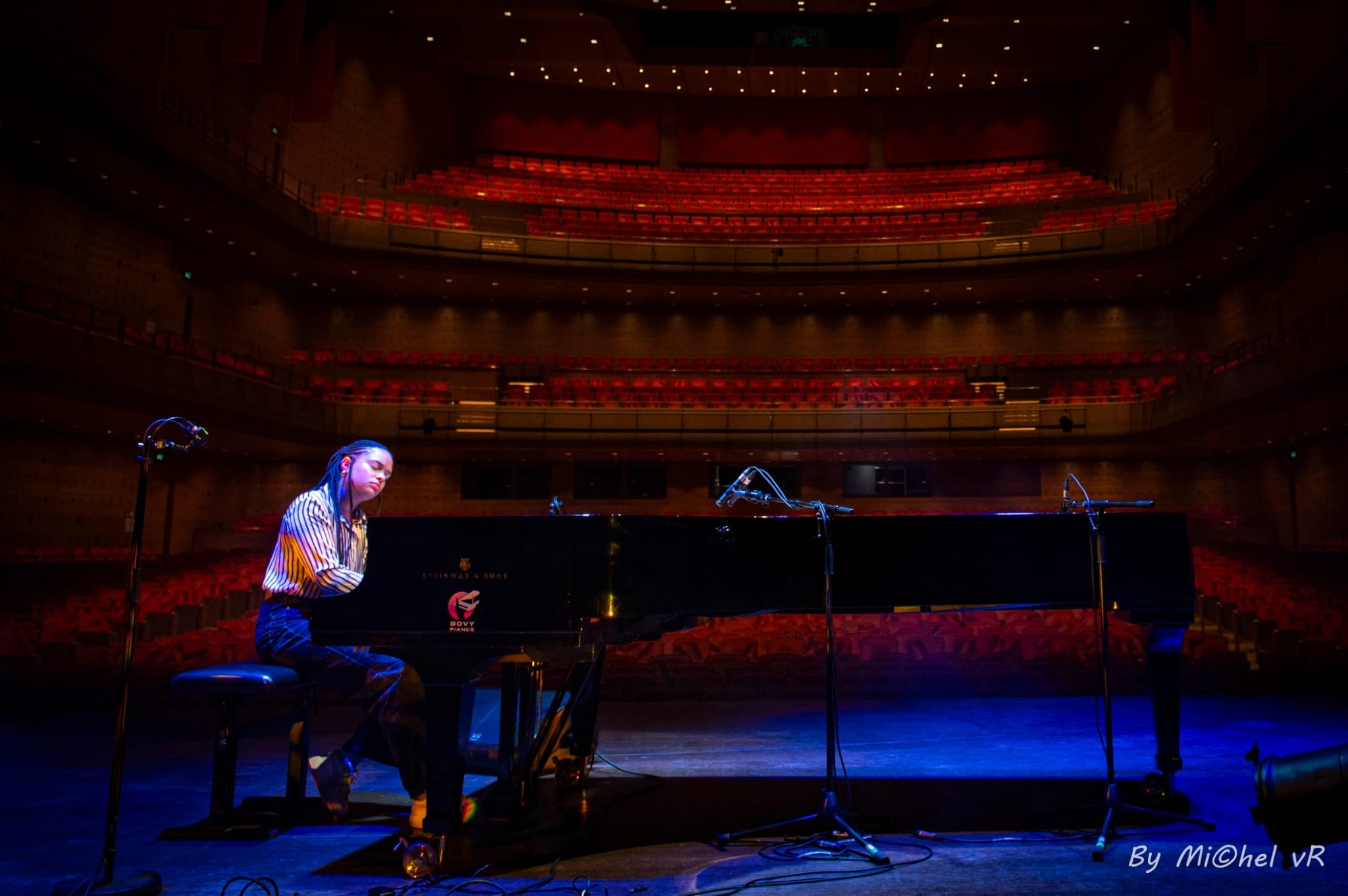
Between Classical Light and Contemporary Emotion
PRM: Every artist carries a personal musical landscape shaped by the music they grew up listening to, the artists they discovered along the way, and the sounds that continue to inspire them. Which composers, pianists, albums, or musical traditions have had the greatest influence on you?
Louisiana Bloom: My musical influences have evolved a lot over the years.
In the beginning, I was mainly inspired by pop artists who used piano as an accompaniment. When I started studying classical music at the academy, I discovered composers like Chopin and Debussy.
I was particularly drawn to Debussy’s floating, almost magical universe, and also to Erik Satie and the beautiful simplicity of his Gymnopédies. When I started composing myself, I discovered artists such as Ludovico Einaudi and Andrea Vanzo, whose approach to piano and emotion really resonated with me.
More recently, I’ve also been inspired by contemporary pianists like Tony Ann, with whom I had the opportunity to tour this year as part of the PianoPop tour.
I think all these influences have shaped my musical language, somewhere between classical music, minimalism, pop and emotion.
The Introspective Piano
PRM: Your work has a distinctive minimalist neo-classical character, where silence, repetition, space, and gradual harmonic evolution become part of the storytelling. How would you describe your own musical identity today?
Louisiana Bloom: My music is, above all, a translation of my feelings and my life experiences.
It carries many different emotions, which I try to express through dynamics, nuances, repetition, and especially silence.
You can hear these emotions when listening to my music on Spotify or other platforms, but I think they can be felt even more deeply in a live setting, where the music becomes a shared emotional experience.
If I had to describe my musical identity in a few words, I would say introspective piano, perhaps even healing piano.
That may sound like a big statement, but what I mean is that I want my music to move people, to stir something inside them, and perhaps even help them connect with emotions they sometimes struggle to put into words.
When Experience Becomes Music
PRM: Release is structured as an emotional journey through five stages: illusion, the first cracks, attachment, awakening, and ultimately release. When did this concept begin to take shape?
Louisiana Bloom: The concept of Release really began to take shape through my own experience of living through the different stages of a toxic relationship.
Toxic dynamics can exist in many areas of life—family, romantic relationships, friendships, or even professionally—and I experienced some of these dynamics myself.
I don’t want to go into the personal details, but what I lived through became a real source of inspiration.
I needed a way to release and process those emotions, almost like a form of therapy, and they naturally found their way into melodies.
I truly believe that my piano has the power to heal my emotions. By translating what I feel into music, I can give those emotions a voice without needing words.
And that is really how Release was born.
The Cycle of Attachment
PRM: One of the most fascinating aspects of your approach is the way repetition and recurring motifs gradually change meaning throughout the album. What may initially feel familiar can become tense, obsessive, or fragile before eventually opening into something freer. How do you use repetition to reflect emotional evolution?
Louisiana Bloom: A good example is Attachment.
The piece is built around a lot of repetition, reflecting the feeling of being trapped in a cycle and wanting to leave, but being unable to do so.
As the piece progresses, the recurring motif gradually transforms and returns, almost like a thought or pattern that we cannot escape from.
This repetition represents the struggle of attachment, the desire to break free, while constantly being pulled back. I also use different dynamics, tensions and silences within the repetitions to express what is happening internally.
Little by little, the pattern begins to unravel, symbolizing the possibility of finally letting go.
For me, repetition is not about playing the same thing again and again. It is about showing how the same emotion can change, intensify, and ultimately transform us.
Behind the Door, there is Light
PRM: The final piece, Release, seems to represent not simply an ending but a transformation. The piano becomes lighter, harmony opens up, and silence changes from something heavy into a space in which one can breathe. What did you want this final chapter to say about healing?
Louisiana Bloom: For me, Release is truly a symbol of healing, freedom, and the moment when we finally allow ourselves to move forward.
It represents a sense of accomplishment, the feeling of finally being able to break free. There is something much lighter in this piece than in the others. It feels as if, behind a door, there is finally light waiting for us.
After all the darkness, there is hope.
Release represents hope for the future. We are often afraid of change, but sometimes we have to understand that change is simply necessary in order to move forward.
And what lies ahead can be much more beautiful than what we are leaving behind.
I also wanted healing to represent becoming someone new, because we are constantly evolving. Every experience creates a new version of ourselves. We can take the parts of our past that helped us grow, but we cannot truly go back to who we were.
Healing is about becoming someone new, and I think that is where real renewal begins.
From Gratitude to Self-Discovery
PRM: Your debut album Elles and Release explore very different territories, yet both are deeply connected to human experience. Looking back at your journey from Elles to Release, what has changed most in you as a composer, pianist and storyteller?
Louisiana Bloom: There has been a huge evolution between Elles and Release.
When I composed Elles, I was really at the beginning of my journey. I was mainly writing from what I had naturally under my fingers, without necessarily thinking about a broader musical language.
When I listen to it today, I hear a certain simplicity and spontaneity that belong to that period of my life. With Release, I have become much more conscious as a composer. I have drawn inspiration from a wider musical world and from the music I hear around me.
I feel that I have developed a richer musical vocabulary and a clearer sense of what I want to express. On a personal level, I have also grown tremendously. I have gained much more confidence in myself, and I think you can really hear that confidence in Release.
Elles was very much about gratitude. I wanted to pay tribute to the people who helped shape me and contributed to the person I am today. It was, in a way, a public expression of gratitude.
Release, on the other hand, is much more personal. It takes me deeper into my own experience and emotions. So, if I had to sum up the journey, I would say that Elles was about thanking the people who helped me become who I am, while Release is about discovering who I have become.
When the Piano Knows First
PRM: We are always curious about the moment when an artist is alone with the instrument and an idea begins to emerge. What does your creative process look like?
Louisiana Bloom: I love this question because I’m often asked about my creative process.
Because of my classical background, I often begin with chords. Sometimes they are chords I have heard somewhere before, and sometimes they simply come naturally under my fingers.
From there, I improvise small melodies over the chords and let myself explore.
When I find something that really speaks to me, I keep playing it until the melody becomes anchored in my fingers. I record it so I don’t lose it, and then I come back to it the next day and continue the process, gradually building the piece.
Sometimes a composition can come together in a day or two, while other pieces take two or three weeks. It really depends.
But sometimes, something simply comes to my fingers without me really knowing where it comes from.
In those moments, I almost feel like I am a channel, as if something arrives through me, and I am simply the person carrying that message and allowing it to be translated through my fingers into music.
Those moments feel almost magical, and I think they are some of the most beautiful parts of being a composer.
“I Want to Touch Souls”
PRM: Every artist eventually develops a personal creative philosophy, a principle or belief that guides the way they approach their work. If you had to define your creative motto in a few words, what would it be?
Louisiana Bloom: My artistic philosophy is built around a mantra that I developed with my teacher at the time.
He once told me that, before starting a project, I needed to know why I was doing it. I needed something to repeat to myself every morning, especially on the days when I doubted myself or struggled with imposter syndrome.
It took me a few days to find the right words, but eventually, I knew exactly what my mantra was:
“I want to touch souls.”
That is my philosophy, and it is what keeps me going. It is why I continue to compose, perform, and put myself on stage, even when I doubt myself.
And every time I perform, I receive a reminder that this is why I do it. People come to me afterwards and tell me that the music moved them, that they could actually feel what I was playing.
Sometimes there are even tears. I feel that my music can resonate at different frequencies with different people. Somehow, they connect with what I have experienced and with what I am trying to express through the music, even without words.
What I find most beautiful is that it becomes a two-way exchange.
I don’t feel that I am simply giving my music to an audience. Something comes back to me through their emotions, their words, and their reactions.
And every time that happens, it moves me deeply. It makes me think,
“Yes. My mantra is working. The reason I make music is working.”
After Release
PRM: Release opens an important new chapter, but it also feels like the beginning of a wider artistic journey. What can we expect from Louisiana Bloom next?
Louisiana Bloom: I hope to find a label that can support me in my projects, help me develop as an artist, and open new doors internationally, particularly when it comes to live performances and reaching new audiences.
I would really love to return to London.
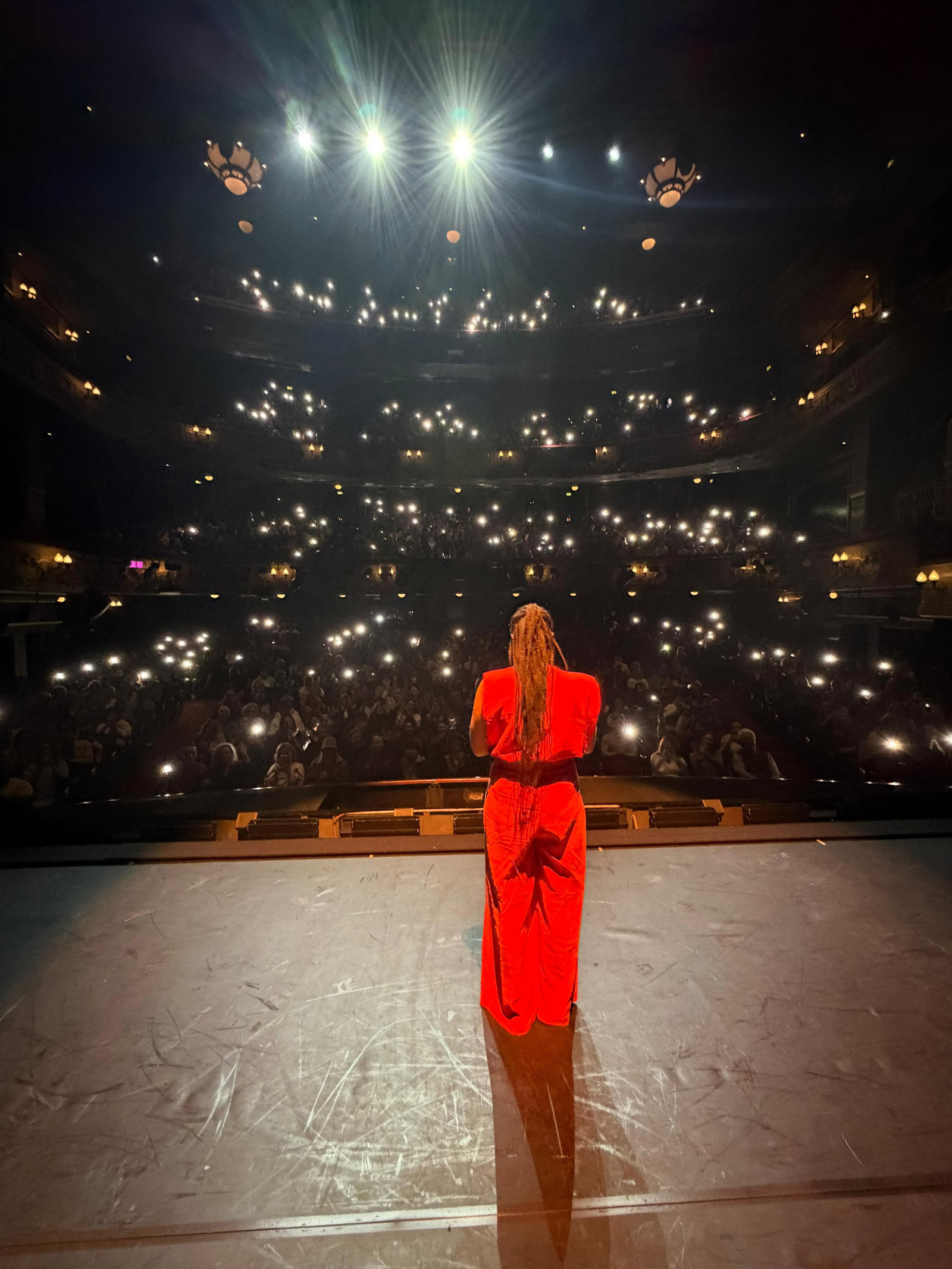
The audience at the Theatre Royal Drury Lane was absolutely wonderful, and the experience left a very strong impression on me. I would love to build on that connection and perform there again.
My dream would be to fill the kinds of venues I have already had the chance to perform in within the next two years, perhaps even sooner: the Theatre Royal Drury Lane in London, the Folies Bergère in Paris, the Queen Elisabeth Hall in Belgium, and hopefully many other beautiful venues around the world.
And then there is my biggest, perhaps craziest dream:
to compose for film.
I would absolutely love to explore the world of film music.
For now, I simply want to keep creating, growing, performing, and seeing how far this music can take me.
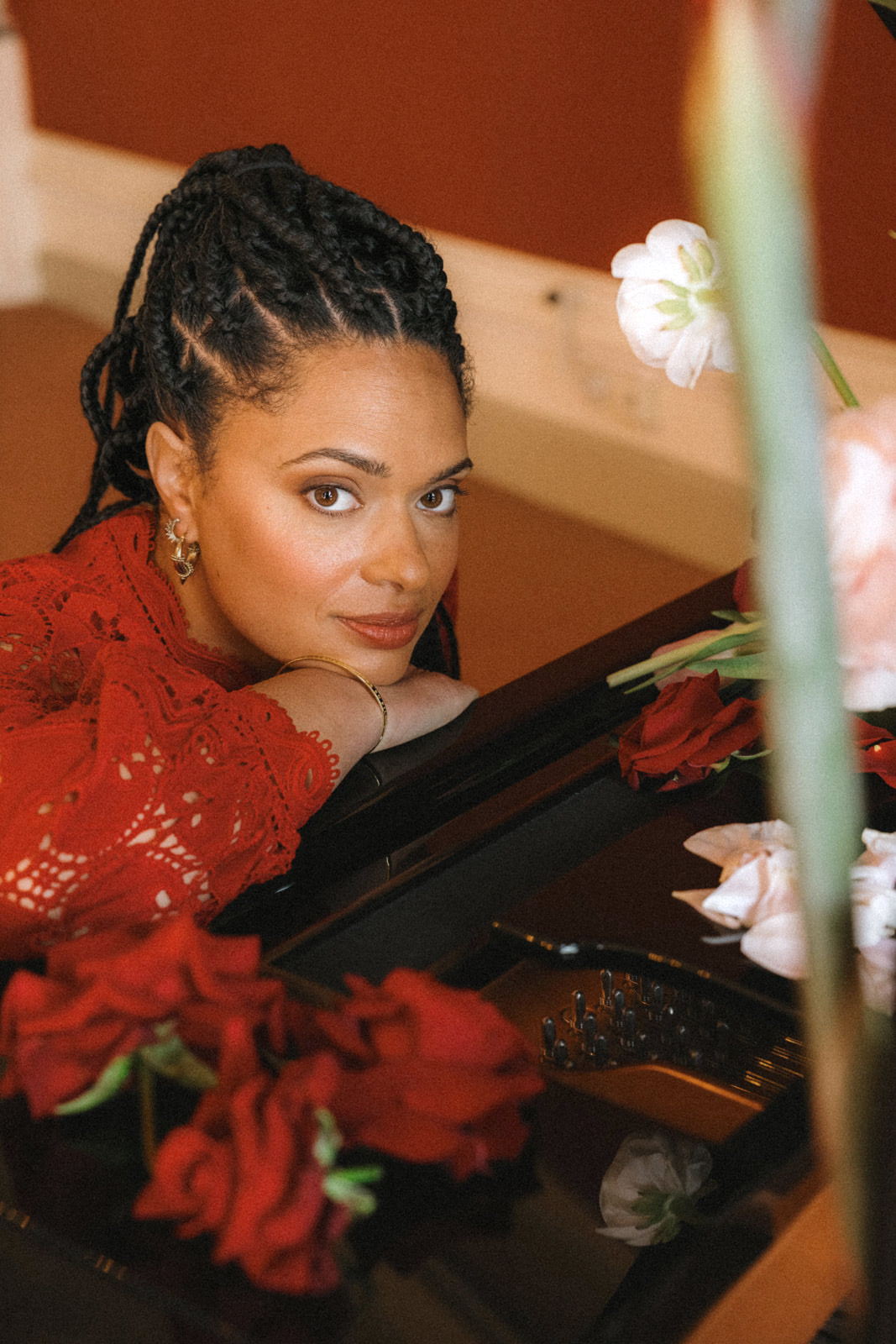
The Art of Letting Go
There is something quietly striking about Release.
Louisiana Bloom does not approach healing as a return to an earlier self. Instead, she sees it as transformation—a process through which every experience leaves something behind, while simultaneously creating someone new.
That philosophy is embedded in the music.
Repetition becomes the sound of attachment. Silence becomes a space for emotions that cannot be spoken. Harmony gradually opens as the possibility of freedom begins to appear.
And then, finally, there is Release itself. The darkness does not disappear. It has simply been passed through.
Behind the door, there is light.
For Louisiana Bloom, music began with a fascination for the piano. It became a discipline, then a creative language, and eventually something more intimate: a means of understanding herself.
Now she wants that language to reach others.
Perhaps that is why her mantra feels like the natural conclusion to this entire journey: “I want to touch souls.”
Not to tell people what to feel.
Not to explain every emotion.
Simply to create the space where they might recognise something of themselves.