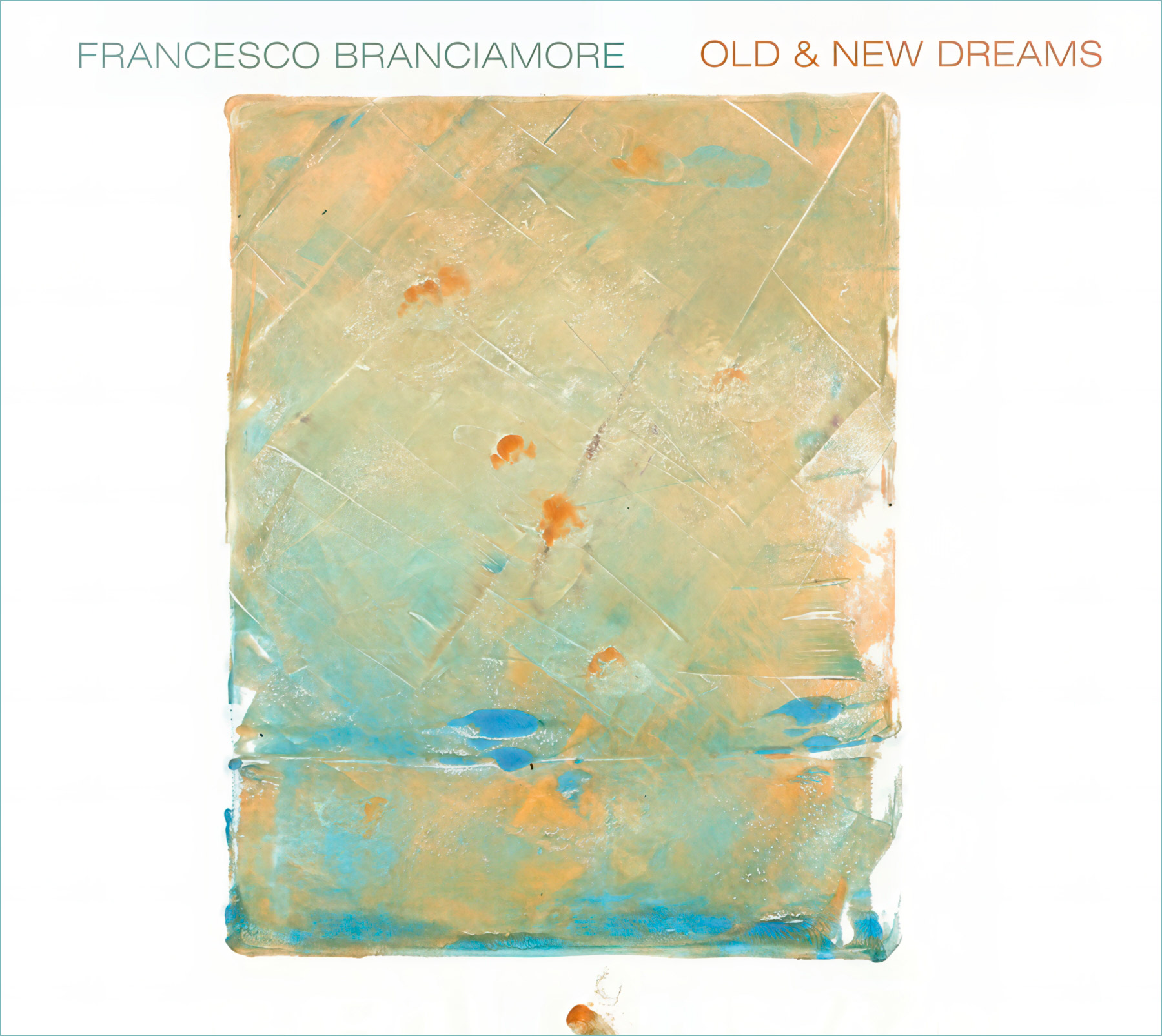
Francesco Branciamore — Old & New Dreams
Some music asks to be heard. Some music asks to be felt. There are artists whose presence remains with you long after the last note When the theme becomes a narrative voice, the piano becomes more than an instrument: it becomes a place where memory, composition and improvisation can coexist.
There are albums that announce themselves through volume, virtuosity or stylistic certainty. Then there are albums that ask a quieter question:
What does a musician still have to say after decades spent listening, studying, performing and composing?
Francesco Branciamore’s Old & New Dreams, released by Caligola Records in 2026, belongs firmly to the second category.
A thirteen-track solo-piano work, the album is the latest chapter in a long artistic trajectory that has seen Branciamore move fluently between drums, piano, composition, arrangement and improvisation. It follows his previous piano projects Aspiciens Pulchritudinem and Skies of Sea, but it does not simply extend an established formula. Instead, it appears to reconsider what a piano album can contain when the musician brings an entire history of listening into the room.
The title Old & New Dreams is therefore more than a poetic label. It describes the album’s central tension: the meeting of inherited musical memory with the need to speak in the present tense.
Branciamore approaches that meeting through a particularly personal understanding of the relationship between composition and improvisation. His conception of the theme as a “narrative voice” is crucial here. The theme is not merely material to be presented and developed; it becomes the beginning of a story, a point from which the music can move into less predetermined territory. The resulting aesthetic occupies a fascinating space between written form and spontaneous discovery.
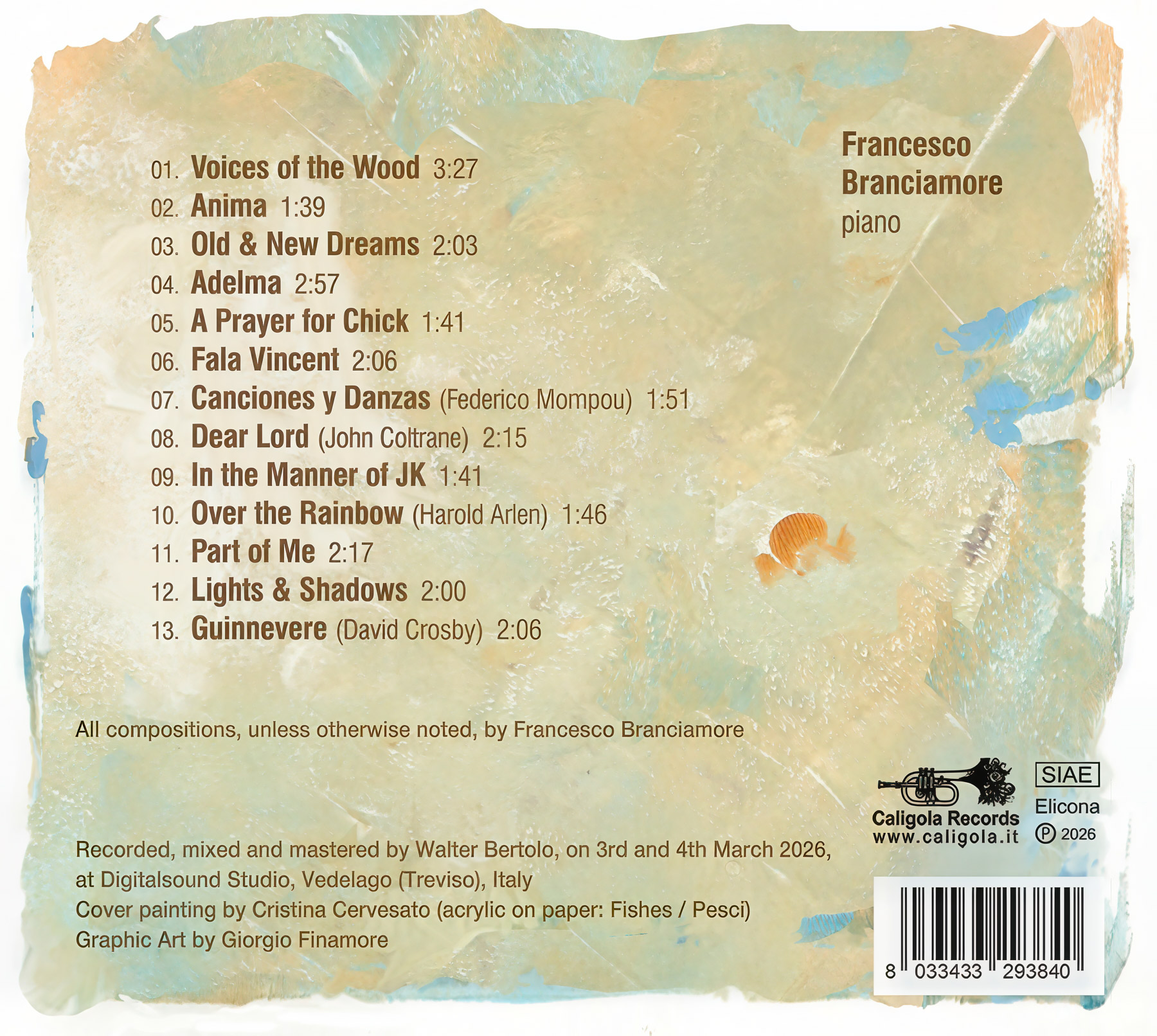
The album begins with “Voices of the Wood”, immediately establishing the idea of sound as something connected to imagery and atmosphere. From there, titles such as “Anima,” “Old & New Dreams,” “Adelma,” “Fala Vincent,” “Part of Me” and “Lights & Shadows” suggest an album constructed not simply as a collection of compositions but as a sequence of inner landscapes.
This is one of the work’s most compelling characteristics: Branciamore seems less interested in demonstrating how many musical languages he can master than in asking what remains essential after those languages have been absorbed.
That distinction matters.
Jazz is present, but Old & New Dreams is not confined by the expectations of a conventional jazz piano album. Classical music is present, but this is not a classical recital in disguise. Improvisation is fundamental, but the project is not an exercise in unrestricted freedom. Instead, Branciamore searches for a personal equilibrium between these elements—a language in which composition provides architecture while improvisation supplies movement.
This is particularly evident in the album’s relationship with repertoire.
For much of his previous recorded work, Branciamore concentrated on original compositions. Here, however, four pieces by other composers enter the narrative: Federico Mompou’s “Canciones y Danzas,” John Coltrane’s “Dear Lord,” Harold Arlen’s “Over the Rainbow,” and David Crosby’s “Guinnevere.”
It is an unusually revealing selection.
Mompou brings the intimate world of twentieth-century piano writing; Coltrane brings one of jazz’s deepest spiritual dimensions; Arlen represents one of the great melodies of the American songbook; Crosby introduces a strand of songwriting associated with a different kind of poetic freedom. Rather than functioning as interruptions to Branciamore’s own material, these pieces can be understood as windows into the musical memory from which his own language has developed.
This is where the word “dreams” becomes particularly interesting. Dreams are rarely made from entirely new material. They recombine things already encountered: voices, images, fragments, places and memories. In that sense, Old & New Dreams is an album about transformation rather than novelty for novelty’s sake.
Branciamore’s decades of experience as a jazz drummer also provide an important background to the piano writing. His biography is unusually rich in encounters with the language of improvisation, from his studies with major figures to his work in ensembles and European projects. He was also awarded the Targa Mazars at Milan’s “Jazz in” festival in 2000 for a project addressing the relationship between jazz, tradition, improvisation and technology.
Yet the most intriguing aspect of Old & New Dreams is perhaps that none of this history needs to be announced loudly. The album is built around the idea that experience can eventually become economy. After decades of musical exploration, the question is no longer necessarily how much one can play, but what deserves to be played.
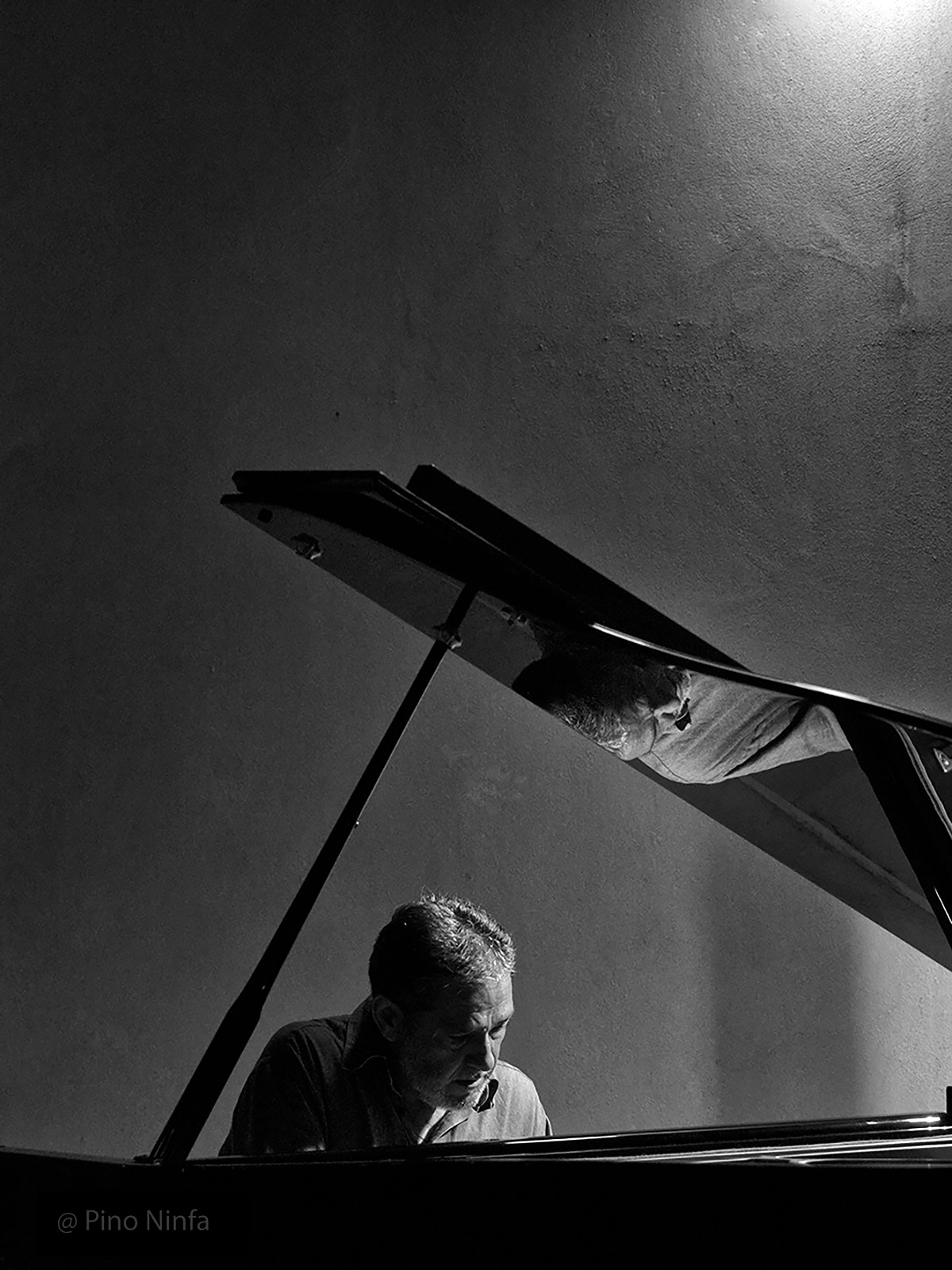
That idea is particularly resonant in a solo piano setting. Without bass, drums, horns or electronics to redistribute attention, the pianist is exposed not only technically but conceptually. Every pause, repetition, harmonic turn and melodic decision becomes part of the architecture. The piano is simultaneously orchestra, rhythm section, harmonic foundation and intimate voice.
The choice of a Steinway Grand Piano D-274 reinforces this concentration. The album was recorded, mixed and mastered by Walter Bertolo at Digitalsound Studio in Vedelago, Italy, on 3 and 4 March 2026.
There is also something significant in the fact that this is an album by a musician whose career has been so strongly associated with ensembles. Branciamore has worked with formations including the Trade d’Union European Quartet and the Perfect Quartet, while his TRIUM project brought together an international cast including Michel Godard and Jean-Luc Cappozzo.
In Old & New Dreams, however, the dialogue has been internalised.
The conversation is now between the composer and the improviser, between the musician and his accumulated memory, between the written page and the moment in which the written material becomes sound.
That makes the album feel less like a declaration and more like a reflection.
And reflection does not mean passivity.
The presence of “A Prayer for Chick” and “Dear Lord” places jazz history within the album’s emotional vocabulary, while Mompou, Arlen and Crosby widen the frame beyond the traditional boundaries of the genre. The result is a record that treats musical history not as a museum but as living material—something to be revisited, questioned and reinterpreted.
This is ultimately what makes Old & New Dreams interesting within the contemporary piano landscape.
It does not attempt to erase its influences. Nor does it attempt to disguise its long relationship with jazz and improvisation. Instead, it accepts that a mature musical voice is inevitably built from many voices—and that originality may lie not in having no influences, but in knowing what to do with them.
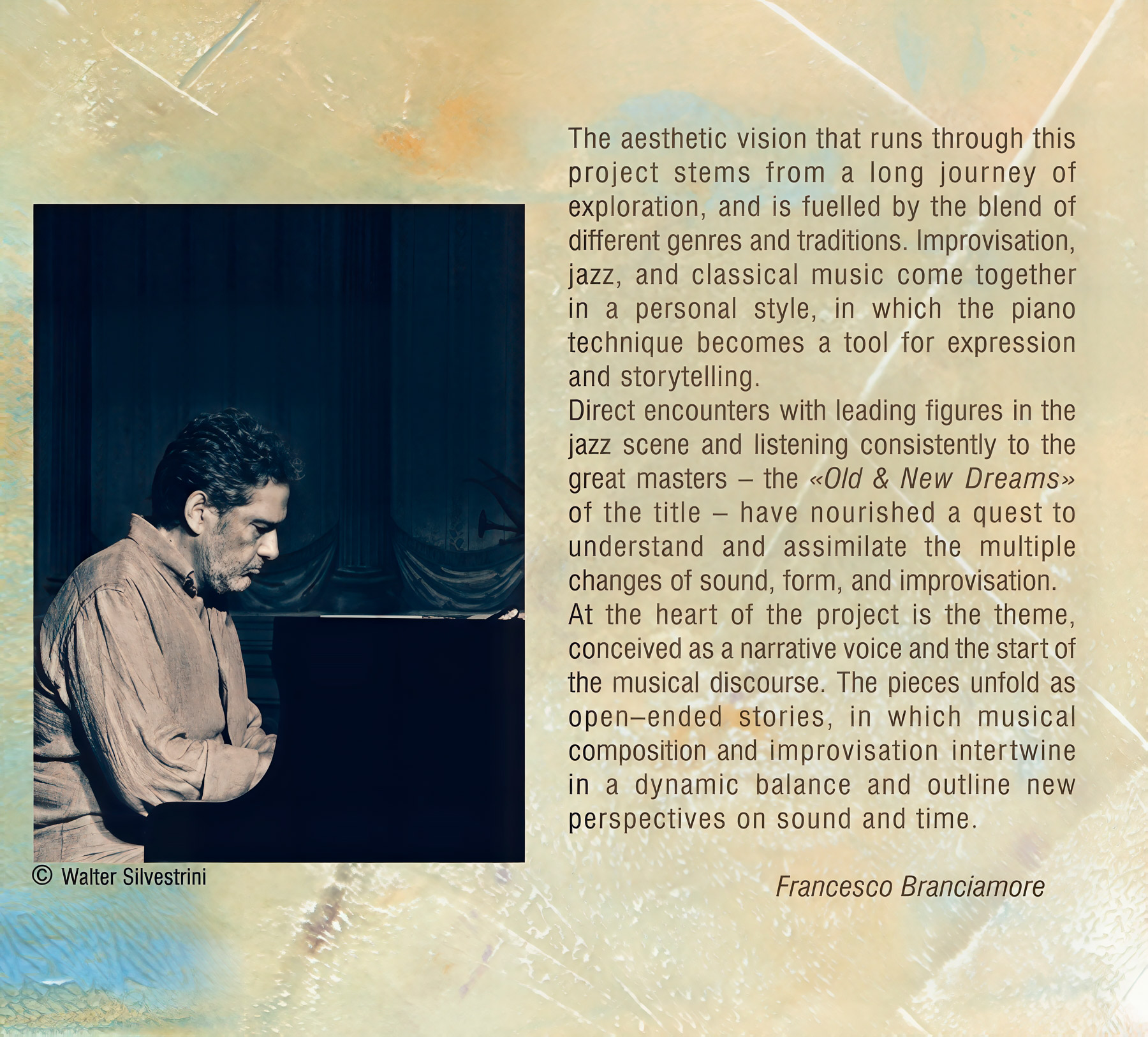
Branciamore’s own description of the project speaks of studying the evolution of musical construction, sound, perspective and improvisation. That pursuit is reflected in the album’s very architecture: original compositions sit beside works that come from radically different traditions, creating a conversation across generations and genres.
The result is a record about continuity without repetition.
The “old” is not there simply to be honoured, and the “new” is not there simply to appear contemporary. They need each other. Memory gives the new language depth; the present gives memory another possibility of being heard.
In that sense, Old & New Dreams is perhaps best understood as a portrait of a musician arriving at a particularly interesting stage of his artistic life: experienced enough to understand tradition, curious enough not to remain inside it, and disciplined enough to leave space for the unexpected.
The piano becomes the meeting point.
Not between jazz and classical music alone, nor between composition and improvisation, but between everything Branciamore has heard and everything he is still searching for.
A thoughtful, deeply personal piano statement in which experience does not close the musical conversation—it opens it further.
Piano Revenge MAG — Album Review
Francesco Branciamore — Old & New Dreams
Caligola Records, 2026 · 13 tracks · Solo piano
Editor’s Note
Some albums arrive as statements; others unfold as conversations. With Old & New Dreams, Francesco Branciamore invites us into a space where memory, improvisation, composition and listening are inseparable.
The album moves freely between original compositions and works drawn from very different musical traditions, revealing an artist less concerned with genre boundaries than with the expressive possibilities that emerge when they meet.
For Piano Revenge MAG, this record is particularly compelling because it reflects something at the heart of our own editorial vision: the piano as a living language—capable of carrying tradition while remaining open to discovery. Branciamore’s long experience across jazz, improvisation and composition gives this solo work a distinctive perspective, where every piece becomes part of a larger musical narrative.
What follows is our independent reading of Old & New Dreams —not as a conventional catalogue of influences, but as an invitation to listen to the album as a dialogue between where music has been and where it can still go.
The Editors, Piano Revenge MAG