Dennis Korn — One Piano Piece at a Time
A journey through emotion, memory, seasons and light…
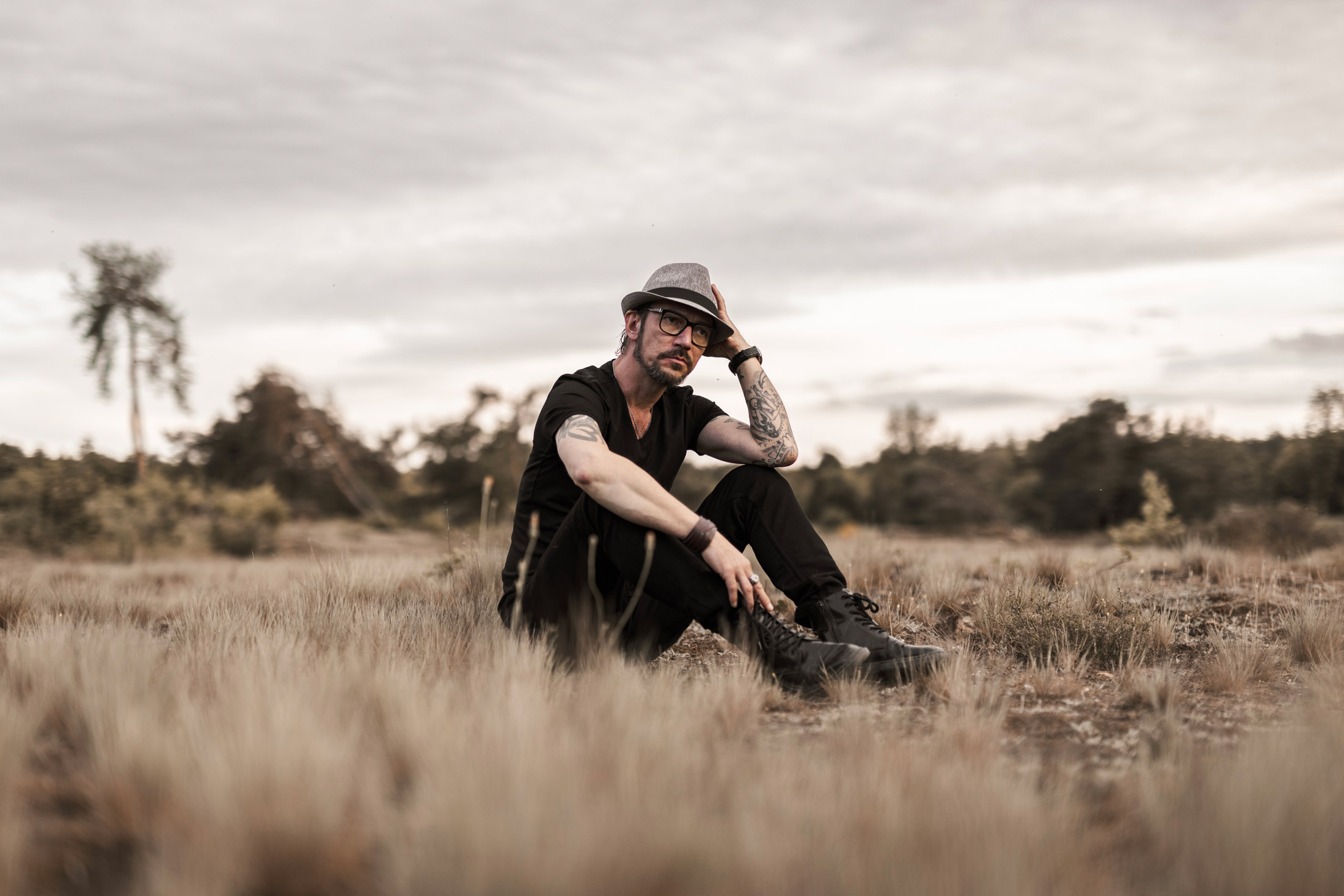
A Dennis Korn piano piece rarely announces itself. It arrives almost like a memory — quietly, intimately, and with the strange ability to make an ordinary moment feel significant.
For him, the piano has never been simply a collection of keys, harmonies and techniques. It is a place where feelings can exist before they become words. As he told Piano Revenge MAG in our recent conversation, he often begins composing not with theory or a predetermined concept, but with a feeling — an emotion that gradually finds its way into melody.
“I play what I feel,” is perhaps the simplest description of his artistic philosophy.
And it is precisely this simplicity that makes Korn’s music so immediately accessible.
Since beginning to release his original piano music in 2020, the German composer and pianist has built an extraordinary catalogue: more than 180 pieces, millions of streams and a vast international audience. His music has appeared on more than 100,000 playlists worldwide, while his piano videos have helped him create a substantial community across social media.
Yet numbers alone do not explain the phenomenon. To understand Dennis Korn, one has to sit with the individual pieces.
One at a time.
A melody.
A memory.
A place.
A season.
A moment.
And suddenly, the apparently simple becomes deeply personal.
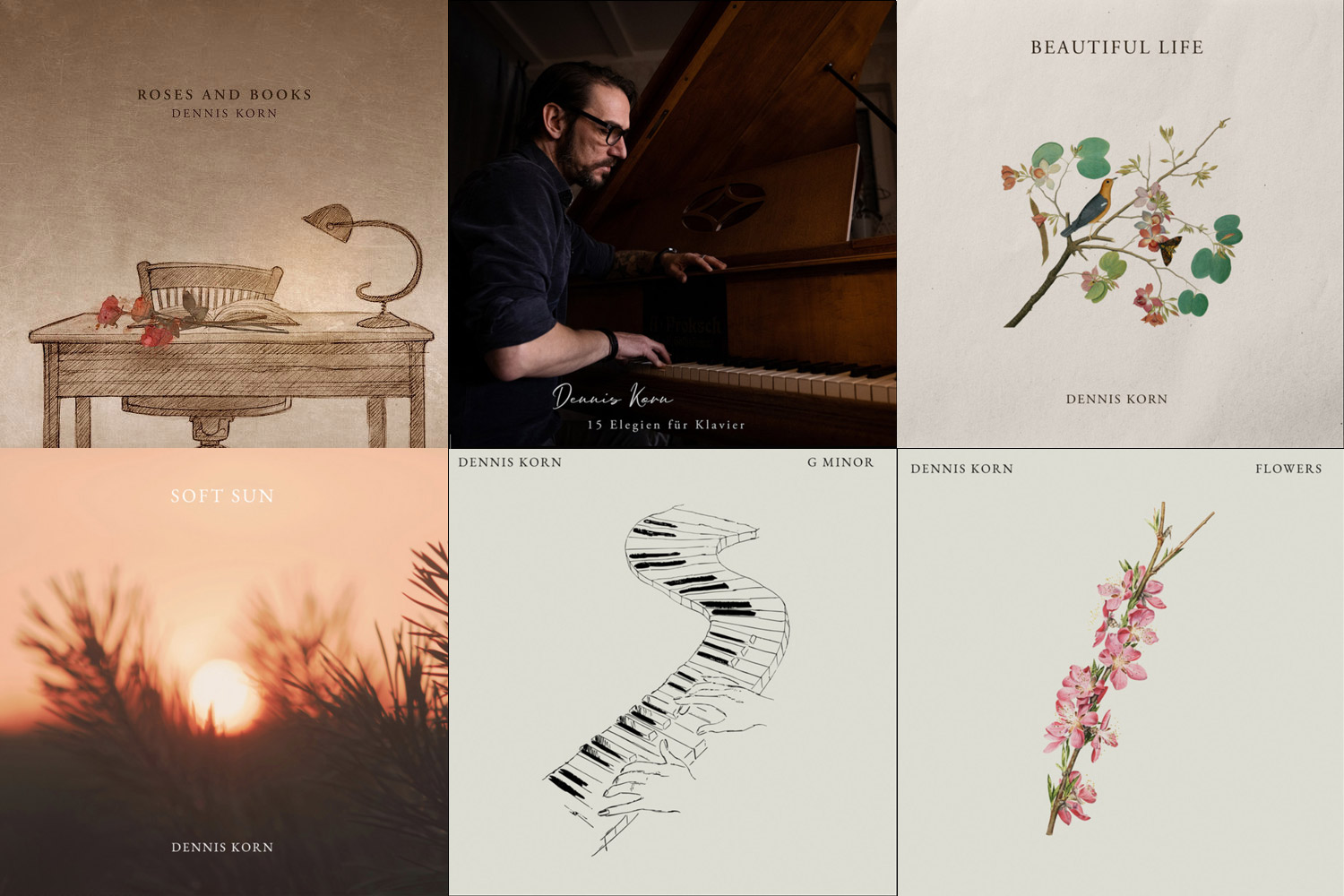
For this Piano Revenge MAG review, rather than approaching Korn’s vast catalogue as a single conventional album, we have chosen four releases that reveal different dimensions of his artistic universe — from the literary atmosphere of Roses and Books, through the intimate melancholy of 15 Elegien für Klavier, to the monumental concept of The Year and the more recent world of Storybook Waltzes. Along the way, several of his most recognisable pieces become signposts: “Beautiful Life,” “Art of Now,” “Soft Sun,” “Flowers,” and “Fly.” Together, they tell a story.
Roses and Books — Where music becomes memory
Released in 2023, Roses and Books occupies a particularly evocative place in Dennis Korn’s catalogue. The title itself already suggests the atmosphere: literature, solitude, old rooms, autumn light, memory. The album has been associated with the “Dark Academia” aesthetic, and its music often feels like the soundtrack to an imaginary film — one in which nothing dramatic necessarily happens, yet everything seems emotionally significant.
Among its pieces, “Dinner Time” is especially revealing. Korn himself has singled it out as a meaningful work, describing it as the first song of Roses and Books. There is something almost cinematic about such a title. “Dinner Time” is not a grand historical event. It is an ordinary moment. And this is precisely where Korn’s compositional personality becomes interesting: he repeatedly finds poetry in things that might otherwise pass unnoticed.
A table.
An evening.
A room.
A book.
A remembered street.
A quiet thought.
His piano does not necessarily tell us what happened. Instead, it allows us to imagine what might have happened. Then comes “Cimetière du Père Lachaise”, a title that immediately places us in Paris — one of the world’s great cities of memory. Here the literary atmosphere of Roses and Books becomes almost architectural. The piano seems to walk through history rather than simply perform a melody. This is one of Korn’s great strengths: his pieces frequently have a sense of place even when they contain no words. The listener supplies the story. And perhaps that is why his music travels so easily.
15 Elegien für Klavier — The courage to be melancholy
If Roses and Books creates an atmosphere, 15 Elegien für Klavier goes deeper into the emotional interior.
Released in 2024, the album is one of the clearest expressions of Korn’s ability to transform melancholy into something beautiful rather than merely sad. Its titles alone form a miniature emotional geography.
“Abschied von Paris.”
“Herbstwalzer.”
“Ein trister Sonntag.”
Three titles, three images — departure, autumn, Sunday — and yet each contains an entire emotional world. “Abschied von Paris” is particularly poignant for Piano Revenge MAG.
Paris is not simply a city here. It becomes the idea of leaving somewhere that has become part of you. There is a certain restraint in the piece’s emotional language: rather than dramatizing departure, Korn allows the feeling to unfold naturally.
That restraint matters. Korn’s music rarely demands that the listener feel something. It creates enough space for the listener to discover their own feeling inside it. Then there is “Herbstwalzer.”
The waltz is a fascinating recurring element in Korn’s musical language, and he has spoken to us about the traces of Viennese waltz rhythm that can still appear in his contemporary compositions. For him, this connection between historical musical language and today’s listeners is part of what makes Vienna so fascinating. “Herbstwalzer” therefore feels almost like a bridge between centuries.
The nineteenth-century waltz is there somewhere in the background — but it has been stripped of ballroom grandeur and transformed into something much more intimate.
A waltz for memory.
A waltz for autumn.
A waltz for things that are already disappearing. And perhaps nothing illustrates Korn’s philosophy better than “Ein trister Sonntag.” There is no need to disguise sadness. A grey Sunday can simply be a grey Sunday. Korn’s gift is to make such a feeling musically inhabitable.
The Year — 36 pieces, 12 months, one musical diary
Then comes the ambitious project that perhaps best demonstrates the scale of Dennis Korn’s imagination: The Year.
Released in 2025, the project consists of 36 neo-classical piano works corresponding to the twelve months of the year, accompanied by original artwork. It is an unusually simple concept — and an unusually difficult one to sustain.
Because time is not dramatic by itself.
January does not sound like February.
March does not automatically sound like April.
The challenge is to turn the calendar into emotional material. Korn approaches this not as a grand symphonic statement but as a collection of small observations. Each piece becomes a little window. And this brings us back to his central artistic principle: composing one piano piece at a time. Rather than attempting to explain an entire year through one monumental composition, Korn allows the year to exist as a succession of moments.
Thirty-six pieces.
Thirty-six emotional perspectives.
A musical diary without words.
It is perhaps here that the accessibility of his music becomes most powerful. You do not need to know the composer’s biography to recognise the feeling of a particular month.
Everyone has experienced the anticipation of a beginning, the heaviness of a winter afternoon, the sudden lightness of spring, the strange melancholy of summer ending. Korn gives these sensations a piano.
Storybook Waltzes — The return of the dance
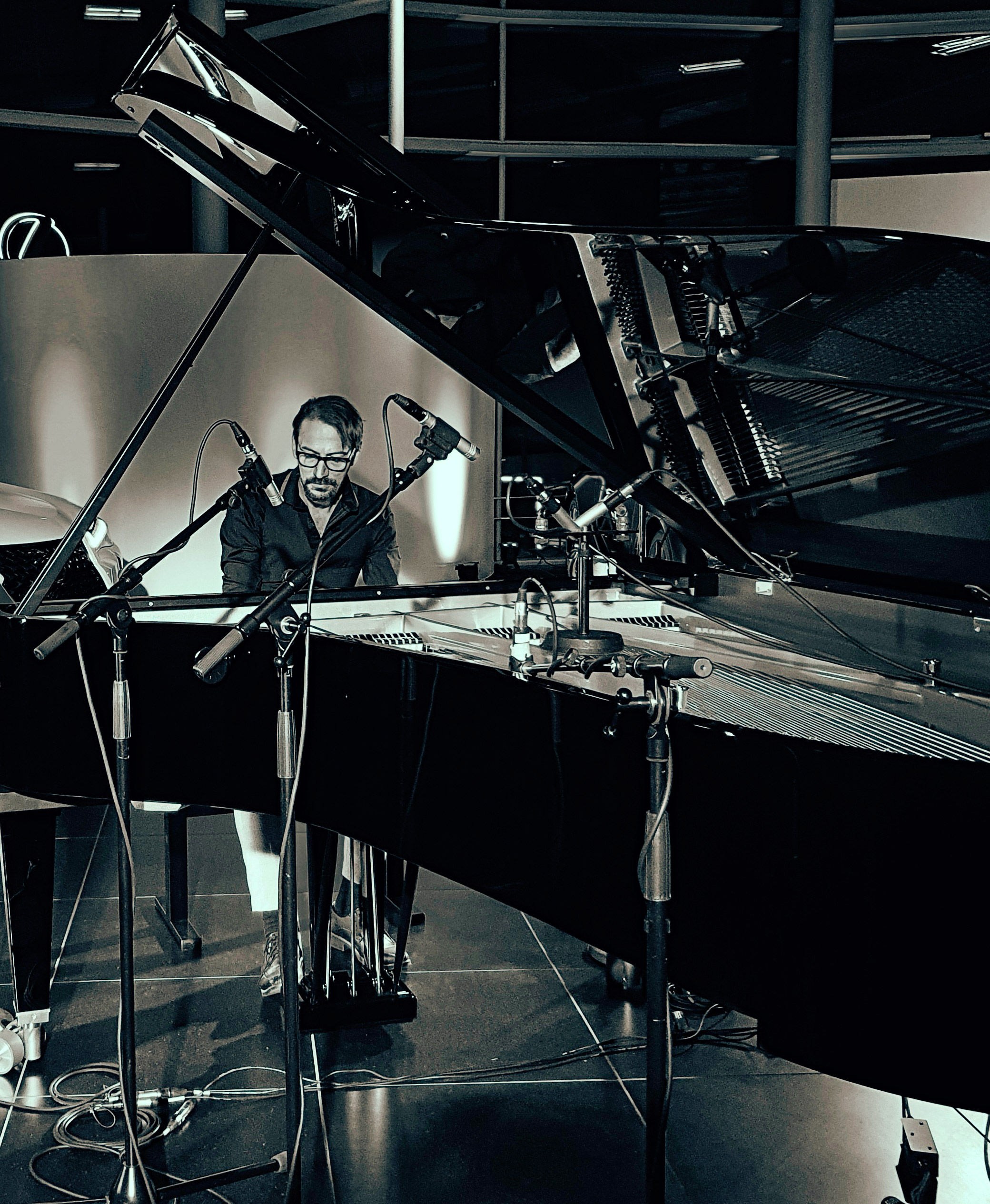
By 2026, another side of Dennis Korn begins to emerge. Storybook Waltzes, released in collaboration with pianist Carlos Hof, returns to one of the oldest and most recognisable forms in European music: the waltz.
The project sits naturally alongside Korn’s continuing interest in contemporary piano music that can carry traces of older musical traditions. The collaboration also opens another door. Korn’s music is no longer necessarily a solitary conversation between composer and piano.
Pieces such as “Moonlit Carousel” and “The Butterfly Waltz” reveal a more playful, dreamlike side of his musical imagination.
There is movement here.
There is theatre.
There is the feeling of something turning in circles — like a carousel, a dance, or a childhood memory that returns years later in a completely different form. And yet the emotional DNA remains unmistakably Korn.
The music is still about connection.
Still about atmosphere.
Still about the little moment that suddenly becomes meaningful.
The singles: a world in miniature
If the four releases above provide the larger architecture, Korn’s singles show just how effectively he can communicate an idea in miniature.
“Beautiful Life” is perhaps the most obvious example. It is among his most popular recordings on Spotify, with millions of streams, and its appeal lies partly in the directness of its emotional message. There is no elaborate conceptual machinery required. The title says enough. But Korn’s music does not simply illustrate the words. Instead, it leaves enough openness for “beautiful life” to mean something different to every listener.
Then comes “Art of Now.” The title itself feels almost like a manifesto. The present moment as an art form. And perhaps that is exactly what Korn’s music does best: it encourages us to stop long enough to notice what is already there.
“Soft Sun” moves into gentler territory, while “Flowers” continues Korn’s fascination with small images capable of carrying surprisingly large emotional weight. Both belong to his recent catalogue and have become recognisable parts of his current musical world.
And then there is “Grateful.” The title could hardly be simpler, yet it opens another door into Korn’s musical language. Gratitude, like beauty, is not necessarily a dramatic emotion. It can exist quietly — in a morning, a memory, a person, a place, or simply in the awareness of being present. The piece belongs to Korn’s 2026 repertoire and has also been presented in several versions, including Nature Sounds, Slowed + Reverb and Sped Up treatments.
What is striking is how naturally Korn’s music accommodates this kind of simplicity. He does not need to enlarge a feeling in order to make it meaningful. Sometimes a title, a melody and a few carefully chosen notes are enough. That may be one of the reasons his music travels so easily.
A melody can begin in a room and somehow travel across countries.
A piano piece can be written alone and eventually become part of thousands of other people’s private lives.
A simple motif can become someone’s soundtrack.
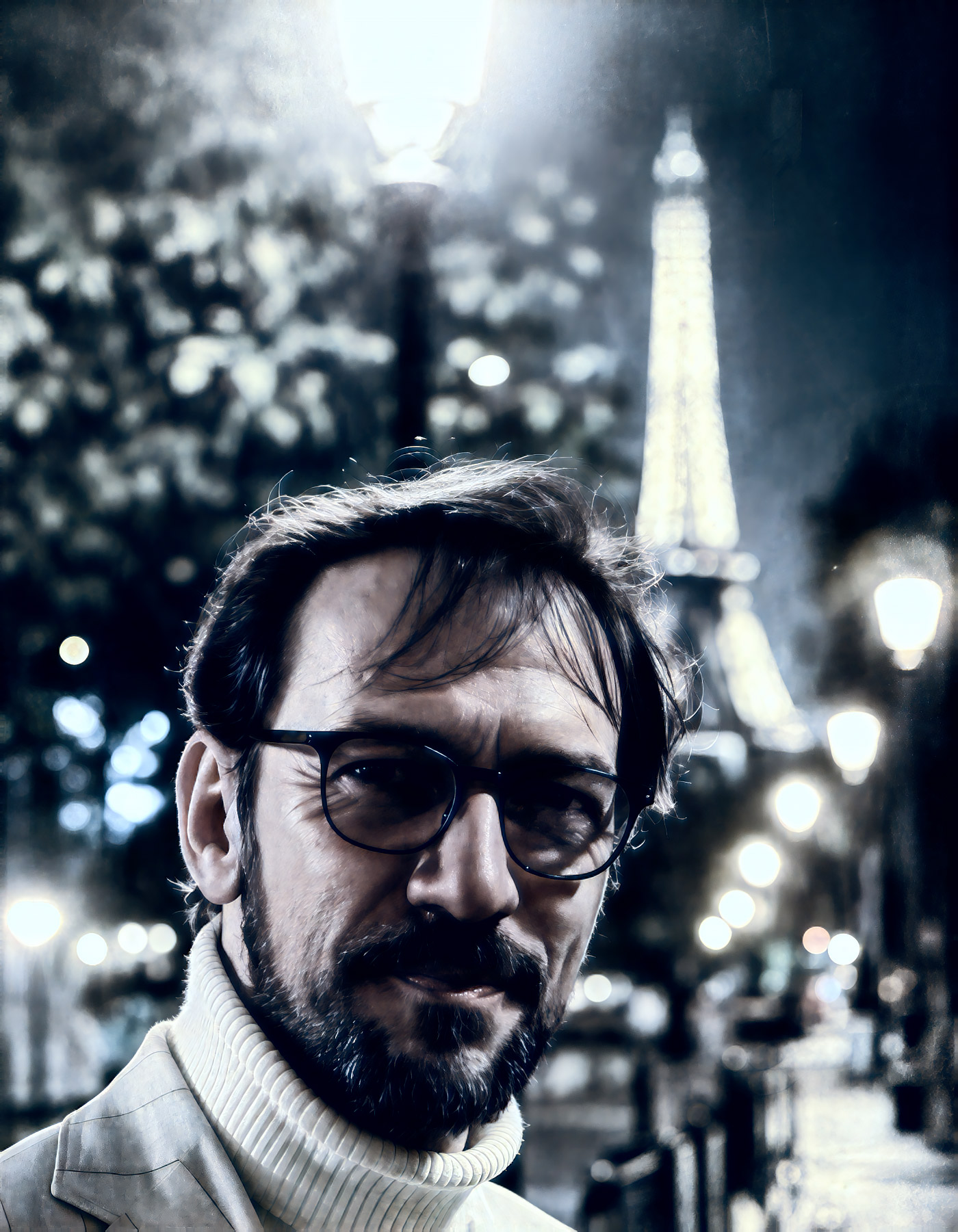
One piece at a time
There is a temptation, when confronted with an artist who has produced such a large catalogue, to talk about productivity. But productivity is not really the interesting story here. The interesting story is connection.
Dennis Korn has built his artistic identity around the belief that contemporary piano music does not have to choose between accessibility and sincerity. It can be simple without being simplistic. It can be emotional without becoming sentimental. It can be contemporary without abandoning the musical memories of the past. His influences — from Bach to Einaudi, Nils Frahm, Ólafur Arnalds, Yann Tiersen and Philip Glass — reveal an interest in composers who understand that a relatively economical musical language can nevertheless create enormous emotional spaces. And there is another important element in Korn’s philosophy: he does not want his music merely to be listened to.
He wants it to be played. In our interview, he described the particular joy of knowing that pianists around the world are sitting down with his sheet music in front of them. For him, that can be even more meaningful than streaming numbers — because the music has crossed another threshold.
It has entered somebody else’s hands.
It has become part of somebody else’s musical life.
That idea feels particularly close to the spirit of Piano Revenge. Because a piano piece is never truly finished when the composer writes the final note. It is finished when someone sits down at another piano and begins again.
From Paris to Vienna — and beyond
For Piano Revenge, Dennis Korn’s music has also become part of our own story. We had the pleasure of welcoming him to Paris this April, where his presence brought his music from the streaming world into the physical intimacy of the concert hall.
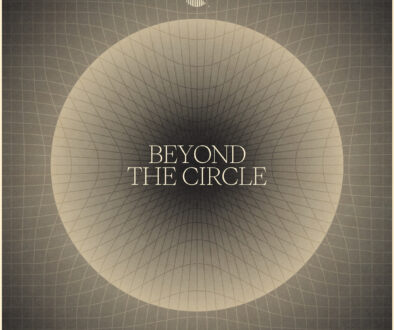
Now the journey continues. In October 2026, Dennis Korn will return to our stage in Vienna, performing as part of Piano Revenge Days at VIA – Piano & Arts Center. Spotify currently lists his Vienna appearance for October 16. And the story does not end there. Dennis will also join the main selection of Piano Revenge Festival in Paris in 2027, bringing his music back to the city that already appears so memorably in his catalogue. There is something wonderfully circular about this.
A composer who wrote “Abschied von Paris” will return to Paris.
A composer fascinated by the Viennese waltz will come to Vienna.
A composer who believes in music one piece at a time continues to build his career one encounter at a time.
And perhaps that is the best way to listen to Dennis Korn. Not as a catalogue. Not as a number of streams. Not even as a collection of albums.
But as a sequence of moments.
One melody.
One memory.
One feeling.
One piano piece at a time.
Dennis Korn is not simply writing piano music for the present moment. He is collecting moments — and giving them back to us in sound.