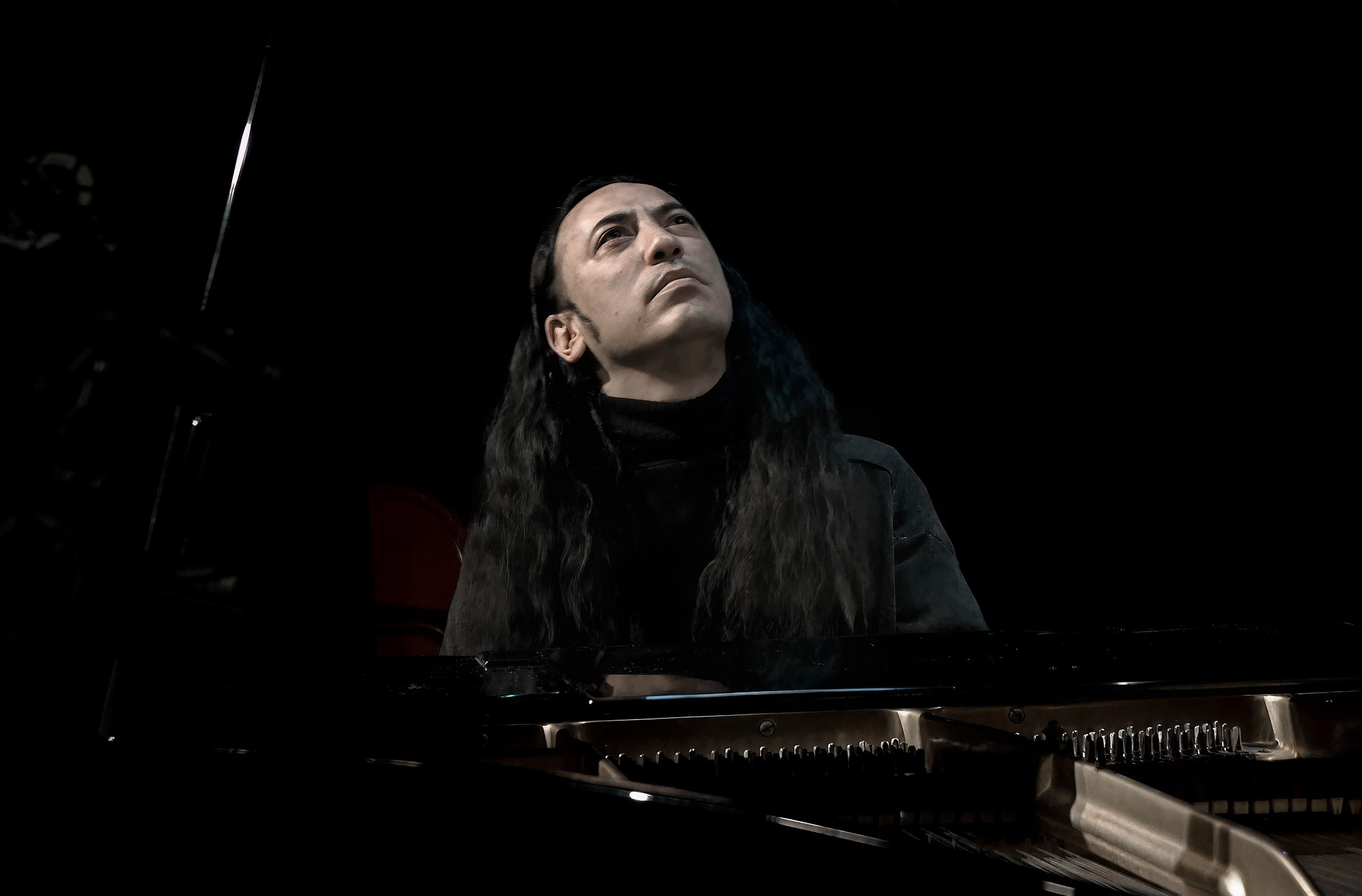
Hüseyİn Kirmizi, or the Art of Becoming
From Eastern Mediterranean Memory to Reinventing the Piano
In Hüseyin Kırmızı’s hands, the piano becomes something closer to a private room in a city you can’t quite name: a place where memory, identity, silence, and transformation speak in the same breath. His music carries the Eastern Mediterranean within it—Cyprus as geography and as psyche—yet it never turns nostalgic. Instead, the past is worked into the present like pigment: distilled, re-lit, and set into motion.
Kırmızı’s story is one of becoming: leaving familiar ground without losing the echoes that shaped it. Over the years—through Cyprus, teachers and changing musical environments, Rotterdam, and an increasingly international concert life—he has moved toward a language where contemporary classical thinking, modern jazz freedom, and improvisation are no longer separate compartments, but one continuous voice.
In the following conversation, we look beyond the notes to the forces behind them: the island’s layered histories, the discipline of form and the risk of the moment, and the way a solo piano can hold both confession and architecture. This is not simply where an artist comes from—it is where the music insists on going next.
Piano Revenge MAG meets Hüseyin Kırmızı at the threshold—listening for the sound of transformation as it happens.
Editor’s note:
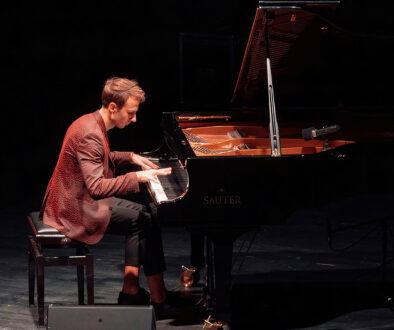
We first encountered Hüseyin Kırmızı not simply through his music, but in the intimate atmosphere of the Piano Revenge Festival in Paris this past April, where we had the pleasure of welcoming him to our stage.
There is something particularly meaningful about meeting an artist in the live space before sitting down to explore the story behind the music. Hearing Hüseyin perform gave us a first glimpse into the sensitivity, depth and evolving character of his artistic voice — qualities that stayed with us long after the festival.
It is therefore a pleasure to now open a deeper conversation with him: to look beyond the performance and into the memories, ideas and transformations shaping his musical path.
From the stage in Paris to the pages of Piano Revenge MAG, we are delighted to invite you into Hüseyin Kırmızı’s sound of becoming.
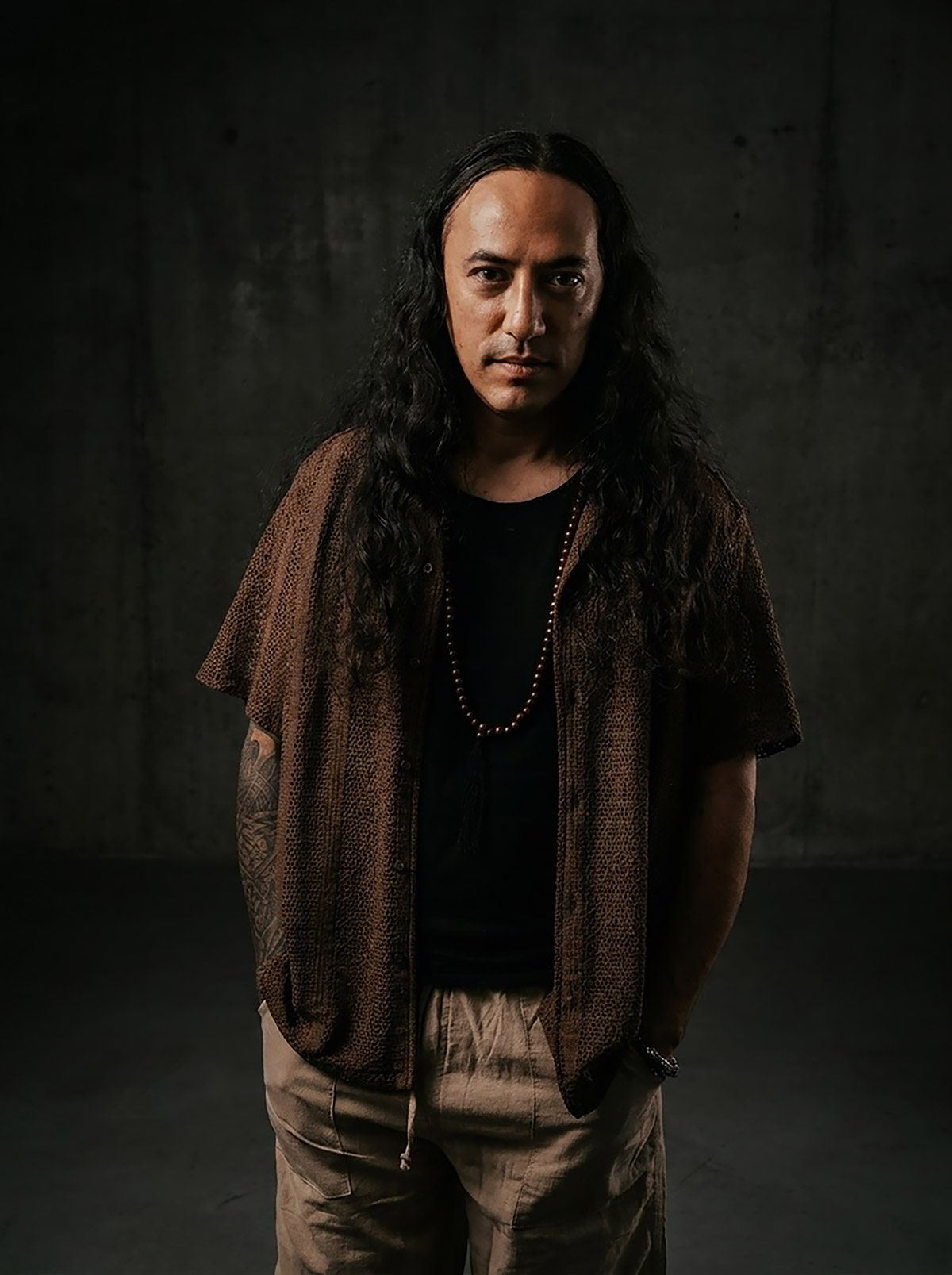
From Nicosia to Paris: Where Does the Journey Really Begin?
PRM: You were born in Nicosia, and your musical development has taken you through Cyprus, different teachers and musical environments, and eventually Rotterdam and an increasingly international concert life. Looking back, which place or period truly changed the way you understood what it meant to be a pianist and composer? Was there a moment when the piano stopped being simply an instrument and became a language?
Hüseyin Kırmızı: It is difficult for me to point to one place or a single moment. The piano’s transformation—from instrument into language—was gradual: a process that began in childhood and unfolded over many years.
My father was a musician, and our home was always filled with music. I started classical piano lessons at eleven. About a year later, I began inventing melodies—playing them, shaping them, listening to what they carried. Even as a child, melody evoked worlds in me: memories, countries I had never visited, the joy of being alive, bittersweet sadness, anger, hope. That is why I wanted to create my own.
My classical training was conservative, and exploring other kinds of music was not encouraged, but I did it anyway—quietly, almost in secret. I would try to play popular songs I heard on the radio. My father’s synthesizers were at home, so electronic sound became part of my ear early on; within a few years I was recognising timbres and textures, understanding how they were built.
By high school I could play to a good standard and was also fluent in rock, pop, and other styles. Around fifteen I entered music competitions; a song our group composed received an award, and the baroque elements I brought into it were part of what made it distinctive. That experience made something clear: creating what is your own is invaluable, and words are not always necessary for communication—melody can carry an extraordinary expressive force.
At university I continued classical piano, worked with teachers from different countries, and composed many short piano pieces. I no longer know where those scores are—probably still in old boxes at home. By graduation I had accumulated a great deal of material, but it took years for it to truly surface.
When I eventually began combining everything I had learned—knowledge, experience, technique—with new compositions and recordings, I felt I had crossed an important threshold. Works, albums, and concerts followed in a variety of forms.
“The piano has become the most natural language I have between my inner world and the world outside.”
Playing the piano was never an end in itself for me. I have always played to communicate something. Even when I performed Chopin or Bach during my formal training, I was trying to express myself through their melodies. In recent years I have turned fully toward my solo piano works—recording them, performing them—and in a sense, listening more closely to my own inner voice.
Creating music has always been a necessity. I love transforming what I live through, observe, and feel into melody—and then hearing those experiences take on a life in sound. Over time, the piano has become the most natural language I have between my inner world and the world outside.
The Eastern Mediterranean as Musical Memory
PRM: Your work seems to carry Cyprus beneath its surface—not as direct quotation, but as place, memory, and cultural layering. How does your Cypriot background enter the music instinctively? Are there particular sounds, landscapes, rhythms, or emotional associations that stay with you when you sit at the piano?
Hüseyin Kırmızı: Yes—the influence of the geography in which I live is present in my work. Being born and raised on an island like Cyprus has profoundly shaped my musical identity.
I have always been deeply interested in history and art history, and I still read and research. Cyprus carries the traces of many civilisations—Roman, Byzantine, French, Venetian, Ottoman, British, among others. Over centuries, each has contributed to contemporary Cypriot culture: belief, dance, cuisine, and especially music. These layers are not only something you learn in books; you can feel them in the land itself.
My awareness of this cultural depth and its appearance in my music developed almost in parallel. Over time I found forms of expression nourished by the cultural and folkloric fabric of Cyprus. Living in the Eastern Mediterranean—beside some of the world’s most deeply rooted civilisations—left impressions in my ear and in my heart, and they entered my music naturally. They are not decorations I attach to a composition; they are the spontaneous emergence of a musical memory already living within me.
Rhythms and melodies carry stories that reach back thousands of years. They are, in a sense, fingerprints cultures leave upon time. People change, borders change, languages and governments change—yet certain rhythms and melodies continue, passed from one generation to another.
The melodic and rhythmic traditions of Cyprus and the surrounding region have become a kind of secret language between the piano and me. I use it constantly, but rarely in a direct voice. More often it whispers. Even when it is not visible on the surface, it is present underneath.
Between Composition and Improvisation
PRM: Your musical identity brings together contemporary classical writing, modern jazz, and free improvisation—worlds that can demand very different approaches to the instrument. When you sit at the piano, do you know whether you are going to compose or improvise, or has that distinction become less relevant? What does improvisation let you say that a carefully written composition sometimes cannot?
Hüseyin Kırmızı: I used to believe there was a clear division: composition as a structure shaped in advance, improvisation as freedom in the moment. In recent years that boundary has blurred.
Now, when I sit at the piano, I do not always know whether I am about to compose or improvise. Sometimes a small motif appears during improvisation and slowly becomes a written work. At other times, a composition I have already written opens beyond its original boundaries in concert and takes me somewhere I have never been. I no longer experience composition and improvisation as opposites, but as complementary parts of the same process.
For me, composition is the memory of the music; improvisation is the moment it breathes again. Written material preserves identity, direction, and emotional centre, while improvisation lets the work live anew each time. The room’s acoustics, the piano’s character, the audience’s energy, and my own state of mind can all alter the music’s direction—so the same work is never repeated in exactly the same way.
“Composition is the memory of the music; improvisation is the moment it breathes again.”
Improvisation’s greatest gift is the freedom to express an emotion I have not yet been able to name. In composition, you can revise and reshape over time. In improvisation there is nowhere to hide: every decision, hesitation, risk, and silence belongs to that moment. That vulnerability makes the music more honest—more alive, more human.
What I aim for now is not merely to perform my compositions, but to recompose them in every performance. The melodic identity may remain, but the path changes each time. The written structure points me in a direction; improvisation shows me, in the moment, where the journey will lead.
The Eastern Mediterranean’s melodic memory, the rhythmic and cultural traces I carry from Cyprus, irregular metres, modal structures, contemporary harmonies, strong melodic themes—all of this enters the process naturally. My aim is not to place genres side by side, but to create a single language where they can no longer be separated.
For me, music is not an object that becomes complete and stays unchanged. It is a living organism—reborn, transformed, and marked by the present each time it is played.
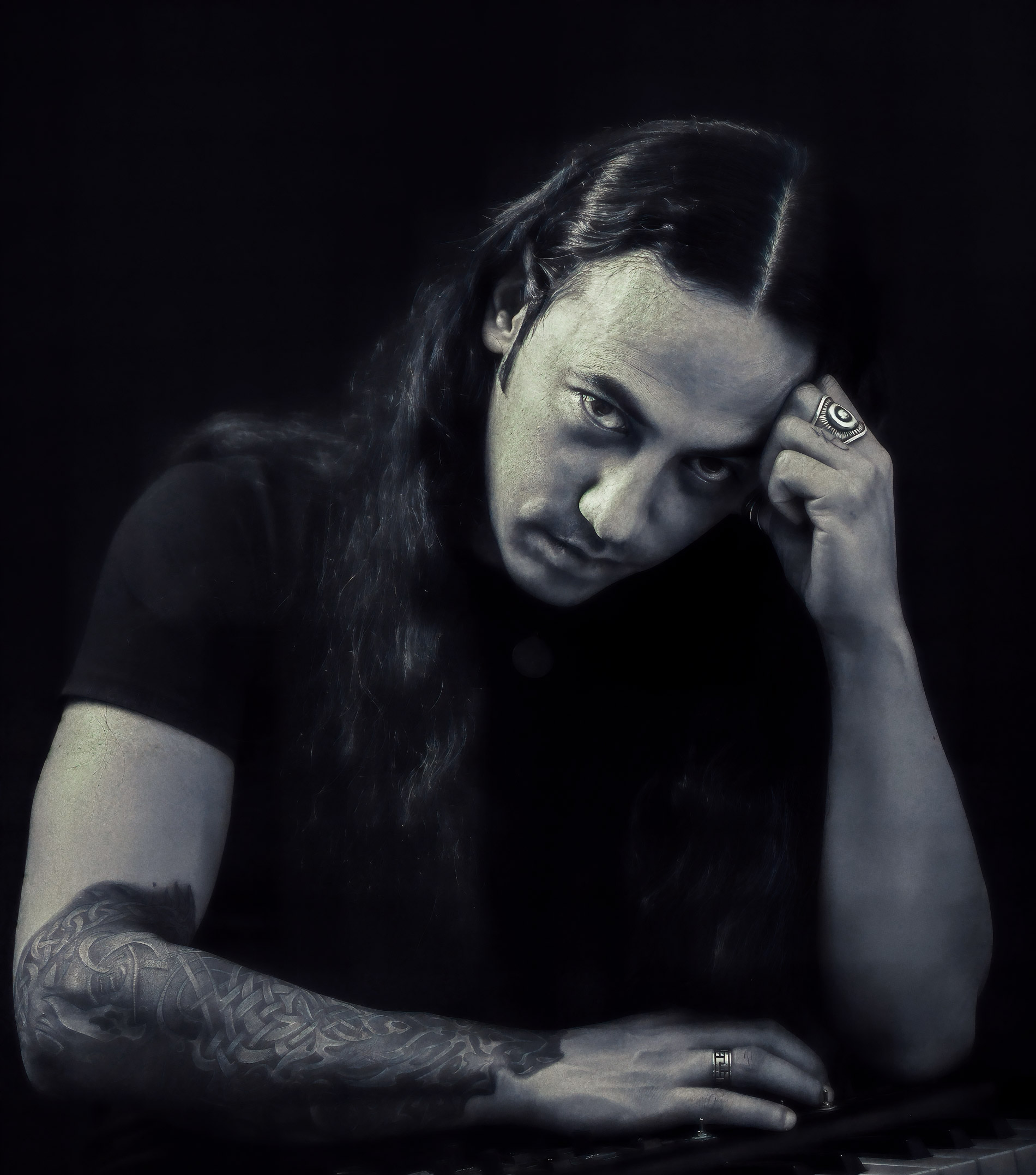
Inner Conversation and the Discovery of the Solo Piano
PRM: Your 2024 album Inner Conversation marked a more introspective, piano-centred direction. What shifted during its creation? Did working alone reveal a side of yourself that had been hidden by ensembles, arrangements, or other projects?
Hüseyin Kırmızı: Yes, absolutely. As the title suggests, Inner Conversation comes from a period in which I turned inward and began speaking with myself—almost as a return to my roots.
Apart from a few previously composed works, most of the pieces were felt and played entirely in the moment. It became one of the decisive turning points in my journey: a quiet, spontaneous, singular dialogue between a human being and a piano.
Rather than saying something changed inside me during its creation, I would say that the changes already within me became audible. There was very little calculation, planning, or intellectual construction. What remained was feeling, melody, and the connection between the piano and me in that moment. Instead of controlling the music, I let it find its own direction.
In larger projects I always had roles to fulfil: the piano functioning within a structure—part of an arrangement, making space for other instruments, carrying dramatic architecture. In Inner Conversation, the piano had no assigned role. There were only the piano and me.
That simplicity revealed something previously hidden: a more vulnerable, direct, instinctive self behind large arrangements, conceptual structures, and layered ideas. I rediscovered how vast an emotional space the piano can create on its own—and how the deepest things can sometimes be said in the simplest way.
I see Inner Conversation not only as a recording project, but as an inner transformation that brought me closer to myself and to the piano. That dialogue became one of the starting points for my full return to solo piano music.
Note: Inner Conversation appears on Spotify and other digital platforms not as a single album package, but as a series of separately released singles. Nevertheless, all of the pieces belong to the same creative period and shared artistic narrative, and together they form a unified body of work.
Belle Paix: Memory of the Stones — When Place Becomes Sound
PRM: In 2025, you premiered Belle Paix: Memory of the Stones, a work for piano and synthesizer inspired by memory, place, and Cyprus’s layered history. The idea of stones carrying memory is striking. What can a place remember that a person may forget? And in music, how do you decide what becomes sound—and what remains silence?
Hüseyin Kırmızı: Belle Paix: Memory of the Stones was composed and premiered in 2025. It was written for the historic Bellapais Abbey in Cyprus—where the premiere took place—and for the French name associated with it, Abbaye de la Paix: the Abbey of Peace.
The first buildings of the monastery were constructed between 1198 and 1205 for a religious community that arrived in Cyprus from Jerusalem. Much of the principal structure visible today took shape during the reign of Hugh III of Cyprus, of the Lusignan dynasty. I have visited the abbey since childhood; it has always fascinated me. It carries an energy that radiates a pure, almost inexplicable peace. And in today’s world—marked by conflict and profound disorder—its association with the idea of an “Abbey of Peace” feels even more meaningful.
I should explain why I dedicated a work to architecture. When the monastery began to be built, war and chaos also dominated the world, particularly the Eastern Mediterranean. Yet to me, this structure has stood for centuries as a silent defence of serenity, peace, and fellowship—despite everything unfolding around it. I find it deeply moving that stones can carry an idea for so long. Through this composition, I wanted to join that quiet struggle and become one of the voices speaking for peace.
At the heart of the work is the question of what a place can remember that a person may forget. I believe everything—especially physical objects—carries its own energy. The stone blocks of Bellapais hold not only material existence, but the traces of the stonemasons who shaped them, the labourers who worked there, the people who prayed within those walls, and the countless lives that have passed through the space over centuries.
Just as a musician gives something of their life to a composition, or a painter leaves part of their presence within an image, those who build leave something of themselves in stone. Stones do not speak, yet they retain what has been inscribed upon, within, and around them. Human memory may fade or reshape the past; a place continues its silent witness until the structure disappears and the energy it carries assumes another form.
“Stones do not speak, yet they retain what has been inscribed upon, within, and around them.”
When translating this into music, I did not draw a strict line between memories that should be narrated and others that should remain silent. In designing the movements, the abbey’s architecture, geographical setting, and historical past played a decisive role. My intention was not to illustrate events, but to transform into sound the impression these elements created in my mind and imagination.
The silences are not forgotten or untold memories; they are part of the narrative. Sometimes the most truthful way to express what stone remembers is melody. At other times, it is the silence that remains after the melody ends.
Metamorphosis of Silence
PRM: In February 2026, you premiered Metamorphosis of Silence at the Goethe-Institut Thailand in Bangkok. The title suggests transformation—yet also a paradox: silence becoming something else. What does “silence” mean to you as a musician: absence of sound, a space before creation, an emotional state, or music in itself?
Hüseyin Kırmızı: Silence is not merely the absence of sound. Just as it would be inadequate to define darkness only as a place without light, it is incomplete to treat silence as an empty space where nothing can be heard. Silence has its own depth, tension, and life.
One intellectual starting point for the work was Goethe’s idea of metamorphosis. He understood nature and life not as completed, immutable forms, but as living processes continually transformed—assuming new shapes while remaining connected to their essence. That led me to view silence differently: is it a static void, or a living space containing thoughts, emotions, and sounds that have not yet taken form?
I think of silence as a conversation between two people. While one speaks, the other may remain silent—but that does not mean nothing is happening within them. Behind that silence, responses, opposing thoughts, memories, emotions, and new ideas are being born. From the outside there is silence; inside, intense movement. Some of our greatest transformations happen precisely when we say nothing.
In music, the space between two notes is not truly empty. It carries resonance and the emotional trace of what came before, while preparing what is to come. It creates expectation—tension, peace, uncertainty. A silence placed at the right moment can be as powerful as a played note, sometimes even more so.
The “metamorphosis” in the title arises from this: silence as a living space inhabited by thoughts, emotions, and possibilities not yet sound. Something begins to move—first a thought, then an emotion, then sound. Yet even when sound emerges, silence does not disappear completely; as in Goethe’s metamorphosis, the previous form continues to live within the new one.
So I do not see silence and music as opposites. Silence is not where music ends, but where it is born and reshaped. If music is what we can hear, silence is what is not yet audible—but is already becoming.
“Silence is not where music ends, but where it is born and reshaped.”
For me, Metamorphosis of Silence is the moment when thoughts, emotions, and personal transformations that have lived silently within someone for a long time finally become audible. Silence does not vanish; it changes form and becomes music.
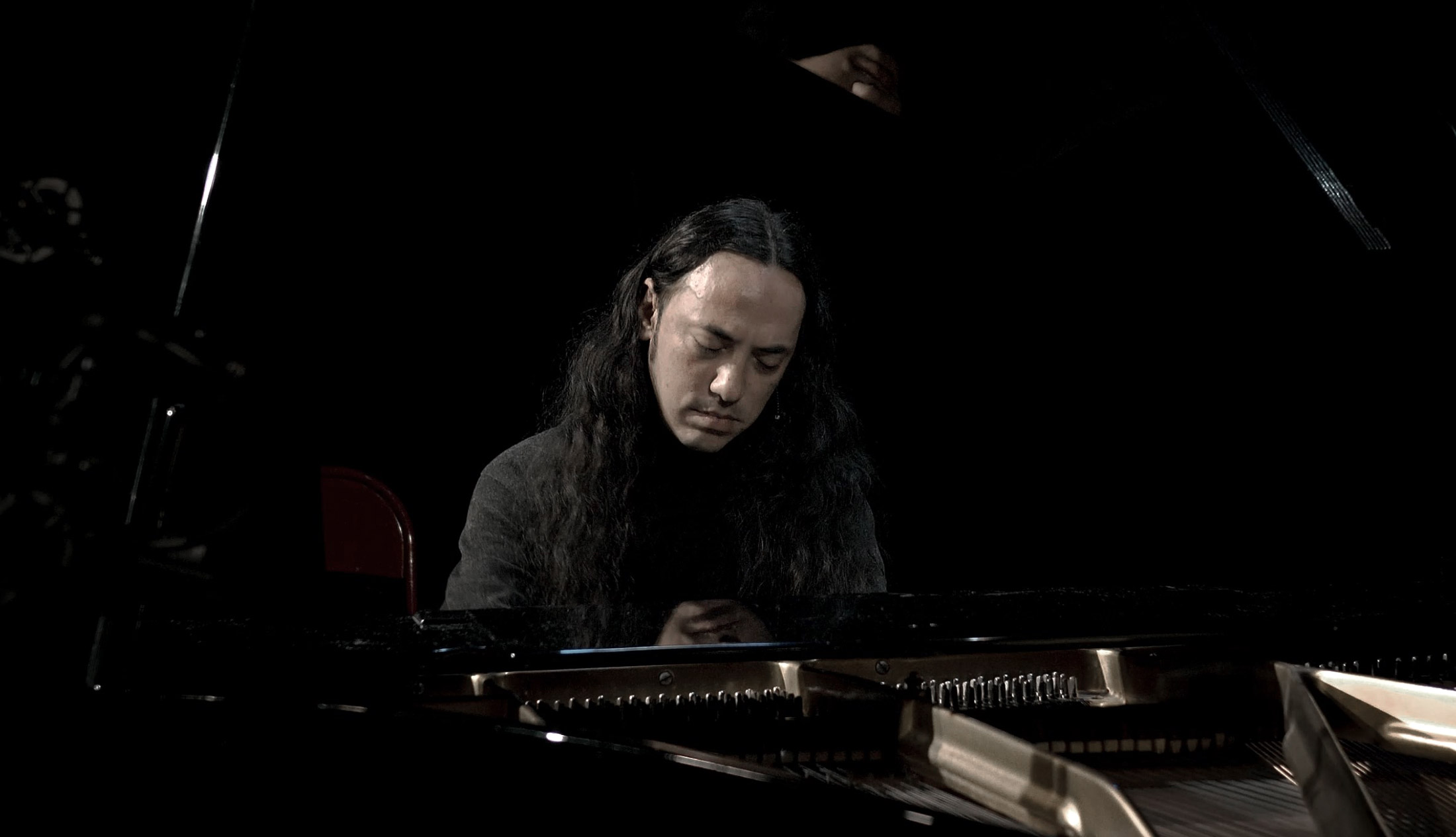
The Meaning of Metamorphosis ’26
PRM: Your Metamorphosis ’26 Tour has taken you through Ankara, Bangkok, Nicosia, Paris, Helsinki, Riga, Budapest, and Pordenone, with further performances in Vilnius and Estonia. You’ve described this period as the emergence of a musician from a cocoon that had been waiting to open for years. What was inside that cocoon—and what can you finally say, musically or personally, that you couldn’t say five or ten years ago?
Hüseyin Kırmızı: Yes—I truly was a musician waiting to emerge from a cocoon. But I was not simply waiting inside it; I was gradually undergoing transformation.
The experiences I gained through local and international projects, the knowledge I accumulated, the time I devoted to music, everything I observed and considered, everything I became aware of—and perhaps everything I still do not understand—all of it belonged to that process. Every path I chose or did not choose, every decision, every missed possibility brought me here. There was not one single thing inside the cocoon, but a musician and a human being taking shape over many years.
And of course, transformation does not end here. There is everything that comes next, and that is what makes life extraordinary. A person is never finished. We continue to change as we live, create, encounter, and lose. Emerging from the cocoon is not the end—it may simply be the first moment the transformation becomes visible.
“Emerging from the cocoon is not the end—it may simply be the first moment the transformation becomes visible.”
Why now? In truth, I could have left the cocoon years earlier. But leaving a comfort zone is one of the hardest things. Life offers small gifts to keep us there: security, habit, familiar roles, protection from uncertainty. And while accepting them, we often fail to realise what we are giving away in return—our time.
When I understood this, I wanted to break the circle I had been living in. More importantly, I believed I could. I only needed to take the first step. What I wanted to say, the music I wanted to create, the road I wanted to follow—these had been waiting within me for years. What was missing was not the thought or the music, but the courage to place them at the centre of my life.
What I could not say five or ten years ago, but can say clearly today, is this: I can choose my own life and my own artistic path. I do not have to live by other people’s expectations, familiar roles, or seemingly safe spaces. I should not postpone my own voice until a “more suitable time,” because that time may never arrive.
I do not believe we should consume the life we have been given through regret, sorrow, other people’s expectations, and constant complaint. Metamorphosis ’26 is not merely a tour for me; it is this conviction turned into action. Leaving the cocoon does not mean I am no longer afraid. It means I move forward despite my fears—and give my voice the space it deserves.
Returning to the Piano Revenge Festival Stage
PRM: Your performance on the opening night of the Piano Revenge Festival in Paris placed you among artists with different aesthetics and stories, sharing one stage. What did that night mean to you? And did the experience of listening to other pianists clarify anything about your own musical identity?
Hüseyin Kırmızı: First of all, I believe the Piano Revenge Festival is truly special. It embraces today’s modern piano world without confining it to fixed categories, genres, or rules, and it gives each artist the freedom to speak in an individual language.
Before I performed, I listened to the pianists who appeared before me and to the works they had created. Once again, creativity’s beauty and boundlessness stood before me in all its richness. I found myself on the same frequency as pianists who live very different lives and inhabit different worlds, yet understand one another through a shared language—and, most importantly, can tell their own stories. For me, that was invaluable.
Isn’t one of art’s fundamental purposes to tell our stories through aesthetic power? I believe music’s value is not only technical ability or beauty, but the genuine human experience behind it. A listener may not know an artist’s precise story, but they can sense the honesty inside the music.
At a time when content generated by artificial intelligence is rapidly entering every area of our lives, the value of human imperfection, hesitation, intuition, and lived experience in art becomes even greater. Technology can produce impressive results, but the weight of a story formed through years of human experience—and the vulnerability required to tell it on stage—remains unique. For this reason, festivals like Piano Revenge, which make room for a personal voice, are becoming increasingly important.
The festival was also instructive for me. Hearing pianists with very different artistic languages reminded me how vast the piano’s expressive world can be. And while listening to others, I realised something essential about my own identity: I do not have to belong entirely to a single category.
Contemporary classical thinking, improvisation, the freedom of modern jazz, and the melodic memory I carry from the Eastern Mediterranean coexist in my music. The festival’s diversity made me feel that, rather than hiding any of these layers or forcing my work into a fixed frame, I should embrace every part of my language with greater courage.
That night, I did not only listen to other pianists; among their voices, I heard my own more clearly. Our languages were different, but our need to communicate was shared. That, to me, is the Piano Revenge Festival’s true strength.
The Album That Is Still Becoming
PRM: You’re developing a new solo-piano album, with recording planned in Paris in October 2026 and release expected in early 2027. You’ve described its themes as memory, inner conflict, time, hope, and personal transformation. Without revealing what should remain mysterious, what is this new body of music asking from you that previous work did not—and has the process changed your relationship with the piano?
Hüseyin Kırmızı: This body of work is asking something my previous projects did not: not merely to create music, but to decide more openly and honestly who I am as a musician.
Earlier projects involved different genres, large arrangements, conceptual structures, and various roles for the piano. Here, those external layers fall away. I am alone at the piano, with no ensemble or elaborate arrangement behind which I can hide. So the album does not ask me to show everything I know—it asks me to choose what I truly want to say.
The Eastern Mediterranean’s melodic memory, the cultural and rhythmic traces I carry from Cyprus, irregular metres, contemporary harmonies, improvisation—these are no longer separate elements placed side by side. I want them to become one natural language. Rather than inviting the listener to identify influences one by one, I want them to hear the personal voice that emerges through all of them.
The process has also changed my relationship with the piano. In the past I often approached the instrument to realise an idea already formed in my mind. Now I approach it not only to speak, but to listen. I pay closer attention to resonance, the natural decay of a note, the space between sounds, and the unexpected answers the piano gives me. I see it less as an instrument I must control and more as a companion that thinks alongside me—and can redirect the music.
I want this album to mark the beginning of a new artistic period. But searching for something new does not mean rejecting the past. On the contrary, it means allowing everything I have accumulated over the years to be distilled into a form that is simpler, freer, more personal. Perhaps the work is not asking me to create a new identity, but to reveal—without hiding any longer—the musical identity that has been within me for a long time.
Note: The recording process began at Mama Studios in Vilnius in August 2026. The remaining works are scheduled to be recorded in Paris on 31 October 2026, and the album is planned for release in January 2027.
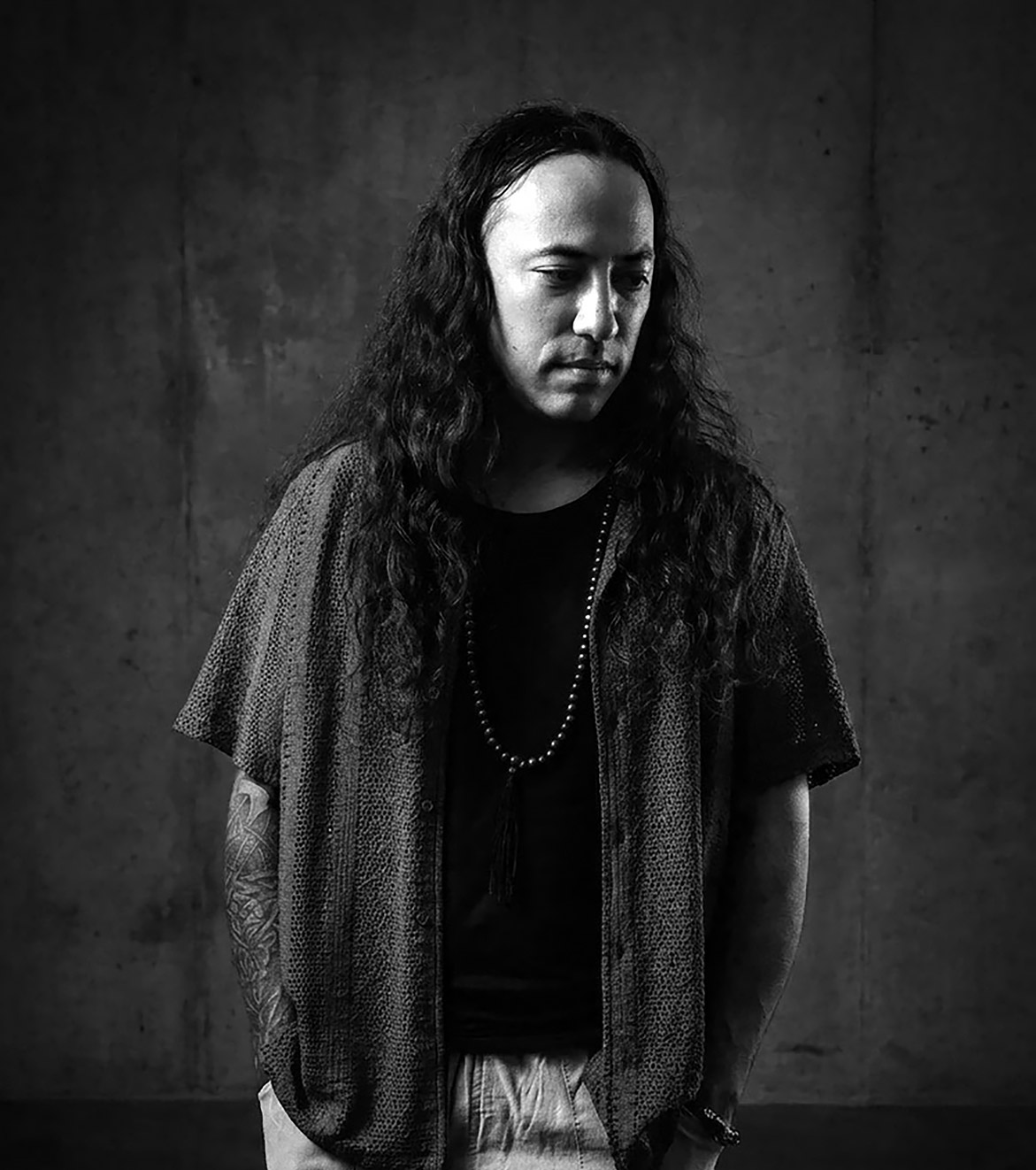
After the Metamorphosis
PRM: The most interesting question may be what comes after transformation. Once an artist leaves the cocoon, there is no returning to the same place. When you imagine Hüseyin Kırmızı at the piano a few years from now, what do you hope will have changed—and what do you hope will never change? And what would you want first-time listeners to discover when they enter your world?
Hüseyin Kırmızı: I do not believe transformation ever truly ends. For me, the essential threshold was taking the first step—emerging from the cocoon. But leaving it does not mean transformation is complete; it simply means it has become visible for the first time.
Art is like flowing water: alive, continually moving, evolving, renewing itself, carrying traces of every place it passes through. As long as human beings exist—and as our ways of perceiving the world change, as we keep asking new questions—art changes alongside us. Naturally, we artists keep weaving new cocoons throughout our lives, reflecting within them, and emerging again in renewed forms. Each emergence is not a final destination, but the beginning of another transformation.
When I imagine myself at the piano a few years from now, many things will have changed: my relationship with music, my forms of expression, my technical choices, even ideas I consider essential today. I would not want to stop that change. Art that does not change eventually loses vitality.
What I hope will never change is my childlike way of thinking: the ability to ask questions with a child’s directness, to look at answers without disguise, to move through problems as though playing a game. It is one of the qualities I value most in myself, and one of the strongest forces in my creative process.
A child creates the world of a game: decides its rules, changes them when necessary, dismantles the game and builds it again. The limits of imagination are not drawn by someone else. In Thus Spoke Zarathustra, Nietzsche presents the child as a symbol of innocence, play, and a new beginning. To create, we sometimes have to step away from the rules we have learned, look at the world again, and find the courage to invent our own game.
A few years from now, I hope my music will be more mature, freer, deeper—but I hope the child at play within me remains just as curious. Technique, knowledge, and experience can develop; but if curiosity is lost, the fundamental reason for creating can disappear with it.
I would, of course, like to tell first-time listeners about the emotions and ideas beneath my works. Yet I also know the relationship between music and listener is not limited to what the composer intended. A work is born from me when I compose it, but once it reaches the listener, it no longer belongs only to me.
Every listener approaches music with their own memories, losses, joys, fears, hopes. A piece I wrote from one emotion or story may open an entirely different door in someone else’s life. This is the invisible bond between composer, work, and listener: the composer speaks first, but cannot determine how the music continues inside the person who hears it.
For that reason, I do not want to tell those who enter my world what they should think or feel. I hope they discover within my music a memory, an emotion, or perhaps a part of themselves they had not yet been able to name. If they find something of themselves in the works I have written, then the music moves beyond my personal story and becomes part of theirs. As a composer, nothing could make me happier.