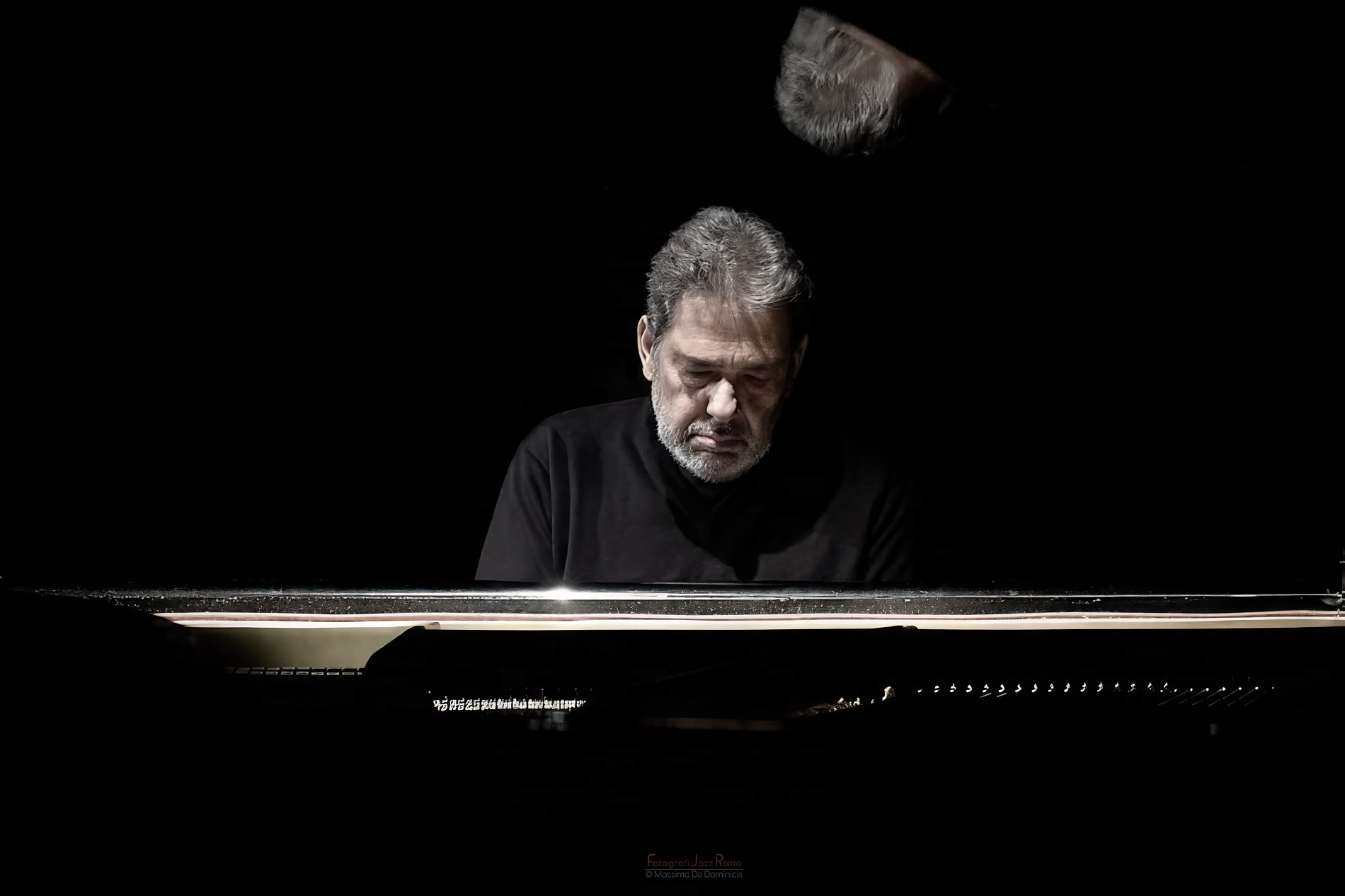
Francesco Branciamore: Listening Beyond the Notes
There are musicians who inhabit a genre, and there are musicians who quietly dismantle the walls between genres.
Francesco Branciamore belongs to the latter.
Batterist, pianist, composer, arranger, improviser and educator, his musical journey has never followed a single straight line. Instead, it has developed through encounters, experiments and a persistent refusal to be reduced to one identity. Jazz meets contemporary composition; classical memory meets improvisation; rhythm remains present even when the drums have disappeared.
His new solo piano album, Old & New Dreams, is perhaps the most intimate expression of that philosophy.
Where memory becomes movement, and improvisation becomes a way of thinking
Recorded on a Steinway Grand Piano D-274, the album brings together Branciamore’s original compositions with profound reinterpretations of works by Federico Mompou, John Coltrane, Harold Arlen and David Crosby. The result is not a collection divided between “original” and “repertoire”, nor between composition and improvisation. It is a single musical language in which everything belongs to the same continuum.
For Piano Revenge MAG, we wanted to enter that space with him — to explore the musicians, sounds and ideas that shaped his artistic identity, and to understand what happens when a musician with decades of rhythmic experience sits alone before a piano.
What emerges is a conversation about individuality, memory, listening, the physicality of sound and the mysterious territory where composition and improvisation become indistinguishable.
The Space Between Dreams
Old & New Dreams is an album about continuity. Not continuity in the sense of repetition, but in the deeper sense of things carried forward: sounds remembered, encounters absorbed, traditions transformed, melodies heard again through another life.
The album’s title immediately suggests a conversation between past and present. Yet Francesco Branciamore does not treat the two as opposing territories. His “old” dreams are not nostalgic objects preserved behind glass. They are living material — experiences, records, teachers, musicians, compositions and sounds that have remained active within him and continue to generate something new.
This philosophy can already be felt in the visual world of the album. The CD artwork presents an almost painterly landscape of pale blue, turquoise, cream and amber, with the disc itself appearing like a luminous object suspended within an organic field. It feels both ancient and contemporary, atmospheric and tactile — an appropriate visual counterpart to music that moves constantly between memory and invention.
At the centre of this world is the piano.
But behind the pianist we hear the percussionist. Behind the composer we hear the improviser. Behind the improviser stands the listener.
Branciamore describes the aesthetic vision of the project as being born from “a long journey of exploration”, where “improvisation, jazz, and classical music come together in a personal style, in which the piano technique becomes a tool for expression and storytelling.”
That last word is crucial: storytelling.
For Branciamore, a composition begins with a theme — a narrative voice. From there, harmony, rhythm and melody become the architecture of an unfolding story. The written score does not close the door. It opens it.
And perhaps this is where Old & New Dreams becomes most compelling: it does not ask whether music should be composed or improvised.
It asks what happens when the two are allowed to breathe together.
The Interview
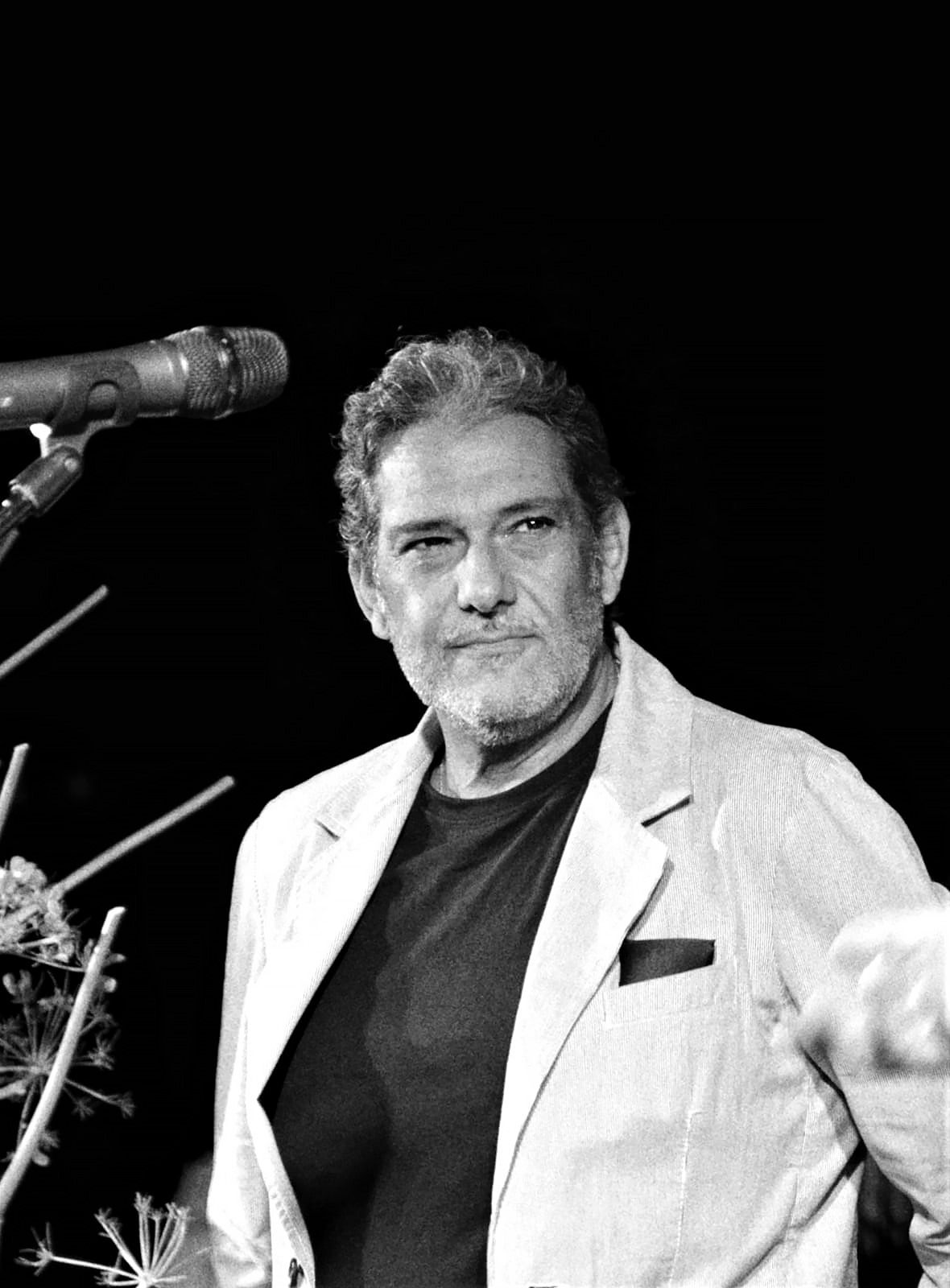
Piano Revenge MAG: You have experienced music from very different perspectives — as a drummer, pianist, composer and arranger. How have these different identities influenced one another over the years, and what does the pianist in you understand precisely because the drummer is always present?
Francesco Branciamore: I think the fundamental point lies in a single passpartout capable of opening different windows, whichever structural perspective we look at it from, while bringing them together through the different stages of a musician’s growth.
This is the meaning of aesthetics, synthesis and language — the elements that define a precise artistic identity.
There has always been a continuous search to create a strong individuality, together with the precise intention of distinguishing oneself rather than conforming to the many.
Piano Revenge MAG: Your musical education brought you into contact with figures such as Bruno Biriaco, Andrea Centazzo, Pierre Favre and Tony Oxley, while your artistic path developed across jazz, improvisation, contemporary composition and classical references. Looking back, which encounters or musical experiences most radically changed the way you think about sound?
Francesco Branciamore: Certainly, choosing solo performance as a drummer and percussionist was fundamental for me. I wanted to challenge the preconceptions of a certain musical formalism and orthodoxy, from the perspective of a performer of “the struck skins”.
Coming closer to Pierre Favre and Tony Oxley helped me understand much more clearly where I wanted to go.
Everything eventually came together in a recording entitled Meloritmoarmonico, which contained this entire concept of music. It was released by Caligola Records in 1997 and produced by Koper Radio in Slovenia.
The musicians and technicians at that studio were fantastic.
For the occasion, I used a particular setup: a drum set, with a keyboard system positioned to my left, which I played with my left hand simultaneously while playing the drums.
The final piece, “Sljivovica”, was recorded using a Bösendorfer concert grand piano together with sampled classical percussion.
The result was astonishing.
Piano Revenge MAG: You describe the theme as a kind of “narrative voice”, and as the starting point of your musical discourse. What makes a theme capable, in your view, of becoming a story? And at what point does a written composition feel the need to open itself to improvisation?
Francesco Branciamore: The narrative voice is connected to the title of the composition and, above all, to the thematic part of the piece. I proceed as though I were creating a sound fresco, where harmony, rhythm and melody determine how the work should develop.
The carefully researched chord voicings also play an important role, particularly in the relationship between the choice of melodic notes and their intervallic relationships.
Improvisation moves partly within the thematic exposition and continues when the piece begins to present the entire form again as a section in itself, always directed towards enhancing the melodic texture.
I would say that improvisation becomes an added value, where every note is contested.
Old & New
Piano Revenge MAG: Old & New Dreams is especially intriguing because its title suggests a dialogue between memory and the present. What are the “old dreams” and what are the “new dreams” behind this album? And has your understanding of the title changed between conceiving the project and recording it?
Francesco Branciamore: I completely agree with what the music critic Francesco Verrina wrote in connection with the release of the CD at the end of July.
The title Old & New Dreams creates a dialectic that goes beyond a simple chronological reference. The old and the new are not opposed according to a historical succession; instead, they coexist as complementary dimensions of creative memory.
Every composition preserves fragments of previous experiences, intuitions developed over time, listening experiences, readings and encounters that re-emerge stripped of any purely citational character.
Memory, therefore, does not act as a nostalgic repository, but rather as a generative principle for new expressive possibilities.
There is nothing suggesting an alternation between composed material and spontaneous freedom. Both dimensions coexist within a single syntactic flow, governed by considerable clarity of conception.
During the recording, the entire project rigorously respected this conception.
Piano Revenge MAG: Unlike some of your previous piano projects, Old & New Dreams includes reinterpretations of music by Federico Mompou, John Coltrane, Harold Arlen and David Crosby. What led you to place these works alongside your own compositions, and what does each of these artists represent within your personal musical language?
Francesco Branciamore: The pieces by these composers are the “old” turning towards the “new”. They have become sedimented within me and have been extensively absorbed because of their particular fascination.
Each of these works has been reinterpreted according to the principles of jazz composition and arrangement.
I came to Federico Mompou through the magnificent performances of Arturo Benedetti Michelangeli. Canciones y Danzas is essentially a minor blues, and it came naturally to me to give it a Latin mood.
John Coltrane’s “Dear Lord” has an extraordinarily touching theme and represents the spirituality of the African-American saxophonist. On the piano, I wanted to give it greater sweetness.
“Over the Rainbow” by Harold Arlen has been played by the greatest performers, each enriching it with something of their own. To move away from the many established versions, I chose quartal harmonies, making it more modern without taking anything away from its nature as a ballad.
David Crosby was something of a spiritual father to me when I was young. I grew up listening to the great West Coast musicians of the 1960s. “Guinnevere” was a song that was far ahead of the repertoire of its period. That is why I chose it and rearranged it for piano — something that had never been done before in this way.
Piano Revenge MAG: Mompou and Coltrane belong to very different traditions, while Over the Rainbow and David Crosby’s Guinnevere come from yet other cultural territories. Do you believe repertoire can transcend genre, chronology and musical classification?
Francesco Branciamore: What celebrates all these compositions is the trance contained within the melodic movement of each piece.
When a performer is drawn to these strong suggestions, everything naturally aligns in an unequivocal way.
The Piano As Another Voice
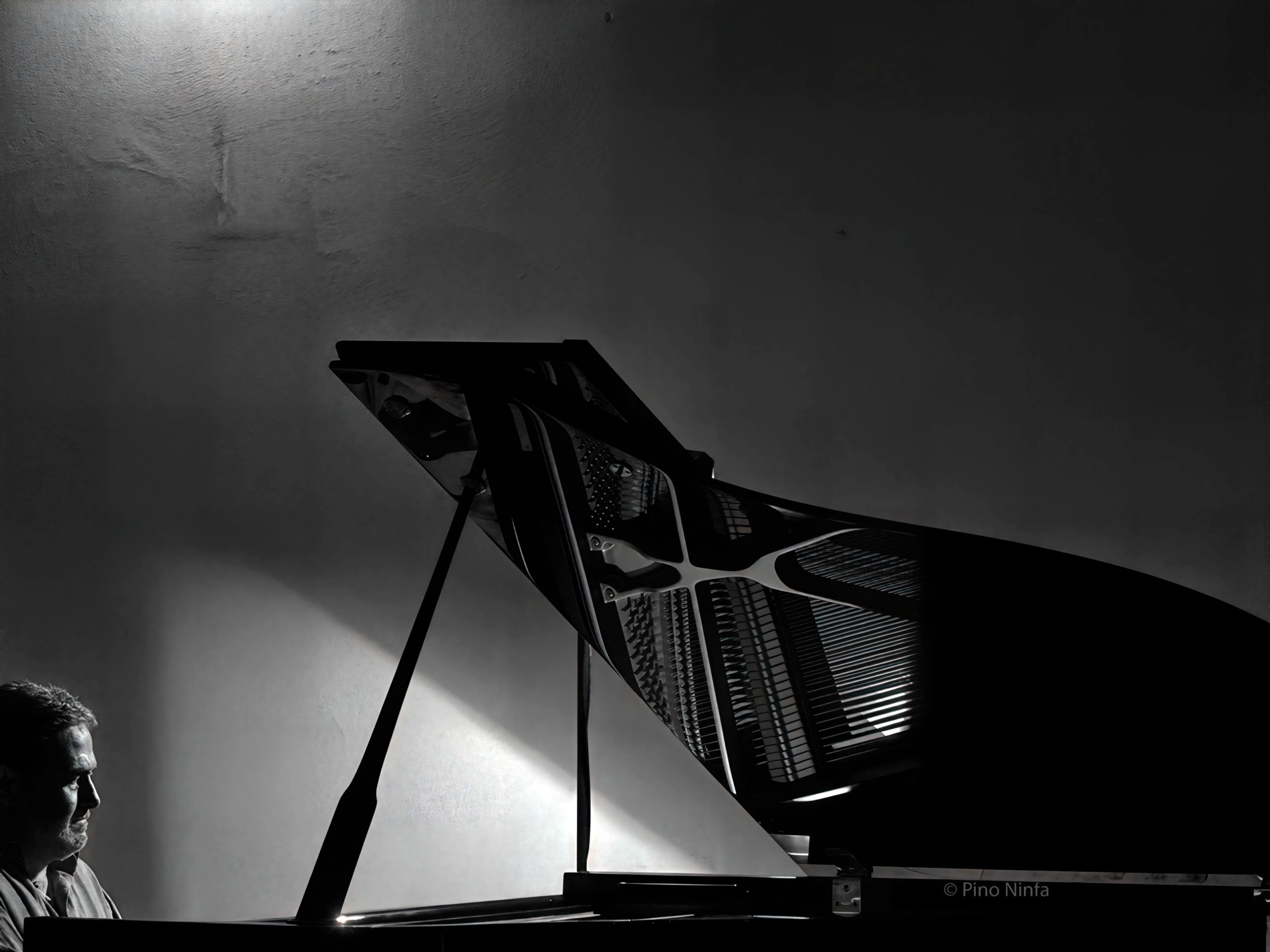
Piano Revenge MAG: The album was recorded entirely as solo piano, using a Steinway Grand Piano D-274. How important was the physical and sonic character of that particular instrument to the project? Did the piano itself ever influence your compositional, interpretative or improvisational decisions?
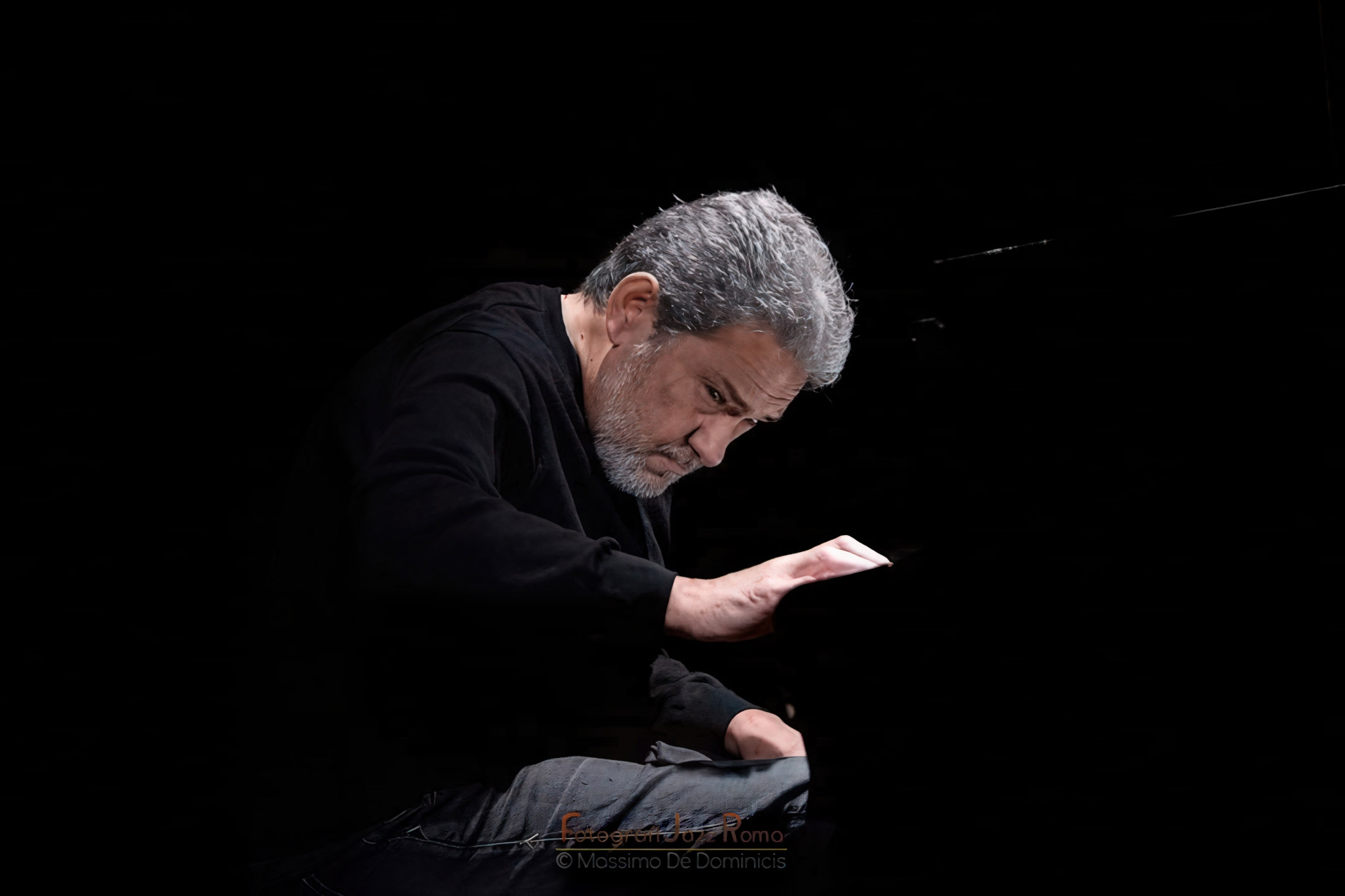
Francesco Branciamore: The sound of the piano determines the intensity of the performance, the tension and that necessary sense of flow for a perfect alignment of the music. But to reach this point, you need to spend some time playing that particular piano, understanding what you can and cannot push.
The Steinway Grand Piano D-274 is an instrument that requires attention and sensitivity of touch. Once you understand what kind of sound you can draw from it, and once you have tested all the pieces before recording, everything becomes easier.
Piano Revenge MAG: You have spent decades within ensembles and larger formations — from the Trade d’Union European Quartet to Perfect Quartet and your European projects — while Old & New Dreams places you completely alone before the piano. What can solitude reveal to a musician that an ensemble cannot?
Francesco Branciamore: I would say absolute control of sound. You understand this because there are three entities moving together: the piano, yourself, and the otherness within yourself.
These are the three fundamental principles supporting interplay in a solo piano performance. Before this CD, I recorded two other solo piano albums: Aspiciens pulchritudinem in 2018 and Skies of Sea in 2021, both released by Caligola Records.
When Composition and Improvisation Become One
Piano Revenge MAG: Your work seems to have always resisted a rigid separation between composition and improvisation. After so many years devoted to both, do you still consider them two different practices, or have they progressively become two sides of the same musical thought?
Francesco Branciamore: Neither can be separated. Sometimes one may prevail over the other, and sometimes the opposite may happen, but they always walk together.
We should not forget that to improvise means to be both performer and composer at the same time. And everything has to be played while thinking ahead.
Piano Revenge MAG: You are also a teacher of jazz composition. When you hear a young musician searching for their own voice, what do you believe is most important to develop: technical mastery, knowledge of tradition, the courage to improvise, or the ability to listen? And what, in your opinion, cannot be taught?
Francesco Branciamore: Jazz composition is closely connected to the practice of the jazz idiom: technique, improvisation, harmony, correct rhythmic pronunciation and, above all, a great deal of listening. The history of jazz has taught us that over the course of a century it has repeatedly challenged itself, renewing itself approximately every ten years.
Many new styles have followed one another, but always looking back towards the past and tradition. What cannot be taught? A precise sense of musical aesthetics. That develops with time, after many experiences.
Above all must always stand the absolute meaning of music — with its “Old and New Dreams.”
A Final Listening
There is something particularly striking about Francesco Branciamore’s understanding of musical identity.
It is not based on choosing one language and rejecting another. His identity seems instead to have been formed precisely through the friction between them: the physical intelligence of the drummer, the harmonic imagination of the pianist, the architecture of the composer and the instinct of the improviser.
Old & New Dreams consequently feels less like a departure from his previous work than a gathering of everything that came before.
Mompou can sit beside Coltrane. A Harold Arlen standard can enter the same intimate room as a David Crosby song.
A drummer can become a solo pianist without leaving rhythm behind. And a composition can remain written while still breathing as though it were being invented in the moment.
Perhaps that is the real meaning of Branciamore’s “old” and “new”: not two periods of time, but two movements of the same creative consciousness.
The past is not behind him. It is inside the music — listening, transforming, and dreaming again.
Francesco Branciamore — Old & New Dreams
Solo piano · Steinway Grand Piano D-274
Featuring original compositions alongside works by Federico Mompou, John Coltrane, Harold Arlen and David Crosby.
An album where memory does not look backwards, but becomes the beginning of another story.