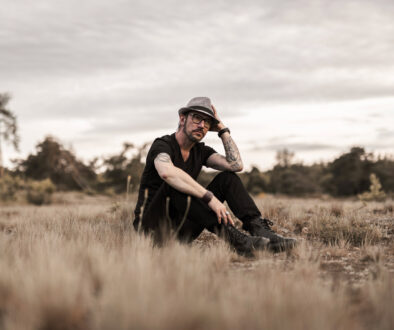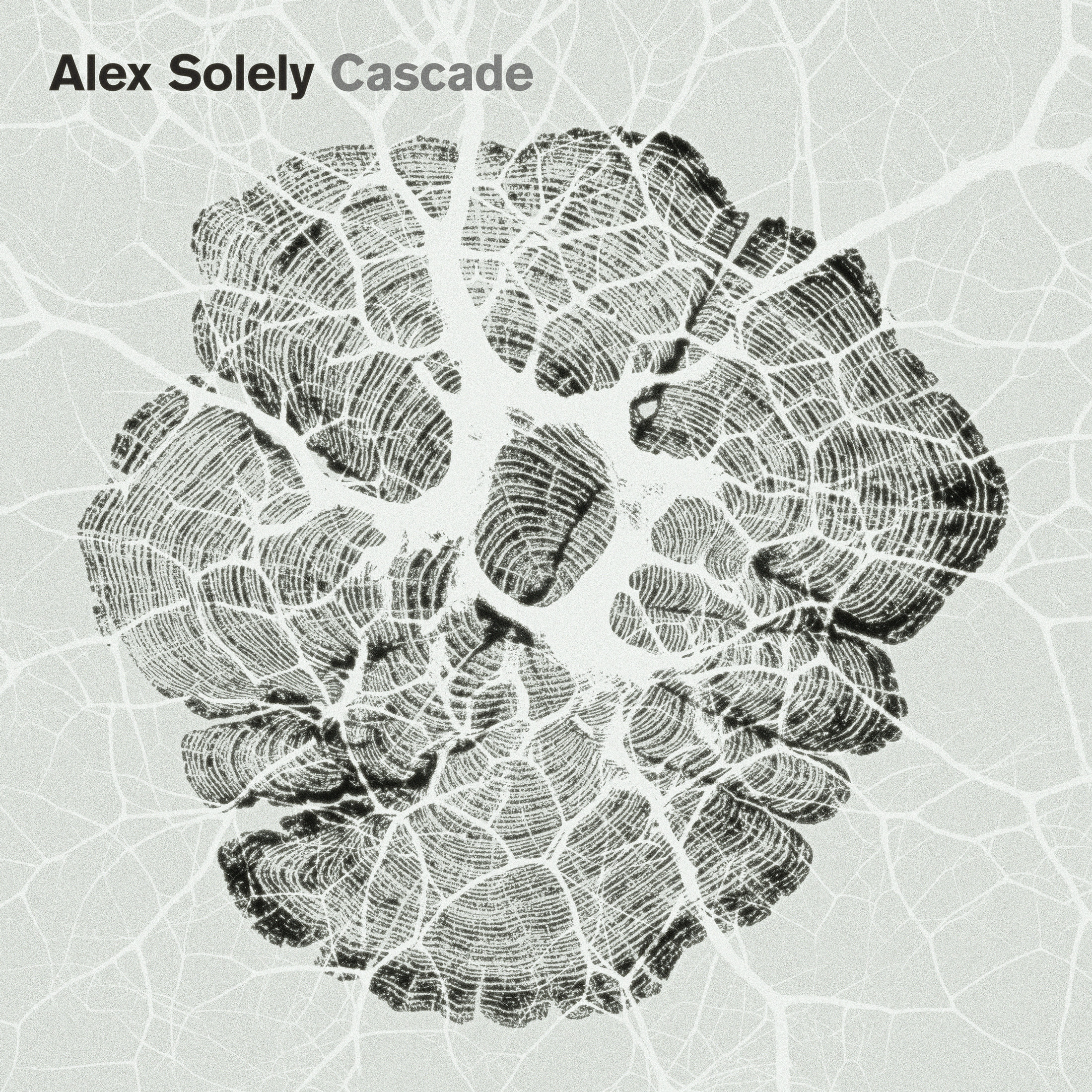
Alex Solely – Cascade
Cascades feels like a natural evolution of Alex Solely’s previous work. His 2024 debut, Piano Solely, introduced an intimate piano language built on simplicity, repetition and emotional restraint. The Home Concert (2025) brought that language into a live setting, giving the music greater immediacy and human presence.
With Cascade, Solely opens the frame. The piano remains at the centre, but violin, cello, ambient textures and wordless vocals introduce new depth and colour. What was once almost entirely a solitary conversation with the piano has become a wider sonic landscape.
The essential quality, however, remains unchanged: Solely continues to believe that fewer notes can sometimes say more. Cascade is therefore not a departure, but a refinement — the sound of an artist becoming increasingly confident in the value of space, silence and emotional precision.
The modern neoclassical composer and pianist describes his approach as Essential Minimalism, a philosophy built around the idea of intentional enoughness. It is an apt description of an album that repeatedly resists the temptation to overstate. The music is carefully reduced, but never emotionally thin; spacious, but never empty. Its restraint is not an absence of ideas. It is the idea.
From its opening passages, Cascade establishes a world governed by texture, resonance and gradual movement. The acoustic piano remains its gravitational centre, its sound carrying the physical presence of hammers, strings and decay. Around it, violin and cello introduce another dimension: warmer, more human, sometimes almost tactile in their friction against the stillness.
The result is music that feels less constructed than allowed to unfold.
Solely is particularly interested in what happens after a note has been played. The reverberation, the fading harmonic, the small space before the next gesture — these are not incidental details but part of the composition itself. Silence becomes an active participant.
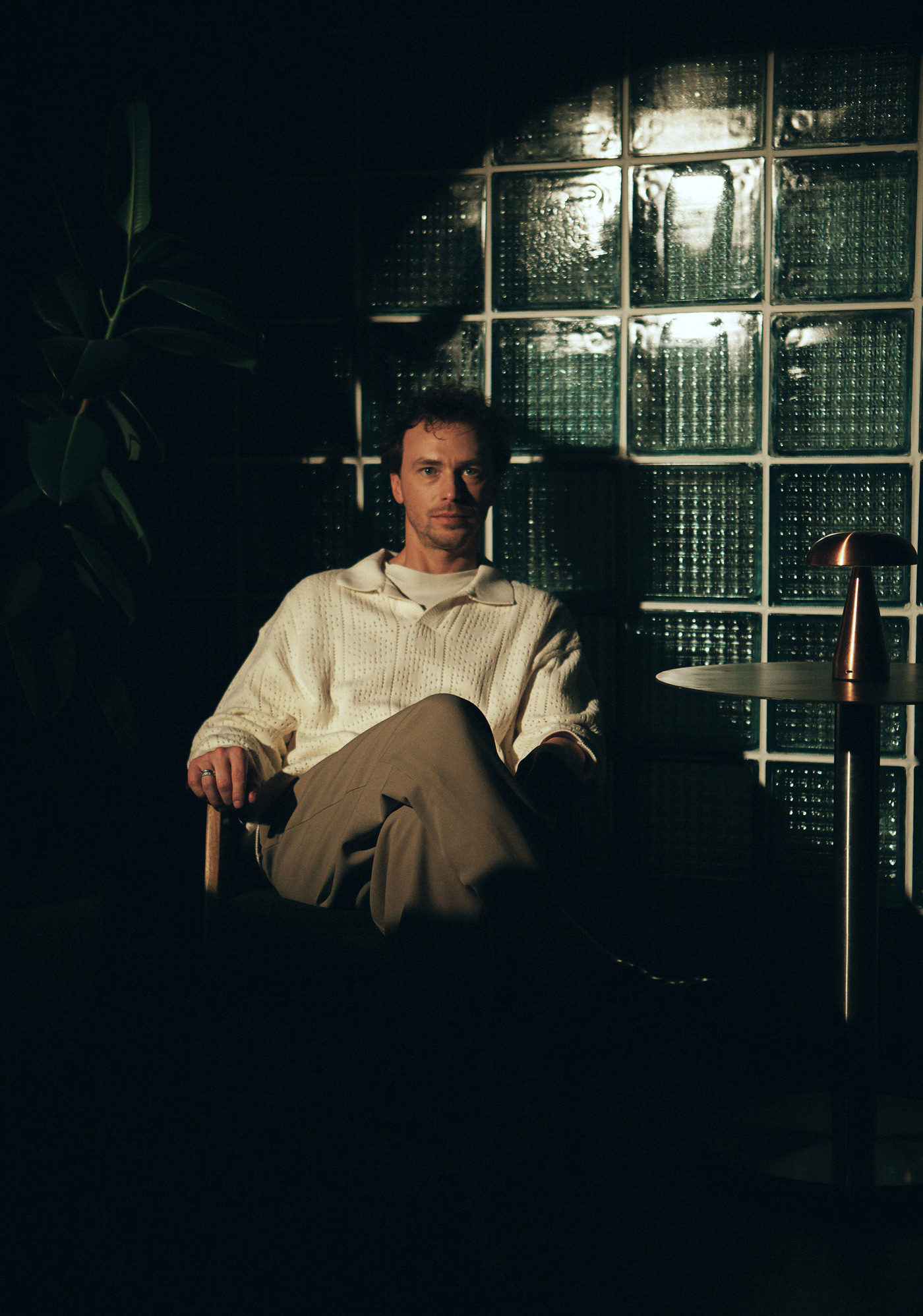
Much of the album’s character also comes from its production. Recorded at ZUH Studio in Kazakhstan and mixed and mastered by Ocean Sound Recordings in Norway, Cascade possesses an expansive clarity that suits Solely’s aesthetic. There is room around the instruments. Frequencies do not seem crowded together; individual sounds are allowed to breathe.
That spaciousness is crucial.
A less sympathetic production could easily have turned this material into generic ambient neoclassical music. Instead, the sound retains enough physical detail to remind us that these are instruments being played: strings vibrating, bows moving across surfaces, piano mechanisms responding to touch. The polish never completely removes the grain.
This is music that understands the difference between minimalism and minimal effort.
There is considerable craft behind its apparent simplicity. To leave something out is often harder than adding something. The composer must know when another layer would enrich a piece and when it would simply explain too much.
Solely consistently chooses the latter path.
The acoustic performances by violinist Artem Len and cellist Zhanel Salamatova deepen the album’s emotional vocabulary without breaking its compositional discipline. Their instruments introduce warmth and vulnerability into a sound world otherwise characterised by spaciousness. The strings do not function merely as decoration around the piano; they become extensions of its emotional language.
There is the question of listening
Cascade is an album that rewards a different relationship with time. It is not necessarily music for multitasking. It asks for a degree of attention that contemporary listening habits do not always encourage. Put simply, it wants you to stop doing something else.
That makes Solely’s idea of Essential Minimalism particularly relevant.
In an era when music is increasingly required to compete with notifications, conversations, screens and an endless stream of information, Cascade proposes something almost radical: enoughness. Enough notes. Enough sound. Enough movement. Enough space.
The album becomes a small sanctuary not because it attempts to escape the world, but because it temporarily changes our relationship to it.
There is nothing spectacular about that proposition — and that is precisely its strength.
Cascade does not need a grand climax to justify its existence. Its achievement lies in the accumulation of small sensations: a piano resonance disappearing into silence, the grain of a cello bow, a violin entering almost imperceptibly, an ambient tone widening the room around a single note.
These details become the event.
By the end, the album leaves behind something surprisingly difficult to describe: not a particular story, but a changed pace of attention. The listener has been invited to inhabit the spaces between things — between memory and experience, sound and silence, the physical and the imagined.
Alex Solely has created an album that understands restraint not as limitation, but as a form of expression.
Cascade does not ask how much music can be put into a composition.
It asks how little can be said while still saying something meaningful.
And sometimes, that is more than enough.
Editor’s Note
At the centre of Cascade, there is still the piano — and ultimately, that is where Alex Solely’s musical identity remains most clearly revealed. Beneath the strings, ambient layers and spacious production, it is the piano’s physical presence, its resonance and its silences that hold the album together.
For Piano Revenge MAG, this is perhaps the most compelling aspect of the record: Solely never treats the piano merely as a vehicle for melody. He allows it to breathe, to decay, to leave traces of sound in the room. In an album concerned so deeply with memory and presence, the piano becomes more than an instrument. It becomes the point of return.