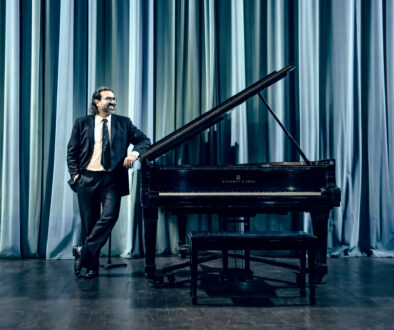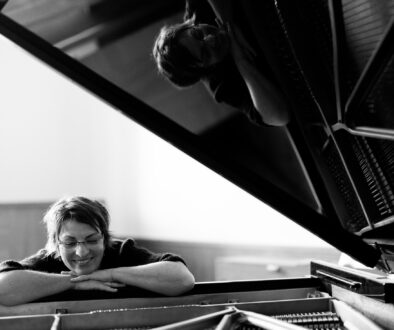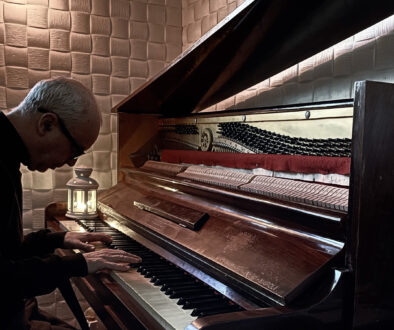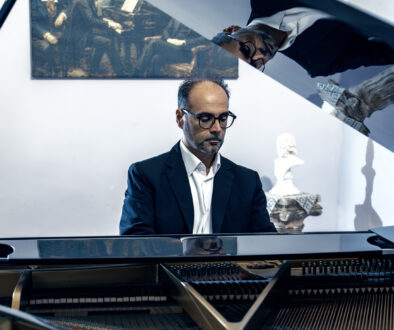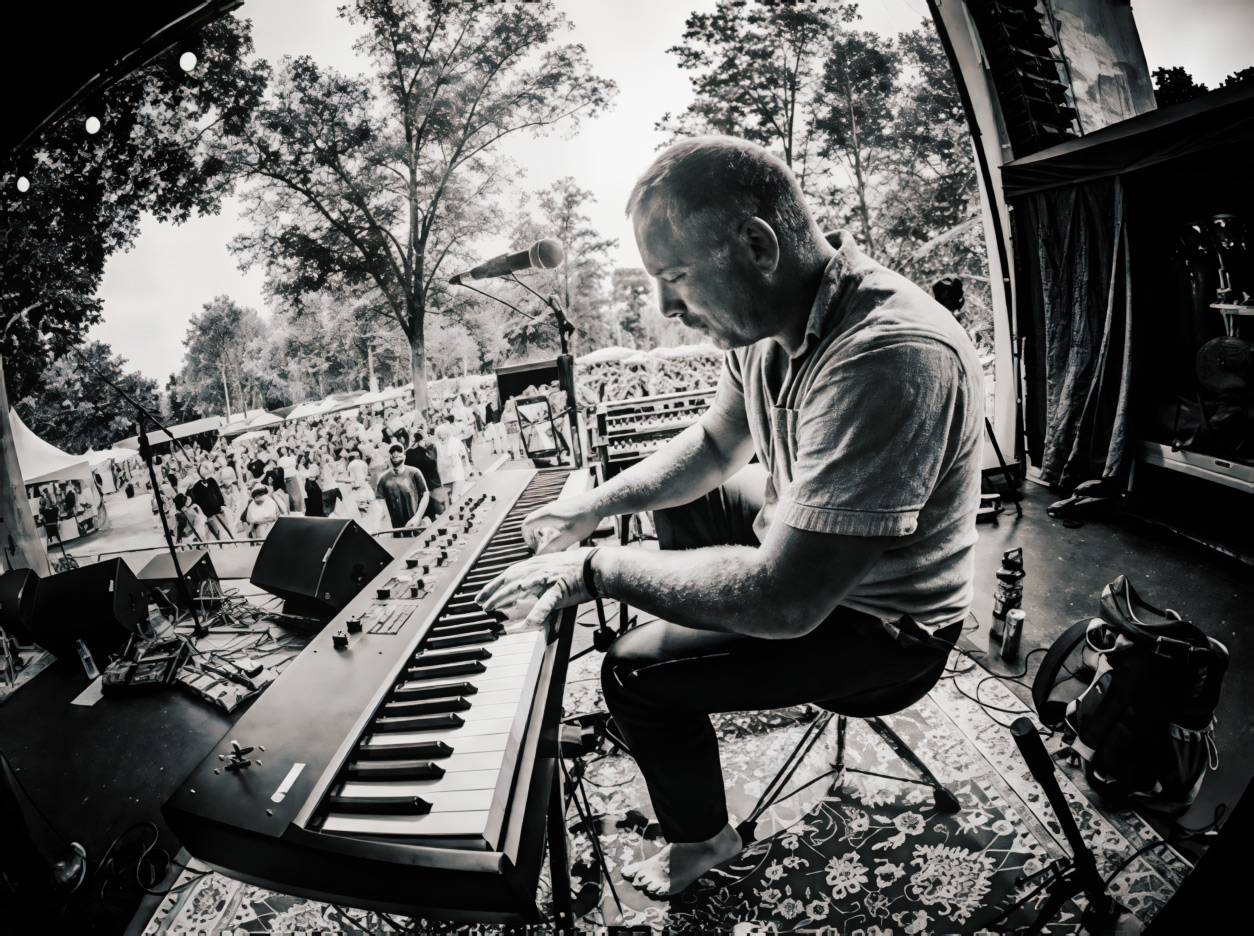
Michael Borowski: “I Want to Travel the World With Just a Piano and My Heart”
Michael Borowski does not seem particularly interested in keeping his music in one place.
It can begin in a crowded room, move through a memory, surface from a dream, or emerge from a few unplanned minutes at the piano. It can carry the energy of a bandstand or become intensely private; it can remember a person, evoke a landscape, or simply follow a feeling until the feeling has somewhere to go.
I Want to Travel the World With Just a Piano and My Heart
Perhaps that is why improvisation matters so much to him. For Borowski, leaving room for the unexpected is not a stylistic device but part of how he remains present inside the music.
His story begins in a house that was rarely quiet. His mother, a piano teacher, filled their home with students, rehearsals and music, while his own musical identity gradually formed between classical training, an instinctive ear for improvisation, and a growing fascination with the wider worlds of rock, jam and contemporary piano music. Years later, the piano would become the place where he could hold both grief and gratitude — particularly through his mother’s long illness and the creation of Peace Valley.
Now, with his upcoming appearance at Piano Revenge Festival — Paris 2027, another chapter is about to begin: Michael is finally bringing this deeply personal musical language across the Atlantic, to a city he has dreamed of performing in for years.
PianoRevenge MAG: Your music seems to exist between two very different worlds: the intimate solitude of the solo piano and the energy of touring with artists such as Assembly of Dust, John Kadlecik and Splintered Sunlight. How do these two sides of your musical life influence one another?
Michael Borowski: For me it’s all about balance. I am certainly not a one dimensional kind of man, so in order to really function I need variety in my life. Since music is my main emotional, physical, and mental outlet, I need these different worlds to be able to express myself properly.
Whether it’s on stage with other musicians, improvising a high energy rhythmic sound in front of a large crowd of happy little dancers, or if it’s just me and my piano playing literally whatever is on my mind, the experience is therapeutic.
I am simply not complete as a man without one or the other. I literally have to live in both worlds for my sanity.
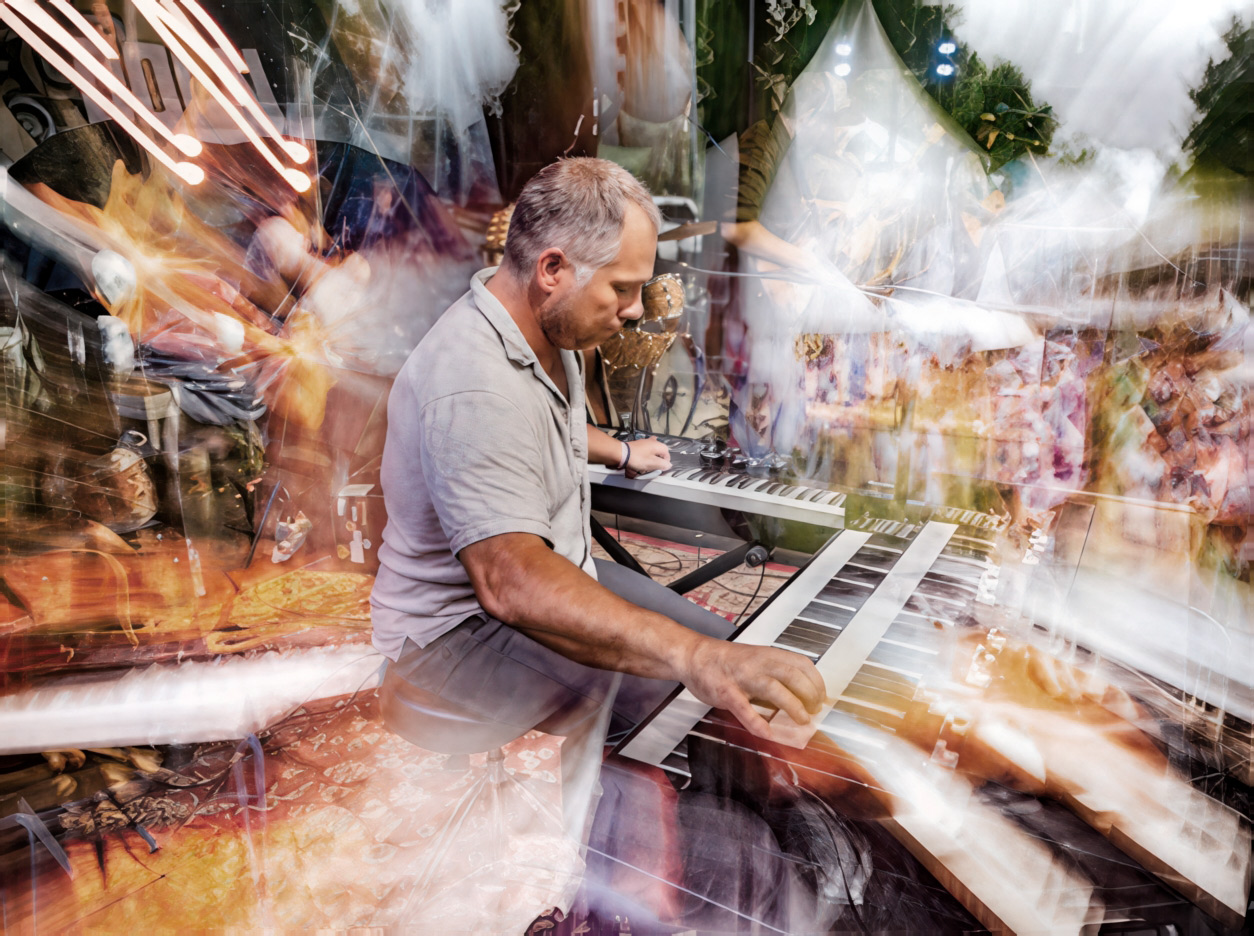
Your mother was a piano teacher and an important musical presence throughout your life. What are some of the earliest memories you have of music in your home, and how did watching and listening to your mother shape the musician you would eventually become?
Well geez, making me cry already and it’s only question number 2!
Bottom line, if it wasn’t for my mom’s musical presence, support, and unconditional love I would not be who I am today. I mean that on a musical and emotional level. Yes she was a much beloved piano teacher in the area. Hundreds of students would come into the home every week, so the house was constantly filled with music… not always the PRETTIEST of music, but music nonetheless 😉 She was also musical director for many local theaters and would frequently hold rehearsals, so i was constantly getting an earful of all kinds of music at a very early age.
Although my mother was an amazing teacher, she was not my main piano teacher growing up. She thought it would be a conflict of interest to have her teach me, and would just cause tension between us. She was right. Even just her helping me practice caused some very uncomfortable moments in my childhood which I’m still having a hard time forgiving myself for. So thankfully she chose Glorianna Sewell from Milford Square Studios near Quakertown, Pennsylvania to be my piano teacher. I was with her from age 4-18. I was very lucky to have both of those women help shape my musical identity, and I’m forever grateful for them.
I do also need to acknowledge my dad’s side of the family for naturally furthering my musicality simply through genetics. My mom usually gets most of the credit for my musical development, and well deserved, but our talents and strengths around the piano were quite different. She could sight read anything you put in front of her, and play it almost perfectly… i can’t.. at ALL.
However, I have the ability to dig down deep and express myself on the keyboard through improvisation and composition. That did not come naturally for her. Plus i have a good ear and can play mostly anything by just listening. Again, not her forte.
Unfortunately I never met my Dads father, but i heard he was an excellent musician and could pick up basically any instrument and play it well. I also learned that there was a classical composer in Chicago on my dad’s side, Joseph Borowski. So from both sides of my family is how my musicality formed inside of me, but it was my mom who helped me to express it.
My dad did not inherit the music gene, but taught me so much about everything else in life that really shaped who I am today, and that comes out through my work ethic and my will to keep going, even though the music business is just getting harder and harder to succeed in. However thanks to my dad, I’m not afraid of hard work, and certainly not afraid to get my hands dirty.
After your mother’s passing, you turned to the piano as a place of remembrance and refuge, and this eventually led to “Peace Valley”. How did grief change the way you approached the piano, and did you feel that you were communicating with your mother through the music?
I’m not sure if anything changed with my approach to the piano, it’s actually constantly growing and changing almost daily. Unfortunately I’m no stranger to grief and negative life experiences. I’ve been channeling my grief AND happiness through music as far back as I remember.
Especially during the 12 years my mom suffered from Alzheimer’s Disease. Those were the hardest years of my life watching her disintegrate right in front of my eyes. However during that period my son was born and I met and married my wife, so there were all KINDS of emotions swimming around in me. Literally the highest of highs and the lowest of lows within a 12 year span.
That’s how my album “Peace Valley” came into existence. It was almost a relief when she passed as I knew she was no longer suffering, and was finally at Peace… same for me as well. There is also a nature park called Peace Valley where i would go to bike ride, kayak, or just stare at the lake. So that album pretty much wrote and titled itself.
There is a remarkable emotional openness in your compositions, even when the music remains understated and spacious. When you sit down to compose, do you begin with a particular feeling, a memory, an image—or does the music itself usually lead you somewhere unexpected?
Honestly, that kind of changes from song to song, moment to moment. Sometimes i just sit down and play and see what comes out, other times it’s because I’m feeling a certain way, or sometimes i literally hear a melody in my sleep and scurry to go record it as soon as i wake up.
Either way, the music always comes first. If it’s not coming from something specific I’m feeling, i usually just sit back and listen to it. 9/10 times the music will remind of SOMETHING, so that’s what i end up calling it. However, every once in a while i just pick something that sounds cool and go with that 🤭
Will Ackerman, who produced “Peace Valley” and “Gardens of Zion in the Rain”, said that as a producer he looks for someone who “doesn’t sound like anyone else” and praised the fact that you put your heart into everything you play. What did his recognition mean to you, and what did you learn from working with him?
Omg i don’t think I have the words to properly describe what working with Will, or what his comments about my music means to me. Growing up i was mainly a classical guy, like my mom, but i also started branching off and listening to more bands and discovering rock and jam bands.
Then my mom and I both discovered George Winston and his album DECEMBER, produced by Will, and everything changed. It was kinda like when the Beatles came to America for the first time. It was life changing for me. George Winston combined classic, folk, blues, jazz, rock, improvisation, etc. and combined them into solo piano…. And Will was part of all of that. The two of them became my idols, and it was my dream to be a Windham Hill recording artist.
They were the soundtrack to my childhood hood, so having a chance to actually work with Will, hear what he said about me, and even becoming good friends with him is still mind blowing to me. Windham Hill was a MAJOR part of my childhood, and my relationship with my mom.
The titles of your compositions and albums often evoke places, nature, light, darkness and movement. How important are images and landscapes to your creative process? Is there a particular place—real or imagined—that you feel continues to live inside your music?
As I said earlier, Peace Valley is the name of a nature preserve near me which I adore, so that combined with the peace of know my mom is free inspired that whole thing. Gardens of Zion In The Rain was also inspired by real life moments. My mom is buried at Zion Memorial Gardens sooo, that one wrote itself.
Often times I’m thinking of some particular image or landscape while writing music, sometimes it comes to me afterwards, but yes, the music always evokes an image, whether it’s a person, place, or thing.
However i want listeners to be free to imagine their own space when they hear it so they can connect, sometimes i try to be vague with the title, or an “explanation” of a song… or sometimes there IS no explanation or meaning behind the piece. It’s just how i was feeling for those 3-7 minutes when i was playing it.
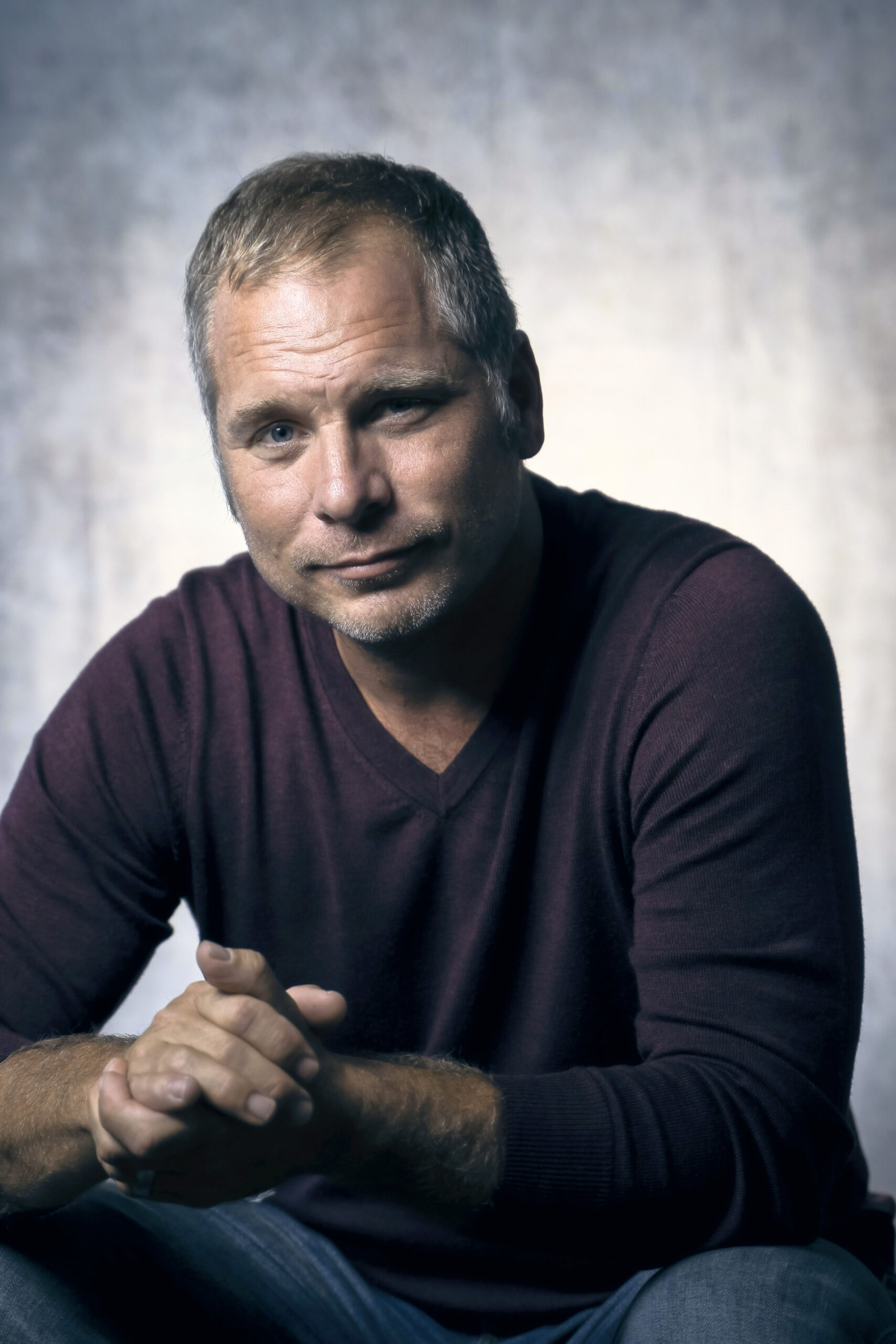
Your music has received recognition from Whisperings Solo Piano Radio, the Global Music Awards and SiriusXM, among others. How has this growing recognition affected your relationship with your own music? Do you feel more confident, more responsible, or perhaps simply grateful that these very personal pieces have found listeners?
I certainly feel very grateful for any accolades or recognition of my music, but it hasn’t changed anything regarding how i feel or approach my own music.
You have performed in intimate listening rooms, theatres and venues across the United States, while also sharing stages with major touring musicians. What does a live performance mean to you today, and what do you hope a listener carries away with them after sitting in a room with your piano music?
A live performance of mine can include any really, but the main thing is i improvise a LOT. Rarely play the music the exact same way twice.
This way it connects more with the audience, but also myself. It’s easy to go into auto pilot mode by simply regurgitating the damn recording. By adding improvisation you add a bit of suspense on what comes next, and it keeps the minds of myself and the audience alive and ready for a journey through their own imaginations.
I want the listener to paint their own landscape and create their own movie in their head while listening to me create the sound track live for them. That’s what i hope for.
If you could sit at the piano today and play one piece for your mother — not as a musician performing for an audience, but simply as her son — what would you want that piece to say to her?
Two things: I’d want it to say I’m sorry for any grief I caused us while she helped me learn this instrument. I still replay unnecessary fights over nothing important.. we unfortunately both have the same… “passion” i guess you could say, and we clashed, a lot. I just need her to know I’m sorry.
The second thing I’d want this piece to say to her is, “Thank you, Mom.”
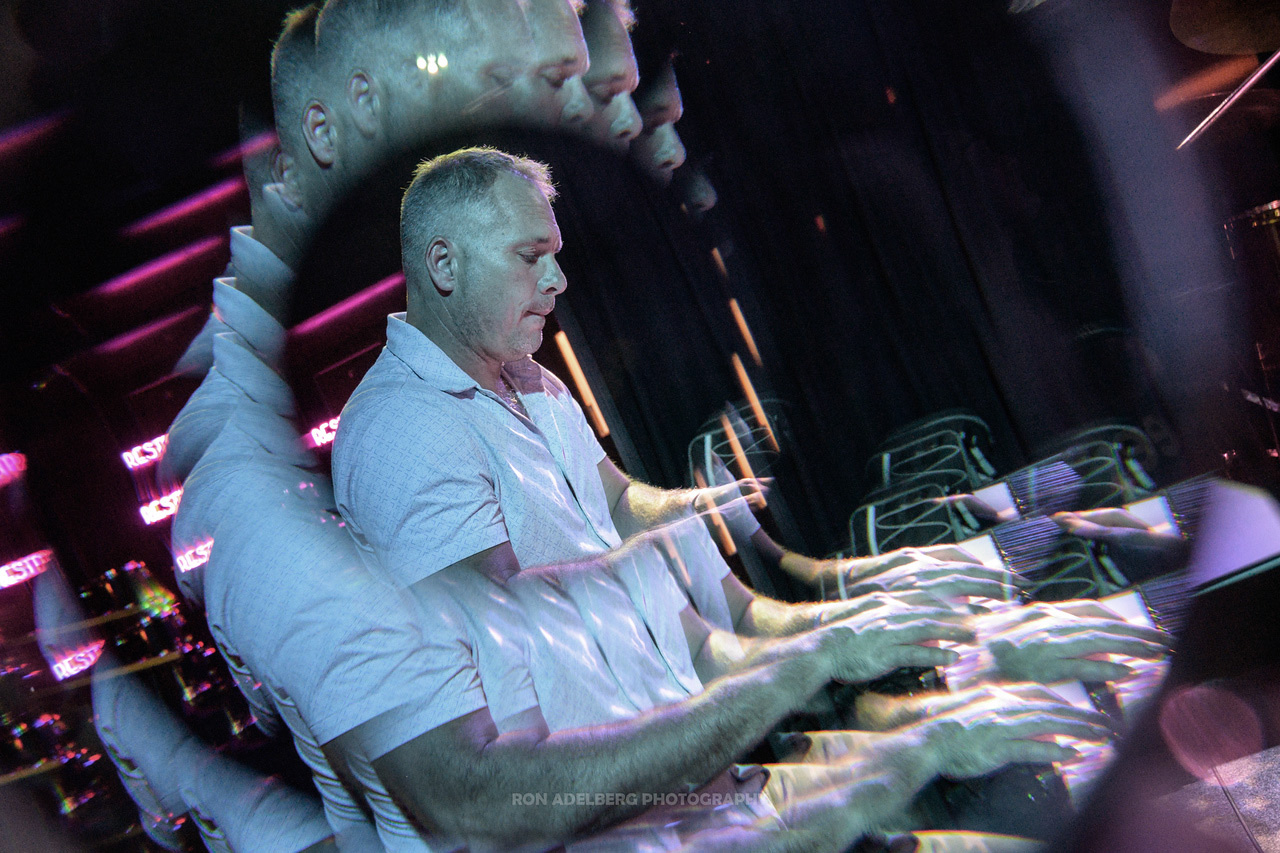
You are now joining the main selection of “Piano Revenge Festival — Paris 2027”. How does it feel to bring your music to Paris and become part of this international gathering of pianists and composers? Is there something particular you hope to share with the Paris audience, or something you are personally looking forward to experiencing through this encounter?
Performing my music in Paris is a lifelong dream, in fact performing anywhere in Europe is. Honestly, it just hasn’t sunken in yet. All i know is it’s going to be extremely difficult to narrow down all my musical thoughts of gratitude into such a short performance, but I’m up for the challenge.
I only hope this can lead to more concerts overseas as that is my ultimate goal in life, to travel the world with just a piano and my heart… and YOU are the reason i have this opportunity to get things started. I’m so very grateful for you , Anna, and the entire Piano Revenge team. Thank you from the bottom of my heart.