Maryna Krylova: The Piano as a Passport to Other Worlds
Ahead of her appearance at Piano Revenge Days Île Saint-Louis in Paris in April 2027, the pianist and composer reflects on improvisation, the living encounter between artist and audience, and a multisensory project inspired in part by Alexander Scriabin’s vision of a total artwork.
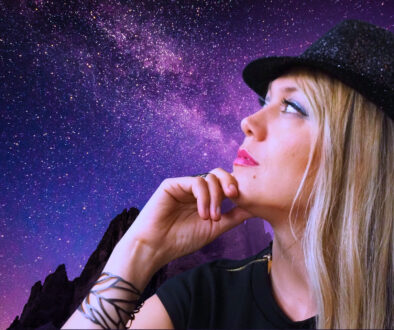
Maryna Krylova describes her relationship with the piano in terms of movement: a way of travelling beyond the ordinary, entering a different state of attention and allowing music to arrive before the mind has time to organise it. In her account, a performance is not simply the delivery of a finished composition. It is an encounter with the present — with the instrument, the room, the audience and the unpredictable shape of a particular moment.
That philosophy informs what she calls Instant Music: an intuitive approach in which her own compositions may change from one performance to the next. A piece can lengthen, contract or lead naturally into another; sometimes, she says, a new work emerges in front of the audience. The piano becomes both instrument and companion, capable of giving physical form to music she experiences as already sounding somewhere within her.
This openness extends beyond the keyboard. Through Pianoscapes Mysteria, Krylova brings her piano music into dialogue with light, colour, sound effects, fragrance and the architecture of a venue. The project draws a line to Alexander Scriabin’s ambitious idea of the Mysterium — a synthesis of music, movement, colour and space — while developing its own contemporary, multisensory language. In collaboration with sound artist Dr. Goldfinger, light artist Vladimir Grafov and olfactory artist Yulia Untilova, each element responds to the music in real time.
The project has taken shape in very different environments: at Amsterdam’s Spirit Festival in November 2024; in a tea-house setting with video projection; in the gardens of Slava Polunin’s Moulin Jaune near Paris; and in the lie-down concert format of Aromapiano, where scent, light and sound surround the listener. These are not simply backdrops for a piano recital. They are changing conditions for listening — an invitation to notice how sound meets memory, sensation and the body.
Before her appearance at Piano Revenge Days Île Saint-Louis in Paris in April 2027, Piano Revenge MAG speaks with Krylova about the instrument that became her artistic home, the freedom of playing without a fixed setlist, the extraordinary concert that made her childhood dream of space travel feel real, and the Scriabin encounter that helped bring Pianoscapes Mysteria into being.
PianoRevenge MAG: When you sit at the piano to create or perform, what inner landscape are you trying
to enter — and what do you hope the listener discovers there?
Maryna Krylova: I enter another reality. It is as though I step outside my body and become an observer and a listener, connecting with what I call my higher self. My fingers seem to find the necessary keys by themselves. I draw the music from a cloud — something like iCloud, where the music is already there and I can access it.
I hope the listener will make this journey with me. I want people to enjoy the beauty of the tones, melodies and performance, but also to be touched on deeper emotional levels. When the usual mental control falls away, each listener travels through their own inner world. Everyone’s journey is different. People have told me that long-forgotten memories returned, that feelings they had not encountered for years resurfaced, or that their whole life seemed to pass before them.
I invite listeners to experience stillness and a change in their perception of time. Someone who has experienced silence can perceive music deeply.
What does the piano allow you to say that words cannot, and has your relationship with the instrument changed as you have changed as an artist?
For a long time, I composed and performed in different line-ups, and explored other instruments, including guitar, harp, accordion and synthesizers. Yet the piano always remained at the centre. It can replace a whole orchestra. I could not imagine conducting an orchestra made up of individual musicians, each with their own emotional life and ego, but the piano allows me to create the orchestra of my dreams.
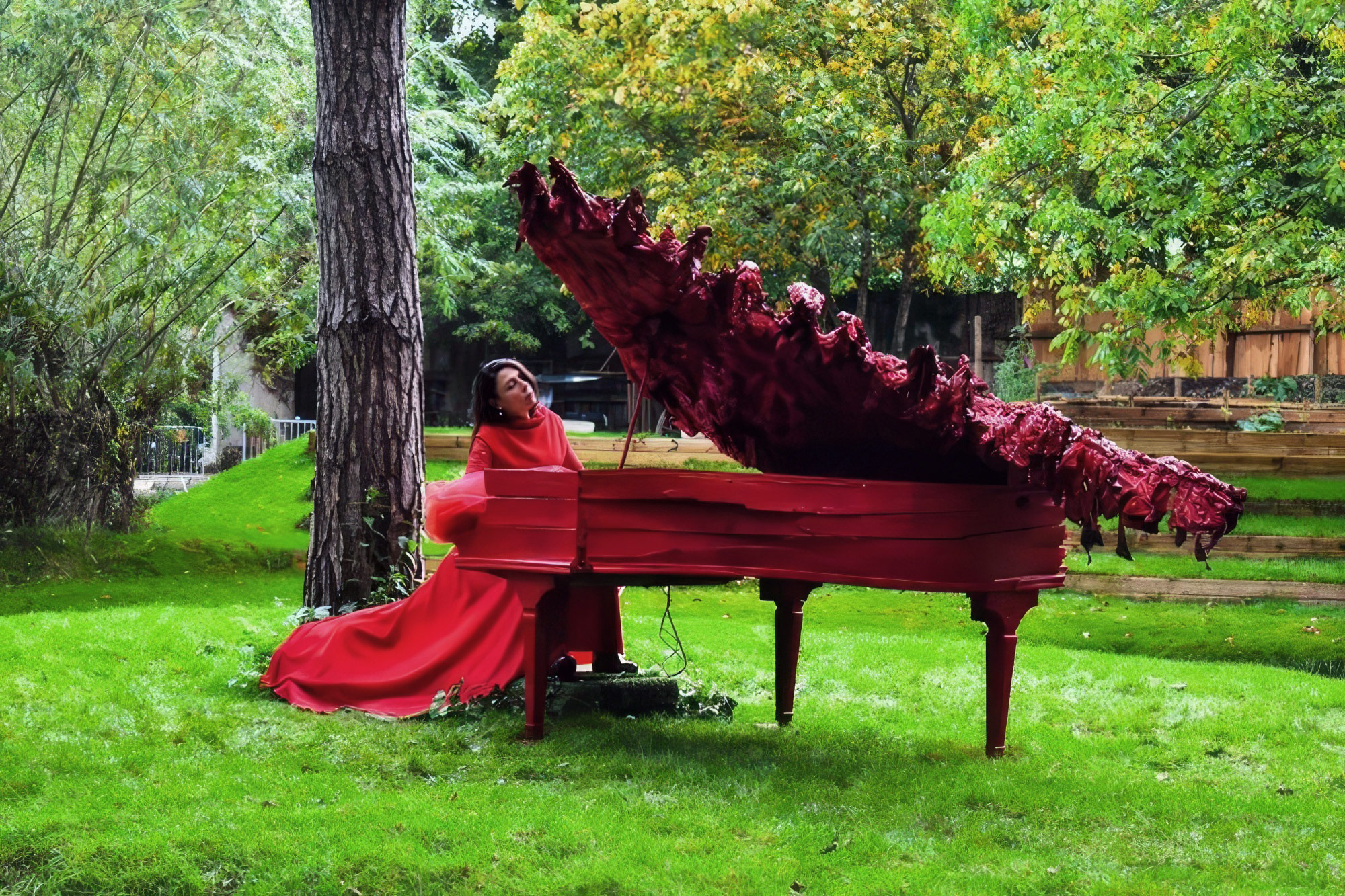
A grand piano has a magical shape — like a harp wearing a beautiful dress. Its curves, its wing: there is something sensual about it. My surname, Krylova, is related to the word ‘wing’, and in Dutch a grand piano is called a *vleugel*, also meaning ‘wing’. I can fly on a piano. In terms of acoustic depth and range, perhaps only the organ can compare with it.
My technique continues to develop, and I increasingly find that I can play what I hear in my head without effort; my fingers lead me in the right direction. Words usually pass through the brain before they become emotion. Sound, in my experience, goes straight to the heart, to the soul. Finding the right words is harder for me than finding the right melody.
You often perform your own music without following a fixed score. Where does interpretation end and your own artistic voice begin?
For me, performing my music is a way of stepping outside the ego-system. I am not on stage to make a show of technical tricks. I try to remain completely in the here and now. I give myself permission not to follow a predetermined score every time, but to play in the moment and create a portrait of that moment — one that reflects the listener, the performer, the place, the time and the particular instrument.
I perform primarily my own compositions, interpreting them differently each time. Of course, traces of my character appear in those interpretations. But I see that as the surface layer, through which something more interior and less personal can be glimpsed.
“Sound, in my experience, goes straight to the heart, to the soul.”
How do you translate a sensation, memory or state of mind into musical decisions
— touch, silence, tempo and resonance?
When I compose or perform, I try to set aside the brain’s usual control. I become an observer. I may laugh or cry; sometimes I feel an impulse to growl like an animal. My fingers weave the musical thread.
When a new composition comes to me, it remains in several forms: as an audio recording in that inner ‘cloud’, as an emotional imprint in my heart, and as a kind of graphic drawing made by my fingers across the keyboard. Sound is clay for me. I shape it in response to physical sensations, adjusting resonance, accents, note lengths and intensity until each note acquires its own meaning.
At the beginning of a performance, I listen to the room and its acoustics. Soon, however, I may enter a dreamlike state of silence in which I hear only the piano. My task is not to wake up completely before the concert ends. Sometimes I play with my eyes closed for almost the entire performance.
When I play solo, I often do not know in advance which piece will come first or what will follow. I sit at the instrument and listen inwardly. The piece I hear is the one I begin to play, and its duration may differ from the album version. Each performance becomes a unique version. One piece seems to suggest the next. If I try to impose a piece that I cannot yet hear inwardly, I have to let go of that decision and find the music again — almost as if tuning a radio receiver. Sometimes, a completely new piece is born in front of the audience.
In an age when recordings are instantly available, what makes a live piano
performance irreplaceable?
The answer is as simple as truth: the feeling of being here, now, and the uniqueness of that moment. A live performance is a shared physical, emotional and, if you wish, spiritual experience in an acoustic space. A recording listened to through a screen is an imperfect copy of a real event.
How do you balance the piano’s long history with your freedom to experiment?
The piano belongs to the Western musical tradition, and that tradition gives it both possibilities and limitations. Yet, despite academic conventions of composition and performance, the instrument offers enormous freedom for unconventional approaches.
The extent of that freedom depends on the performer’s inner freedom, respect for the instrument and its historical inheritance, and the depth of their understanding of it. For me, however, my personal relationship with the piano takes precedence over strict adherence to conventions or the opinions of those who guard them.
Was there a turning point when you found your identity as an artist?
Of course there were uncertain periods, but they belong to the past. In recent years I have found myself at the grand piano. I stopped moving between identities and chose the path that, in a sense, had chosen me. The piano became my vehicle for travelling through different worlds. I no longer feel stage fright before a concert; each performance feels like a moment of cleansing and renewal.
I have been an artist for as long as I can remember, but for years I was searching. I worked as an actress and singer, had my own ensemble, wrote songs, explored electronic music and made my own arrangements. I released two albums of songs, performed Mussorgsky’s *The Nursery* with a symphony orchestra, worked on the Luce part in Scriabin’s *Prometheus*, and for ten years produced and presented an annual festival in central Amsterdam. Each experience flowered and then faded.
About ten years ago, I experimented by retuning my Steinway to 432 Hz. It transported me into another world, where my doubts fell away. I had found what I was missing, and the music that had been waiting to be born began to arrive. It still renews my inspiration whenever my fingers touch the keys — creating, as I like to think of it, the notes of the future.
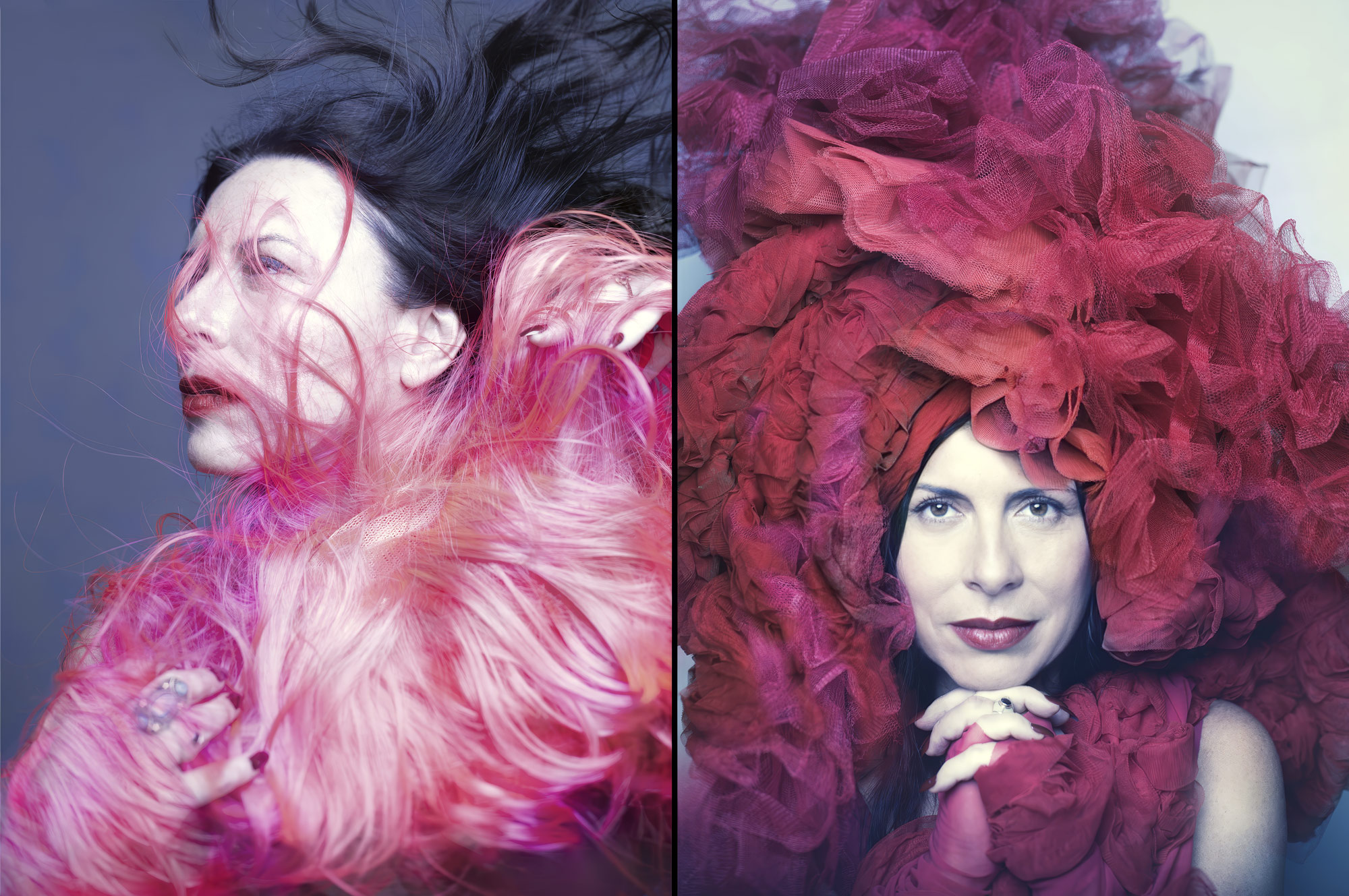
“My childhood dream of becoming an astronaut came true. I had
travelled into space — and my spaceship was my grand piano.”
What does artistic community mean to you, and can sharing a programme change how you hear your own music?
Being part of a community helps me understand myself and reminds me that I am not alone. There is always something to learn from colleagues and something to share with them. Every artist follows a unique path. To encounter those different paths within one community is an interesting and valuable experience.
Which live performance remains especially vivid in your memory, and why?
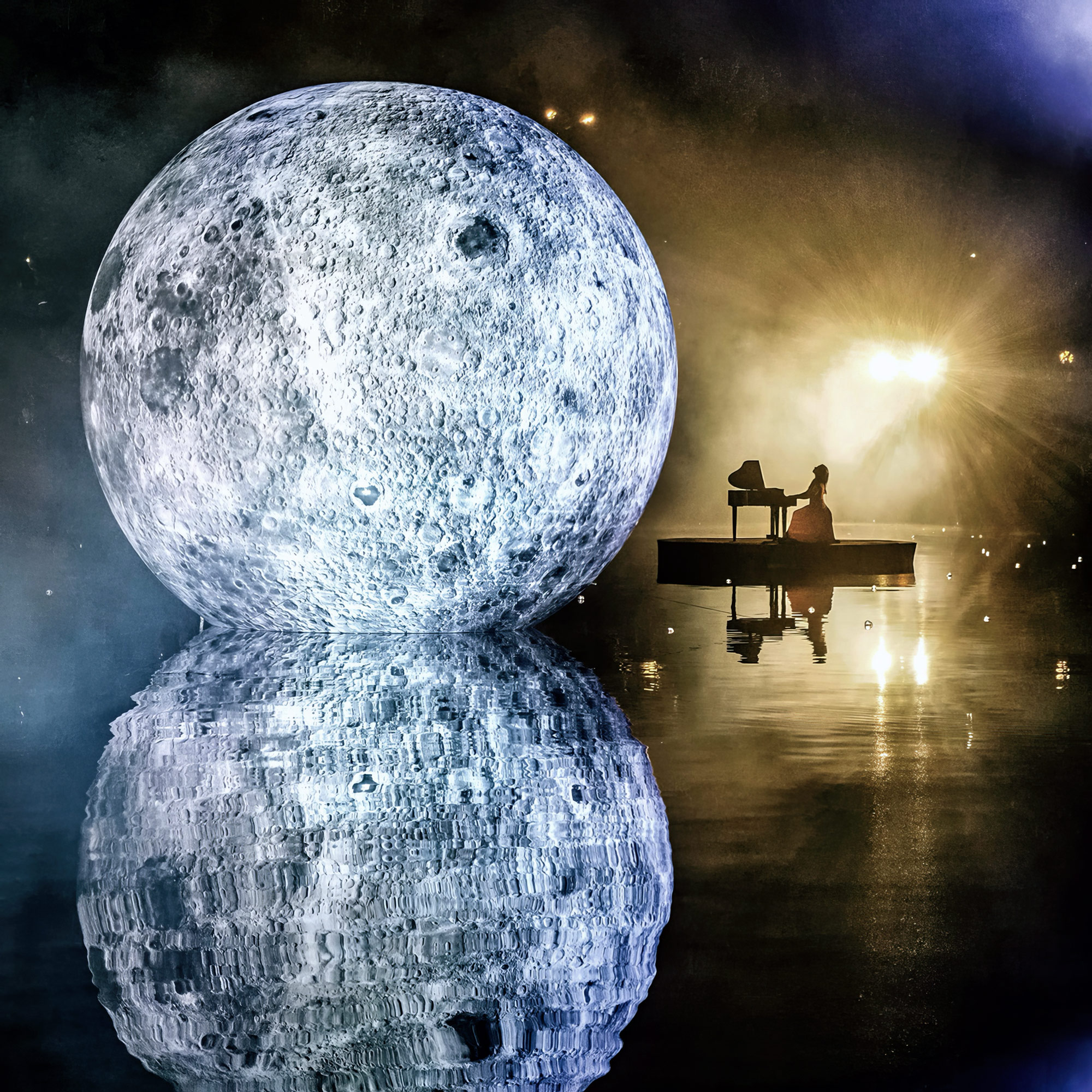
I have experienced the magic of performance many times, but one of the most memorable was a two-and-a-half-hour concert at Pioneer Pond in Moscow’s Gorky Park. The grand piano stood on a raft beside an inflatable Moon, 6.5 metres in diameter, accompanied by a beautiful light show. I played only my own music, without sheet music or a setlist.
I was taken to the raft by boat and became completely separated from the land and the outside world. On the shore, people were gathering for the park’s anniversary celebration. Those two and a half hours passed like a single instant. I did not miss a key, even when the air grew colder and dew appeared on the keyboard, making it difficult to feel the keys beneath my fingers.
My childhood dream of becoming an astronaut came true. I had travelled into space — and my spaceship was my grand piano.
Your relationship with Alexander Scriabin has a special place in this story. What does he mean to you beyond his compositions?
My introduction to Scriabin came when I was invited to record the Luce part for a Dutch television project about *Prometheus*. The orchestra, conducted by Valery Gergiev, had already been recorded. The written Luce part did not have an obvious musical relationship to the orchestra recording, which had been made without a metronome, and it quickly became clear that playing it conventionally in the studio was impossible.
A film was to be created using the colour scheme Scriabin had imagined, so I proposed programming the Luce part as MIDI and laying the recording into the video. I listened to every measure and every note many times, feeling, as it were, every pixel of the work.
It was a magical experience. I had to explore the history and ideas behind the score to understand what I was recording, and I read several books given to me at the Scriabin Museum in Moscow. I discovered a composer who approached music as a mystical act and radically reimagined harmony, tonality and colour. Later, I ha the opportunity to perform my own solo concert at the museum.
Scriabin’s grand vision for the Mysterium — an event uniting music, dance, colour and the resonance of architecture — began to feel almost like my own mission. From my compositions, Pianoscapes Mysteria emerged, with its emphasis on multisensory experience. Fragrance, light, colour and sound effects interact with my music in real time. Olfactory artist Yulia Untilova created a series of fragrances for the project, with names including *Spiral to Heaven*, *Still* and *Arriving at the Gates of Love*. The idea is not simply to add sensory elements to a concert, but to let them enter into a living relationship with the music.
About this feature
Maryna Krylova is a pianist, composer and performer whose practice centres on intuitive composition and live performance. Her Pianoscapes Mysteria project expands the piano recital into a multisensory encounter with sound, light, colour, fragrance and space. She will perform as part of Piano Revenge Days Île Saint-Louis in Paris in April 2027.
Next concert: https://klassiek-centraal.be