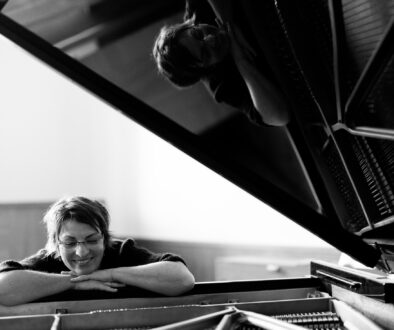
Daniella Nassar: The Art of Discovery
I think performing has taught me that the idea of perfectionism has to go out of the window. No matter how prepared you are, there’s always an element of unpredictability in a live performance, and you have to learn to accept yourself in that moment, whatever happens.
Preface
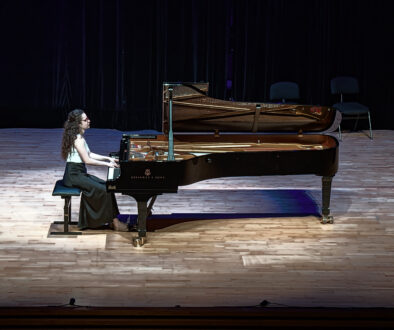
For Nassar, interpretation is a conversation between the composer’s intention and the performer’s own evolving voice. It is also an act of listening — to the score, to the instrument, to the room, and to the unexpected moments that can emerge only in performance. Now joining Piano Revenge Days on Île Saint-Louis in Paris in April 2027, she brings this spirit of discovery to an intimate historic setting, alongside a community of artists united by their curiosity and commitment to musical expression.
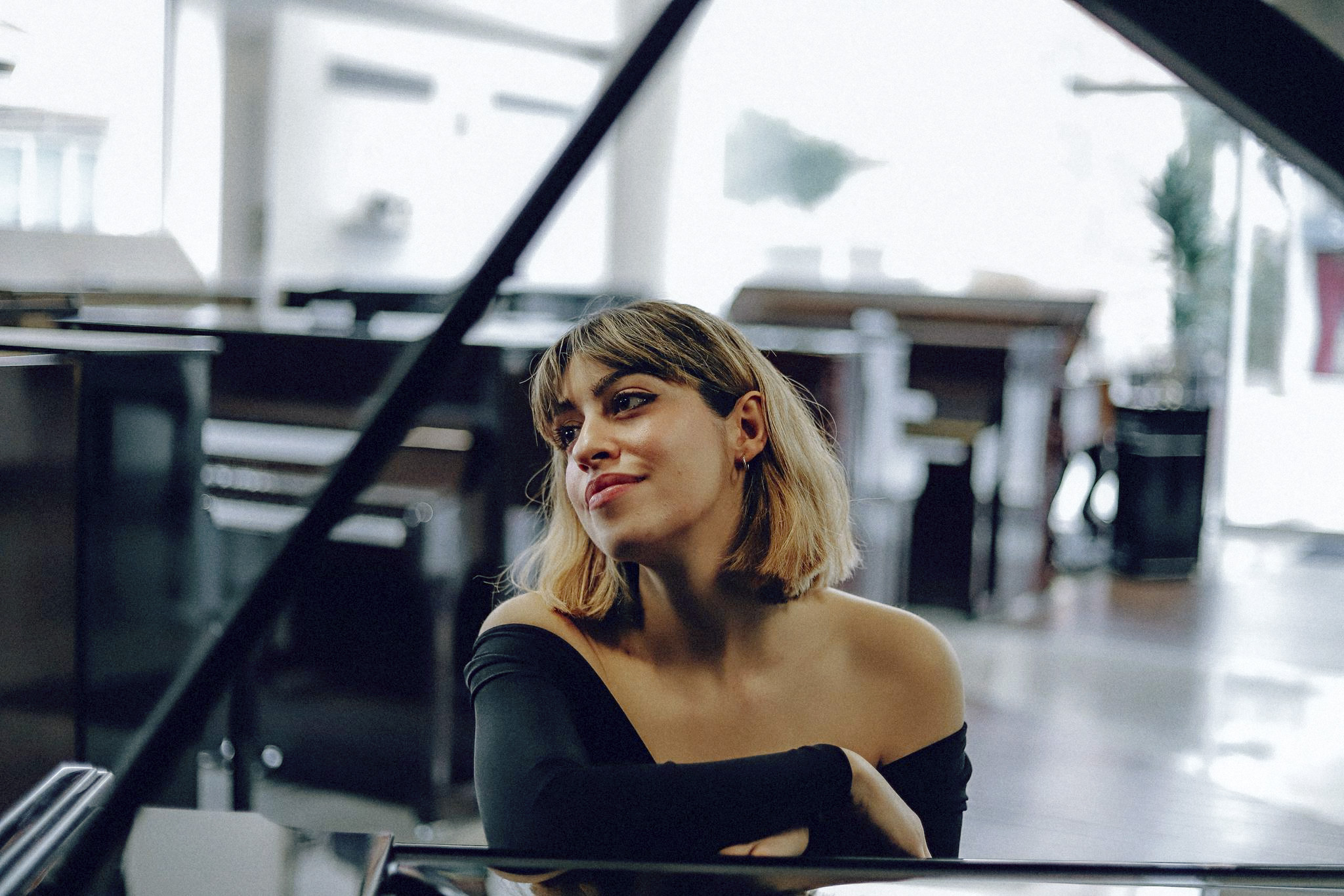
There is a particular kind of curiosity at the heart of Daniella Nassar’s musicianship: a desire not simply to perform music, but to discover what might still be waiting inside it. Drawn to late-20th-century repertoire, new music and voices too rarely heard, the British pianist approaches the piano as both an instrument of interpretation and a space for exploration. Her artistic world moves naturally between performance, composition and commissioning, always guided by an openness to what lies beyond the familiar.
PianoRevenge MAG: Your musical journey has taken you through formal classical training and performance. What first made you fall in love with the piano, and what continues to keep you connected to it today?
Daniella Nassar: My first encounter with the piano was at my grandmother’s home on her old piano, where I would spend hours tinkering with melodies and tunes I had heard throughout my childhood. I was fascinated by the tactile feel of the keys, the vast range of sounds the instrument could produce, and the excitement of hearing my little melodies come to life.
As I began studying the piano more deeply, my appreciation for the instrument continued to grow. I started to understand how music could be used to express different emotions, tell stories and create entire worlds. What I love most about the piano is its versatility and its ability to convey such a wide spectrum of human emotions, from the most intimate and delicate moments to the most powerful and dramatic.
Today, what continues to keep me connected to the piano is that there is always something new to discover. No matter how much I practise or how deeply I study a piece, I feel there is always another layer of expression to explore.
With your BMus (Hons) and ABRSM Diploma, you have built a strong technical and musical foundation. How has your education shaped the artist you are becoming, beyond technique and repertoire?
My education, teachers and mentors have played a significant role in shaping the artist I am becoming, beyond the technical foundations and repertoire I have studied. The encouragement and support I received, alongside the challenges and expectations placed on me in my early student years, taught me to embrace challenges, remain curious, and constantly strive to improve.
I think that curiosity has become a very important part of my identity as an artist. I’m not afraid to try new things or to step outside of what I already know. I believe that to be a complete artist, you can’t become pigeonholed into doing just one thing. You have to remain open to other forms of art and allow them to influence and feed into your own work.
I feel that some of the most striking pieces of art come from a reaction to something else, whether that is a film, a painting, a story, a place or another piece of music. Studying both performance and composition has allowed me to explore these different influences more freely and to understand how they can shape the way I communicate as an artist. Ultimately, my education has given me not only the skills to perform and create, but also the confidence and freedom to keep questioning, exploring and developing my own artistic voice.
When you sit down at the piano to prepare a new piece, what comes first for you — the score, the sound, the emotion, or the story behind the music?
It is different every time, depending on the piece. Sometimes I’m immediately drawn to a particular sound world, while with other pieces it’s the arc of the story or the emotional journey that captures my attention first.
Ultimately, though, what is most important to me is conveying the composer’s intention. For me, that means understanding the story behind the piece and allowing the emotion, the sound and the narrative to work together. I don’t see these as separate elements, but a different parts of the same musical language.
Is there a particular composer or repertoire that feels especially close to your artistic identity at this stage of your career? Why?
I think the answer to this question changes as I grow artistically. At the moment, I find myself gravitating towards late 20th-century piano repertoire and new music. I’m particularly drawn to highlighting underrepresented composers and bringing their voices to audiences. For example, I’ve recently been exploring Leo Ornstein’s rarely performed Fourth Sonata, and I find that kind of repertoire incredibly rewarding.
There’s something special about giving life to music that isn’t heard very often. It feels meaningful not only to explore a composer’s individual voice, but also to introduce audiences to something they may not otherwise encounter. I’ve found that audiences really respond to that sense of discovery, and their feedback often tells me that they enjoy feeling they’ve discovered something alongside me.
That’s also what draws me towards new music. I feel strongly about supporting emerging artists, and I’m currently working on a commissioning project, which I find particularly exciting. There’s something very special about being the first person to bring a new work to life. Having the trust of a composer to interpret and communicate something they’ve created is a real privilege, with both a sense of responsibility and a great deal of freedom.
At the moment, I’m also exploring a lot of Ravel, particularly his approach to orchestration. I love approaching piano music almost as if I’m thinking orchestrally, imagining different instruments, colours and textures within the sound of the piano.
Ultimately, I like to keep my artistic world broad. I’m excited by the idea that my musical interests, and therefore my artistic identity, can continue to evolve rather than being defined by one particular composer or style.
Every pianist develops a unique relationship with their instrument. What do you look for in a piano before you feel ready to perform?
As pianists, we don’t get much choice in choosing a particular piano for every performance, unlike a cellist, for example, who will perform on the same instrument they’ve known for years. We have to be adaptable creatures, and often find ourselves playing instruments that may be out of tune, have sticky keys, or simply need a little care.
I actually look forward to discovering what piano I’ll be playing on on a particular recital day. There’s something exciting about that element of unpredictability. If you’re greeted by a piano that needs some love and attention, your playing will inevitably respond to it differently. Sometimes you just have to embrace the interesting dissonance of a few out-of-tune notes and work with what you have.
On the other hand, when I’m greeted by a beautifully cared-for piano, I feel that I can really let the instrument do its work. I can relax into it and, in a sense, let go. I think that adaptability is an important part of being a pianist, learning to listen to each instrument and finding a way to make music with it, whatever it gives you.
Your performances bring together discipline and personal expression. How do you find the balance between respecting a composer’s intentions and allowing your own voice to emerge?
I think allowing your own voice to emerge as an artist is ultimately what separates one artist from another. At the same time, I feel that, at the core of any interpretation, a composer’s intentions should always be at the forefront.
For me, interpretation develops through spending a substantial amount of time with a piece and growing with it. The more deeply I get to know a work, the more I begin to understand its character, its structure and the world that the composer has created. I think that process naturally allows something personal to emerge, rather than having to consciously impose my own voice onto the music.
I also think interpretation is something that continues to change. A piece can feel completely different to you a few years later because you have changed as a person and as an artist so I often like to revisit repertoire that I’ve played before. My responsibility is to listen carefully to what the composer has written, but also to find a way of communicating it honestly through my own musical personality. Hopefully, that’s where the balance between respect and personal expression comes from.
What has performing taught you about yourself that practicing alone at the piano never could?
I think performing has taught me that the idea of perfectionism has to go out of the window. No matter how prepared you are, there’s always an element of unpredictability in a live performance, and you have to learn to accept yourself in that moment, whatever happens.
I also hear a piece differently when I’m performing. It can feel completely different in a concert hall because you’re in a different state of mind and body, and suddenly the music breathes differently. Things that felt familiar in the practice room can become much more alive on stage. I think that’s one of the things I value most about performing: you realise that music isn’t something you can completely control.
You will be joining us for Piano Revenge Days on Île Saint-Louis in Paris in April 2027. What does performing in Paris — and particularly in such an inspiring historic setting — mean to you?
I’m really looking forward to being part of Piano Revenge Days. The idea of bringing together pianists and audiences in such an intimate setting on Île Saint-Louis feels very special to me. Paris has such an extraordinary musical and artistic history, and being able to perform there, particularly in a place with so much character, is something I’m very excited about.
I think the setting will inevitably become part of the experience of the music. Île Saint-Louis has such a strong sense of history, and there’s something quite moving about performing in a place where so much art and culture has existed for generations. At the same time, you’re creating something completely new in that moment, which I find really exciting.
I’m also looking forward to experiencing the festival as a whole; hearing other artists, discovering different repertoire and sharing that experience with the audience. I think festivals can create a real sense of community around music, and I’m excited to contribute to that through my own performance.
Looking ahead, what is the musical dream you are currently working toward — a repertoire, a stage, a collaboration, or simply a new artistic direction you want to explore?
There are quite a few things I’m working towards at the moment, although I can’t give too much away just yet! As I mentioned earlier, I’m working on an album centred around new commissions, with a particular focus on female and gender-diverse composers and giving space to voices that I feel deserve to be heard more widely. Alongside that, I’m developing my own concept album for orchestra, as well as a few other commissioning projects that I’m really excited about.
One of my longer-term dreams is to work more closely with dance, particularly ballet. It’s a form of art that has always been very close to me, and I love the relationship between movement and music; the way music can shape the physicality of a dancer, while the movement can completely change the way you hear the music.
I’d love to explore that relationship from the musical side, whether through performing, composing or collaborating with choreographers and dancers. I think there’s still so much to discover in the space between different art forms, and that’s something I’d really like to explore as my career develops.
Bonus Question — A New Chapter You have recently become a young Steinway Artist — a wonderful milestone in any pianist’s journey. What does joining the Steinway Artist family mean to you personally, and how do you hope this new chapter will influence the artist and performer you are becoming?
Becoming a Young Steinway Artist is a deeply meaningful milestone for me. It’s a huge honour to be part of such a respected family of artists, and I’m incredibly grateful for the opportunity.
For me, it feels like the beginning of something really exciting. I know that this new chapter will open doors to new opportunities, collaborations, and experiences that will help me grow both as a musician and as a performer. Steinway has such a rich history in the world of music, and to now be part of a tradition that includes so many inspiring artists makes this moment particularly special to me.
I’m particularly excited about what this can mean for developing my own voice and becoming more confident in the artist I want to be. I want to keep taking risks, staying curious and, most importantly, staying true to myself and the music I believe in.