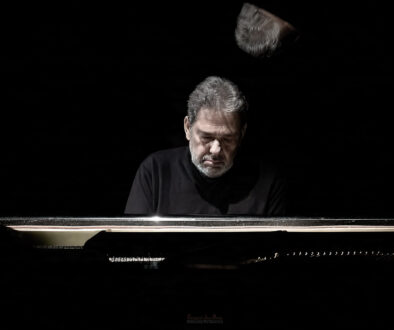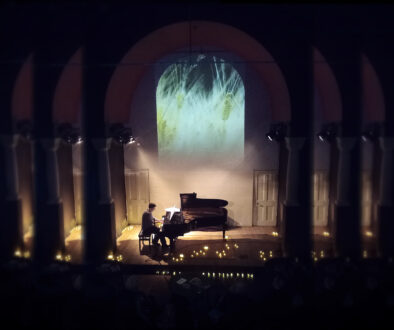
Where Memory Meets the Piano: Giovanni Renzo on Sicily, Improvisation and the Art of Listening
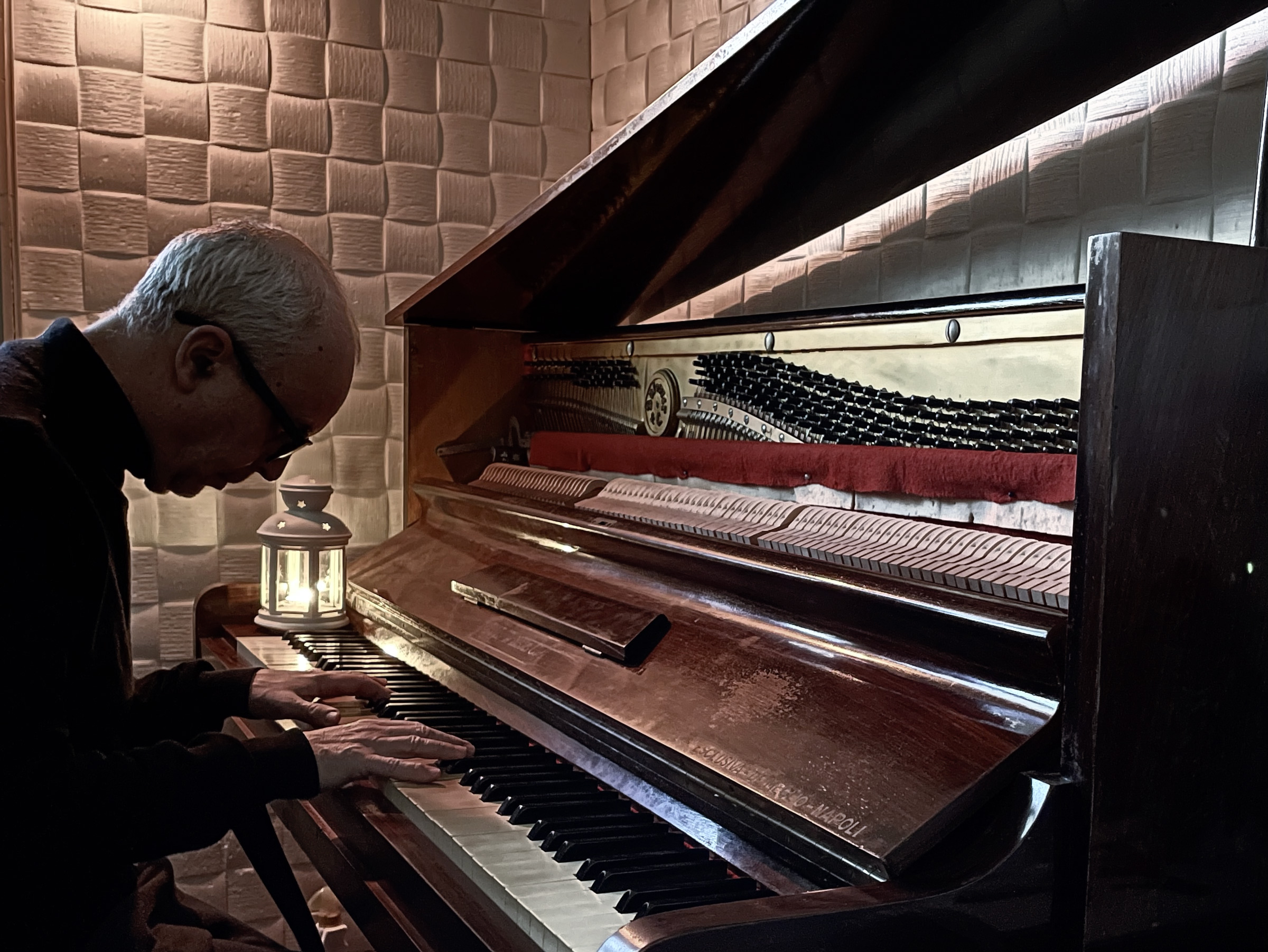
Giovanni Renzo’s music begins with the piano, but it does not end there. For the Sicilian pianist and composer, music is a language beyond words — one capable of carrying memories, landscapes and emotions without asking the listener to decode a single fixed meaning.
Editor’s Note
For him, the piano is not simply a vehicle for sound. It is a way of remembering, travelling and listening — and, ultimately, of allowing an audience to hear something of the person behind the music.
His artistic journey has taken him from his beginnings as a jazz pianist to a deeply personal compositional language built around improvisation, rich harmony, atmosphere and an increasing appreciation for silence. The landscapes of Sicily remain an essential presence: the sea of Messina, the wind, local voices, Arab-Norman architecture, ancient theatres and the particular musical colours of his homeland continue to find their way into his work, even when he is performing thousands of kilometres away.
That relationship between place and sound has become increasingly international. His recent performance in Singapore marked his first musical experience in Asia, introducing his intimate piano language to a new cultural environment and audience. Yet wherever he travels, Renzo first takes time to listen — to explore the city, absorb its atmosphere and allow new sounds and impressions to become part of his musical world.
There is also a particular sense of impermanence at the heart of his practice. Renzo is an improviser, and some of his compositions began as moments that existed only once, before being recorded and later transcribed. A melody can therefore move from something completely ephemeral into something that can be performed again, while still retaining the memory of the moment in which it was born.
This autumn, that journey returns to Sicily. Giovanni Renzo is already lined up to perform with Piano Revenge Days Marsala this November, bringing his music back to the landscape that has shaped so much of his artistic imagination. From there, the road continues towards Paris, where the possibility of a future Piano Revenge performance carries a particularly personal resonance: his composition Giostra was inspired by the carousel beneath the Eiffel Tower.
In this conversation, Renzo reflects on the evolution of his musical language, the role of silence, the relationship between improvisation and memory, the importance of place, his departure from mainstream jazz, and what it means to carry the atmosphere of Sicily into the wider world.
A language beyond words
PianoRevenge MAG: Your music often seems to exist somewhere between composition, contemplation and storytelling. When you sit at the piano today, what are you trying to say that words could never express — and has that musical language changed as you have changed as a person?
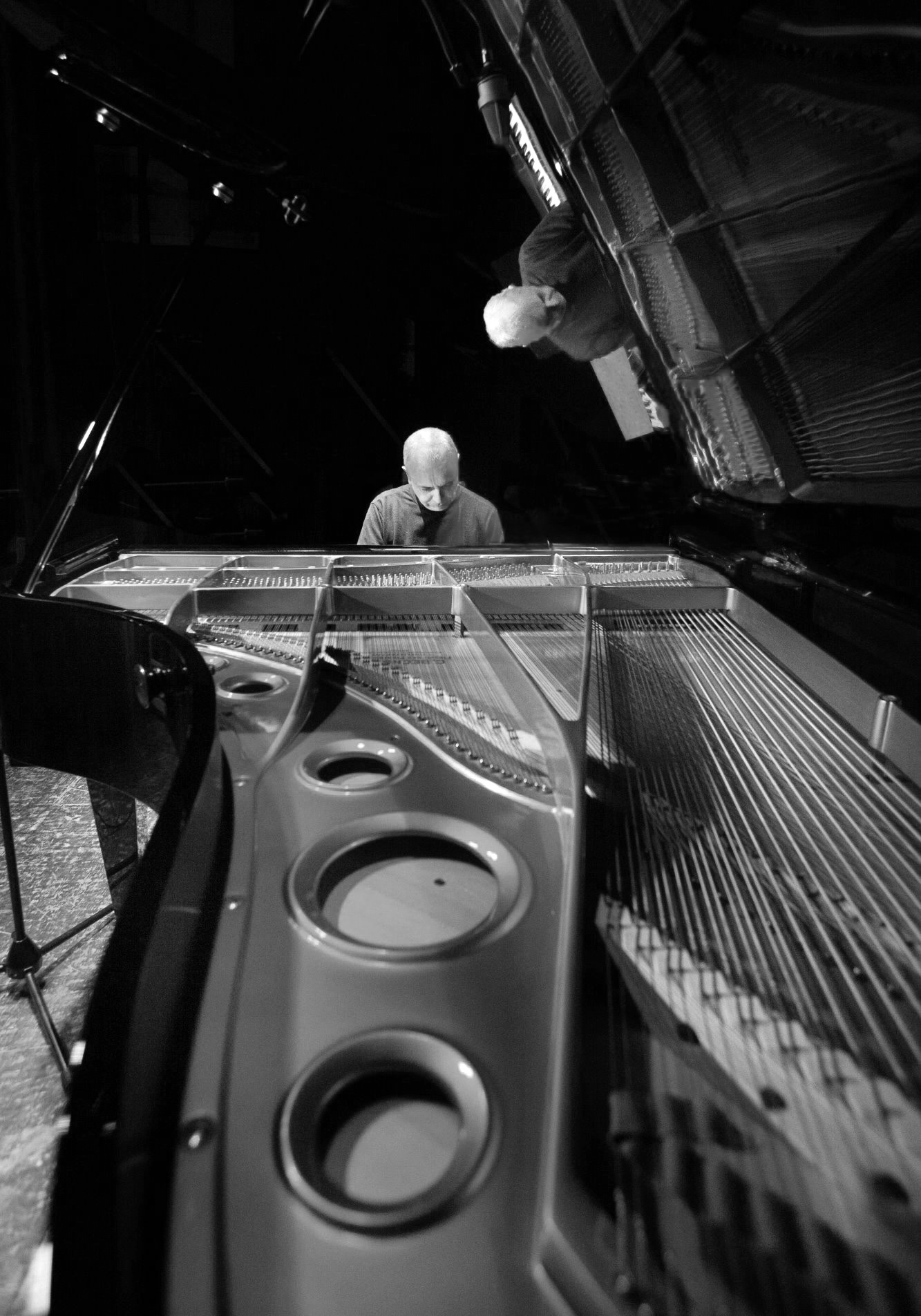
Giovanni Renzo: Music represents an extraordinary language, devoid of words, which allows the expression of the deepest feelings, that inner world often difficult to express verbally. There is undoubtedly a profound connection between the poetics of the instrument and the sphere of personal feelings.
However, as a non-semantic language, I believe it is not essential for the listener to decode the meaning attributed by the musician to the piece. In fact, I think it is more inspiring for everyone to attribute their own interpretation or even embark on a journey of introspection to identify the meaning of the music they listen to.
My musical language and the way I express my feelings have evolved over time. As I gained maturity, I learned to be more concise and direct. While in the past my compositions were of considerable length, they now tend to be shorter and more essential.
The constant element in my musical language remains improvisation; some of my compositions are transcriptions of impromptu improvisations.
Sicily beneath the music
PianoRevenge MAG: You come from a very rich Italian musical and cultural tradition. How much of Italy — its landscapes, history, light, architecture, silence and emotional character — do you feel is unconsciously present in your music, even when you are performing far from home?
My musical production is profoundly influenced by the surrounding environment and cultural context in which I grew up. It incorporates distinctive elements of the Sicilian landscape, such as the sound of the sea, the wind and the voices of the population, as well as the rich artistic and architectural heritage, in particular Arab-Norman architecture and ancient Greco-Roman theatres.
These elements, together with specific musical scales typical of my homeland, form an integral part of my musical expression, even when I perform in different geographical contexts.
On the other hand, before each concert in a new venue, I believe it is essential to dedicate time to exploring the city, immersing myself in the local atmosphere and absorbing new sounds and stimuli that can enrich my sonic palette and contribute to the creation of a more complete and engaging musical experience for the audience.
Learning to leave space
PianoRevenge MAG: There is something deeply powerful about what a pianist chooses not to play. How important have silence, space and restraint become in your artistic vocabulary, and what have they taught you about listening?
As I matured, I gained a greater awareness of the importance of silence in music. In my youth, as is often the case with young musicians, I tended to saturate the sound space, neglecting the importance of pauses that give depth and meaning to the musical message.
The influence of composers such as Anton Webern, John Cage and Arvo Pärt was decisive in this path of artistic growth.
My composition Restless Nights opens with two long, isolated sounds, from which the entire piece develops. Initially, I had doubts about their inclusion in the final version, fearing that they might lead listeners to skip to the next track after the first few seconds.
However, I decided to keep them, and this song turned out to be one of the most streamed.
The music that disappears
PianoRevenge MAG: A piano performance exists only in the moment: a sound is born, resonates and disappears. Does this ephemeral nature of piano music influence the way you compose or perform? Are you trying to preserve a moment, or are you more interested in allowing it to disappear?
One of the distinctive elements of my musical production is improvisation, the search for a phrase or melody that arises and lives exclusively in the context of a specific performance.
This creation belongs solely to the interpreter and the audience present at that moment. The only method to immortalize these moments is recording.
Just consider Keith Jarrett’s extensive discography of free improvisation: without the recording, we would not have been able to fully appreciate the brilliance of this extraordinary pianist. I often wonder how much was lost, in eras before the advent of recording, by great musicians and improvisers such as Bach, Mozart, Chopin and Liszt.
When recording my improvisations and then listening to them, I often find myself marveling at the musical structure I have managed to create, feeling a sense of personal wonder.
The creative act, in such circumstances, sometimes manifests itself in a state of trance, outside the control of consciousness, abandoning itself to the creative flow.
Therefore, when I have the opportunity to record my improvisations and am satisfied with them, I believe it is appropriate not to lose what I have performed and I commit to transcribing the material produced.
Several of my songs are, in fact, faithful transcriptions of improvisations, including After the Rain, Mare di Primavera, Lullaby for Gaia, Mirror and many others.
A new horizon in Singapore
PianoRevenge MAG: You are currently travelling and performing in Singapore, bringing your music into a completely different cultural environment. What happens to your music when you place it in a new cultural landscape? Do you discover something about yourself through the way audiences in other parts of the world listen?
My performance in Singapore was a moment of great professional relevance, as it was my first musical experience in Asia, in front of a completely new audience and distant from European culture.
While I was aware of the large Asian fan base that follows me on various streaming platforms, the live dimension presented some unknowns. However, I had the belief that my music could be successful even in an Eastern context, and this prediction proved correct.
I received requests for encores, a final standing ovation, and, to my great surprise and gratitude, a long line of people who, in order and patience, waited for the opportunity to take a photograph with me to share on their social media.
Audiences in that region demonstrate a special focus on Western cultural expressions, having a deep respect for our musical tradition, as evidenced by the success of a number of talented Asian musicians who have recently emerged.
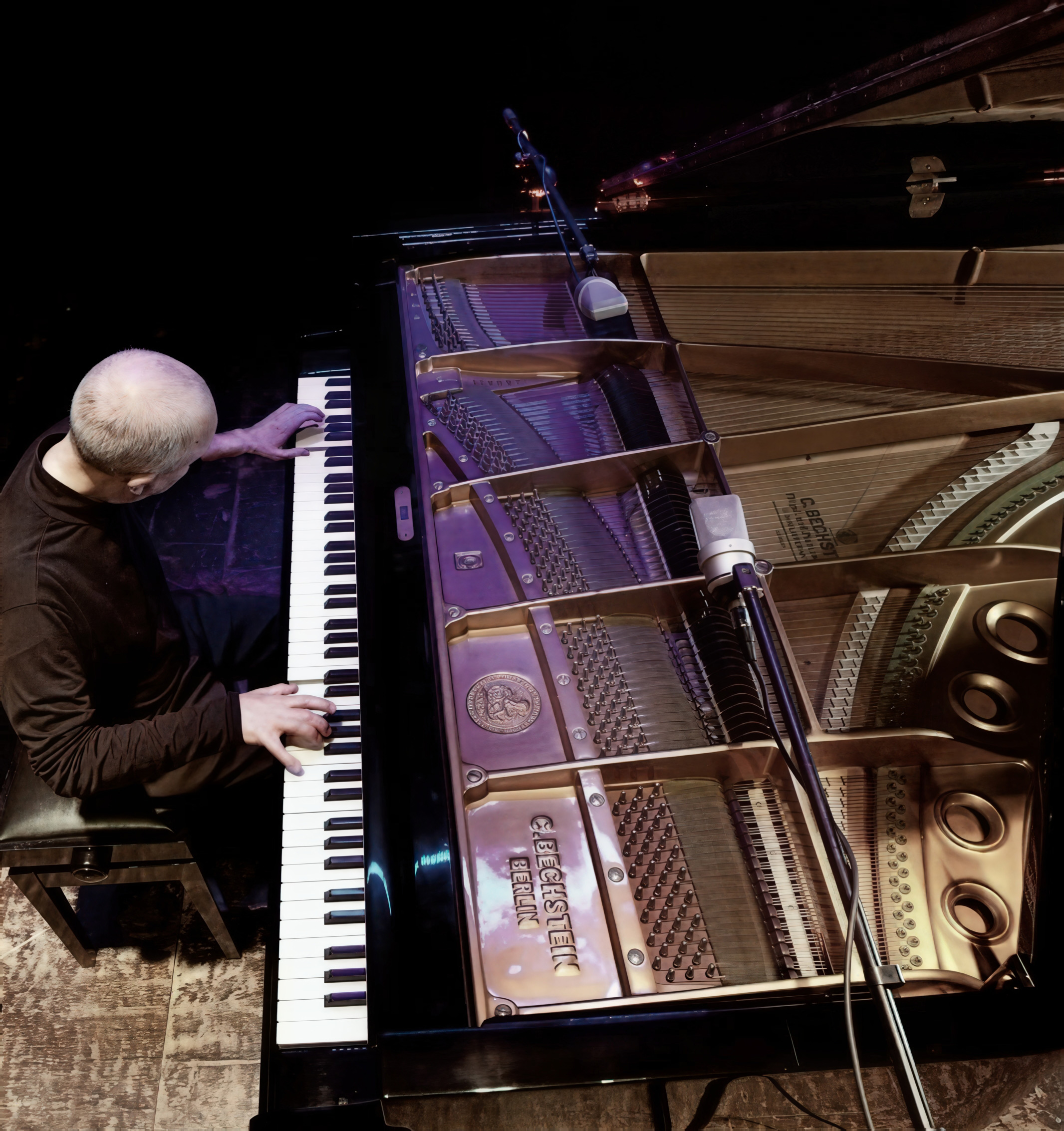
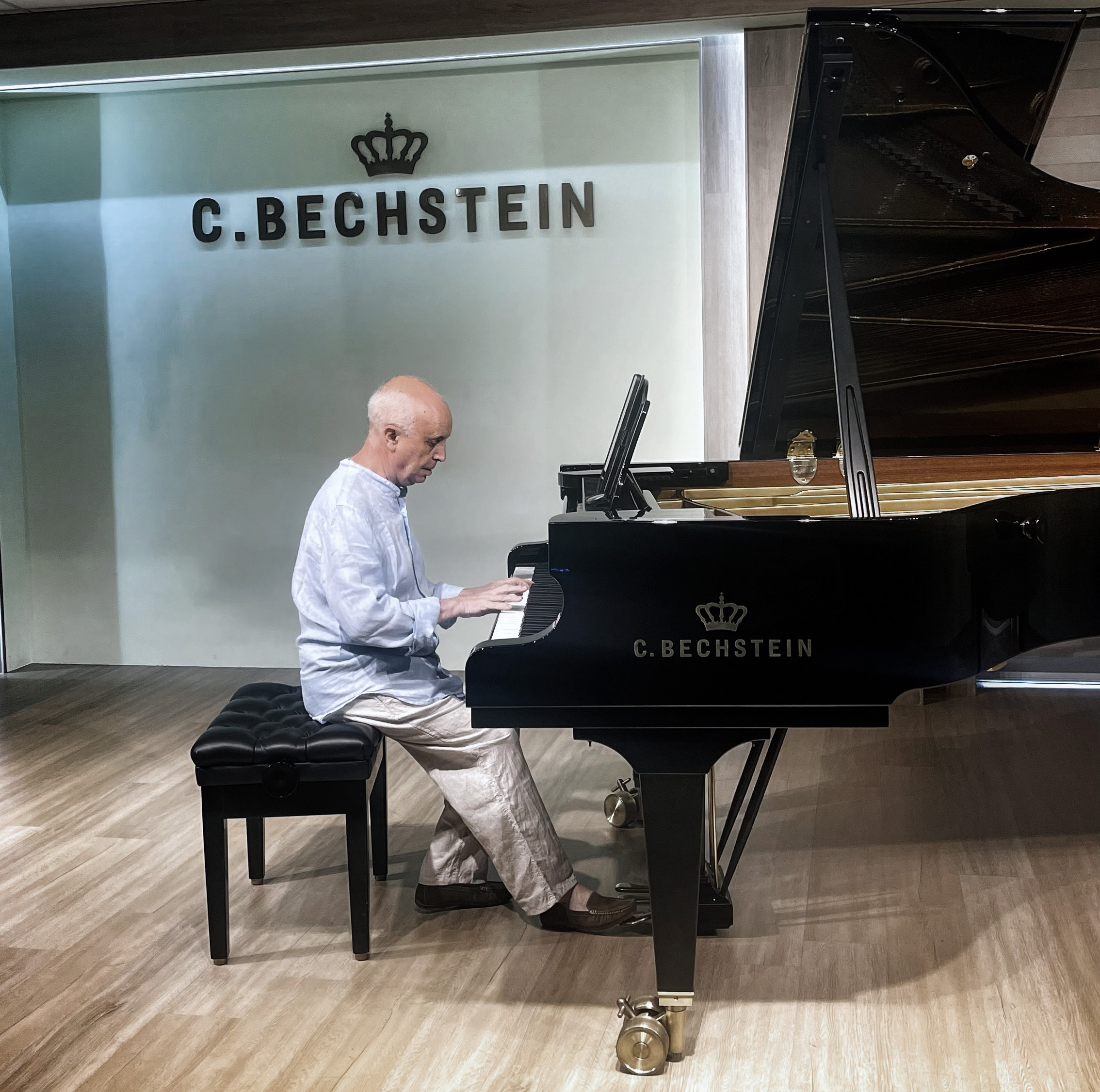
As soon as I proposed my performance, I immediately gained the support of Bechstein Music World, a prestigious concert hall equipped with an exceptional Bechstein 228 Grand Piano, as well as the Italian Embassy in Singapore, which enthusiastically welcomed the proposal to promote my performance.
When a concert becomes a shared space
PianoRevenge MAG: For you, what makes a live piano concert truly memorable? Is it technical perfection, emotional vulnerability, the atmosphere of the room, the connection with the audience — or perhaps something that cannot really be explained?
An unforgettable concert is the result of a combination of variables that do not always manifest themselves simultaneously in the same place.
Firstly, I consider the presence of a quality piano, preferably a Steinway A or B, to be crucial. Equally crucial is the acoustics of the room, which must be optimal, and the lighting, which must help create a warm and welcoming atmosphere.
These elements allow me to focus exclusively on the musical performance and the emotions I intend to convey to the audience.
Another essential aspect is the relationship with the public itself. I like to connect with viewers, introducing individual songs and sharing the stories and inspirations behind them.
Finally, the most significant moment for me is the moment of silence that follows the conclusion of a passage. The longer this silence, the greater the feeling of having created a magical atmosphere that one wishes not to interrupt.
Beyond virtuosity
PianoRevenge MAG: The history of piano music often celebrates virtuosity and technical achievement. At what point does technique become secondary to artistic truth? And have there been moments in your own career when you deliberately chose emotional honesty over technical display?
Throughout my musical career, I have never favored virtuosity over expressiveness.
I have undertaken the study of classical music, considering it the most comprehensive source of technical training available. The deepening of piano literature, from classical composers such as Bach, Clementi and Mozart, to Schumann, Chopin, Debussy, Scriabin and contemporary composers, provided a technical baggage of considerable value, essential for a pianist-composer.
Further study of jazz piano has enriched my technique with significant rhythmic precision, thanks to the deepening of piano playing of prominent musicians such as Oscar Peterson, Bill Evans and Keith Jarrett.
In my opinion, the greatest degree of virtuosity lies in the ability to precisely express what is on your mind, even when it comes to a simple melody that requires correct execution, a refined touch and a fluid legato.
At times, achieving this goal can be more challenging than performing a quick virtuosic passage. A prime example of this approach is Keith Jarrett’s album The Melody at Night, with You, in which the pianist, recognized as one of the greatest contemporary virtuosos, deliberately forgoes virtuosity to create melodies of extraordinary beauty.
Jarrett deviates minimally from the jazz themes proposed, offering a record of intense emotional expression.
In my approach to music, virtuosity must never prevail over expressiveness. The true virtuoso is the one who can convey his emotions most effectively.
Leaving jazz, finding a voice
PianoRevenge MAG: Looking back at the younger Giovanni Renzo and comparing him with the pianist and composer you are today, what has changed most profoundly? Is there something you believed about music at the beginning of your career that you no longer believe today?
My musical career began at the age of seventeen, as a jazz pianist.
Initially I preferred the performance of jazz standards, paying little attention to composition. I included a limited number of songs of my own composition in the setlist, mainly in a typically jazz style.
However, at a certain point, I perceived that jazz no longer met my artistic needs and that performing classics from the jazz repertoire in jazz clubs no longer gave me pleasure.
Therefore, I embarked on a path of developing my musical ideas, progressively moving away from the strictly jazzy language.
Currently, in my concerts, I perform exclusively original compositions. I have identified my artistic path, my style, in which an influence of my jazz experience certainly persists, mainly improvisation and the use of rich harmonic progressions.
What’s missing, which I perhaps no longer firmly believe in, is the typical language of mainstream jazz, which has now crystallized into the repetitive ritual of jam sessions.
Since John Coltrane, there have been no significant developments in this musical genre. The most interesting productions are those that integrate different musical experiences, such as those made by Manfred Eicher’s ECM, in which at times the jazz component is minimal, as in the case of the exceptional album Officium by Jan Garbarek and the Hilliard Ensemble.
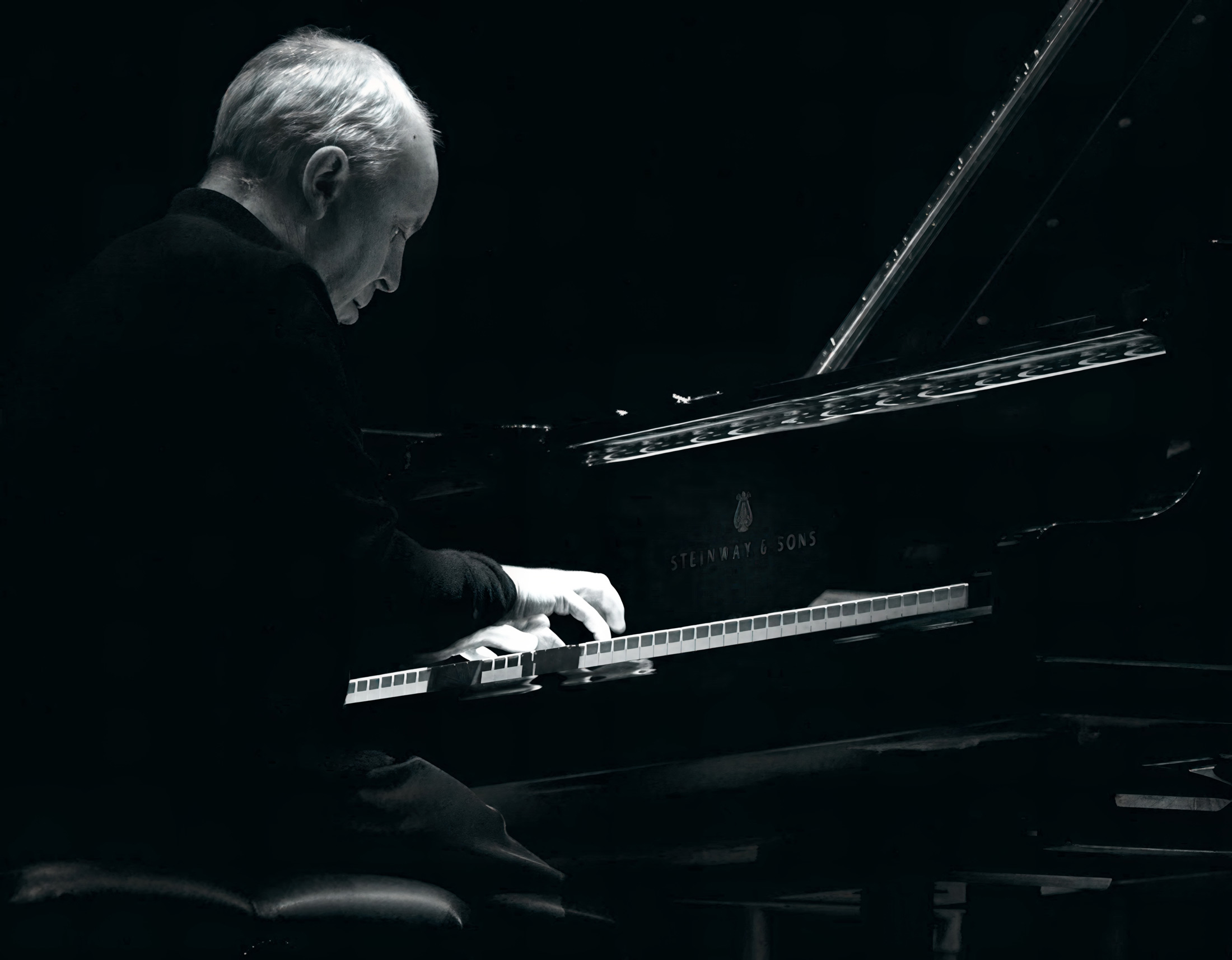
The road ahead
PianoRevenge MAG: After years of developing your own musical identity and now performing internationally, what artistic territory still feels unexplored to you? Is there a particular project, collaboration, repertoire or musical idea that you feel is waiting for the right moment?
After years of research, I finally fully developed my musical style.
My primary goal is to perform live internationally, promoting my music. This goal is further supported by the significant following I have gained through streaming platforms.
Through such platforms, my music reaches a global audience, achieving millions of listens worldwide. I frequently receive congratulatory emails from fans of different nationalities, and a growing number of pianists are requesting my scores to perform my compositions, which fills me with pride.
I want to take my music as far as I can myself.
In this context, my first experience in Asia proved particularly enlightening, highlighting the potential of my artistic proposal.
From Marsala to Paris
PianoRevenge MAG: You are already lined up to join us for Piano Revenge Days Marsala this November, bringing your music back to Sicily, the landscape that has shaped so much of your artistic identity. We would also be delighted to explore the possibility of welcoming you to a future Piano Revenge Festival in Paris. If you could bring one piece — or one musical idea — that represents Giovanni Renzo today to these two very different settings, what would you choose, and what would you hope audiences carry with them after the final note?
Paris is a city I love very much. I visited her a few years ago and was deeply impressed by her atmosphere, her places and her people.
I was staying in a small hotel located in Montmartre, from which I left to explore the city, before returning to the neighborhood in the evening, strolling through the artists’ workshops and breathing in the unmistakable Parisian atmosphere.
One of my pieces, entitled Giostra, draws inspiration from a Parisian suggestion: the carousel located at the foot of the Eiffel Tower. When I returned home, I attempted to transpose that image into sounds.
Should I have the opportunity to perform in Paris, I would wish the audience could perceive more than just musical notes.
I hope people hear the sea of Messina, the warmth of Sicily, the colours of Italy, the memories of a lifetime, and perhaps a little of the heart of the man behind the music.