Cansu Naz Eriş: Meeting the “Real” Scriabin
When Cansu Naz Eriş joined us on the Piano Revenge stage in Paris this April, she brought with her a musical world that felt particularly close to the heart of Piano Revenge: the world of Alexander Scriabin.
“In love’s God-like breathing, there’s the innermost aspect of the universe.” Alexander Scriabin
For Cansu, Scriabin is far more than a composer whose works she admires. Her relationship with his music has unfolded gradually — from an early encounter with the Fourth Sonata, through the Two Poèmes, Op. 32, to the moment she heard Vers la flamme and felt, in her own words, that she had finally encountered the “real” Scriabin. Since then, his music has become an important part of her artistic journey, leading her towards an ambitious long-term project devoted to his piano works.
Her Paris programme offered our audience an opportunity to enter that world through her perspective: not simply through Scriabin’s virtuosity or his extraordinary harmonic language, but through the questions, mysticism and search for something beyond the physical sound itself that continue to fascinate her.
In this conversation, Cansu speaks about her evolving relationship with her favourite composer, the experience of performing an entirely Scriabin programme in Paris, the search for a sound that can transcend the physical limitations of the piano, and her own developing artistic identity between Istanbul, Berlin, Paris and the many musical traditions that have shaped her. She also looks ahead to new repertoire, premieres, collaborations and an ambitious dream: to learn and eventually record the complete piano music of Scriabin.ing a new chapter, from years of accompanying and teaching toward the increasingly personal territory of the solo pianist and composer.
PianoRevenge MAG: Your relationship with Scriabin seems to be particularly personal. When did you first encounter his music, and what was it that made you feel that this was a composer you wanted to explore beyond the repertoire itself?
Cansu Naz Eriş: My first encounter with Scriabin’s music was his Fourth Sonata. I heard it when I was very young. Along with the Fantasy and the Second Sonata, it is probably among his best-known piano works.
Much later, my teacher at the time, Jacques Rouvier, recommended that I learn the Two Poèmes, Op. 32. That was an important step, but my deeper fascination with Scriabin had not yet begun. I learned the pieces, then went another two or three years without playing his music.
Just before starting my bachelor’s degree, I heard Vers la flamme. For the first time, I heard something which I like to think of as the moment I met the “real” Scriabin. I knew immediately that I wanted to learn the piece, but I also knew that the distance between it and the Scriabin I had played so far was too great for me to make that leap yet.
My professors in Berlin, Michael Wendeberg and Giuseppe Guarrera, guided me through that journey. They helped me choose repertoire that would let me discover his music gradually: first more preludes, then some études, and eventually my first attempt at a sonata, the Second. As a matter of fact, Prof. Wendeberg is himself a great Scriabinist who has performed and recorded his music extensively. I remember one particularly formative moment: hearing him play Sonatas Nos. 5 through 10 in a single run-through before a recital.
As to ‘discovering beyond the repertoire’… I generally think it is very difficult- if not impossible- to to separate a composer from their music: in other words, I think composers are living, breathing forms of their music. So when I am learning any piece by any composer, I try to look up their life, when and where the piece might have been written, and what their mind and heart might be occupied with at the time. That’s why, on one hand, I find books, articles, diaries, letters, or, if none of those are available, the memoirs of their family and friends or biographies incredibly valuable sources for understanding a composer’s music.
On the other hand, how far we can accept such accounts as unbiased and true is open to discussion, especially when they are second-hand accounts of a composer’s struggles, mental or physical illnesses, encounters with other people, or relationships. Sometimes people experience the same person differently, and this should not, in my opinion, get in the way of our understanding of a composer or their work.
Sometimes composers attach short texts, such as poems or passages from literature, to their pieces, or give a piece a storyline or a name. I find that particularly helpful. But I also think it can become a limitation if the interpreter tries to serve solely that purpose, without adding their own take on the event or emotion.
At the Piano Revenge Festival in Paris, you chose to perform an entirely Scriabin programme. What was behind this choice, and what kind of journey did you want to create for the audience through that programme? Looking back, has that performance changed the way you see or hear these works?
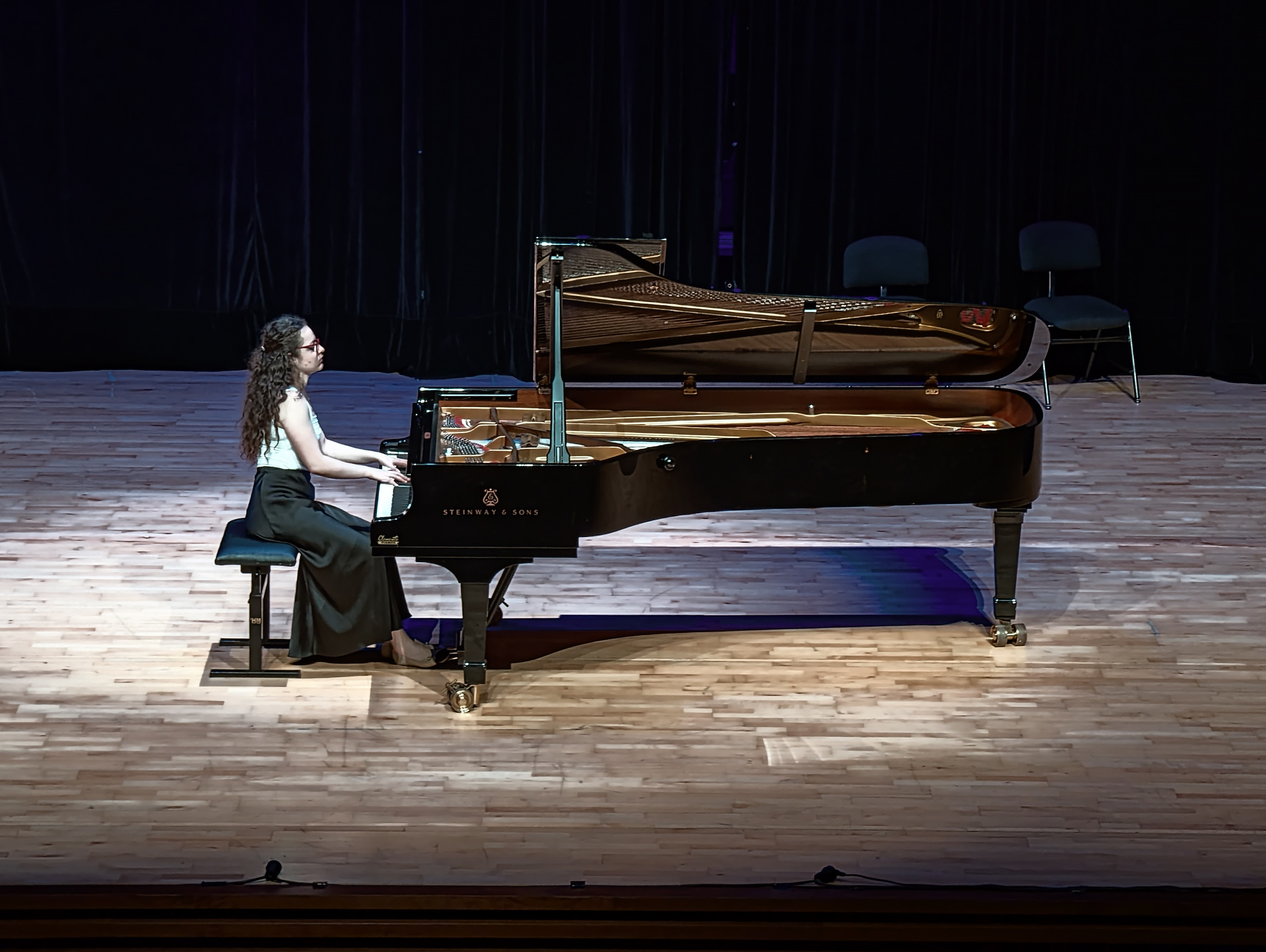
In 2025, I received an important offer from a manager in Istanbul to present a recital series dedicated entirely to Scriabin’s piano music. Several other significant opportunities followed in 2026, including the Piano Revenge Festival in Paris and concerts in Berlin. One of the Berlin recitals was presented by the Richard Wagner Verband Berlin, and there I performed Scriabin alongside works by Lili Boulanger.
Now, attempting to create a programme, I had one question in mind: How can I present Scriabin in a way as diverse as his music is? How can I give a glimpse of who Scriabin is in the span of 45- to 90-minute recitals? Throughout this journey, one of my aims that has been really important to me has been to present not only the easy-to-listen-to and well-known pieces; sometimes the pieces that would challenge the listener, stir the audience’s feelings in a way that it almost stings the soul and make them reflect, like a mirror, on their own depths of emotion and thought; so not only the most agreeable works, but a small portion of almost everything, what we can call Scriabin.
Much like Beethoven’s, his work can be heard in three broad periods. The early compositions, up to the Fourth Sonata, Op. 30, are more Romantic and often Chopinesque. Then comes what I think of as his Wagnerian period, when the Mystic Chord becomes established and his harmonic language, chord progressions and sense of form move far beyond what came before. In the late period, after the Fifth Sonata, Op. 53, a tonal centre and context progressively vanish. His ideas about what music was for, and why he wrote it, became almost frightening to some of his contemporaries. At the same time, his music opened a door for later composers whom it inspired, including Schoenberg, Webern and even Boulez.
Now, I know many musicologists or other specialists might disagree with several things said above, because the lines in his music are often somewhat blurred. It is still possible to find a relatively tonal or tone-centered phrase in the middle of a work written in the late period. It is also possible to find things composed to ‘undo’ certain things, or, as I like to see it, ‘challenge’ or ‘answer’ what he composed before, like in White Mass and Black Mass.
That is exactly why I wanted to present Scriabin’s music so extensively. His musical world is vast and complicated, much like his philosophy, his mysticism and what some writers have described as his “God complex.” My ambition is to invite listeners to encounter him from as many angles as possible: to find their own way of understanding his music, and perhaps to hear in it something that speaks to their own lives, an experience, a thought or a feeling they recognise.
Scriabin’s music sits at the intersection of pianistic virtuosity, colour, mysticism and an almost metaphysical search for something beyond sound. Which of these dimensions speaks most strongly to you as a young pianist, and how does it influence the way you approach his music at the piano?
I think the ‘almost metaphysical search beyond the sound’ is the part that interests me the most for now. I think creation, be it musical or non-musical, is not only a form of self-expression. Creating, as the word suggests, is something often associated with God. And Scriabin, in my opinion, often approached creating as a form of becoming one with the creator, the universe and the moving mechanism that makes simply everything work and breathes life into all beings.
His music therefore often seems to reach towards something beyond the physical world we experience through our five senses. Performing it can feel almost like touching a sixth sense, a kind of transcendental experience, and sometimes almost like meditation.
At the piano, this changes the way I think about performance. It becomes less about presenting myself and more about trying to remove the ego from the centre of the experience. Ideally, there are moments when you stop thinking primarily about your body, your technique or yourself as a performer and become absorbed in something much larger.
It is difficult to put into words without sounding a little mystical, but perhaps that difficulty is part of what keeps drawing me back to Scriabin.
Scriabin was constantly searching for a new musical language and ultimately for a completely new artistic universe. As a young artist developing your own voice, do you recognise something of your own artistic search in his? What are you currently searching for in music?
Perhaps what I recognise most strongly is the refusal to accept the instrument, or musical tradition, only at face value. I am obviously not searching for the same artistic universe Scriabin was, but I am very interested in how we can push beyond the most obvious physical characteristics of the piano.
The piano is, by nature, a vertical instrument. We press the keys vertically; the hammers strike the strings. We have no bow, no continuous breath. And yet beautiful music is very often created by thinking horizontally.
We cannot change the physics of the instrument, but we can learn to shape and manipulate sound so that a phrase is perceived horizontally- almost as if it were sung.
For me, one of the best ways to develop that is through playing with other instrumentalists and, perhaps even more importantly, with singers. They force you to think about breath, direction and line differently.
This connects to another thing I am searching for in music: a sense of creation that is not solitary. I believe one of the fundamental purposes of making music is to share it with other people. In chamber music, ensemble playing or working with an orchestra, I feel an immense joy in discussing, questioning and co-creating with people who share the same passion. In those moments, you become part of an “us” that is larger than any one musician.
Beyond Scriabin, you have already shown considerable eclecticism in your repertoire and artistic interests. Which composers, styles or musical worlds are particularly exciting you at the moment, and are there any unexpected directions you would like to explore?
There are several composers whose music has shaped both my professional and personal path.
I fell in love with Bach relatively early, and I think the contrapuntal way of listening that his music taught me even influenced the way I later connected with Scriabin. Chopin has also remained an important part of my musical world.
Not very far from Scriabin stands Rachmaninoff, whose music is extremely close to my heart. I remember many lessons while learning his Second Piano Concerto in which Prof. Guarrera spoke about long phrases and lyricism- about imagining written text behind instrumental music, almost as though one were playing a Lied or chorale. His approach, deeply informed by the Russian tradition, changed my understanding of piano playing considerably.
And beyond the music I played or learned at the piano, there is another form of music that deeply fascinates me-opera. I think it is important as a musician to listen and let yourself be captivated by the beauty of the music you do not necessarily perform also. Among my favourites are Aida and Otello by Verdi, Samson et Dalila by Saint-Saens, Ariadne by Strauss and Parsifal by Wagner. A little side note, Scriabin was also for a long time a big fan of Wagner, and the Mystic Chord probably would never have existed if the Tristan Chord had not 🙂
Competition success is one aspect of a pianist’s development, while concerts and artistic projects are another. Having received prizes at competitions in Chatou and Valencia, how have these experiences shaped you as a musician, and what have you learned from performing in front of juries and international audiences?
I will attempt to answer this question without referencing Bartók and the famous quote.
In fact, I think competitions are helpful for young musicians throughout various stages of their professional lives. I think they provide a certain push to expand your repertoire and limits, and to do it within a certain timeline. And as someone who enjoys pressure and the experience of learning from it, preparing for competitions overall has had a good impact on my development.
From another point of view, being fully honest, there was a certain time when I thought winning a major prize at a big competition could change my career in an unexpected way. I still think it can happen in the future if I decide again to compete at a major competition. There are musicians I know who experienced that, and I am genuinely happy for them. That being said, there are also many who won such prizes for whom this success did not necessarily lead to any particular further achievements, signings, deals, collabs etc.
As a matter of fact, nowadays pretty much any pianist who can go to such competitions is capable of preparing a vast repertoire to the expected level and beyond, and it is much more of a question of taste of a particular jury, or how the ‘stars align’ on the day and at the place you play. So for taking a competition as a single and particular moment, I think of it as not so different from gambling. The preparation leading to that moment, however, in my opinion, is something that every musician could benefit from experiencing, one way or another.
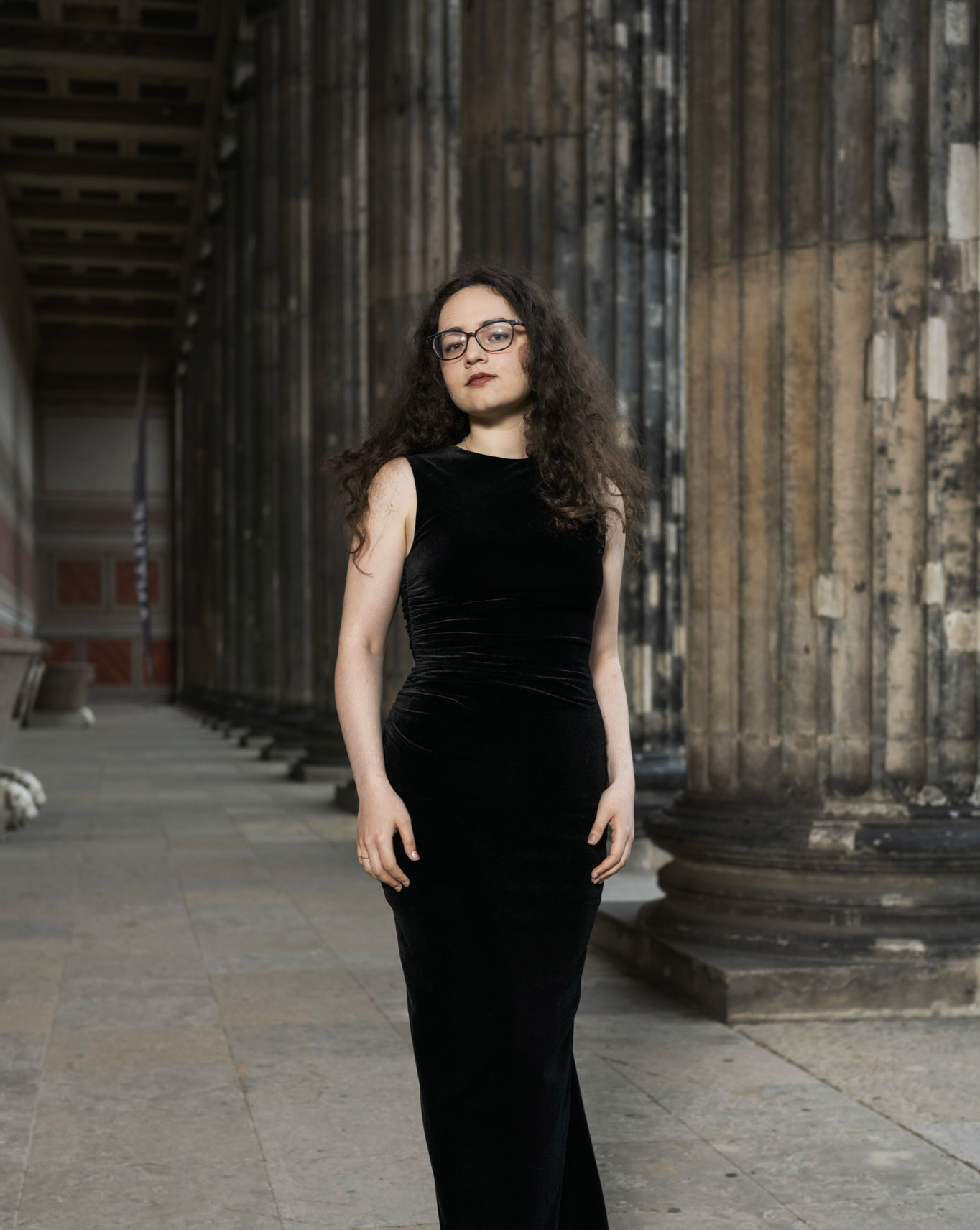
You are now at a fascinating stage of your career, between musical discovery and the construction of your own artistic identity. What projects are you currently working on — concerts, recordings, collaborations or new repertoire — and what can we look forward to from you in the coming months?
I am starting my master’s degree at the Hochschule für Musik und Theater “Felix Mendelssohn Bartholdy” in Leipzig, and I’m excited to begin this next chapter in a city with such a rich musical history.
My Scriabin project will continue this year. Several recitals dedicated to his music are currently being planned, with completely fresh repertoire. I would also love to return to a future edition of Piano Revenge with a selection from it.
I’m preparing two other recital programmes spanning Bach to contemporary music, including pieces that will receive national or international premieres. I will also appear as a soloist with orchestra in Rachmaninoff’s Second Piano Concerto and, later, Beethoven’s Emperor Concerto. I can’t share all the details yet, but I’ll announce them on Instagram and Facebook when I can. 🙂
Istanbul, Paris and the international piano world have all been part of your musical journey. How have the different places where you have studied, performed and developed as an artist influenced your musical personality? Do you feel that your background in Istanbul remains present in the way you play?
I think every city in which I have lived, studied or performed regularly has added another layer to both my personality and my artistic identity.
Istanbul is the city where I was born, and growing up in a metropolis that is so colourful, multicultural, loud- in the best possible way- and crowded certainly left its mark on me. I think experiencing Istanbul as a child is partly what made me so drawn to travelling, discovering new cultures, meeting different kinds of people and eventually feeling at home in another city with a similarly intense energy: Berlin.
“Home,” for me, is a relatively fluid concept. I feel at home wherever I have important memories, people I love and something meaningful to return to. After a long time, Berlin became the first place I consciously felt I could call home, and I think it will remain that way for me. I have actually thought so much about this subject that I wrote an entire Substack article about it called The Art of Suitcase Life.
My Istanbul background is perhaps most audible when I play Turkish composers. There is a fascinating generation of composers, particularly from the early Republican period, who studied European harmony and orchestration and then used those tools to engage with Turkish folk songs and local musical traditions in instrumental and symphonic music. I have played works by composers such as Erkin, Baran and Saygun, and from a later generation, Fazıl Say.
Turkey continues to produce remarkable composers today. When I play this repertoire, I think my background becomes present in a very particular way: some of these melodic shapes or inflections already live somewhere in my memory because I grew up hearing related sounds in old folk songs.
Beyond geography, however, the teaching traditions I encountered have probably shaped my artistic identity just as much. My first teacher in Istanbul was a Bach specialist; Prof. Rouvier introduced me deeply to the French école; and my two most recent professors, Prof. Wendebegr and Prof. Guarrera brought strong German and Russian traditions into my musical education.
I became so fascinated by the differences between these approaches, not only through my own teachers, but also through masterclasses and observing other professors, that they eventually inspired my bachelor’s thesis. I compared aspects of the Russian and French piano schools through the teaching philosophies of two of their great representatives: Heinrich Neuhaus and Alfred Cortot.
So I would say my artistic identity is less the product of one place than of many places, languages, teachers and traditions that have gradually become intertwined.
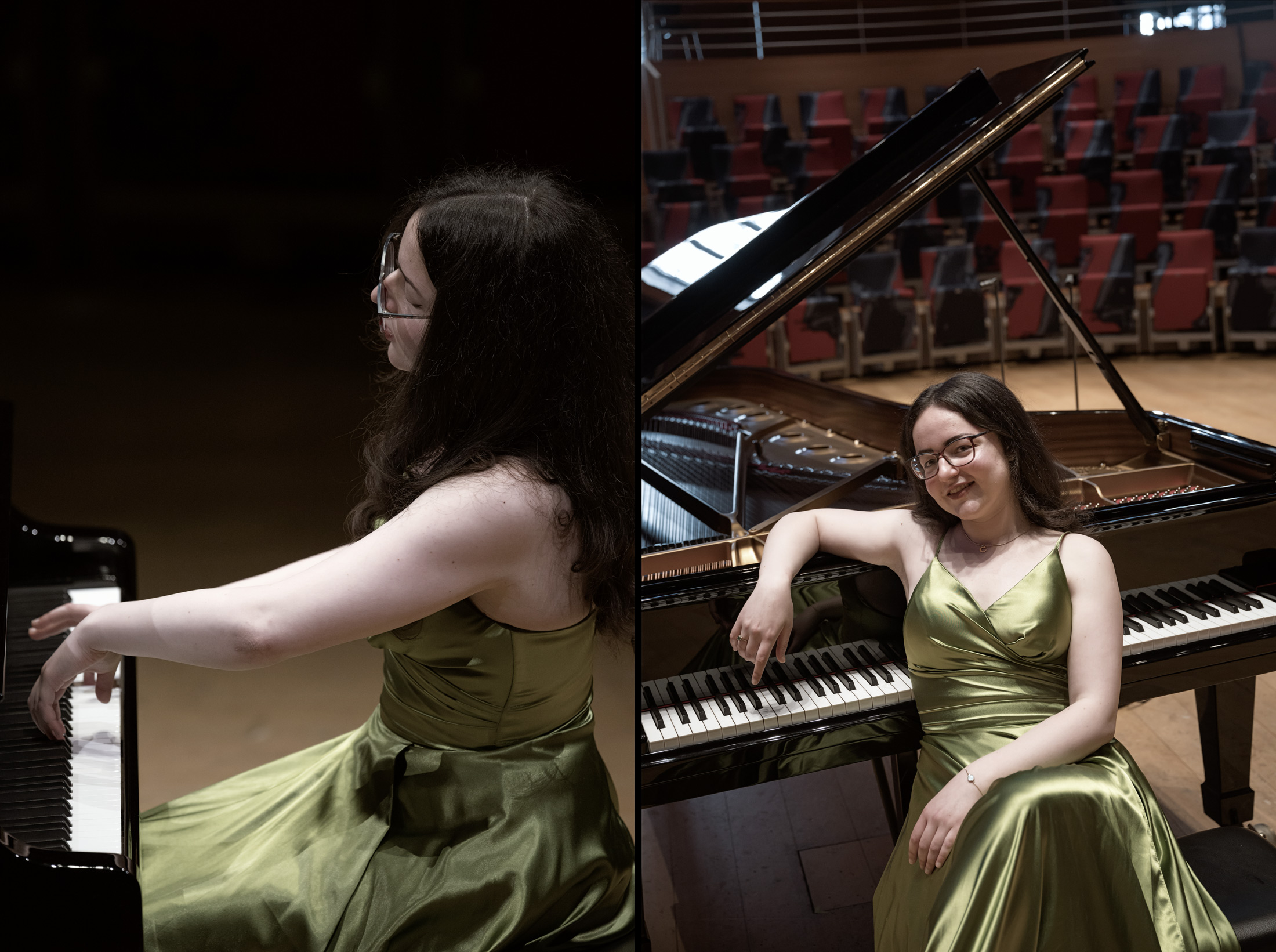
At Piano Revenge, we are particularly interested in artists who are not simply reproducing the established piano repertoire but are searching for new ways of connecting with audiences and with music. What do you believe makes a piano performance truly memorable today, and what would you like an audience to take away after hearing you play?
I remember seeing once an interview of Igor Pogorolevich from his younger years where he says his music is not entertainment. Music is never entertainment. It always serves a purpose. And contrary to common belief, now more than ever before. Let’s think about it for a second: we are sad and taking a walk while it is raining. What do we reach for? We put on our earphones and search for our comfort song or piece. We are happy and want to celebrate. What do we do? We sing and dance.
I also believe that when we give a concert, the audience does not only come to the concert hall to hear some random piece they could easily put on their speaker at home just for the music itself.
They sometimes come there to find meaning, or find themselves. And most importantly, they come because they want to experience our take on it, what we have to say with that piece of music, and they come to feel it live, with tens, hundreds, or thousands of other people in the room.
In my own concert programmes, I always try to find a storyline, an arc people can follow and relate to. I try to find meaning and my own voice in the pieces I play, and pass it to the audience. I also find, for the very same reason, curating your own programme and speaking on stage extremely valuable. Even as a trained musician knowing the background story of certain pieces, when I attend a concert, I am very happy to listen when the musician explains why they chose to pair certain pieces with certain others, why they constructed the programme in a specific way or why in the first place they play a specific composer or piece.
If people leave one of my concerts having felt something strongly, discovered something they want to hear again, or simply begun thinking about a piece differently, then the concert has continued beyond the moment the final note disappeared.
Looking ahead, what is the next chapter for Cansu Naz Eriş? What dreams, artistic collaborations or repertoire would you most like to realise in the next few years — and where would you like your journey with Scriabin to take you next?
One thing I definitely want to do in the short-term future is to record all piano music by Scriabin. I am planning to expand my repertoire by learning all the pieces and playing them in recitals in the next four to five years, and am also actively searching for a recording house that would make the recordings happen in the last year or two of the concerts.
Besides that, I am deeply fascinated by new(er) music and working with living composers, giving a piece its very first performance onstage. The creation of a work written specifically for a performer – for their personality, their technical and musical strengths, and even the areas that challenge them – feels deeply personal to me. There is something almost sacred about being present at the very beginning of a work’s life.
Alongside performing, I want to make classical music more accessible and encourage people to discover their own curiosity about it. I also want to build a community where musicians and other artists can meet, share ideas and create together.
That is the dream behind It is Music to My Eyes, a project I recently started about the relationship between music and other art forms. Through writing, interviews and social media, I explore how artists influence one another and what new projects or concert formats might grow from those encounters. I hope to keep building it into a place where people find inspiration – and find each other.