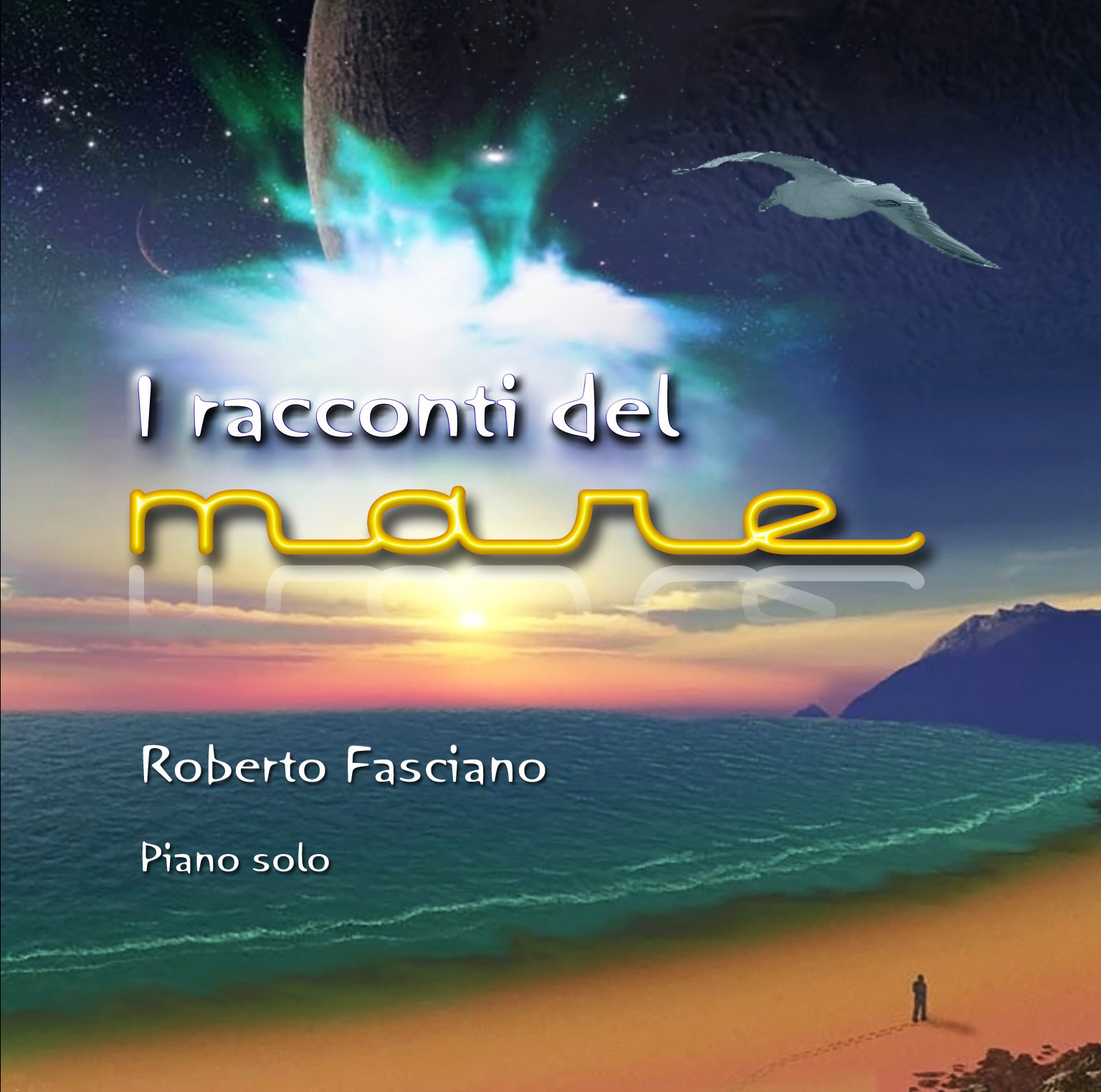
Roberto Fasciano: I racconti del mare
Where the Sea Becomes Music
Album Review | I racconti del mare
There are landscapes that remain with us long after we have left them. A particular quality of light, the rhythm of waves against the shore, the distant line where water meets sky: such impressions can become inseparable from memory, returning years later with an intensity that the passage of time cannot diminish. In I racconti del mare, Italian composer and pianist Roberto Fasciano explores this intimate territory, transforming his lifelong relationship with the Mediterranean into eleven original compositions for solo piano.
First composed across different periods and brought together in their definitive form in 2007, the collection is more than a musical portrait of the sea. It is an exploration of the relationship between landscape and consciousness, between what we see and what remains hidden beneath the surface. Fasciano does not simply seek to reproduce the movement of water or the force of the wind. Instead, he draws on the sea as a source of musical ideas, allowing its changing moods to inform the development of melody, harmony, rhythm and atmosphere.
Music can give form to memories that resist ordinary language.
The result is a cycle whose pieces possess individual identities while sharing a common imaginative world. Its narrative begins with Alba sul Mediterraneo and eventually arrives at Pensieri sommersi. Between these two points, the listener encounters a succession of musical perspectives: the intimacy of Il Canto del Mare, the more elemental character suggested by Grecale, the openness of Orizzonti and the nocturnal reflections of Riflessi di Luna. The titles provide an entrance into this world, but the music itself is intended to go beyond illustration, leaving space for associations that are personal to each listener.
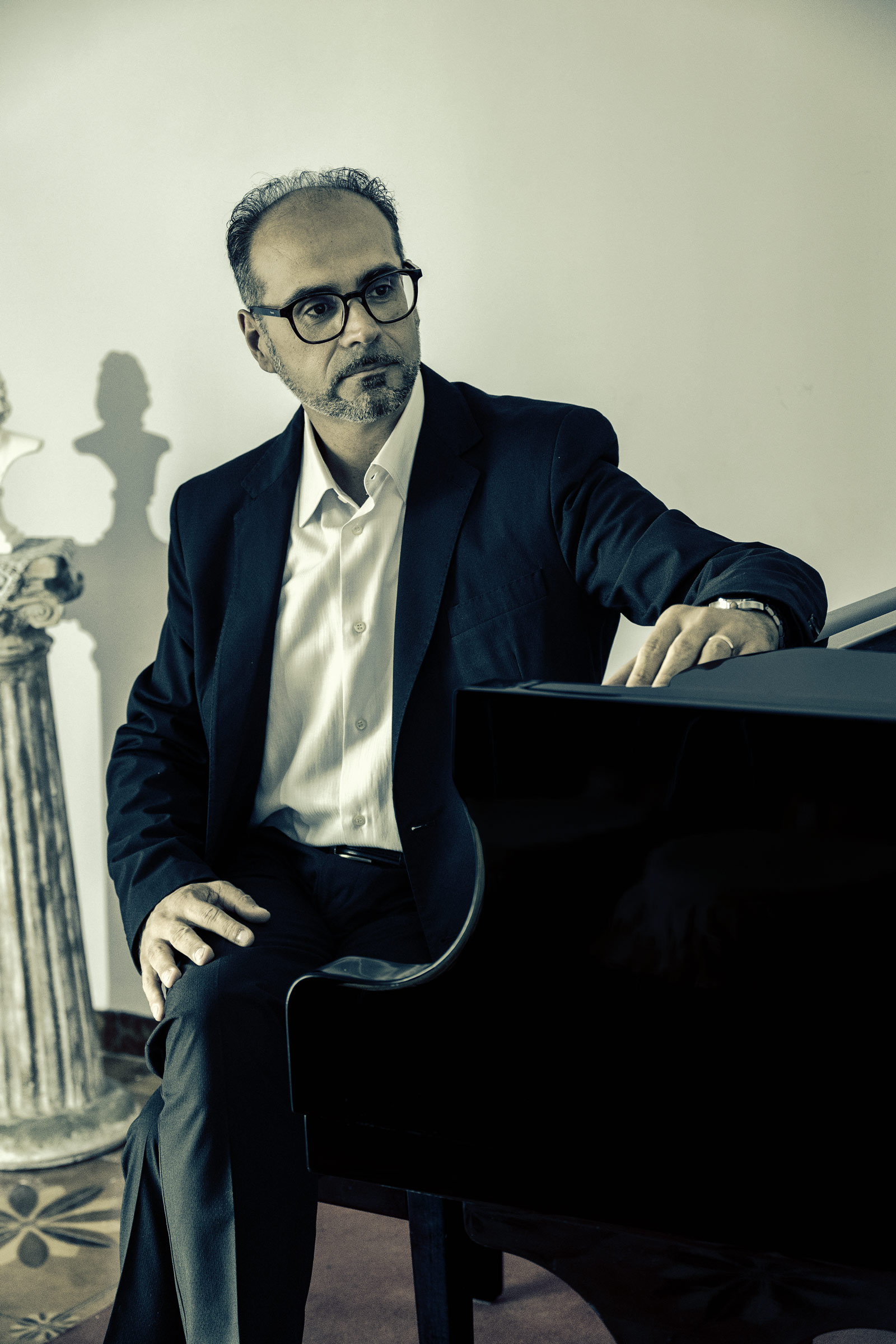
A piano that breathes, sings and moves
At the heart of Fasciano’s writing lies a close relationship between melody and harmony. Neither exists simply to accompany the other. The melodic line gives direction to the music, while the harmonic language determines its colour, emotional temperature and sense of movement. The piano consequently becomes a remarkably flexible narrative instrument, capable of suggesting both physical motion and the quieter fluctuations of thought.
Il Canto del Mare offers a particularly revealing example of this approach. Its lyrical character rests on a singing melody supported by open, spacious arpeggios. The music develops through a contrast between the relative calm of its principal material and a more animated central passage, where rhythmic figures introduce a gentle increase in energy before the opening character returns in a varied form. The effect is not a simple repetition, but a return coloured by what has happened in between.
This interplay of continuity and transformation is central to the collection. A musical idea can reappear with a subtly altered emotional meaning, just as a familiar stretch of coastline looks different under another sky. Fasciano’s attention to extended harmonies and changing tonal colours gives his melodic writing room to breathe, avoiding the need for dramatic gestures at every turn. Expression emerges through the relationship between notes, through the tension of a harmony that has not yet settled and the resonance that remains after a phrase has ended.
The piano’s different registers also contribute to this sense of space. Broadly dispersed arpeggios can establish an open sonic environment, while a melody in the upper register seems to emerge from it, independent yet intimately connected to the underlying movement. The instrument is not merely producing a sequence of notes; it is creating an acoustic landscape in which foreground and background continually interact.
Between the force of the wind and the stillness of moonlight
The collection gains much of its character from the contrasts between movement and contemplation. Grecale, associated with the powerful northeastern wind, represents one of its more energetic and physically charged moments. Here, the natural world is not a tranquil setting but a force that shapes and disturbs the surrounding space. Rhythm becomes an important expressive element, translating the idea of wind into musical momentum and tension.
Such passages matter because they prevent the Mediterranean from becoming an exclusively nostalgic or sentimental image. The sea can be inviting, but it can also be restless and unpredictable. Fasciano’s musical imagination accommodates both possibilities, allowing energy and turbulence to coexist with lyrical expression.
At the other end of the emotional spectrum stands Riflessi di Luna, a contemplative nocturne built around the image of moonlight reflected on water. Its gently unfolding arpeggios, transparent melodic line and modal harmonic colours create a sense of suspension. The music appears to move without needing to arrive anywhere in a hurry. Subtle rhythmic changes and shifts in harmony disturb the stillness just enough to keep it alive, while the return of earlier material near the conclusion gives the piece a feeling of recognition rather than simple closure.
The distinction between these two musical worlds is significant. Fasciano does not rely on a single formula for evoking the sea. Instead, the expressive possibilities of the piano change with the subject: one composition draws energy from movement, another from the delicate instability of light and reflection. What unites them is an interest in translating an impression into musical structure rather than merely assigning a descriptive label to it.
Music as a landscape of memory
Other titles suggest a more explicitly inward dimension. Orme evokes traces left behind, while Al Crepuscolo occupies the threshold between daylight and darkness. Orizzonti looks towards the distance, and Pensieri sommersi turns attention towards what lies beneath the visible world. Taken together, these images suggest a cycle concerned not only with nature, but also with time, absence, expectation and the persistence of experience.
The importance of Orme lies in the idea that a trace can survive even as its original form disappears. Its flowing, recurring musical gestures and flexible phrasing connect movement with the possibility of erasure. In Al Crepuscolo, the expressive world is quieter: a lyrical melody unfolds above spacious accompaniment, while harmonic extensions lend the music a modern, gently shifting colour. The changing pace of the music reinforces the impression of a moment suspended between what has passed and what is about to begin.
The images are invitations rather than instructions.
These compositions reveal the poetic dimension of Fasciano’s work without requiring the listener to follow a fixed programme. One may recognise a coastline, a memory of travel, or a particular hour of the day; another listener may hear something entirely different. The images are invitations rather than instructions.
This openness is one of the collection’s defining ideas. Fasciano’s music seeks emotional communication without abandoning compositional thought. Its lyricism is supported by attention to harmonic detail, rhythmic articulation and the expressive potential of resonance. The performer, too, has an important role: phrasing, tonal balance, timing and the management of the piano’s lingering sound help determine how each musical narrative unfolds.
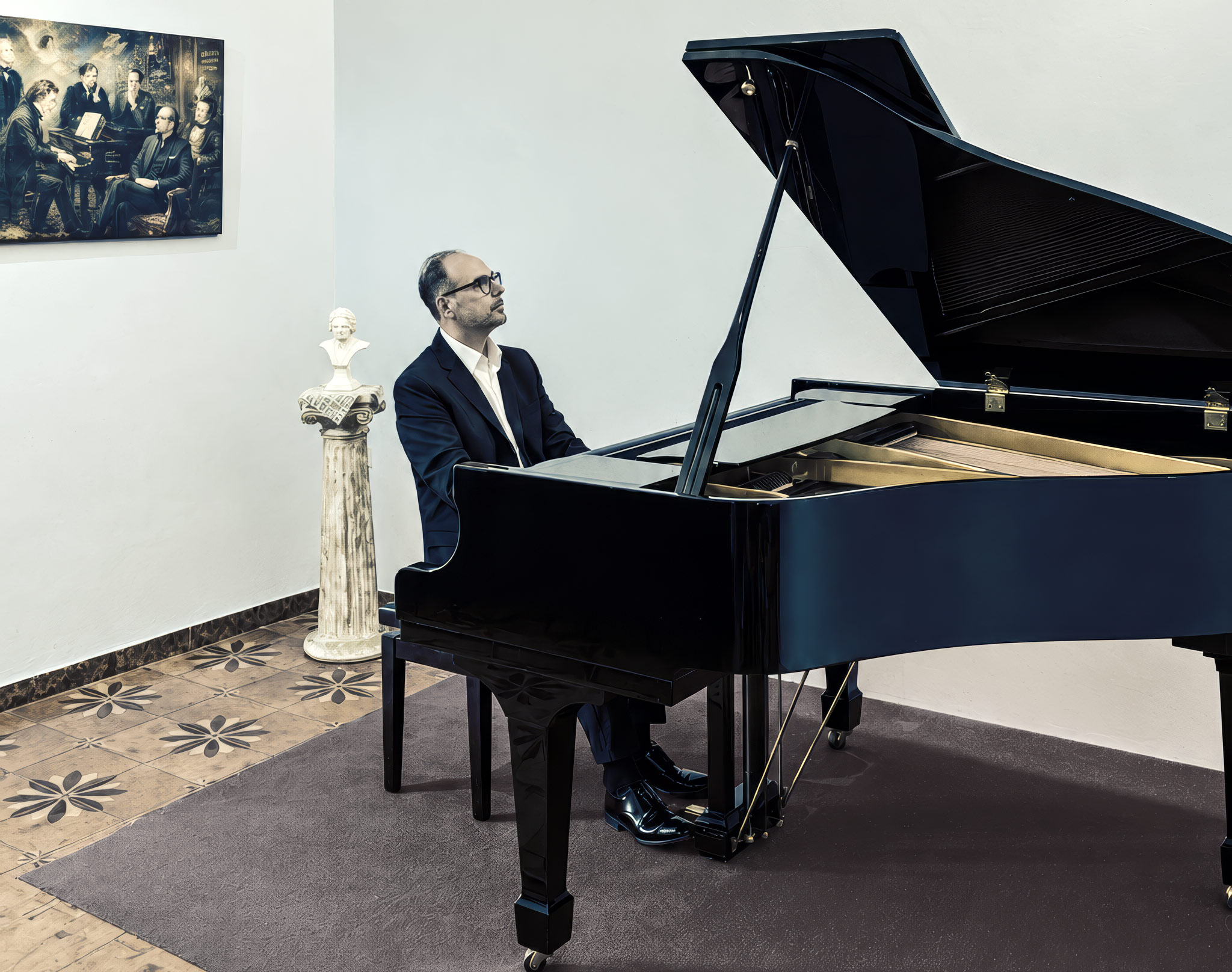
An enduring relationship with the Mediterranean
In his own reflections on the collection, Fasciano describes the sea as a presence that has accompanied him since childhood, shaping his perception of light, wind, silence and distance. This personal connection gives I racconti del mare its underlying coherence. The Mediterranean is not presented as a stylistic category, nor does the composer seek to reproduce a collection of familiar regional gestures. It is a lived experience that has gradually become part of his musical language.
The collection therefore occupies an interesting position between tradition and contemporary expression. Its emphasis on melody offers an immediate point of contact, while its harmonic explorations and changing textures invite closer attention. The music can be approached through its imagery, but it also rewards consideration of how its ideas develop and how contrasting musical characters contribute to the larger cycle.
Ultimately, I racconti del mare is concerned with something more elusive than the sea itself: the way places become part of us, and how music can give form to memories that resist ordinary language. From the first light of Alba sul Mediterraneo to the inward reflections of Pensieri sommersi, Fasciano constructs a world in which the external landscape and the inner life continually meet.
A world of movement and stillness, of luminous surfaces and unseen depths.
It is a world of movement and stillness, of luminous surfaces and unseen depths. And like the sea that inspires it, the collection leaves something beyond its final notes: an invitation to listen again, and to discover what may have been hidden beneath the surface all along.
Editor’s Note
With I racconti del mare, Roberto Fasciano invites us to discover a personal musical landscape shaped by the Mediterranean, where the piano becomes a meeting point between memory, nature and imagination. As we prepare to welcome Roberto to Piano Revenge Days in Marsala in November 2026 and to Piano Revenge Days — Île Saint-Louis in Paris in April 2027, we are pleased to introduce our readers to a composer whose work offers a thoughtful and individual perspective on contemporary piano music.