Telin Is Making Space for Contemporary Piano
The London pianist, composer and founder of Piano Space on live connection, restless curiosity and the music that happens when a room begins to listen.
London has never been short of music. Between intimate live rooms, open-mic nights, concert halls and the free lunchtime recitals scattered across the city, there is always another performance to find.
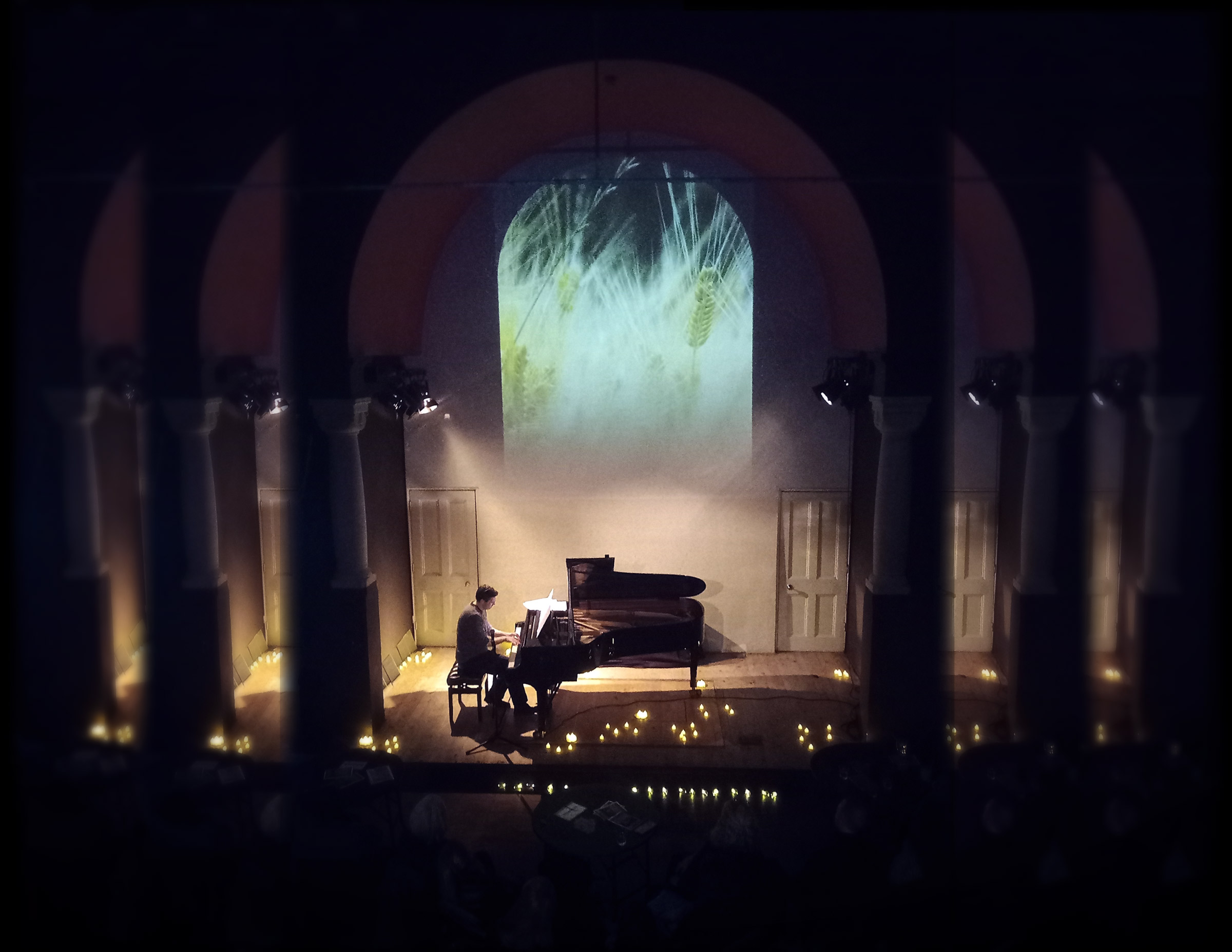
But abundance is not the same as belonging. For London-based pianist and composer Telin, one part of the city’s musical life remained conspicuously absent: a dedicated space for contemporary and neoclassical piano music to be heard collectively, and heard live.
That gap became Piano Space, a concert series bringing pianists, composers and listeners into the same room. It is an idea that sits naturally alongside Piano Revenge’s belief in the piano as a contemporary instrument — a vehicle for experimentation, intimacy and collaboration, transformed by the presence of an audience.
In this conversation, Telin traces the instincts behind Piano Space, the many musical worlds that inform his own work, and the process by which a piece moves from a loose idea towards performance. He also looks ahead to a special two-day Piano Revenge collaboration in London in January 2027. The exact dates and venue will be announced at a later stage.
Interview: Telin
PianoRevenge MAG: You created Piano Space in London. What did you feel was missing, and what made you decide to build the series yourself?
Telin: I have seen a lot of live music in London over the years. There are plenty of opportunities for bands or solo performers at small gigs and open-mic nights, and a wide variety of concerts for traditional classical music, including lots of excellent free lunchtime concerts.
But I couldn’t see many spaces for modern neoclassical or contemporary piano music, even though it’s an extremely popular genre for listeners on streaming services.
I also knew that there were a lot of amazing pianists and composers based in London and thought it would be great to be able to meet them. Having contact through social media is great, but nothing beats in-person connections!
I had seen Simeon Walker’s success over the years with the Brudenell Piano Sessions in Leeds, and it felt like something similar in London could work really well. As no one else seemed to be doing it, I thought I would give it a go!
PianoRevenge MAG: Piano Space has brought audiences into contact with very different approaches to contemporary piano. What have those artists taught you?
Telin: There have been lots of different approaches from the artists we have had — from simple melodic pieces to dramatic narrative performances; intricate compositions to fully improvised sets; music that emphasises space and atmosphere and music that builds on rhythmic patterns.
I think there are lots of common influences: Impressionism, Minimalism, film composers, the melodies and chord progressions of popular music. What is interesting is how artists combine these elements and end up with completely different results.
What excites me most are the little moments that stand out, where a certain texture or combination of rhythm and harmony can sound fresh and capture the imagination.
The room matters
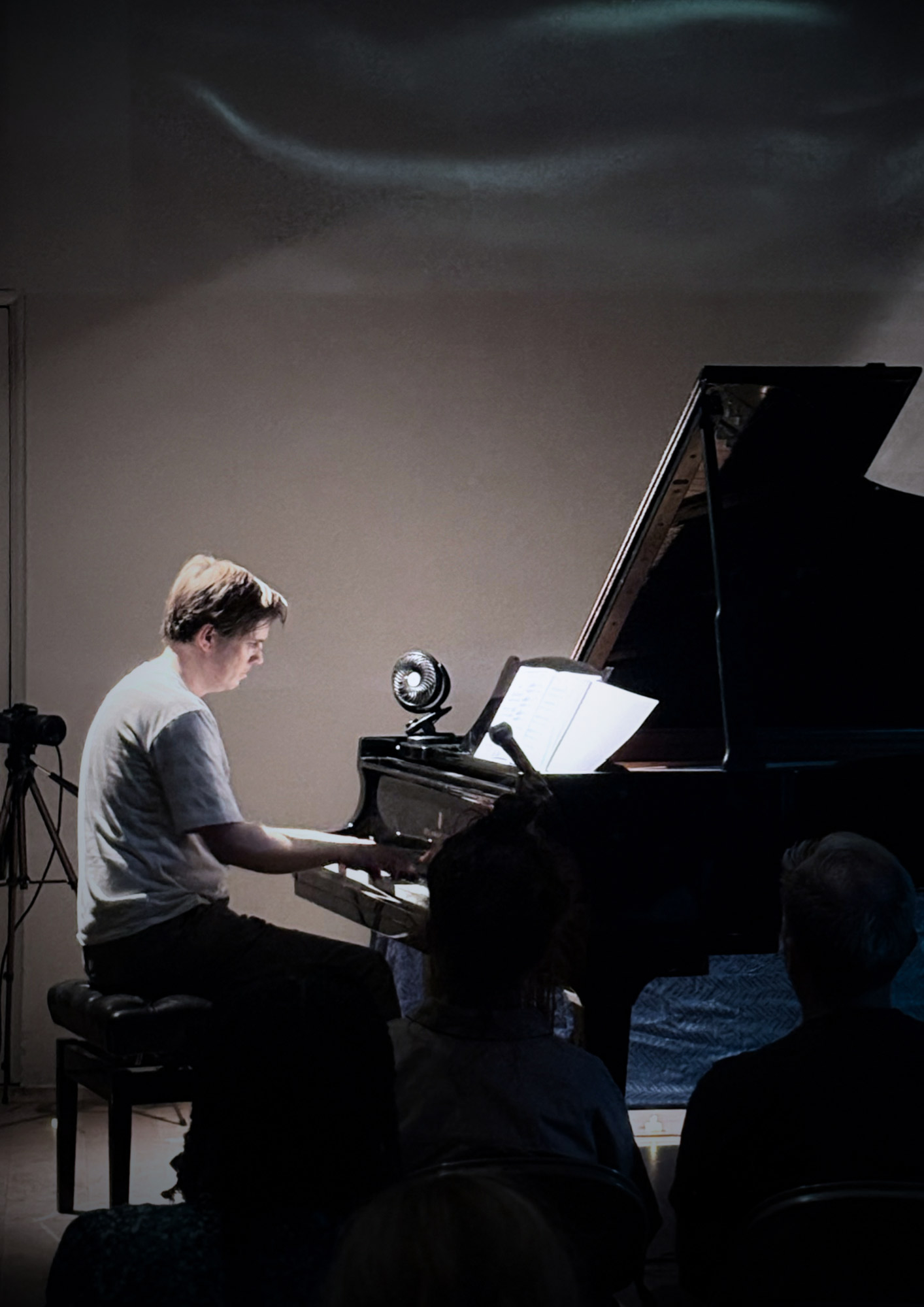
For Telin, live music is not simply a recording transferred into another format. The room, the performer and the audience make each moment newly specific.
PianoRevenge MAG: What happens to a composition when it leaves the studio and enters a room with an audience?
Telin: I think compositions immediately feel different when they are experienced live.
I’ve noticed before how even listening to my own recordings with other people can make me hear them in a different way, and I think playing them in front of an audience takes this to another level.
There is definitely something special about live music and the uniqueness of each moment. This is even more the case with pianists playing their own compositions.
In the age of AI, I think it is even more important that artists have an opportunity to stand out with something unique. I think audiences will also place even more value on a connection with the artist, and being able to share in live performances is one of the best ways of doing this.
A music made from many influences
PianoRevenge MAG: Your musical background crosses classical music, jazz, popular music, composition and synthesizers. How have those experiences shaped the artist you are today?
Telin: I have always loved a wide range of music.
When I was starting to learn to play the piano, I would be working on classical pieces for lessons, trying to work out how to play my favourite songs by ear, and working on my own compositions.
I learnt a lot at university about different compositional techniques, how to develop an idea and the importance of structure. Alongside that, I was playing jazz, which helped develop my improvisational skills and understanding of harmony.
Then, when I played synths in bands, that brought its own lessons — how to come up with an interesting line on a monophonic bass synth, finding melodic hooks to fit around a vocal line, realising when to play and when to leave space.
I still listen to and play all sorts of music. The pieces I release as Telin have a particular sound, but I think I am always drawing ideas from other areas and trying to find a combination that feels like my particular sound.
How a piece takes shape
PianoRevenge MAG: When you sit down to compose, where does a piece usually begin?
Telin: There are a few different things that are key to my writing process: strong melodic lines, interesting rhythmic patterns and harmonic progressions that take unexpected turns.
The starting point for a piece could be any number of things, but once I have begun I am always experimenting with different voicings, different ways of playing the material, trying to develop a narrative that takes the piece through a progression of light and shade.
There are so many variables in music, and the smallest change can alter the way the composition feels. Not least because music happens over time, and what happens just before or after a musical idea changes the setting and the way it sounds.
I’m always fascinated by how a piece takes shape, starting out as loose ideas and gradually becoming more fixed until you commit to a final version.
And then it takes on a whole new life when it gets performed.
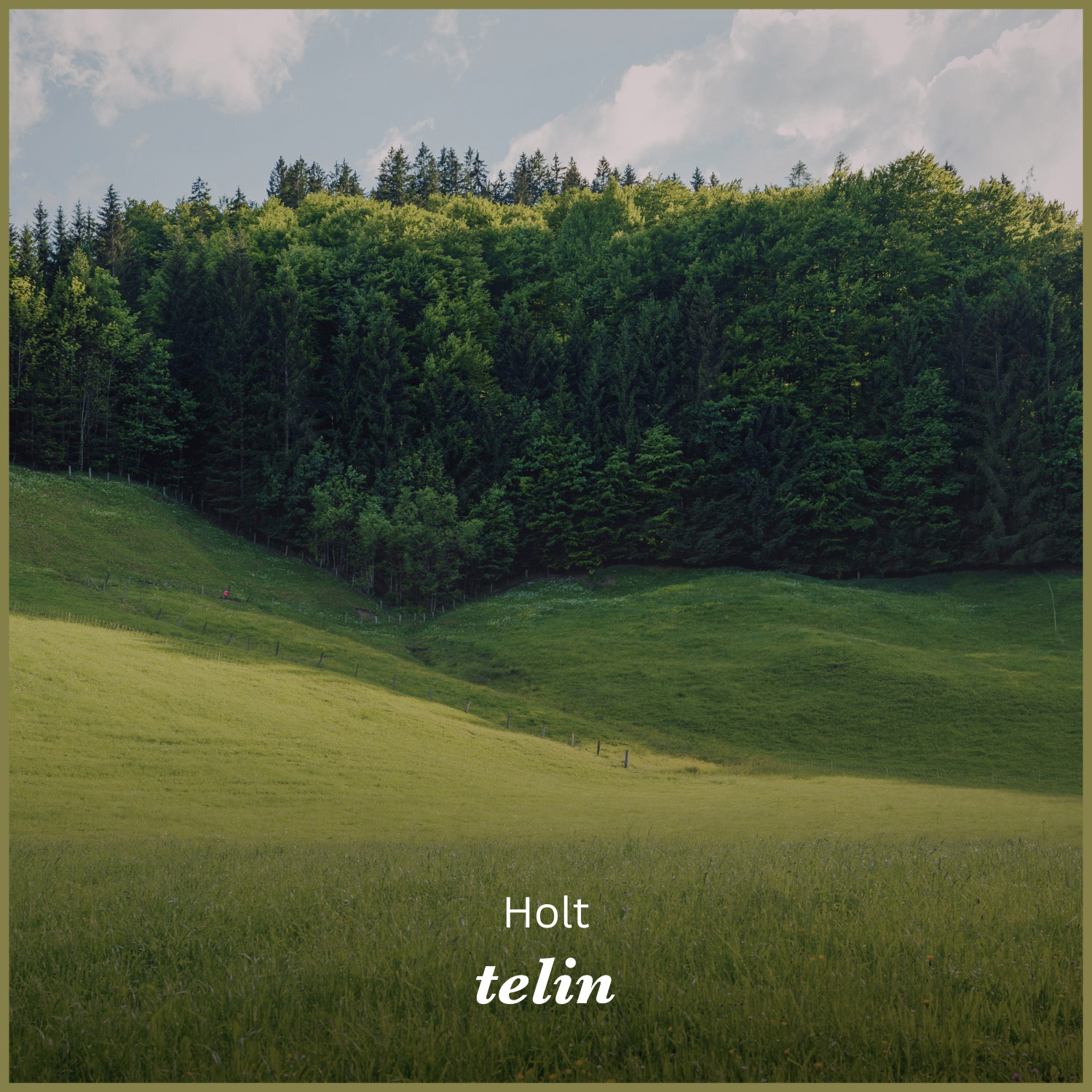
PianoRevenge MAG: One of your pieces, “Holt”, has a particularly peaceful and contemplative character. What can you tell us about its origins?
Telin: “Holt” is an old English word for a small wood, a grove of trees, or a wooded hill.
The initial idea for the piece felt like a peaceful daydream, and the feeling of settling in a resting place was in my mind as I developed the theme.
I like the fact that the rhythm is lightly syncopated, but because of the gentle pace and the repetition, it still feels restful and trips along gently.
This isn’t a piece that is led by a strong melodic theme, more a gently rolling motif that shifts in mood as it falls over different chords.
Listening across traditions
PianoRevenge MAG: Your harmonic language draws from both classical and popular traditions. Which composers and musicians continue to inspire you?
Telin: Debussy was a master at creating wonderfully evocative atmospheres.
He was amazing at doing this with an orchestra — Prélude à l’après-midi d’un Faune made a big impression when I first heard it as a child — and also with solo piano.
I think he is unique as a composer in the way that he explores the range of different sounds that a piano can produce and the subtleties of overtones and texture.
Plus, all those gorgeous seventh and ninth chords!
Joni Mitchell also has a very distinctive writing style, and I love the unusual harmonies she finds with surprising inversions and all kinds of different chords over pedal notes.
I think lots of her songs came about from experimenting with different tunings on the guitar. In fact, one of the things I love about learning songs by songwriters who write on guitar is that they often come up with progressions that wouldn’t be obvious on the piano.
There is something about moving up and down the neck with parallel chord shapes.
I record a lot of piano covers of my favourite songs to put on my YouTube channel, and there is always something to learn from a well-crafted song, as much as from a Bach or Chopin Prelude.
When I compose my own pieces, I bring elements of all these things together and try to write melodies as if they were to be sung.
The piano as companion
PianoRevenge MAG: What can audiences expect from you over the coming months?
Telin: I have lots of new releases planned for the coming months and will be going into the studio again soon to record a batch of compositions, hopefully for a new album.
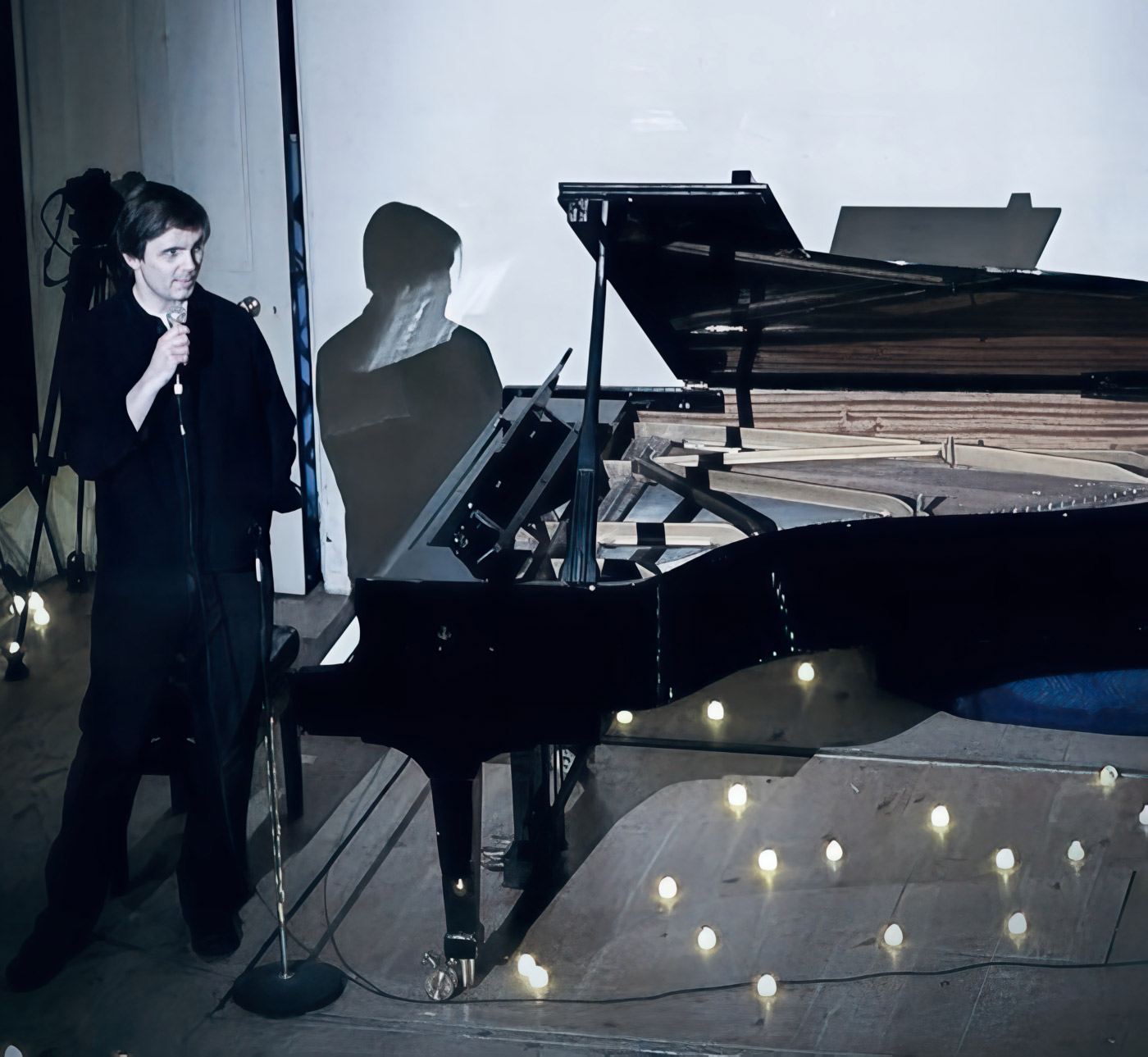
There are lots of fantastic artists lined up for Piano Space events through into 2027, and I am really looking forward to combining forces with Piano Revenge for a special couple of days in London in January!
One of the things I’ve really enjoyed doing for Piano Space is writing piano duets to play with other performers. It’s a fun compositional challenge and also a great way to collaborate with other musicians.
It’s definitely something I plan to keep doing!
PianoRevenge MAG: What makes collaboration interesting to you as a composer?
Telin: There is something very different about writing for two people and then actually sharing the piano with another performer.
It becomes a conversation. You have to think about the other player, about how the parts interact, and about how the music can develop between two people.
That is part of what makes live performance so exciting. A composition can have a fixed form, but the people performing it bring their own interpretation, energy and interaction.
PianoRevenge MAG: Finally, what does the piano mean to you personally?
Telin: Playing the piano for me has always been many things — an emotional outlet, a meditative practice, an intellectual pursuit and a creative opportunity.
Whether I am playing classical repertoire, improvising or composing, the piano is the perfect companion.
The creative side is one part of this, but a very satisfying one.
Sometimes I sit and play and wait for ideas to emerge. Sometimes I want to express a particular feeling and it’s a search for the right sounds.
Other times I come back to a store of ideas and see if anything captures the imagination and takes off in a new direction.
If I feel like I need to find out where an idea will lead, then I know it’s worthwhile.
Beyond the piano
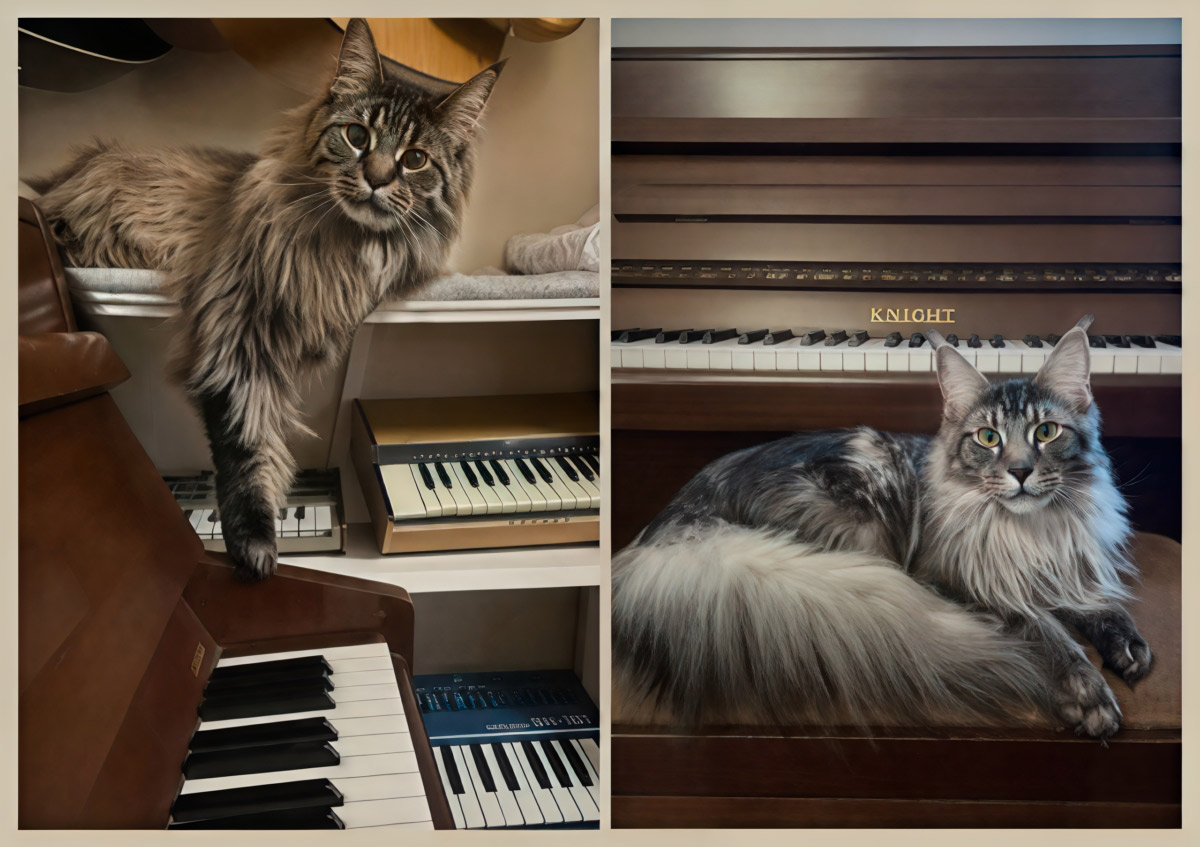
For all the concentration involved in composing, performing and curating a concert series, Telin’s creative world also has room for two less predictable collaborators: his cats, Griffin and Bartok.
Griffin is round-faced, mischievous and affectionate. His brother Bartok has angular features and, in Telin’s description, a rather spiky personality. The name Bartok feels particularly appropriate in a pianist’s household.
“I think having cats around makes everything better,” Telin tells us. “There is a simple, joyous connection that relationships with pets bring that can lift you outside of any frustrations in life or work.”
There is an occupational hazard to this particular arrangement: a cat around while composing or playing can occasionally mean a chewed cable. Even the most carefully constructed musical environment needs a little chaos.
Telin × Piano Revenge: looking ahead
The conversation between Piano Space and Piano Revenge will soon move from the page into the concert room. In January 2027, Telin will collaborate with Piano Revenge for a special London event spanning two days. The exact dates and venue will be announced at a later stage.
For now, the collaboration represents something particularly fitting: two initiatives born from the same desire to create opportunities for contemporary piano, to connect artists beyond the digital sphere, and to remind audiences that this music is not simply something to stream.
It is something to experience. Something to share. Something that changes when a pianist sits down at the instrument and another person is there to listen.
And, perhaps most importantly, something that can still surprise us.
Editor’s Note
From the Editor of Piano Revenge Magazine.
Telin’s creative philosophy intersects naturally with the spirit of Piano Revenge. His story is not simply about composing or performing; it is about creating the spaces in which music can exist, and the opportunities for musicians to meet, collaborate and build genuine connections with audiences.
At a time when music can be created, distributed and consumed almost entirely through screens, Telin reminds us of the importance of the room: the physical space, the acoustic, the performer, the audience and the unpredictable moment that exists only once.
His music draws from Debussy, jazz, songwriting, electronic music, popular harmony and the small discoveries that happen when a musician experiments at an instrument. There are no rigid boundaries here. Instead, there is curiosity — precisely the kind of artistic curiosity we want to celebrate at Piano Revenge Magazine.
This interview is only the first chapter. In January 2027, Telin and Piano Revenge will bring their shared belief in live contemporary piano to London. The dates and venue remain, for now, under wraps.
The piano revenge continues in London.