Beyond the Circle: Tommaso Farinetti and the Sound of Conscious Attention
There is a particular difficulty in reviewing an album born from improvisation: how do you write about music whose starting point was, precisely, an attempt not to decide in advance what the music should become?
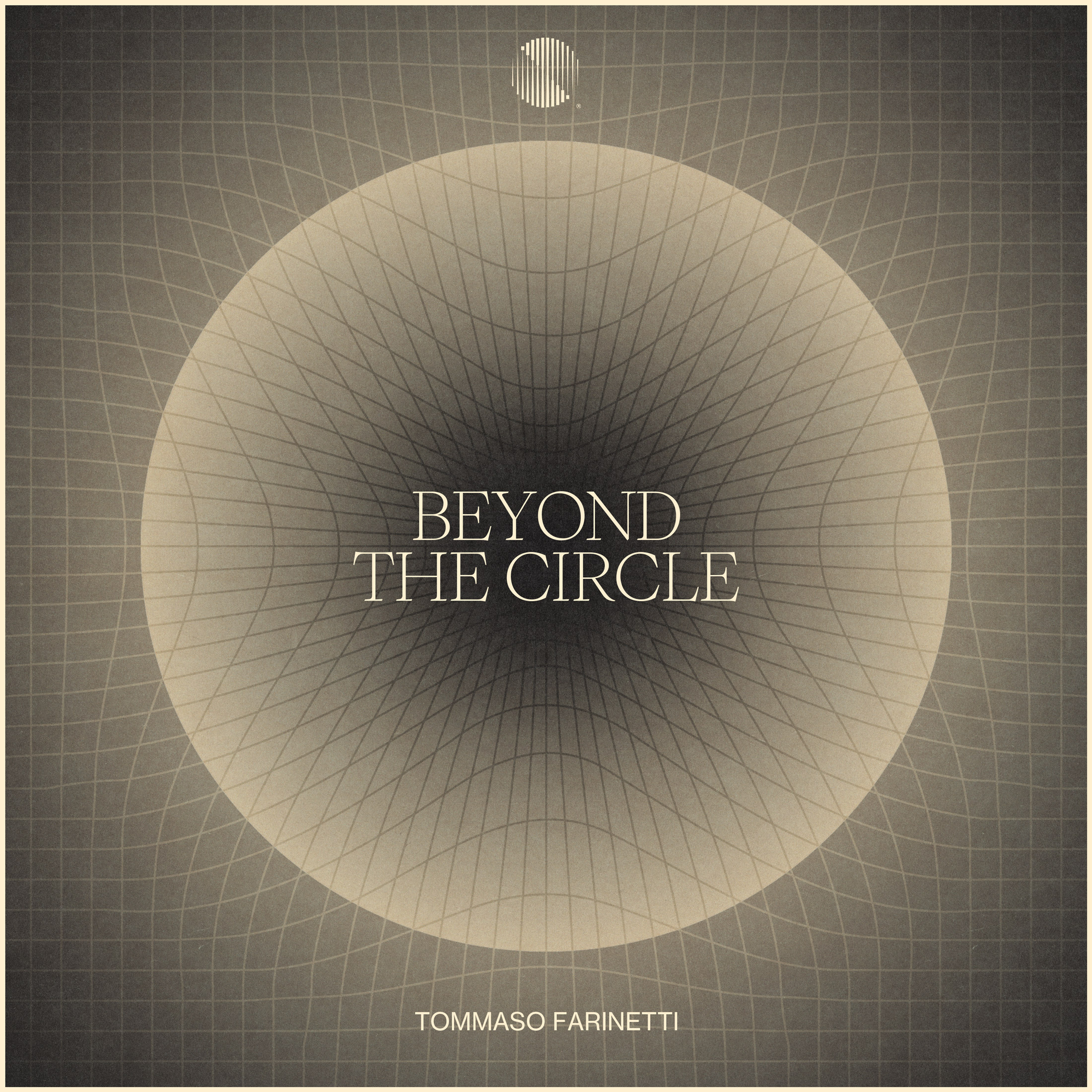
With Beyond the Circle, Italian pianist and composer Tommaso Farinetti places that question at the centre of the listening experience. Released in May 2026, the album unfolds across sixteen short piano pieces, moving through titles such as Waiting, In the Breath, Still Flash, Fall and Return, Steady Gaze, Against the Stream, Self Remembering, Obsession, Presence, Hidden Line, The One Awake, Silent Geometry, At the Point, Absolute Zero and the closing title track.
The sequence itself suggests a vocabulary of attention: waiting, breathing, returning, resisting, remembering, becoming present.
Yet Beyond the Circle is not an album that simply illustrates these ideas. Its more interesting quality is that it seems to test them musically.
Farinetti explains that the pieces grew from improvisation sessions without predetermined material. His intention was to avoid familiar pianistic gestures, habitual harmonic solutions and pre-established forms, observing what happened while playing and responding in real time. The “circle” therefore becomes both a musical and psychological idea: the recurring patterns into which we instinctively fall, and the effort required to step outside them.
This gives the album a conceptual foundation, but crucially, the music does not require the listener to know it. That is where Beyond the Circle becomes most compelling.
The Piano Without a Map
Farinetti’s approach places the performer in an unusual position.
Improvisation can easily become a celebration of spontaneity for its own sake. Without a compositional framework, musical ideas may drift into familiar patterns precisely because the performer instinctively reaches for what is already known.
Farinetti’s stated intention is almost the opposite: to remain sufficiently attentive to recognise those impulses as they occur.
The result is an album that often feels less concerned with conventional narrative development than with states of consciousness.
The pieces are compact – none attempts to dominate the album through extended virtuosity – and this economy works in their favour. Rather than building toward large-scale climaxes, Farinetti frequently allows an idea to appear, change its weight, and disappear before it becomes too familiar.
There is something almost observational in this process.
Waiting establishes the premise with remarkable economy. In the Breath shifts the focus toward movement and physicality, while Still Flash introduces a more elusive tension between stillness and sudden emergence. Fall and Return suggests recurrence almost directly, and Steady Gaze brings the listener back to the question of attention.
The titles are not merely decorative. Taken together, they create a kind of internal vocabulary for the album.
Gurdjieff and the Problem of Habit
The influence of George Gurdjieff is particularly significant here.
Farinetti points to Gurdjieff’s distinction between habitual, “mechanical” behavior and a more conscious state of attention, as well as his practice of self-remembering. In this context, self-remembering means attempting to remain aware of oneself while simultaneously remaining attentive to what one is doing.
That idea has a fascinating musical equivalent.
A pianist is constantly surrounded by habits: familiar intervals, gestures, chord shapes, cadences, physical movements and learned solutions. Technical mastery can therefore become paradoxical. The more deeply one knows the instrument, the easier it can be to play automatically.
Beyond the Circle seems interested in what happens when that automaticity is interrupted.
This is particularly evident in Self Remembering, the album’s most explicit encounter with Gurdjieff. Unlike the other pieces, Farinetti incorporates musical material connected to Gurdjieff into his own improvisational language.
The piece consequently functions on two levels. It is both a musical composition and a practical manifestation of the album’s central idea: can one remain inside the act of playing while simultaneously observing the act of playing?
That question is more interesting than any simple attempt to make “spiritual piano music.”
From Obsession to Presence
The album’s middle section is particularly revealing in the way its titles seem to form a psychological progression.
Obsession is followed by Presence, then Hidden Line, The One Awake and Silent Geometry.
Whether or not one chooses to follow this sequence as a narrative, there is an evident movement from repetition and fixation toward awareness and structure.
Obsession inevitably brings us back to the “circle”: the tendency of both mind and music to repeat themselves. But Presence suggests a different relationship with repetition – not necessarily escaping every recurring gesture, but becoming conscious of it.
This distinction matters. Farinetti is not trying to eliminate musical patterns. That would be impossible, and arguably undesirable. Musical identity depends on recurrence, memory and expectation. What changes is the composer’s relationship to those elements.
The album therefore becomes less about escaping repetition than about becoming aware of it. That is a much more subtle proposition.
A Music of Small Gestures
One of the album’s strongest characteristics is its restraint.
There is no need here for spectacular pianistic display. The music’s ambition lies elsewhere – in texture, pacing, resonance and the small changes that can alter the perception of a musical space.
This approach will not necessarily appeal to listeners looking for strong melodic hooks or conventional neoclassical crescendos. Beyond the Circle asks for a different kind of attention, and at times its restraint can feel deliberately austere.
That is also where the album’s most interesting tension lies.
The conceptual framework is rich, but there are moments when the music risks becoming so restrained that the listener can begin to experience the pieces as fragments of an ongoing process rather than fully differentiated compositions. Because many tracks are short and operate within a similarly intimate pianistic world, the distinctions between them are sometimes more atmospheric than structural.
But this may also be part of Farinetti’s intention. If the album is understood as a document of attention rather than a conventional collection of self-contained piano miniatures, its repetitions and subtle shifts become meaningful rather than limiting.
Beyond the Circle
The closing title track, Beyond The Circle, brings the album’s central metaphor back into focus. Yet the title does not necessarily suggest that the circle has been permanently escaped.
Perhaps that would contradict the album’s philosophy.
Habits return. Musical gestures return. Thoughts return. The challenge is not to achieve some final state in which repetition disappears, but to recognise it when it happens and respond differently.
This makes Beyond the Circle an unusually introspective addition to the contemporary solo-piano landscape.It is not primarily an album about virtuosity, nor is it simply an ambient collection designed to create a particular mood. Its ambition is more inward: to turn the act of improvising into an exercise in attention.
And while the listener does not need to subscribe to Gurdjieff’s philosophy to engage with the music, knowing the album’s conceptual origins adds another layer to the experience. The musical and philosophical ideas illuminate one another without becoming completely dependent on one another.
That balance is important.
Ultimately, Beyond the Circle is most successful when it leaves its ideas open rather than explaining them. Its quietest moments invite us to listen more carefully – not necessarily for a hidden message, but for the moment when a familiar musical pattern begins to reveal itself.
Perhaps that is the real “beyond” of the title. Not a destination, but a moment of recognition.
Recorded at Andante Piano Studio in Amsterdam and released by Andante Piano on 29 May 2026, Beyond the Circle is available on streaming platforms.