Thomas Lambrich’s ‘fæden’: Following the Threads Between Sound and Silence
Thomas Lambrich’s fæden is the kind of piano album that doesn’t so much demand your attention as invite it – gently, patiently, with a hand held out in the quiet. In a musical landscape that often rewards urgency, this record offers something rarer: the feeling that time can widen, and that listening can become a way of being present again.
fæden uses “threads” as a lived experience – relationships, landscapes, losses, and returns – rather than a concept to be explained.
Released as his second album, fæden is built as a substantial 13-track journey through memory, place, attachment, and change. Its title – fæden, meaning “threads” – isn’t a poetic afterthought; it’s the key to how the music moves. Lambrich describes the record as an exploration of the invisible strings connecting people, places, and things: some thick, some fragile, some concealed, some seemingly severed but never truly gone. Ambitious as that may sound, the album succeeds because it speaks the idea in the intimate language of the piano, where metaphors don’t need to be announced – they can simply be felt.
Threads, not theory
The most persuasive thing about fæden is how little it strains to prove its concept. Connection is the album’s guiding metaphor, but Lambrich never treats it like an abstract philosophical exercise. Instead, he lets it show up as lived detail: a phrase that returns differently, a pause that carries weight, a chord that sounds like it remembers what came before. The “threads” here are audible – woven into repetition, resonance, and the feeling of continuity that runs underneath each piece.
That continuity matters because the album’s emotional terrain is wide, even when the dynamics remain restrained. It’s not a record of showpiece virtuosity; it’s a record of attention. Lambrich is interested in the space between sound and silence, and in what stillness can reveal when it’s treated not as the absence of noise, but as a state of presence. In that sense, fæden feels less like a performance and more like an environment – music that makes room for you to step inside it.
A tracklist that reads like a personal map
Part of the album’s pull is the way its titles suggest a life in motion, measured in encounters and locations. Across its 13 pieces, the tracklist feels like fragments from a journal or pins on a map: “Käth,” “Am Meer,” “Golden Gate Ave,” “Montmartre,” “Für die Elbe,” “Ankommen,” “Abschiede,” and “Stiller Freund”. These are not simply names; together they imply a history – people met, places remembered, moments that continue to glow long after they’ve passed. Even if the geography is Lambrich’s, the emotional function is universal. We all have streets, coastlines, cities, and rooms that have become inseparable from who we are. fæden understands that a place can become memory, and memory can become sound – and that the piano, in the right hands, can act as a meeting point between the landscape outside and the emotional landscape within.
How the journey moves: memory, departure, and return
The opening “Jetzt könnte” sets the album’s introspective character immediately, as if the first notes are clearing a small space in the air. From there, fæden travels through contrasting emotional territories without breaking its central atmosphere. “Käth” carries the weight of personal remembrance, while “Leid” introduces a darker emotional vocabulary – shadowed without becoming melodramatic.
“Am Meer” turns toward the freedom and expansiveness associated with the sea, and the album’s sense of place sharpens as “Golden Gate Ave” and “Montmartre” shift the music into geographical memory. There’s a subtle but telling craft in how these pieces sit alongside one another: not as postcards, but as emotional coordinates – proof that locations are often less about where we were than about who we were when we were there. Later, “Für die Elbe” and “Ein und Alles” continue the movement between landscape and intimate feeling before the heart of the album’s premise comes into focus.
“Ankommen” and “Abschiede” place two of life’s most fundamental experiences side by side: arrival and departure. They are opposites, but on fæden they become part of the same thread. One cannot exist without the other. The album’s sense of connection therefore deepens: it isn’t only about closeness, but about distance, loss, and the things that continue to link us after circumstances have changed.
“Stiller Freund” (“Silent Friend”) may be the clearest expression of Lambrich’s philosophy: a piece that holds open a quiet room and trusts the listener to enter. Then comes “14.X,” and, finally, a return to “Am Meer”. That last appearance of the sea is significant. After moving through memories, people, cities, grief, arrival, and departure, the album returns to a place associated with childhood and freedom. It doesn’t feel like repetition so much as remembrance – the same place, heard from a different point in life.
Why this music will matter even more live
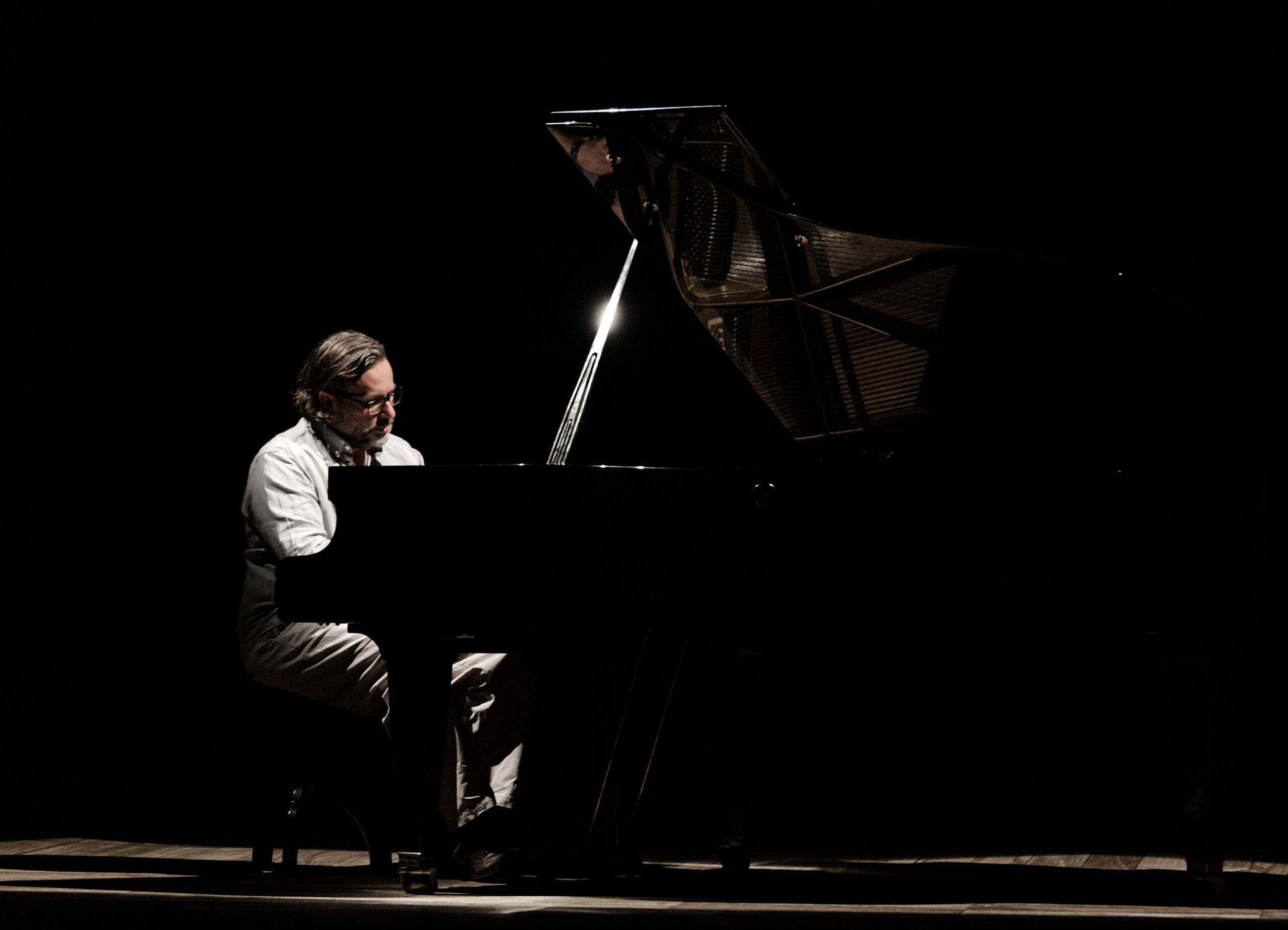
Because fæden is so deeply concerned with presence – how sound inhabits space, how silence frames feeling – it’s easy to imagine the music taking on a new dimension in performance. Thomas Lambrich will be performing at the Piano Revenge Festival in Paris in April 2027, giving audiences the opportunity to experience the world of fæden beyond the recording. For a record built on the relationship between sound and stillness, hearing these compositions in a shared room promises to be more than a recital; it promises to be an extension of the album’s central gesture: attention, offered and received.
A gentle refusal of virtuoso drama
For listeners coming to fæden expecting dramatic, virtuosic piano, this may not be the album they’re looking for. Its ambitions are different. Lambrich is more concerned with atmosphere, emotional resonance, and the quiet accumulation of feeling than with spectacle. The 13 pieces form a coherent emotional journey rather than a collection of isolated piano miniatures – movement, yes, but inward movement: a walk through the invisible architecture of a life.
When fæden works best, it’s because its central metaphor never feels forced. The “threads” can be heard as relationships, memories, landscapes, losses, friendships, and moments of belonging. Some disappear from view. Others strengthen with time. Some lead us back to ourselves. And when the final notes fade, the idea remains – softly insistent, hard to shake: perhaps none of these connections ever truly disappear. In the end, this is not an album about escaping the world. It’s an album about noticing how deeply you are already connected to it.
fæden asks for patience, and in return it offers something increasingly rare: permission to slow down – and to feel the invisible threads that bind one life to another.
Listen: Spotify · Thomas Lambrich’s ‘fæden’: