Keith Jarrett and the Piano: A Place You Enter
Some pianists treat the keyboard as a test of command. Keith Jarrett treats it as a room you step into – an instrument that asks for attention before it offers anything back.
That difference is why his story reads less like a biography than a method: the piano as a space for discovery, improvisation, physical commitment, and a kind of spiritual listening. Everything in Jarrett’s career leads toward that idea, and nothing proves it more vividly than one night in Köln.
Editor’s thesis:
Jarrett’s great subject is not “jazz piano” or “classical piano,” but what happens when a player becomes listener – and lets the instrument reveal its next sentence in real time.
Before Jazz, the Piano Was Already the Point
Keith Jarrett was born in Allentown, Pennsylvania, in 1945 and began studying piano at the age of three. Classical training came first, and remarkably early: by seven, he was already giving public performances.
Even then, the piano wasn’t simply a repertoire machine. Technique mattered – Jarrett developed an extraordinary technical relationship with the keyboard – but it was never the end of the argument. The deeper instinct was that music was larger than any single category, and that the instrument could be a place to search rather than a place to display.
When he moved to New York in his late teens and began working professionally, the résumé filled quickly – Art Blakey’s Jazz Messengers, Charles Lloyd’s quartet, and later Miles Davis’s electric groups – some of the most adventurous musical environments of the 1960s and early 1970s. Yet the piano remained his centre of gravity.
With Lloyd, his playing could pivot from lyrical melody to gospel-inflected intensity to exploratory improvisation. With Davis, he encountered electric keyboards and a radically different conception of sound. But he never settled into a single school. The trajectory by the early 1970s was unmistakable: the piano itself could become the entire orchestra.
The Solo Piano as Unknown Territory
Jarrett’s solo concerts were not recitals in the familiar sense. They were experiments: walk onstage without a predetermined composition and allow the music to assemble itself, moment by moment, under the pressure of a room.
Early solo recordings including Facing You and Bremen/Lausanne established the approach. Long-form improvisation became architecture built without a blueprint – melody appearing, vanishing, returning altered; rhythmic figures hardening into ostinatos, then dissolving into pulse; a single chord opening an entirely new landscape.
The paradox is the point. The music is spontaneous, yet it rarely sounds shapeless. Jarrett can improvise at length while making you feel a composition is unfolding – because he is simultaneously composer, performer, and listener.
Köln: When Everything Went Wrong – and the Piano Opened
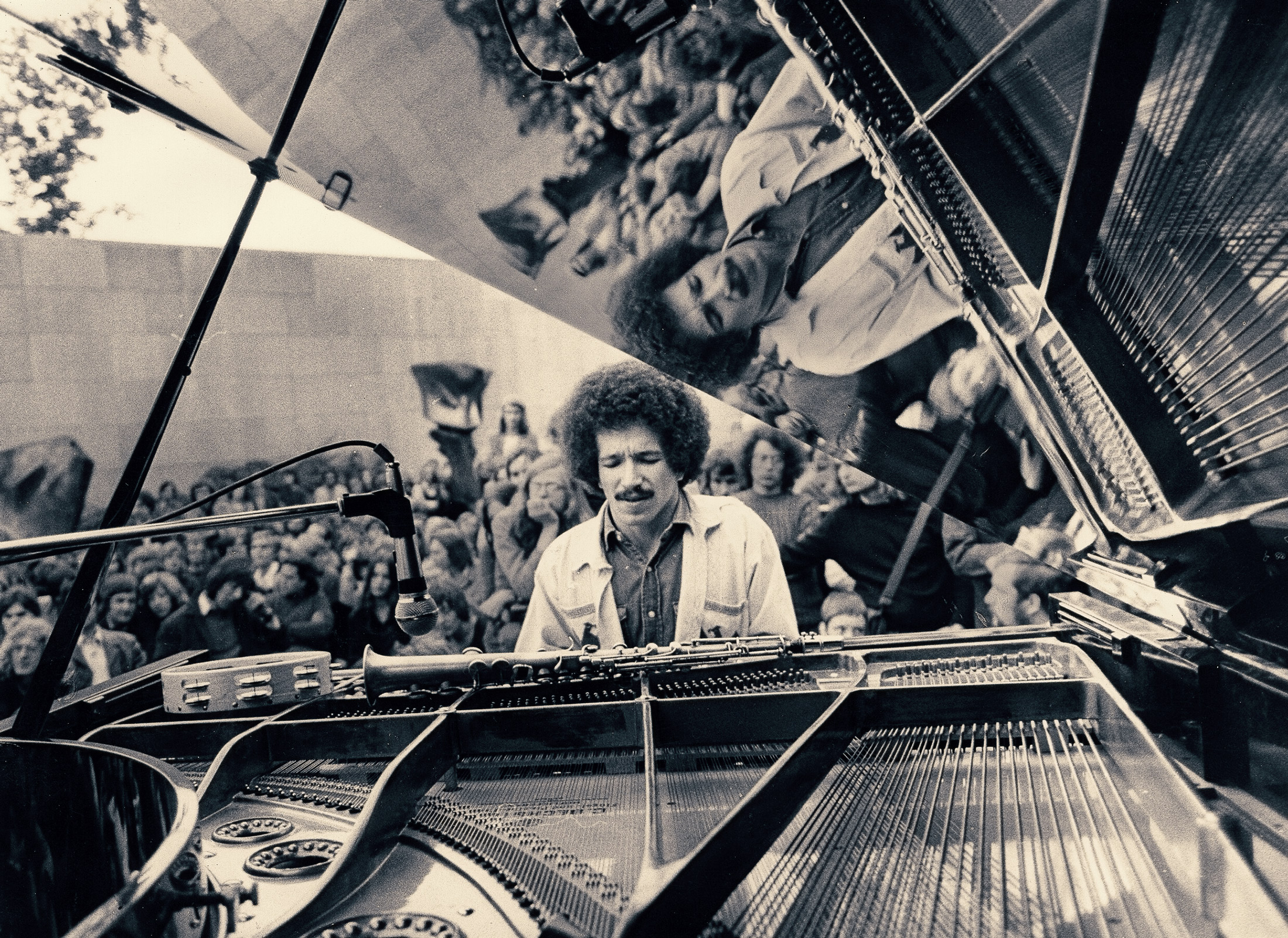
On January 24, 1975, Jarrett arrived at the Cologne Opera House for a late-night solo concert organised by the young promoter Vera Brandes. Almost every detail seemed designed to sabotage the performance.
The piano he requested was unavailable. In its place: a smaller, inadequate Bösendorfer with serious tonal limitations, especially in the bass and upper register. Jarrett was exhausted, hungry, and suffering severe physical fatigue after travelling. At one point, the concert nearly did not happen.
Then he walked onstage – and produced one of the defining documents in the history of recorded piano music.
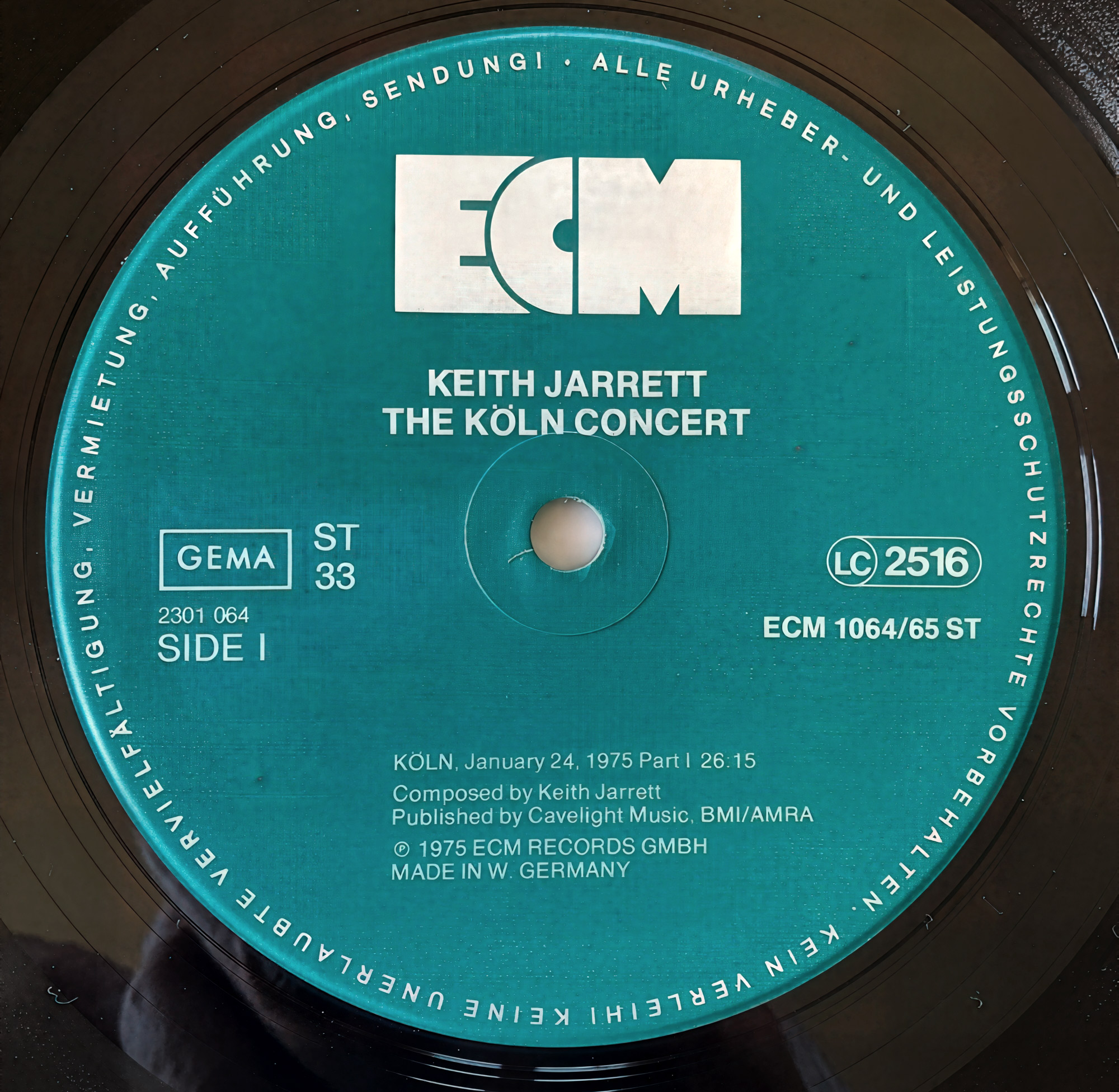
The Köln Concert, released later in 1975 by ECM, is approximately 66 minutes of entirely improvised solo piano music. (Grammy)
The opening is almost disarmingly simple: a short melodic figure, a pulse, and the sense of a door being pushed open. From that small beginning, Jarrett builds a world. Rhythm becomes movement; repetition becomes structure; melody becomes atmosphere. The instrument’s limitations stop being a problem to hide and start being a shape the music can lean against.
The defective piano forced Jarrett to rethink touch and register. He relied heavily on the middle range and on rhythmic patterns, creating momentum through repetition and physical energy. (Pageeditor)
And this is the decisive Köln lesson: the drama isn’t simply that the piano was wrong. It’s that Jarrett listened past it. The instrument becomes less a fixed object than a field of possibilities – what it can do, what it refuses to do, and what a musician can discover inside those boundaries.
Key takeaway: In Köln, constraint doesn’t reduce the music – it clarifies it. The performance shows how improvisation can produce form when the player commits to listening rather than forcing an idea onto the keys.
Between Composition and Prayer
It is tempting to call The Köln Concert jazz, but the label only catches part of what is happening. You can hear jazz, certainly – gospel, blues, folk music, European classical sensibility, the freedom of improvisation – yet the performance continually moves beyond genre, toward something closer to universal musical expression than a style category. Jarrett himself has resisted simple categorisation in discussing the Köln experience. (The Irish Times)
That may be why the recording reached far beyond the usual jazz audience. It became music for listeners who did not necessarily listen to jazz at all. The piano turns almost vocal. Jarrett sings and cries out while playing – not as theater, but as if the body must physically participate in the act of making the music audible.
The Spiritual Piano: Attention as a Practice
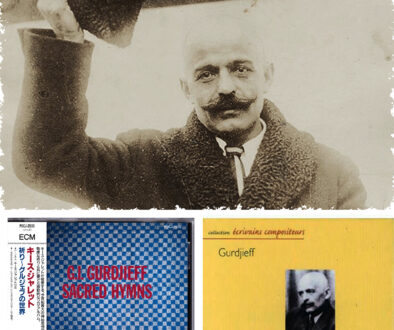
Jarrett’s relationship with spirituality is not decorative. It belongs to a deeper search into consciousness, sound, and the nature of artistic creation. His interest in the teachings of George Ivanovich Gurdjieff began when he was young. Later, he recorded Sacred Hymns – his 1980 interpretation of music associated with Gurdjieff and composer Thomas de Hartmann. (Wiki)
What connects these strands is a single discipline: attention. To play, one must listen. To improvise, one must remain present. To create something genuinely spontaneous, one must be willing to let go of control. Jarrett has spoken about music as an emotional and potentially spiritual experience without necessarily being religious music, describing the spiritual dimension in terms of consciousness, integrity, emotion, meditation, and deep joy (JazzTimes)
In Sacred Hymns, the piano becomes quieter – contemplative, almost ceremonial. But the spiritual aspect is not confi ned to that recording. It also lives in the huge spaces of Jarrett’s solo improvisations, where intensity and stillness are allowed to coexist. Silence isn’t an absence. It becomes part of the composition. The note is only half of the music. The other half is the space around it.
The Body Plays Too
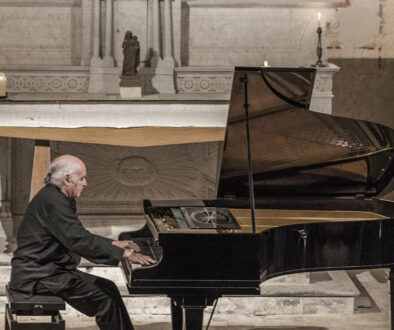
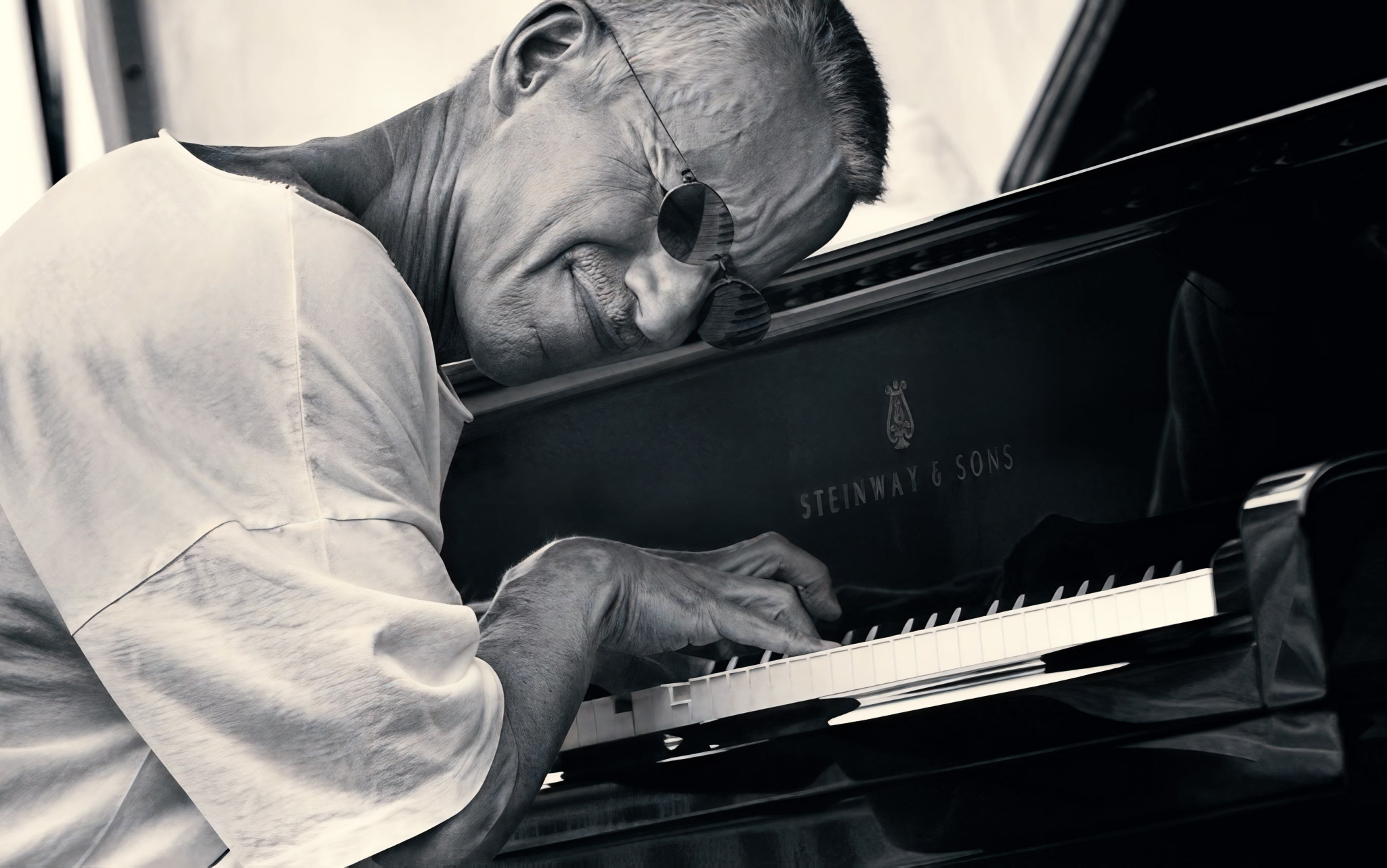
Jarrett’s physicality is not a footnote; it is a statement about how he understands the instrument. He bends toward the piano. He sings. He stamps his feet. He rises from the bench. The whole body participates in the rhythmic construction of the music – not as visual performance, but as evidence that piano playing is not produced by fingers alone.
To listen with full intensity, the body has to be involved. In Jarrett’s case, that involvement makes the piano feel less like an object and more like a living conversation – an exchange between player, room, and moment.
After Köln: A Piano Without Borders
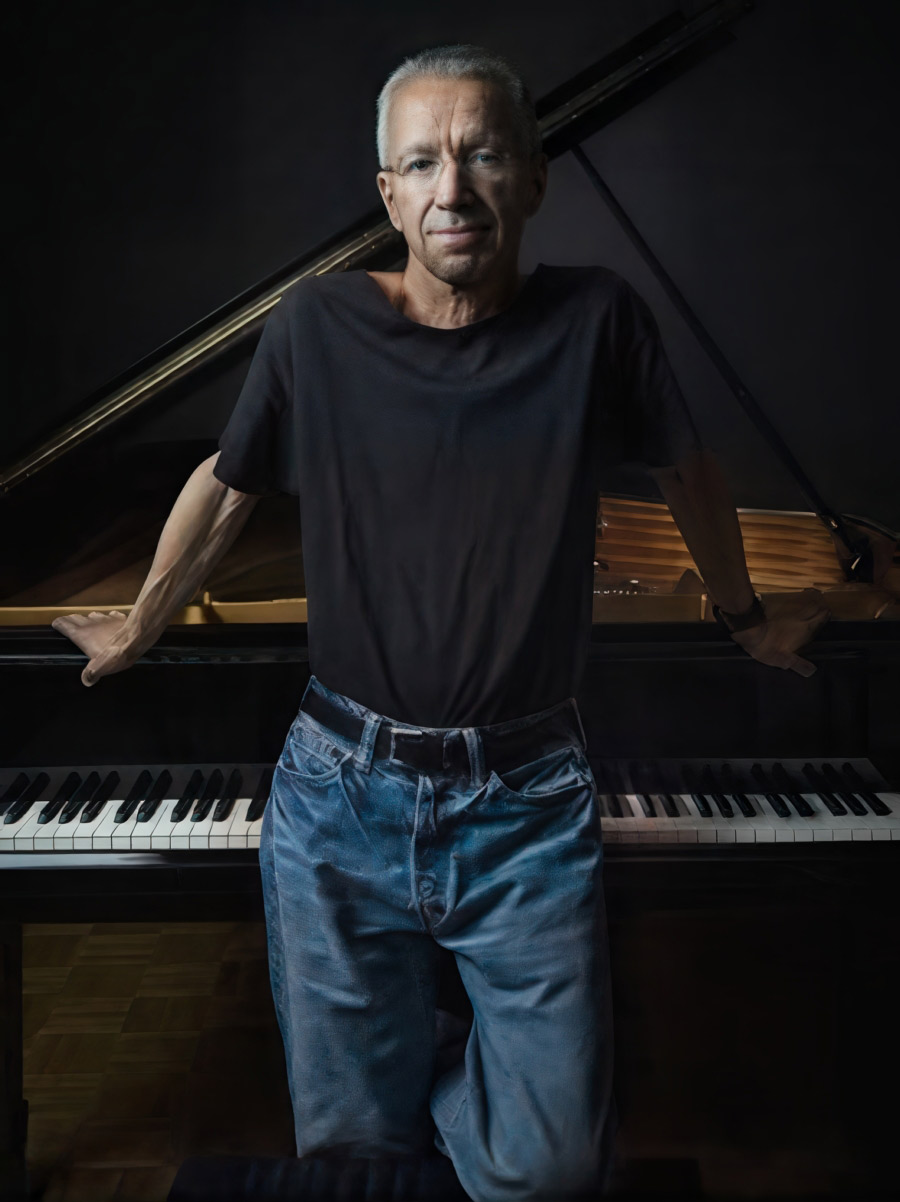
After Köln, Jarrett continued exploring what solo piano could become: Sun Bear Concerts (five solo performances recorded in Japan in 1976), followed by Concerts, Dark Intervals, Paris/London: Testament, Radiance, A Multitude of Angels, and eventually his final European solo performances. Each concert is different; there is no single “Keith Jarrett sound” that can be reproduced on demand. The piano becomes a meeting place between artist, room, audience, and time.
More broadly, Jarrett’s career refuses to choose between musical worlds. He can move from Bach and Handel to jazz standards, from Shostakovich to free improvisation, from Gurdjieff’s sacred music to spontaneous solo architecture. ECM’s own account captures the breadth: baroque organ, clavichord, multi-instrumental improvisation, sacred music, and major interpretations of Bach, Mozart, Händel, Shostakovich, Bartók, and other classical composers. (ECM Records)
What connects all of it is not genre, but a test of aliveness: whether the music is listening as it moves forward.
Closing: The Piano as a Place to Listen
The danger of The Köln Concert is its monument status – so famous it can threaten to eclipse the musician behind it. Jarrett has had an uneasy relationship with the recording’s mythology and has sometimes been critical of the way it became the defining reference point of his career. Yet its significance remains: it transformed the possibilities of solo piano for a global audience and became one of the most influential piano recordings ever made. (Keith Jarrett)
Still, Köln is best understood not as a summit, but as a doorway – into an enormous body of music in which the same question keeps returning, refined rather than repeated: what can happen here, now, with this piano?
Jarrett’s most enduring lesson is also his simplest: virtuosity should eventually become invisible. The more completely he knows the instrument, the more he seems intent on “un-piano-izing” it – stopping the mind’s obsession with technique and returning to what he actually hears. (JazzTimes)
For Piano Revenge MAG, that is the real legacy. The piano is not only an instrument to be mastered. It is a place to enter – quietly, physically, spiritually – and to listen until something true arrives.