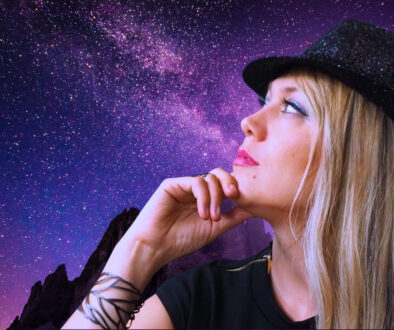
Catherine Fearns: Where Classical Piano Meets the Wild Heart of Metal
Some artists refuse to belong to just one musical world. Catherine Fearns is one of them.
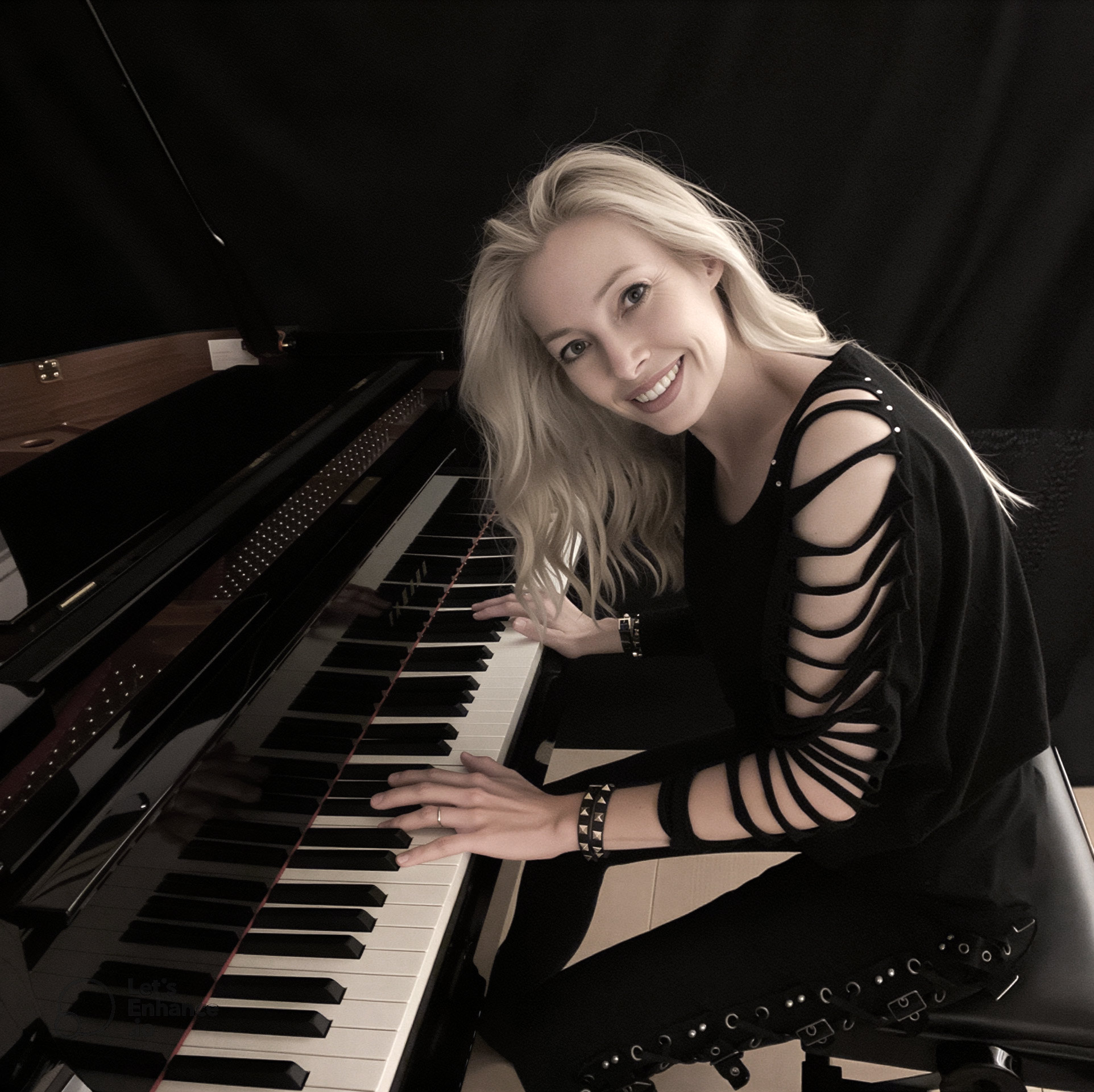
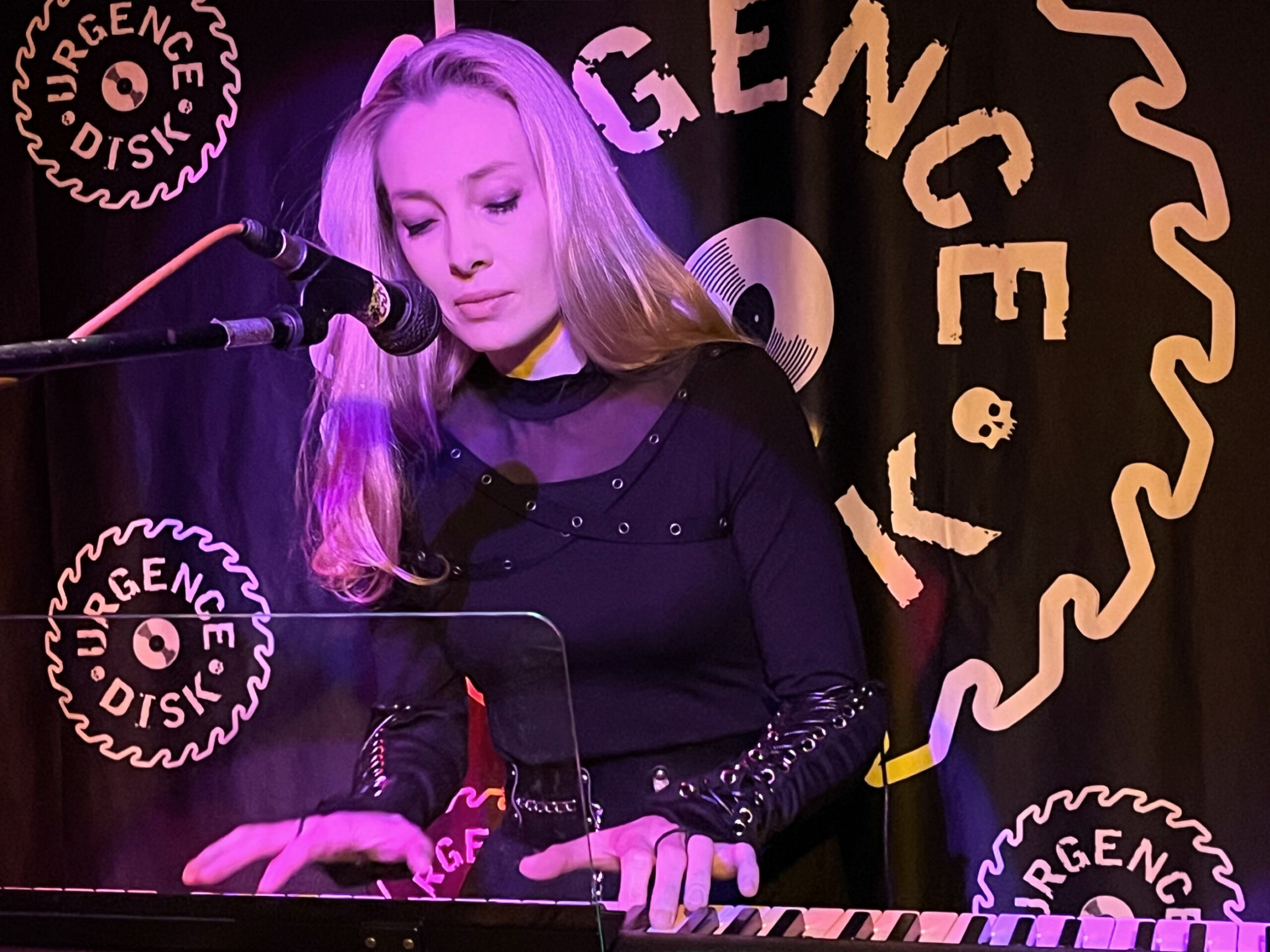
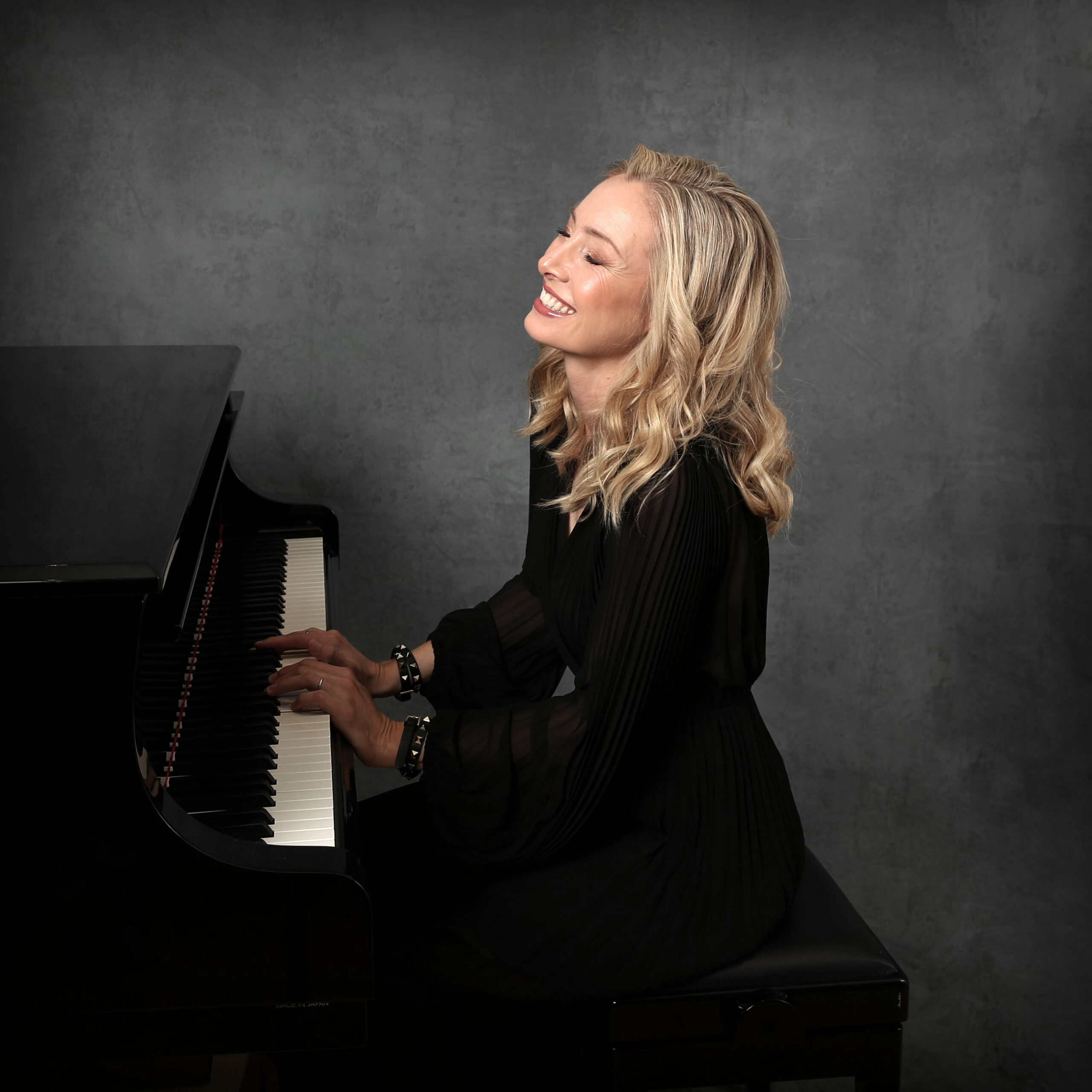
Classically trained pianist, composer, guitarist, writer and member of an all-female metal band, Catherine has developed a distinctive artistic voice where classical discipline meets the visceral energy of heavy metal, and composition meets storytelling.
Her latest release, Scenes From Nowhere, offers a glimpse into this fascinating musical universe – from literary inspiration and jazz-inflected ideas to virtuosic variations on Cannibal Corpse and a nocturnal tribute to Iron Maiden. Her forthcoming Metal Reflections will take her piano arrangements of metal repertoire even further.
For Catherine, these seemingly distant worlds are not opposites, but different ways of exploring intensity, emotion and creativity.
Ahead of her appearance at Piano Revenge Festival Paris 2027, we invited Catherine to speak about music, reinvention, composition, motherhood, storytelling and the freedom to follow an artistic path without boundaries.
In this Piano Revenge MAG interview, Catherine Fearns opens the door to a world where the unexpected becomes part of the music.
And with that spirit of curiosity and artistic freedom in mind, we invited Catherine Fearns to take us deeper into her musical world – from the unexpected relationship between classical piano and heavy metal to composition, creativity, motherhood, and the many paths an artist can take.
Here is our conversation with Catherine Fearns.
PRM: “Twenty years away from the piano is quite a story. You originally trained as a classical pianist, then left the instrument and eventually found your way back through electric guitar and heavy metal. Looking back, what do you think you needed to discover during those twenty years before you could return to the piano as the artist you are today?”
As a young pianist I was extremely shy and suffered from terrible stage fright, so every concert and competition I did felt like an ordeal. I thought musicians must surely need to be extroverts, to whom performance came naturally. I was also afraid of failure; even with a conservatoire education, making it as a concert pianist seemed so unlikely, and I didn’t want to ‘end up’ as a piano teacher. Plus, I didn’t see myself as a creative person – I felt I was just playing other people’s music, and would never be able to compose myself. So I decided to quit music and follow a ‘normal’ path – I did an academic degree, worked in the financial sector and then had my children. I barely touched a piano for twenty years; I felt almost allergic to the instrument, because there was this deep regret and subconscious knowledge that I had sabotaged myself.
Of course, all my beliefs were wrong. I have since learned that in fact many musicians are introverts, and performance nerves are completely normal and even useful. That being a famous concert pianist is not the only mark of ‘success’- there are so many different ways to make a career out of music. That far from ‘ending up’ as a piano teacher, it’s a wonderfully rewarding and important job – and I love teaching now. I also think that becoming a mother triggered the creative part of my brain that had been hidden for so long. Playfulness, childlike wonder, a beginner’s mind – these are essential qualities for creative careers. Becoming a mother also gave me an inner confidence and an urgency to try new things – what’s the worst that can happen, and if not now, when?! I always tell my children to follow their passion in life, even if it seems crazy or impossible – because one day you’re probably going to end up doing it anyway!
PRM: “You have described heavy metal as the unexpected route that brought you back to classical music. What do you hear in metal and classical music that makes these two worlds, which may seem so different from the outside, surprisingly compatible?”
There are a surprising number of similarities between metal and classical music – some metal genres more than others of course. Harmonic language, structure, subject matter – there’s a lot to compare. But in general with music I am always looking for intensity of emotional experience. I need to feel music on a very visceral level, and I get that feeling from distorted guitars and blastbeats in the same way I might get it from a Liszt piano concerto.
That’s why I also like other forms of extreme music such as hard techno. Another similarity between metal and classical music is technical difficulty. Although it may sometimes sound like noise to the uninitiated, metal music can be extremely difficult to play, and metal musicians have to study for many years to reach the required level. It doesn’t matter whether those thousands of hours are spent in a conservatoire or in your bedroom, and it doesn’t even matter whether or not you read music – it’s still virtuosity. So I have a huge admiration for metal musicians, and battling to learn the electric guitar (having imagined it would be easy) reminded me of all those thousands of hours I spent playing the piano.
PRM: “Your work seems to exist deliberately between worlds: neoclassical composer, classical pianist, “heavy metal pianist,” guitarist and member of an all-female metal band. Do you feel that you are crossing between musical identities, or do you see all of these sides simply as different expressions of the same artistic voice?”
I haven’t really thought about it much, but it’s certainly not deliberate. I still feel that I’m at an early stage of my musical journey and I’m just trying out things I enjoy, taking opportunities as they arrive and seeing where they lead. Perhaps I would have more commercial success if I picked a lane and built a brand around that, but I don’t really feel the need. I’m doing what feels authentic to me, and most of all what is possible. I have to turn down most of the opportunities that come my way, because I’m a mum first, and all of the musical jobs I do need to fit around that.
PRM: “Your metal arrangements have become a significant part of your identity as a pianist, while your original compositions have their own very personal and introspective language. What happens when you sit down to compose an original piece compared with when you arrange an existing metal song for piano?”
They are two very different processes. For the metal arrangements I have my formula; I choose a suitable song, play it by ear, transcribe what I play, check it against any online tabs I can find, perfect the standard notation, play and record it. There’s still creativity involved – finding ways to represent all the different instruments in a band, deciding whether to re-harmonize, what to add, what to remove – and it’s enormous fun to do, but it’s a technical exercise.
Composing my own music is a much more intuitive and experimental process. In fact I don’t really have a process. Sometimes I will compose far away from the piano – in my head or with pencil and paper. I might be inspired by a book or a place, or something I’ve been commissioned to do, or I might say ‘Ok I need to compose a piece today’, and will just sit at the piano and improvize.
Occasionally I have combined the two processes – for example with my Variations on Cannibal Corpse and Nocturne For Eddie. But I found when I performed those live, audiences were a bit confused! Perhaps there is a limit to how much genre-blurring an audience wants in a single concert!
PRM: “Your music has also found a life on the page, with your compositions published by Universal Edition. What does it mean to you to see your music interpreted by other pianists rather than existing only through your own performances and recordings? And do you write differently when you know that someone else may eventually play the piece?”
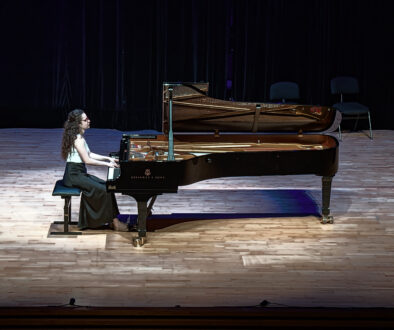
When I began composing for solo piano, I didn’t imagine playing the pieces myself. They are quite difficult to play and I hadn’t performed live for twenty years – so I was certainly intending for them to be played by others. However in the end I braved playing live again. And it’s also very difficult to find players for your pieces – although Universal Edition is prestigious, it’s still hard to get people to notice your work, so my sheet music is not well known. Recently I have been very lucky, because through my connection with the Swiss Female Composers’ Festival, a wonderful Swiss pianist called Eleonora Em has started playing my pieces in her concerts. She plays them much better than me and brings out aspects that I hadn’t even considered. It’s a huge rush for the composer, and when I saw a clip of her playing my Impromptu No. 1 on Instagram I started crying.
PRM: “Your latest classical album, Scenes From Nowhere, marks another chapter in your development as a composer. What was the artistic world behind this album, and what would you like a listener to discover when they spend time with it from beginning to end?”
Scenes From Nowhere is more of an EP than an album – it’s five pieces that really give a snapshot of where I’m at musically in 2026. The first piece, The Fault Mirror, is inspired by a novel I wrote of the same name – I wanted to see if I could create a ‘tone poem’ which tells the story of a book through music. Can’t Let You Go is the solo piano version of a violin piece which I wrote for the Swiss Female Composers Festival. Dream Within A Dream is me exploring jazz motifs, something I’d like to get more into. Variations On Cannibal Corpse is a virtuosic medley of riffs taken from the death metal band Cannibal Corpse – it’s an absolute nightmare to play but I love it. And Nocturne For Eddie is my love letter to Iron Maiden. This is probably the least ‘themed’ album that I have done, but it’s a little glimpse into my strange musical universe, and I hope listeners can all take something different away from it.
PRM: “You are also preparing Metal Reflections, your first album devoted to metal covers. What made this the right moment to create such a project, and how did you approach transforming music originally conceived for the world of metal into something that belongs entirely to the piano?
My ‘metal piano’ YouTube channel started as a bit of fun and a technical exercise just for me. I do sell the sheet music via Hal Leonard’s ArrangeMe, which ensures the original composers are compensated, but I didn’t think about releasing the music on streaming channels or as an album – it didn’t really feel like ‘my’ music and I was very cautious about appropriating it. What if these metal bands don’t want piano covers of their songs? What are the copyright issues? But the channel has taken off in a way I could never have imagined – 2 million views now. And I was getting SO many requests to release an album. I put the idea to my record company, Blue Spiral, not expecting anything- they are a neoclassical/ambient label. But to my delight they were completely behind the idea. It has been really fun choosing which songs to put on the compilation, and we are thinking about doing a second volume next year. I hope that both metal and classical listeners will find something to enjoy.
PRM: “There is another fascinating dimension to your artistic life: you are also an award-winning novelist and have written extensively about music and heavy metal. Do composing, performing and writing feed the same creative instinct for you? Is storytelling, in some form, at the heart of everything you do?”
Yes absolutely. I don’t really distinguish between writing, composing and playing. When I’m in my creative mode, I’m usually doing more than one thing – if I’m writing a novel, at that time I will usually be composing something or working towards a concert as well. I’m just having so much fun, finally doing work that I’m passionate about, and making it into a career.
PRM: “You have built a remarkably diverse artistic life while also raising four children, teaching and maintaining an active performing and composing career. Has motherhood changed the way you think about creativity, time and ambition – and perhaps even the way you listen to music?”
As I mentioned before, motherhood triggered my creative brain; there’s no doubt. It also made me, by necessity, much more creative and efficient with my time. Everything I do has to fit around the children’s schedules, and so I write novels in the school car park, compose while I’m sitting outside my kids’ karate classes, practice using headphones when they are asleep. Being a mother is by far the most important part of my identity, and my kids inspire everything I do. But I don’t want to romanticise this juxtaposition of motherhood and creativity, because it’s still far too difficult for mothers to build careers – in any industry, but particularly in the arts.
I had never planned to be a stay-at-home-mum, but when my children were small everything just fell to me as the primary carer, and I had to give up my career completely. That was a shock to the system and a huge loss, and there were certainly some dark and exhausting times. Even now, I am not free to go on tour, work full-time, work outside the home in the evenings etc. The playing field is not level, not by any means.
I love to see high-profile women balancing motherhood with career – it’s a great example. I’m passionate about measures that promote equality between motherhood and fatherhood – for example shared parental leave – so that more women can reach their full potential.
PRM: “Next April, you will join us in Paris for Piano Revenge Festival 2027. What are you most looking forward to about bringing your music to the Piano Revenge audience, and can you already tell us something about what you are imagining for your performance? What would you love someone to feel when they leave the concert?”
I am so excited to play at Piano Revenge! This will be my first time performing in Paris, and when I saw the other musicians listed on the bill I felt really honored to be included. I haven’t decided on my setlist yet – I’m quite spontaneous about that – but there will certainly be a combination of my original compositions, some inspiration from the world of metal, and at least one piece that people certainly won’t expect to hear on the piano.
I hope that the audience will go away feeling that they have discovered something completely new and unexpected.